Geography knowledge Science Worksheets for Ages 6-8
3 filtered results
-
From - To
Unlock the world of discovery with our Geography Knowledge Science Worksheets for Ages 6-8. These engaging, printable worksheets offer young learners a hands-on approach to exploring earth’s landforms, continents, countries, and oceans. Designed to stimulate curiosity and build foundational geography skills, our worksheets include vibrant activities and puzzles that make learning fun and interactive. Perfect for classroom use or at-home enrichment, these resources will help your child understand the world around them while building important critical thinking skills. Start your child’s journey to becoming a geography whiz today with our carefully crafted educational tools!
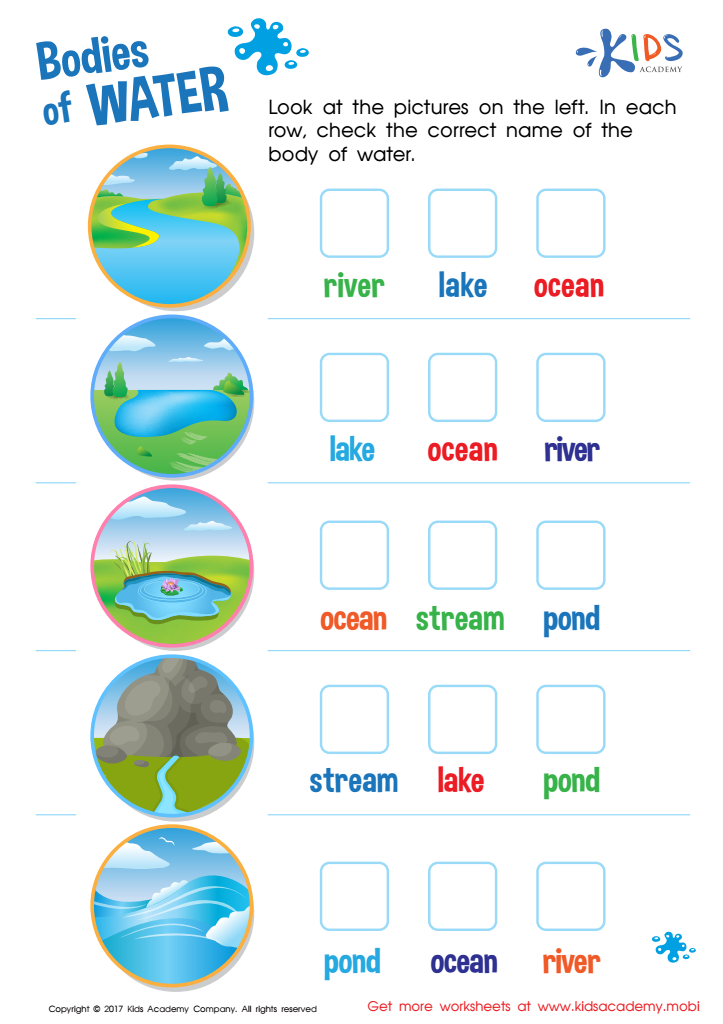
Bodies of Water Worksheet
 Assign to My Students
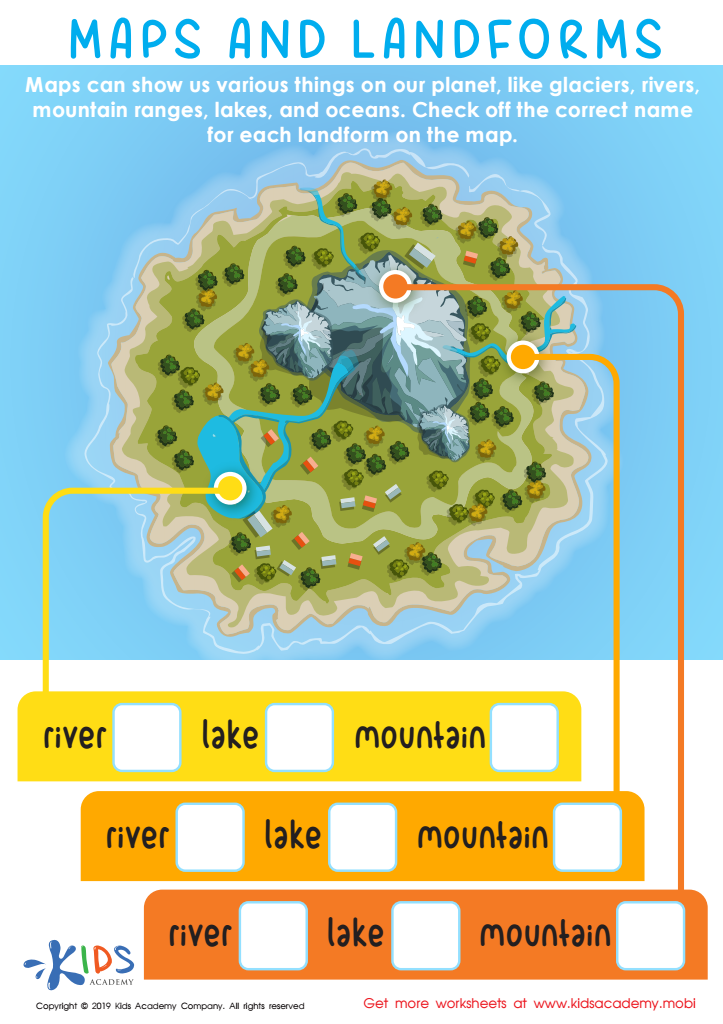
Maps and Landforms Worksheet
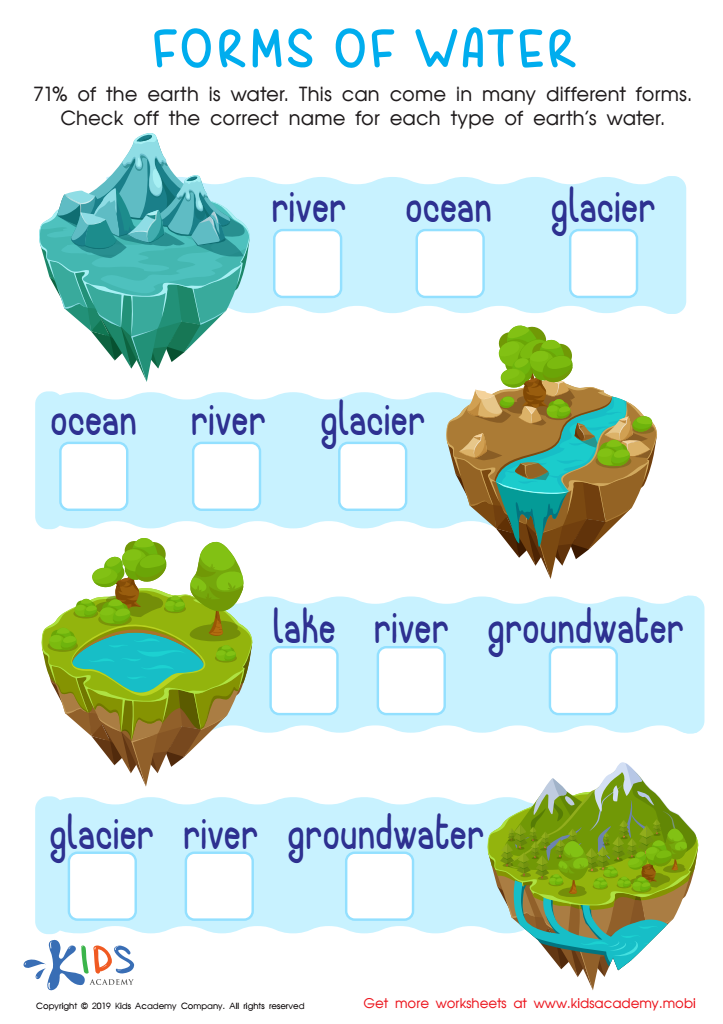
Forms of Water Worksheet






Parents and teachers should care about imparting geography knowledge to children aged 6-8 because it cultivates a foundational understanding of the world around them, shaping their cognitive and social development. At this formative stage, children are incredibly curious and receptive to learning about diverse cultures, landscapes, and ecosystems. Geography helps them comprehend that they are part of a larger community, fostering empathy and respect for other cultures and ways of life.
Teaching geography at an early age enables children to develop critical thinking and observational skills. They learn to interpret maps, understand spatial relationships, and recognize the interconnectedness of natural and human environments. This not only aids their cognitive development but also lays the groundwork for problem-solving and analytical abilities that are crucial in later academic pursuits.
Moreover, an understanding of geography supports other areas of the curriculum such as history, science, and environmental education. It helps children grasp the 'why' and 'where' of historical events and scientific phenomena, making their overall learning experience more coherent and comprehensive. By valuing geography education, parents and teachers equip children with the tools necessary for becoming informed, responsible global citizens who appreciate the complexity and beauty of the world they inhabit.







