Understanding constellations Science Worksheets for Ages 6-8
3 filtered results
-
From - To
Explore the wonders of the night sky with our "Understanding Constellations" science worksheets specially designed for ages 6-8. These engaging and interactive worksheets introduce young learners to the fascinating world of constellations, helping them identify and understand common star patterns. With a mix of fun activities, including coloring, tracing, and matching, children will develop their observational skills and spark their curiosity about astronomy. Perfect for classroom use or home learning, our worksheets align with educational standards and encourage kids to explore astronomy in an imaginative way. Start your stargazing journey today and ignite a lifelong passion for science!
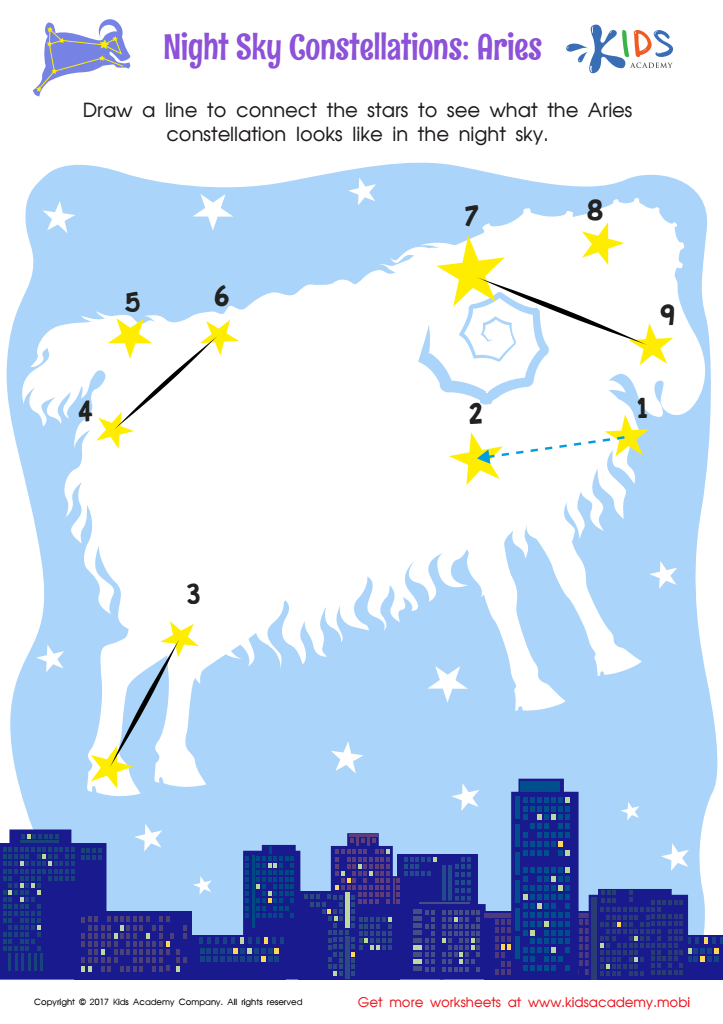
Night Sky Constellations: Aries Worksheet
 Assign to My Students
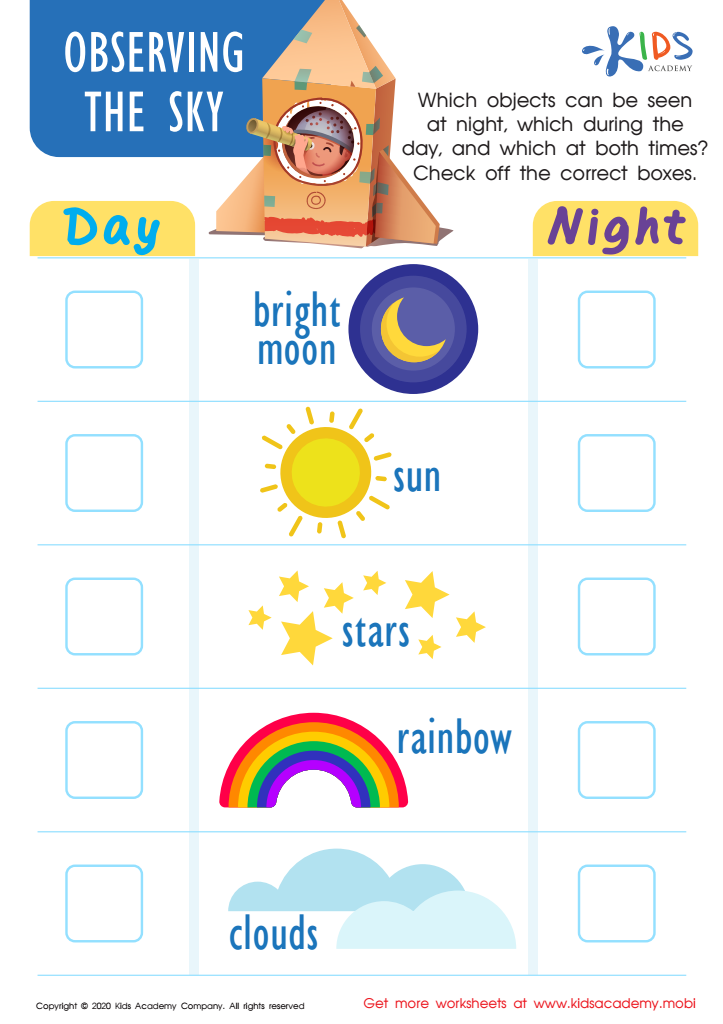
Observing the Sky Worksheet
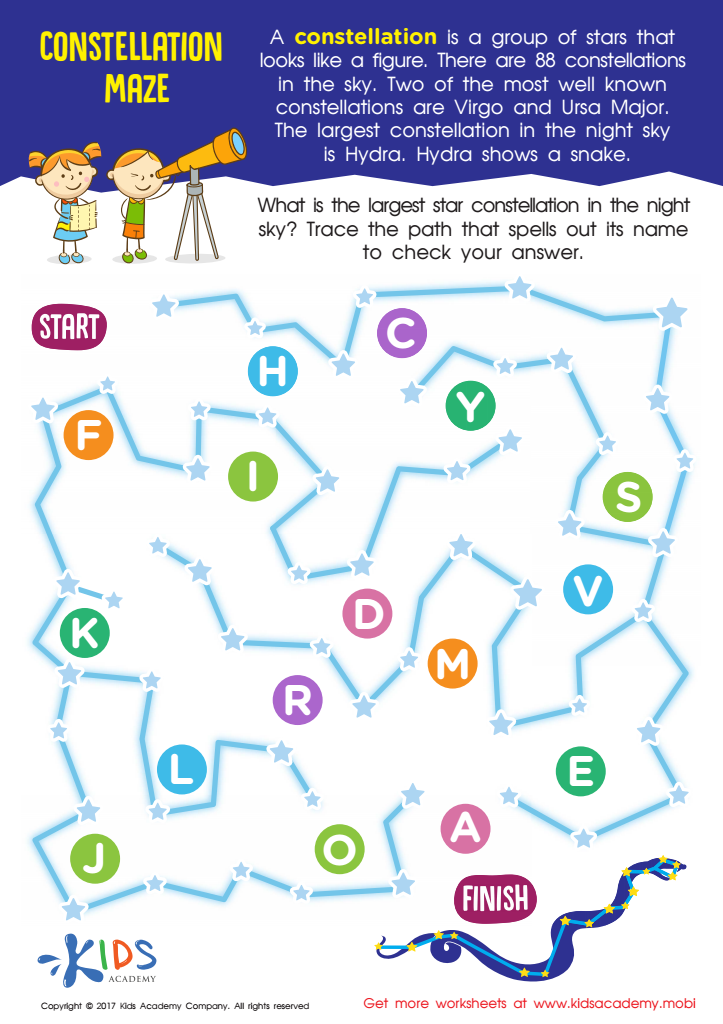
Constellations Worksheet








Understanding constellations is important for children ages 6-8 for several reasons. First, learning about constellations fosters curiosity and a sense of wonder about the universe. It encourages children to look up at the night sky and ask questions, sparking an interest in astronomy and science as a whole. This helps develop critical thinking and observational skills, which are essential in young learners.
Second, studying constellations can enrich a child's knowledge of folklore and history. Many constellations are tied to ancient stories and mythologies, allowing children to engage with cultural narratives while developing their reading and comprehension skills. This cross-curricular connection enhances their overall learning experience.
Moreover, understanding constellations promotes social interaction. Parents and teachers can engage children in outdoor stargazing activities, creating bonding moments and opportunities for shared learning. Families and classrooms can also use constellation maps, fostering teamwork as students work together to identify patterns in the sky.
Lastly, the captivating visuals of constellations serve as an effective educational tool, making complex concepts accessible and engaging for young minds. By caring about and teaching constellations, parents and teachers support children's holistic development—nurturing their curiosity, creativity, and scientific inquiry.







