Understanding directions Science Worksheets for Ages 6-8
4 filtered results
-
From - To
Explore our engaging "Understanding Directions Science Worksheets" designed specifically for children aged 6-8! These worksheets aim to enhance essential skills in following and interpreting directions, promoting critical thinking and comprehension through fun science-related activities. Each worksheet is crafted to encourage hands-on learning, enabling young learners to grasp complex concepts with ease. With clear instructions and captivating visuals, students will enjoy exploring scientific principles while practicing their ability to follow directions accurately. Perfect for classrooms or home learning, these printable worksheets provide an excellent resource for fostering independence and boosting confidence in young scientists. Dive into discovery with our interactive worksheets today!
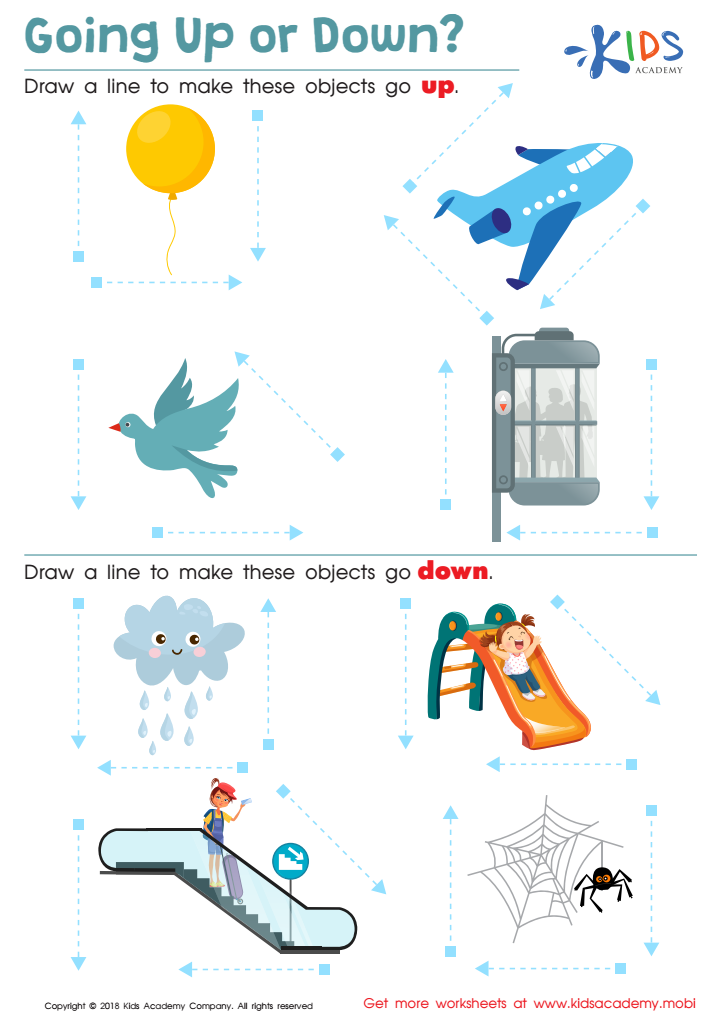
Going up or Down? Worksheet
 Assign to My Students
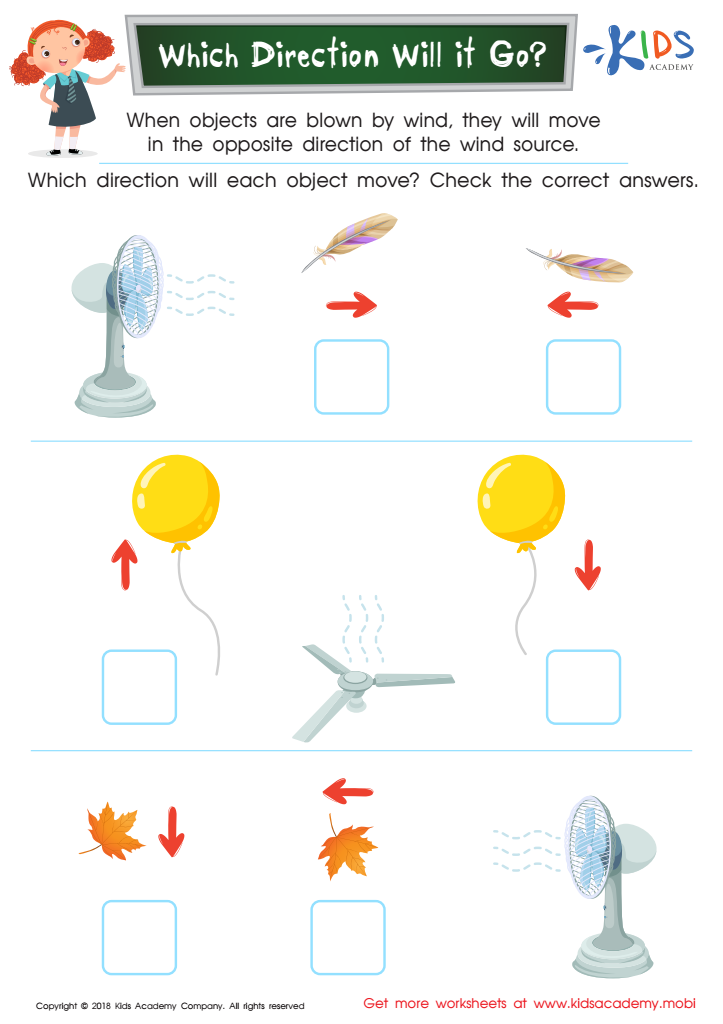
Which Direction Will it Go? Worksheet
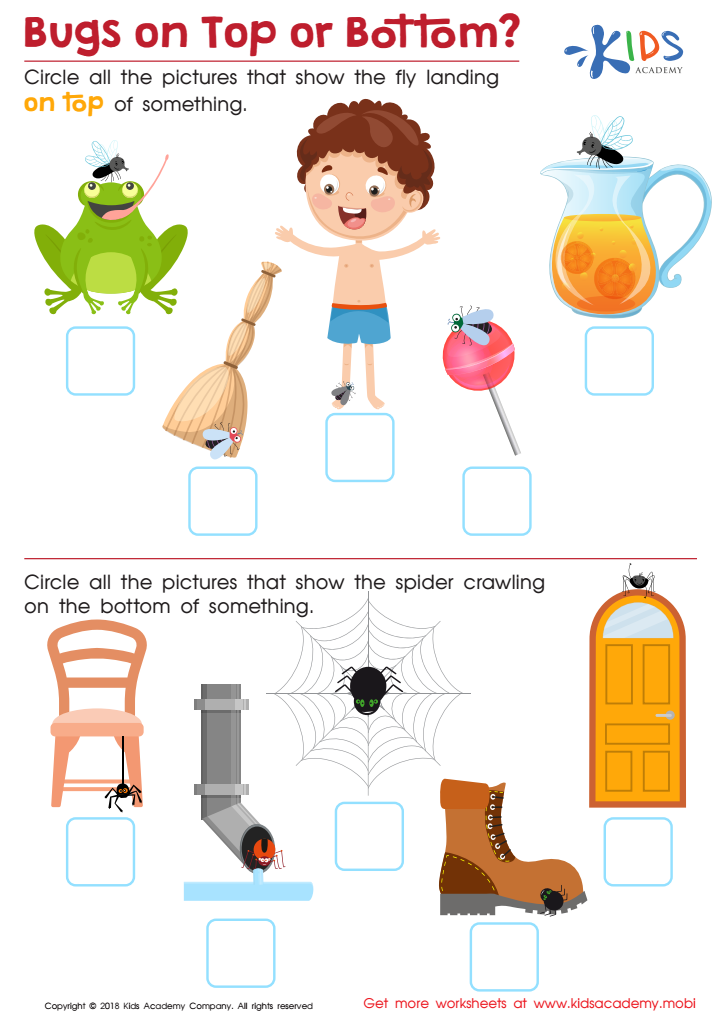
Bugs on Top or Bottom? Worksheet
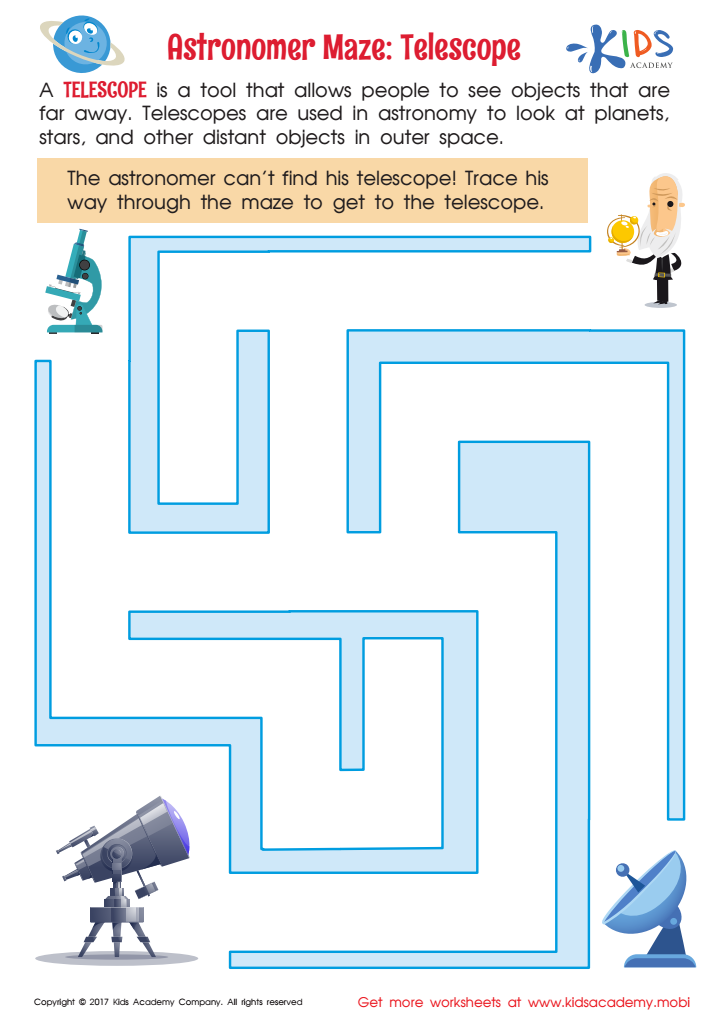
Astronomer Maze: Telescope Worksheet








Understanding directions in science is crucial for children aged 6-8 because it lays the foundation for critical thinking and problem-solving skills. At this age, children are naturally curious, and engaging them in scientific exploration encourages inquiry-based learning. When parents and teachers prioritize understanding directions in science activities, they help children develop essential skills such as following sequences, making predictions, and observing outcomes.
Moreover, comprehending directions enhances children’s ability to work collaboratively and independently. As they navigate through experiments or observe scientific phenomena, they learn to communicate effectively, ask questions, and articulate their understanding. This helps in fostering a love for learning and internalizing scientific concepts.
Additionally, understanding directions encourages a sense of responsibility and confidence. When children successfully complete tasks by following instructions, they experience accomplishment, which boosts their self-esteem. This positive reinforcement is vital for their developmental stage.
Ultimately, emphasizing this aspect of science education instills a sense of wonder about the world and encourages lifelong learning habits. Parents and teachers play a pivotal role in nurturing these foundational skills, ensuring that children not only succeed academically but also grow into informed and inquisitive individuals.







