Weather Vocabulary Science Worksheets for Ages 6-8
3 filtered results
-
From - To
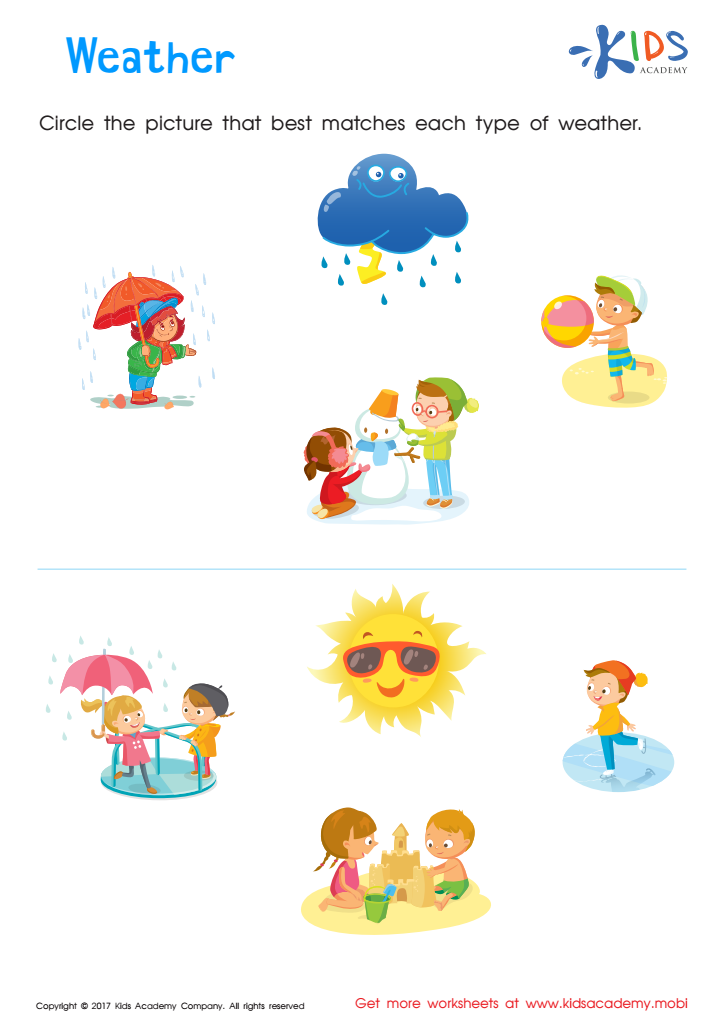
Enhance your child's understanding of weather with our engaging Weather Vocabulary Science Worksheets designed for ages 6-8. These worksheets are crafted to introduce young learners to essential weather terms, helping them develop a solid foundation in science concepts. Interactive activities, including word searches and matching exercises, make learning fun and accessible. Each worksheet promotes vocabulary expansion while encouraging critical thinking skills and environmental awareness. Perfect for classroom use or home learning, these resources foster curiosity about the world around us. Explore our collection today and watch your little ones blossom into knowledgeable weather enthusiasts.
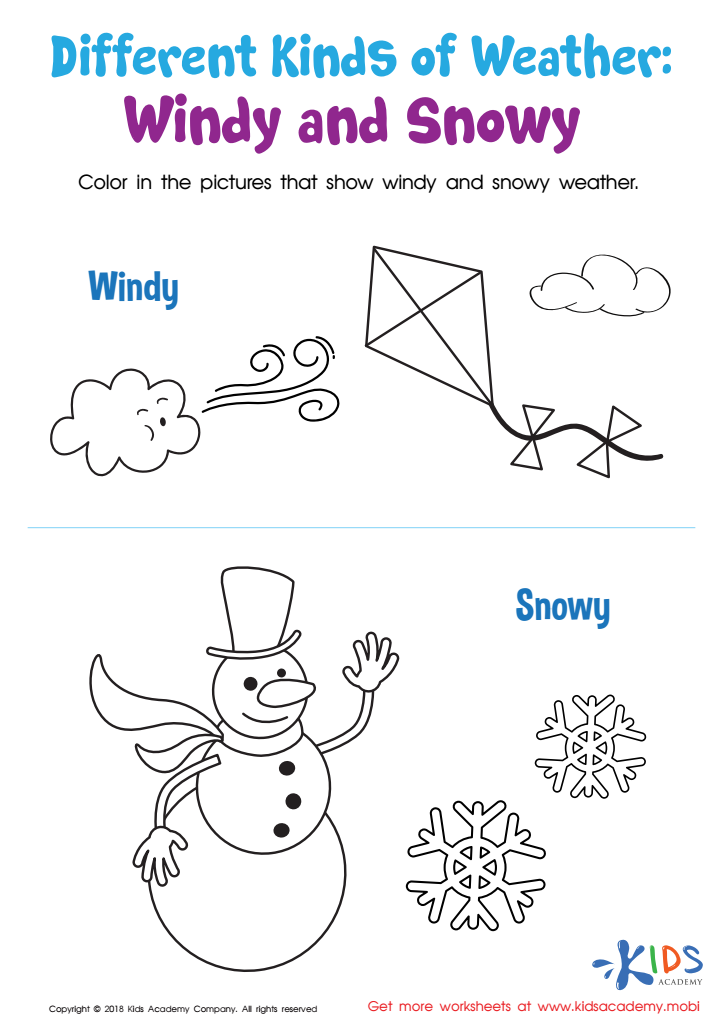
Different Kinds of Weather: Windy and Snowy Worksheet
 Assign to My Students
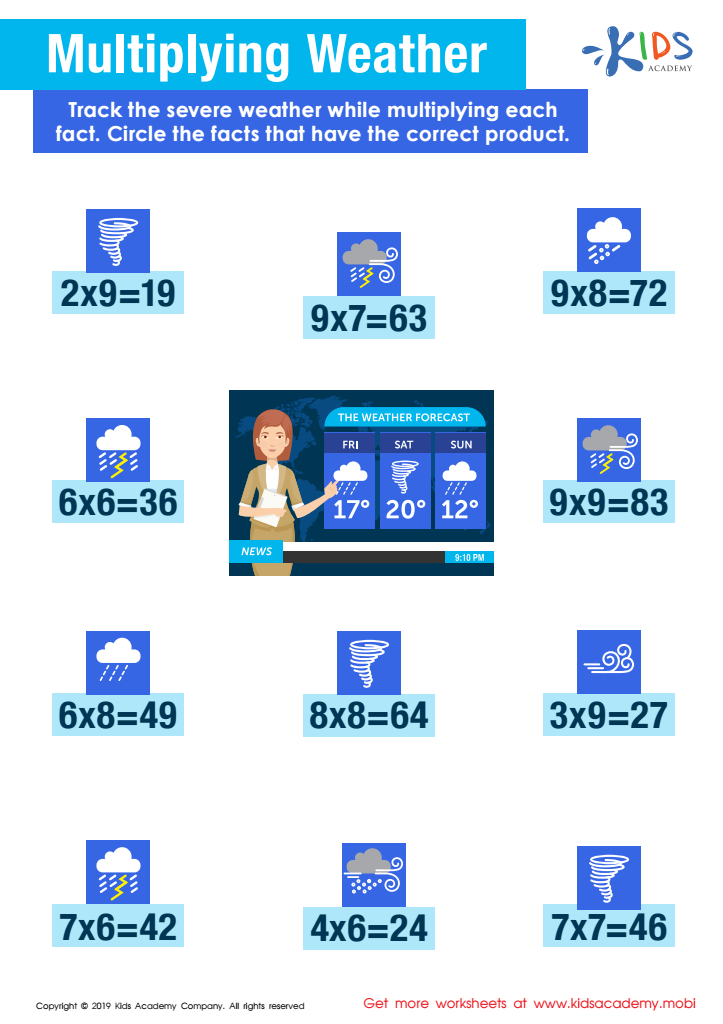
Multiplying Weather Worksheet








Weather vocabulary science is crucial for children aged 6-8, as it helps build foundational knowledge about the world around them. Understanding weather terms—like rain, cloud, thunder, and temperature—enables children to make sense of their daily experiences. It fosters curiosity about natural phenomena and encourages scientific inquiry, leading to critical thinking skills.
Parents and teachers play a pivotal role in this learning process by introducing weather-related concepts through engaging activities and discussions. Knowledge of weather vocabulary empowers children to express their observations and experiences accurately, enhancing communication skills and boosting confidence in their explanations.
Furthermore, a strong grasp of weather vocabulary promotes an awareness of safety and preparedness. Educating children about severe weather conditions, such as storms or extreme temperatures, prepares them to respond appropriately, fostering a sense of responsibility for their well-being.
Incorporating weather vocabulary into learning not only enriches a child’s language skills but also instills a sense of wonder and respect for the environment. By nurturing this knowledge, parents and teachers help shape informed, responsible future citizens who are mindful of their surroundings and prepared to handle unforeseen weather events.







