Categorizing objects Physical Science Worksheets for Ages 6-8
3 filtered results
-
From - To
Explore our engaging "Categorizing Objects Physical Science Worksheets" designed for children ages 6-8! These fun and interactive worksheets help young learners develop critical thinking skills by classifying various objects based on physical properties such as size, shape, color, and texture. Ideal for classroom or at-home learning, these resources encourage exploration and curiosity about the world around them. With vibrant illustrations and age-appropriate activities, kids will enjoy sorting and grouping items, enhancing their understanding of physical science concepts. Foster a love for science while building essential cognitive skills with our comprehensive worksheets that make learning enjoyable and effective!
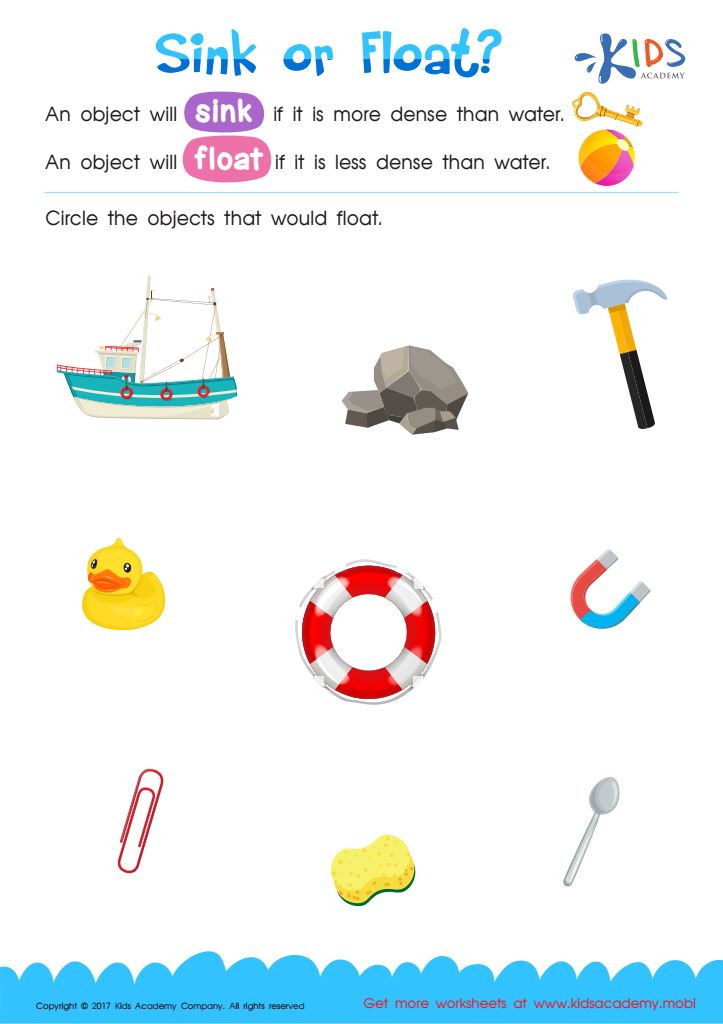
Sink or Float Printable
 Assign to My Students
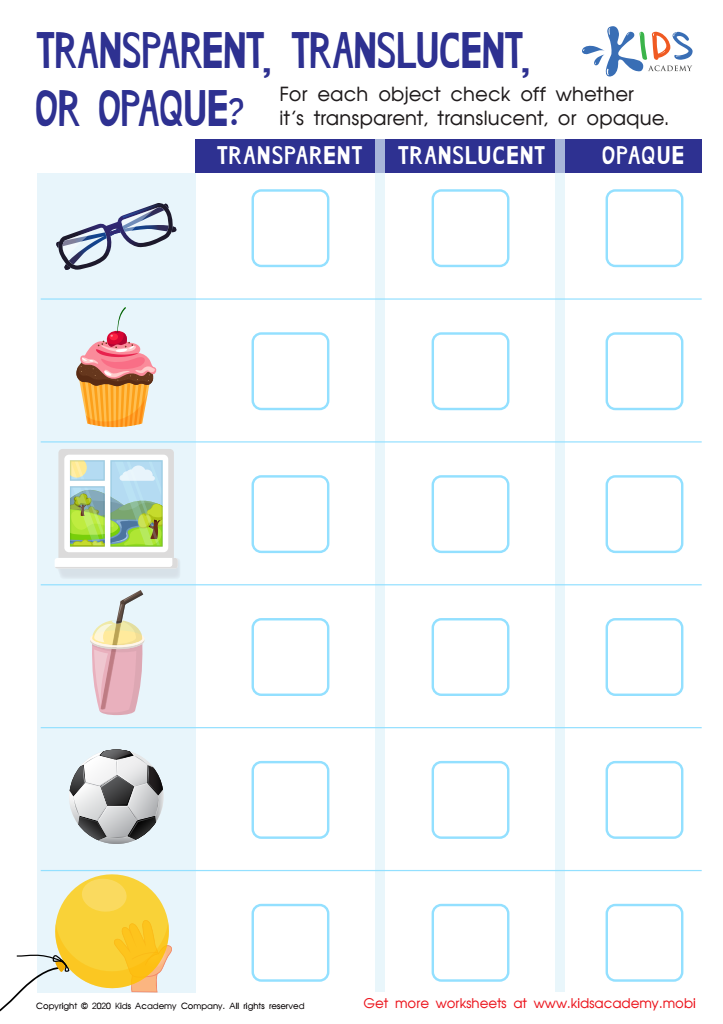
Transparent, Translucent, or Opaque Worksheet
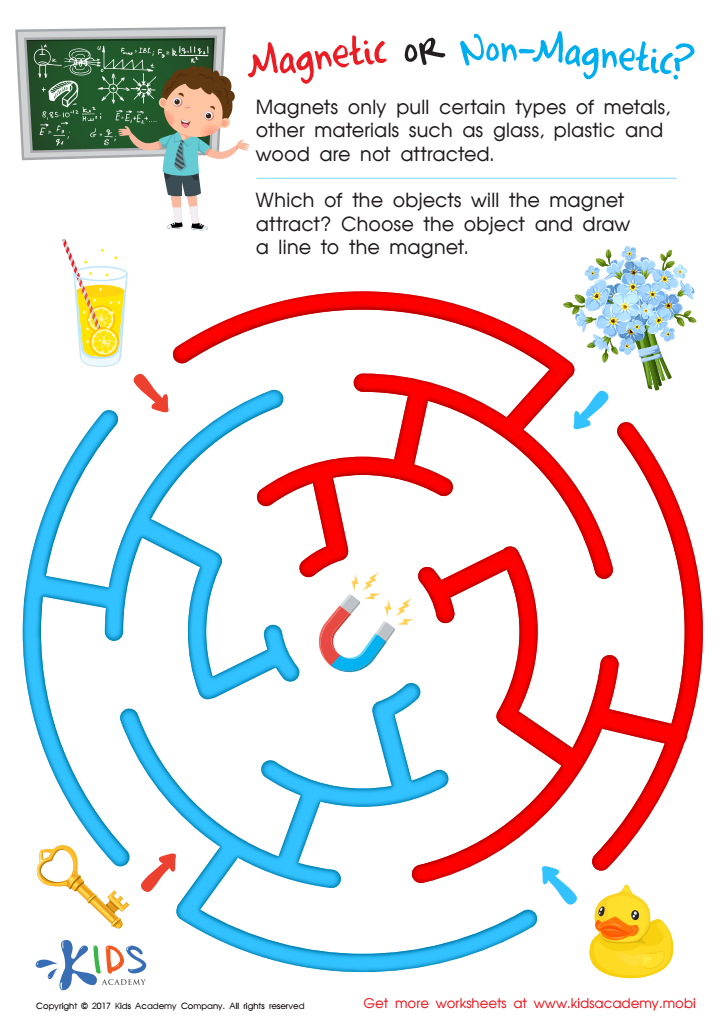
Magnetic or Non–Magnetic Worksheet








Categorizing objects is a foundational concept in Physical Science, and it plays a crucial role in the development of young children aged 6-8. Understanding how to categorize objects helps children make sense of the world around them by identifying similarities and differences among various items. This process promotes critical thinking and enhances observational skills as children learn to classify items based on their properties, such as size, shape, color, or material.
For parents and teachers, fostering this skill is essential as it lays the groundwork for more complex scientific concepts later on. When children categorize objects, they experiment with the idea of properties and classification, which aligns with introductory scientific methods. This early engagement with science leads to curiosity and a deeper understanding of the natural world.
Moreover, categorizing enhances language development as children learn new vocabulary to describe their findings. It also encourages collaboration and social skills when they categorize items in groups.
Ultimately, helping children grasp categorization in Physical Science supports overall cognitive development, instills a love for science, and encourages a mindset of inquiry and exploration—all of which are vital for their academic success and personal growth.







