Observational skills Physical Science Worksheets for Ages 6-8
4 filtered results
-
From - To
Unlock the power of keen observation with our "Observational Skills Physical Science Worksheets" designed for ages 6-8! These engaging worksheets from Kids Academy help young learners develop critical thinking and scientific inquiry skills by encouraging them to observe, describe, and record what they see. Covering essential physical science topics, each activity fosters a curiosity-driven approach, allowing children to explore the wonders of the natural world. Perfect for both classrooms and homeschooling, our carefully crafted worksheets aim to provide a solid foundation in science through fun and interactive learning experiences. Start your child's journey of discovery today!
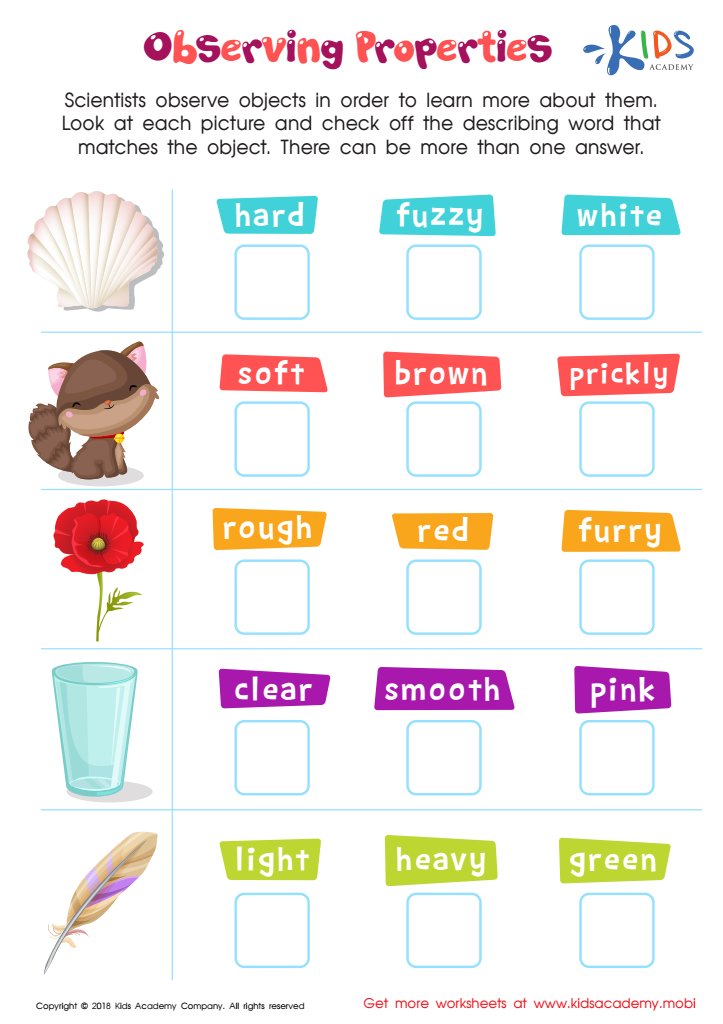
Observing Properties Worksheet
 Assign to My Students
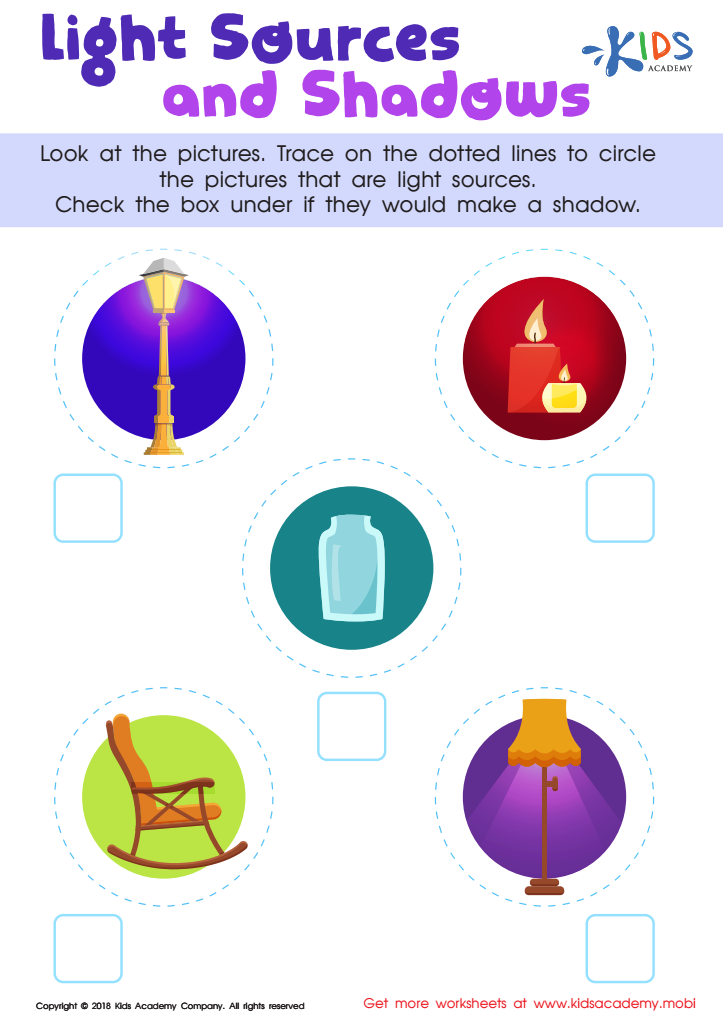
Light Sources and Shadows Worksheet
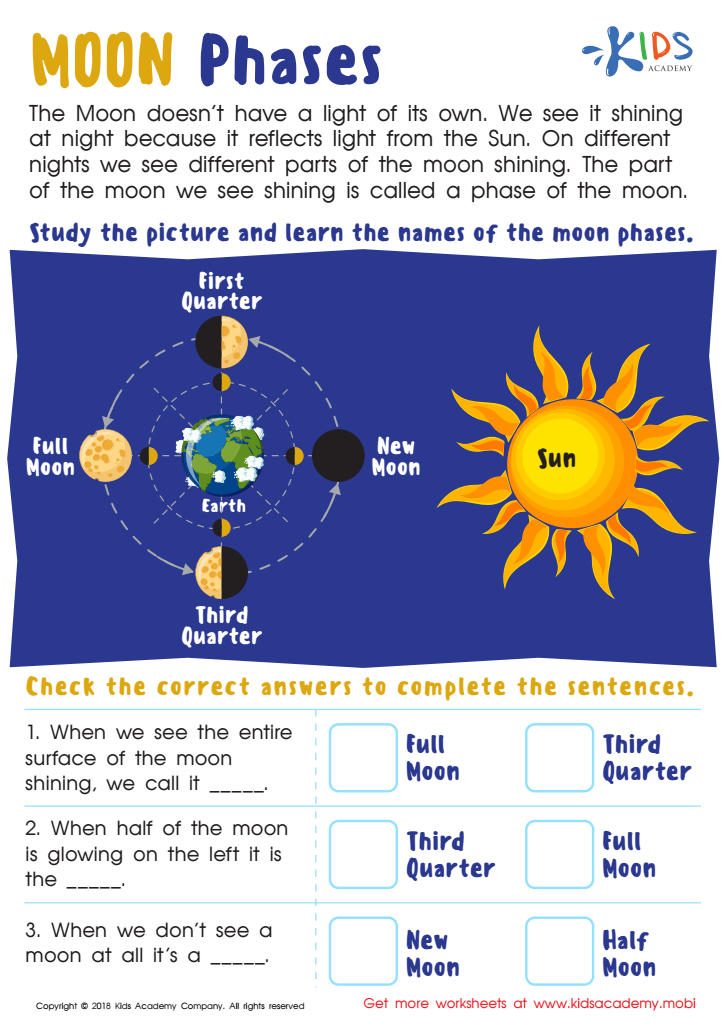
Moon Phases Worksheet
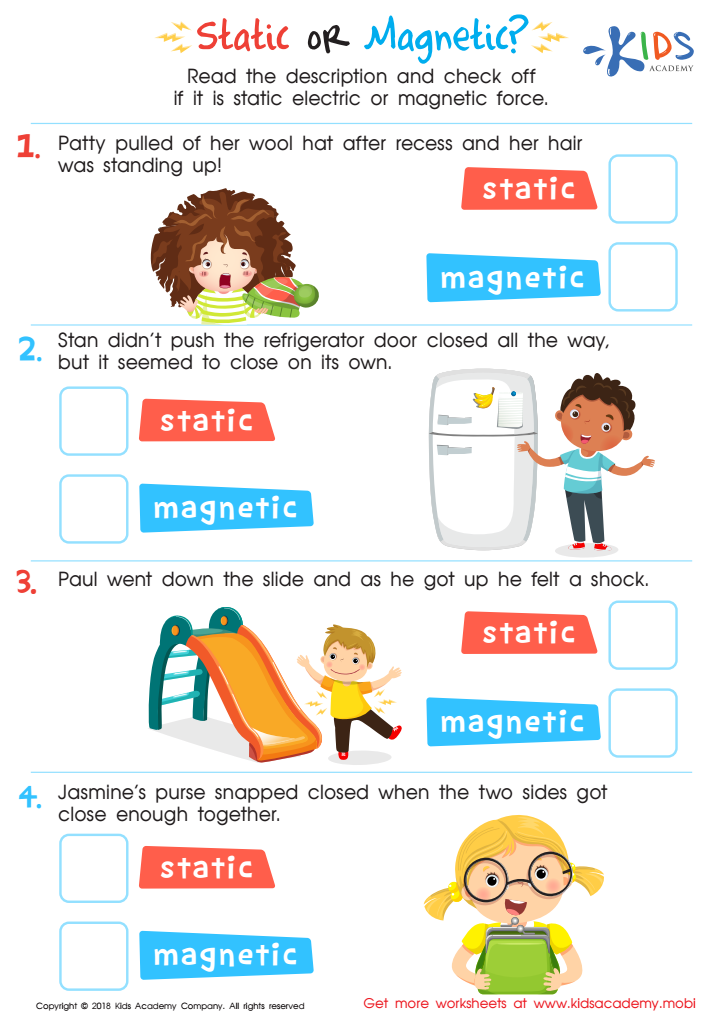
Static or Magnetic Printable Worksheet








Observational skills in physical science are vital for children ages 6-8 because they lay the foundation for lifelong learning and curiosity. At this formative age, children are naturally curious and inclined to explore their environment. Enhancing their observational skills ensures they can accurately perceive and describe the world around them, fostering critical thinking and attention to detail.
For parents, encouraging these skills means supporting their child in developing a keen sense for noticing and questioning everyday phenomena. This can lead to richer conversations, shared activities, and deeper connections as children discuss what they observe. It's also a stepping stone for future academic success—strong observational skills are the basis for effective scientific inquiry, aiding in subjects like math, reading, and, of course, science.
For teachers, honing these abilities is integral to successfully implementing a curriculum that meets educational standards and cultivates a hands-on approach to learning. Observational skills help students better understand scientific concepts by engaging directly with experiments and practice. Teachers who prioritize these skills see their students ask more insightful questions, make thoughtful predictions, and develop better problem-solving techniques.
In essence, parents and teachers caring about observational skills in physical science equip young children with invaluable tools for both academic success and an enriched understanding of the world.







