
Counting practice Plants and Animals Worksheets for Ages 6-8
3 filtered results
Difficulty Level
Grade
Age
-
From - To
Subject
Activity
Standards
Unlock the joy of learning with our "Counting Practice Plants and Animals Worksheets" designed for ages 6-8! These engaging worksheets combine science and math to help young learners effortlessly count while exploring the fascinating world of plants and animals. Each activity is thoughtfully crafted to boost counting skills and grasp early math concepts. Delight your child with vibrant illustrations and intriguing exercises that make counting fun and educational. Perfect for school or home, these worksheets are an excellent tool for fostering a love of learning in your little ones. Download now and watch their confidence grow!
Favorites
With answer key
Interactive
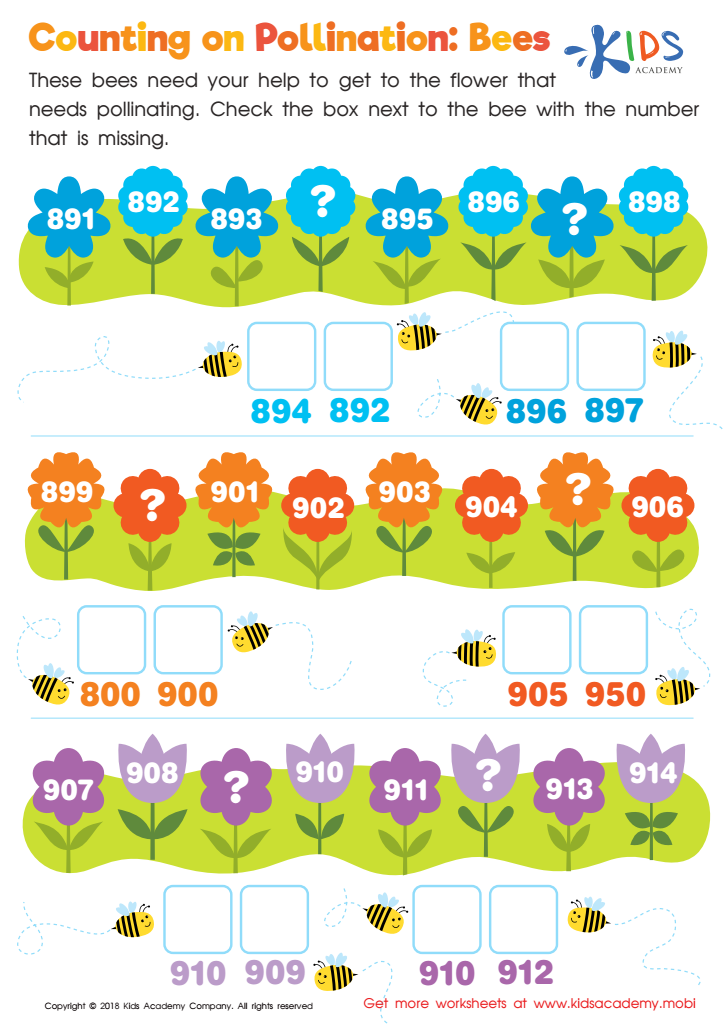
Counting on Pollination: Bees Worksheet
This downloadable worksheet helps kids improve their math skills while having fun - they'll help the bees pollinate the flowers by finding the missing number. It's an entertaining way to practice number patterns, sequences and number line skills, aiding in fast and efficient math computations.
 Assign to My Students
Counting on Pollination: Bees Worksheet
Worksheet











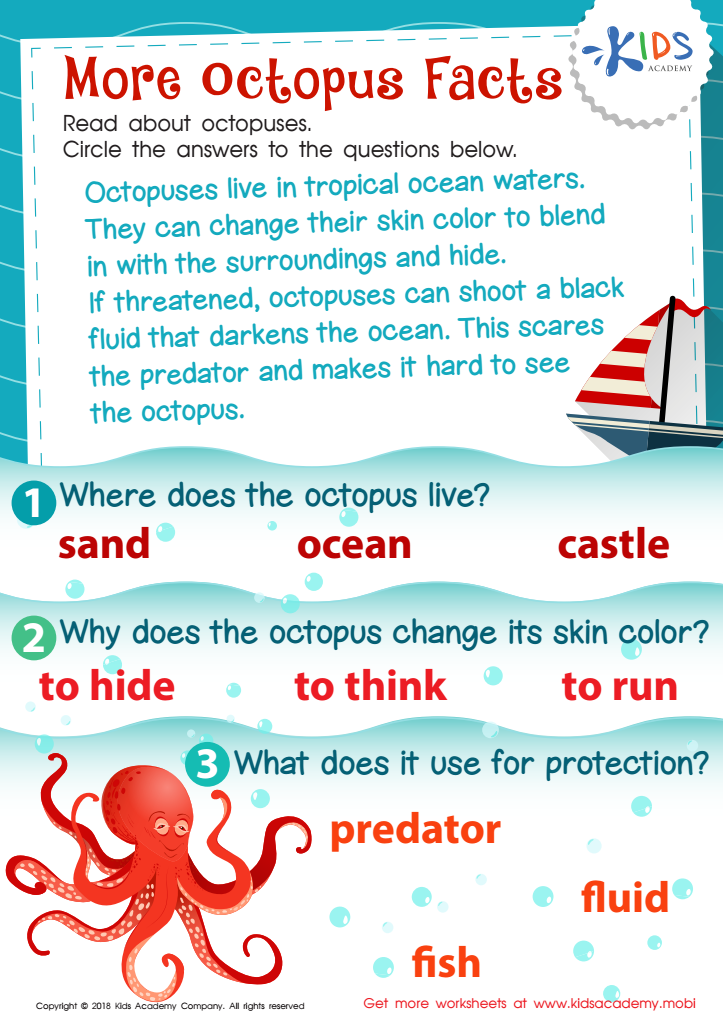
More Octopus Facts Worksheet
This worksheet will help your kids learn about the Octopus. Read the text carefully and have kids read with you. Now, ask them questions based on it and help them answer them by circling the right choices. Teaching your kids facts about animals will help them in the long run.
More Octopus Facts Worksheet
Worksheet
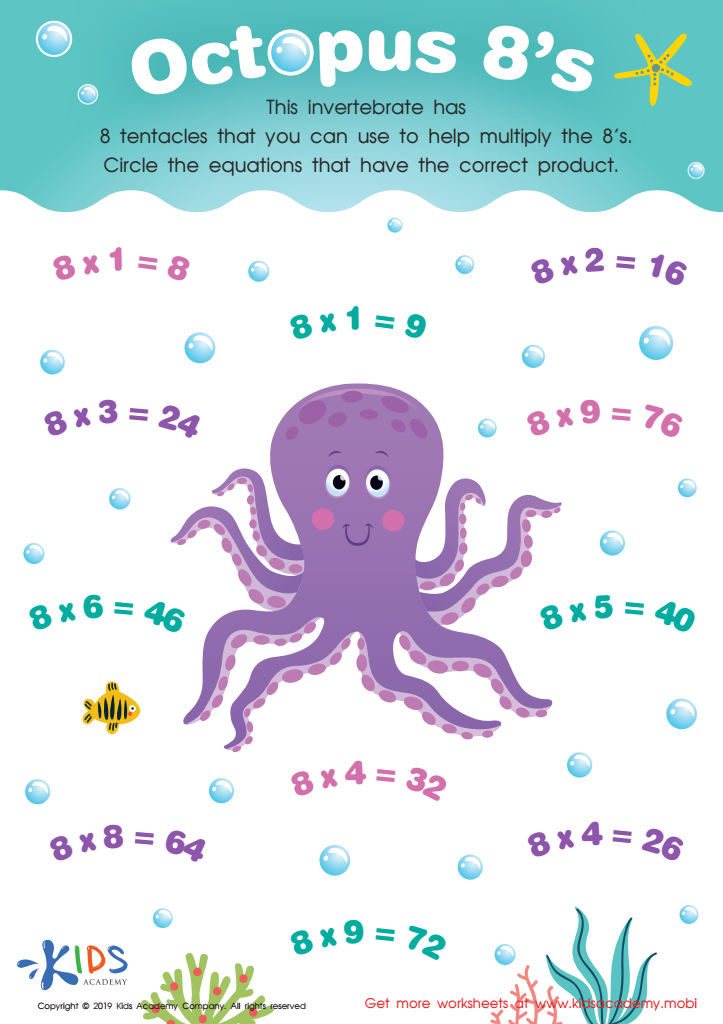
Octopus 8’s Worksheet
Can your child identify the octopus in the worksheet? It's an invertebrate with 8 tentacles. Have your child circle the equations with the correct products, and see if they can tell you some other features of the octopus too.
Octopus 8’s Worksheet
Worksheet
Join Kids Academy for Free
Who is primarily going to use this learning content?







Counting practice using themes like plants and animals is essential for children aged 6-8 because it blends learning with their natural curiosity and love for the world around them. Firstly, this approach makes mathematics relevant and fun, helping to capture their interest more effectively than abstract numbers alone. By incorporating counting exercises with familiar themes like plants and animals, children can smoothly build a strong foundation in numeracy.
Harnessing these themes also supports cross-curricular learning, linking math with science and nature. As children count animal legs, petals of flowers, or leaves on a tree, they simultaneously learn about biology and ecology, broadening their knowledge base and critical thinking skills.
Furthermore, such activities cater to various learning styles — visual, auditory, and kinesthetic — ensuring all children can engage meaningfully. For instance, counting beans can turnaround into planting pinto seeds, or counting fish toys could be aligned with swimming psychology activity.
Psychologically, when children complete engaging tasks with hands-on materials, they achieve a sense of accomplishment that boosts their confidence and foster resilience.
Lastly, regular practice nurtures immediate benefits and long-term repercussions of counting fluently for advanced math vital to problem-solving in school and life scenarios. Thus, it's crucial for teachers and parents to embrace playful counting practices integrating plants and animals.








