Weather identification Weather Worksheets for Ages 6-8
4 filtered results
-
From - To
Engage your 6-8-year-olds with our engaging Weather Identification Worksheets! Designed to make learning exciting, these worksheets help children recognize and understand different weather conditions. Each activity promotes observation and critical thinking skills as kids identify sunny, rainy, snowy, and windy weather. Vibrant illustrations and student-friendly prompts ensure an enjoyable experience that supports science curriculum goals. Ideal for classroom or home use, our printable worksheets offer a foundation for young learners to explore meteorology. Enhance your child’s education with our fun and educational weather activities today! Visit our website for a wide range of child-friendly learning resources.
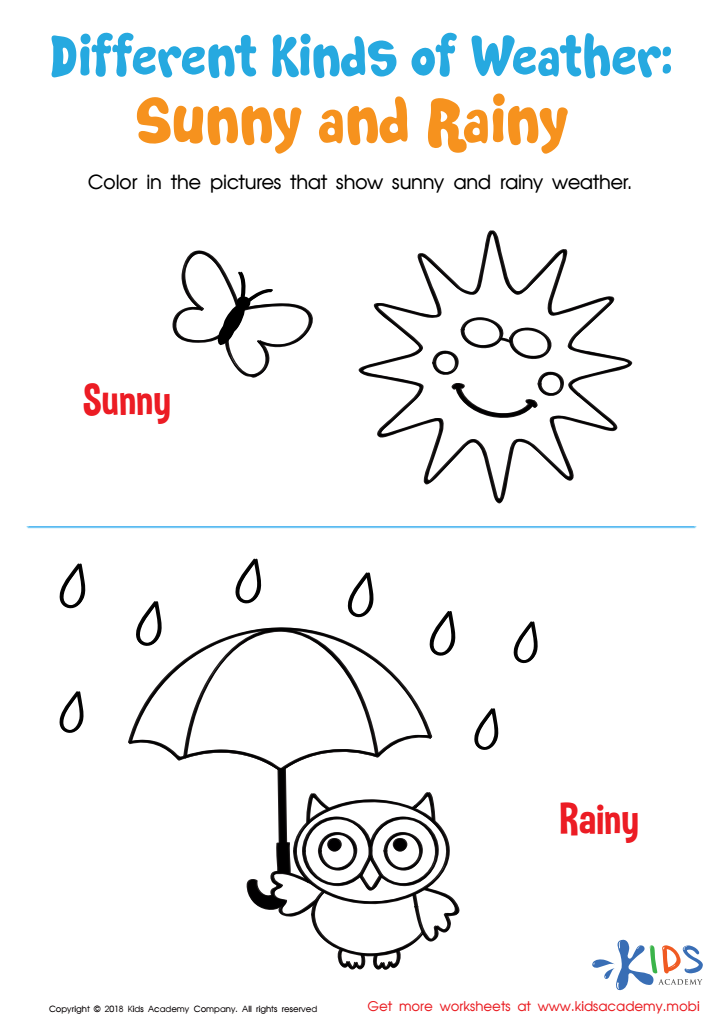
Different Kinds of Weather: Sunny and Rainy Worksheet
 Assign to My Students
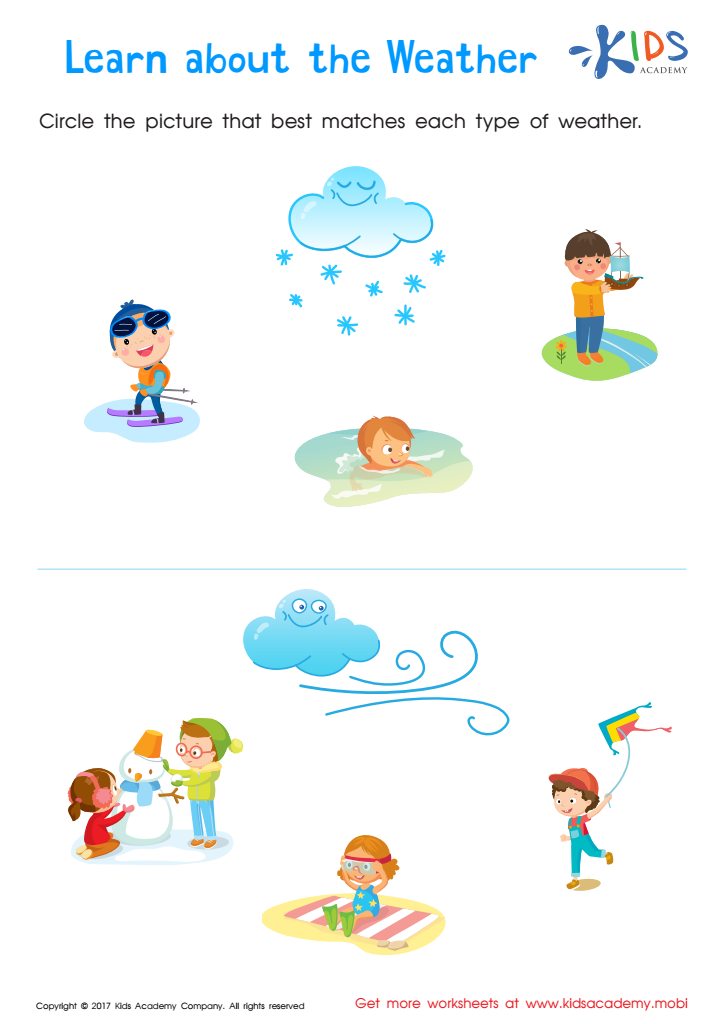
About the Weather Printable
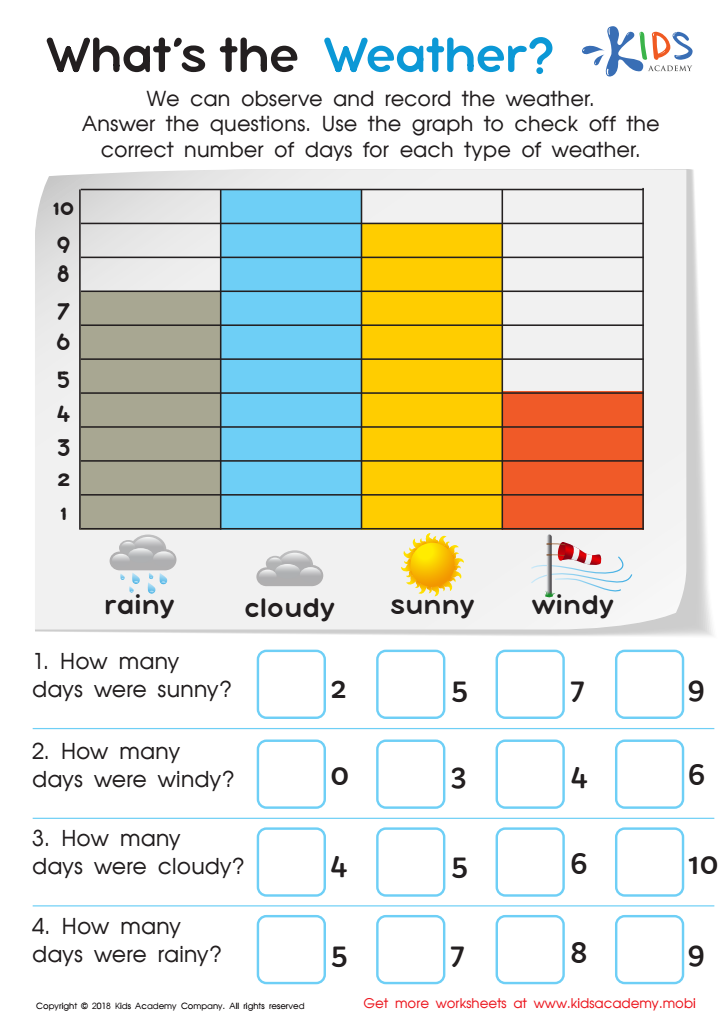
What's the Weather? Worksheet
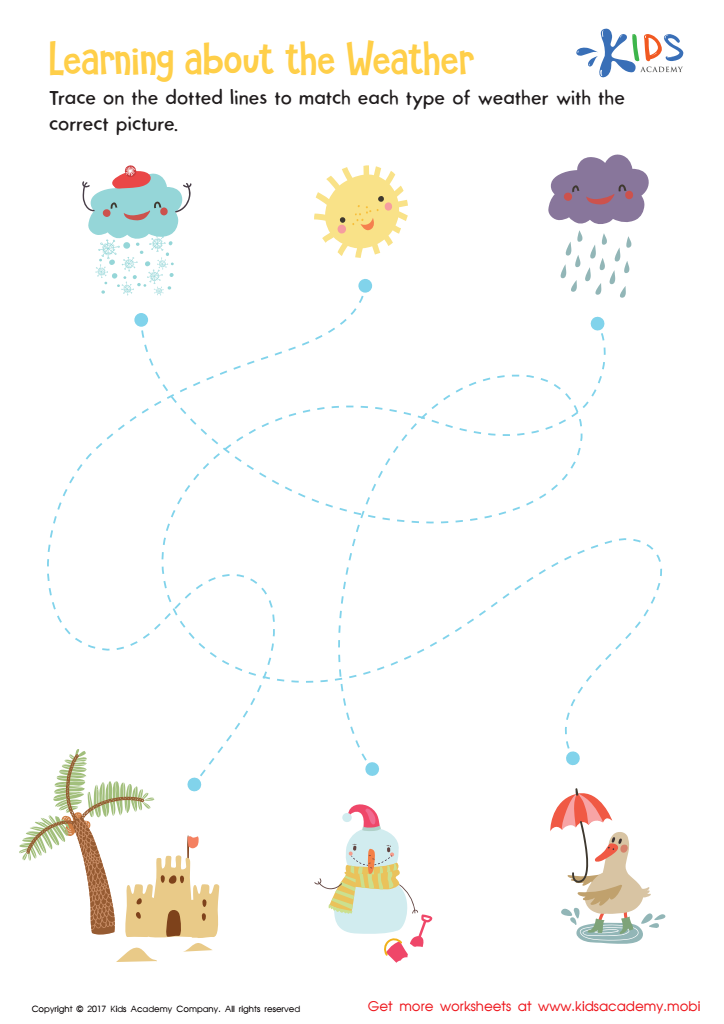








Parents and teachers should care about weather identification for children ages 6-8 because it is a critical component of early scientific education and promotes safety and awareness. Teaching children about different weather patterns helps them understand the world around them, fostering curiosity and inquiry-based learning. Weather education catalyzes discussions on broader topics such as climate change, environmental stewardship, and geography, encouraging children to think critically about their environment.
Furthermore, weather identification skills are essential for personal safety. At a young age, children learn how to dress appropriately for the weather, plan outdoor activities wisely, and respond to weather emergencies like thunderstorms, tornadoes, and heavy snow. Understanding weather signals and proper safety measures can help prevent accidents and instill a sense of preparedness.
Integrating weather education into the curriculum supports the development of key academic skills, including observation, data collection, and analysis. Activities like tracking daily weather, comparing temperatures, and recognizing cloud formations can enhance their mathematical, analytical, and cognitive abilities. Thus, weather education provides a practical, engaging, and interdisciplinary approach, making it a valuable part of early education for developing scientifically literate, safe, and environmentally conscious individuals.







