Vocabulary development History Worksheets for Ages 6-8
3 filtered results
-
From - To
Enhance your child's learning experience with our Vocabulary Development History Worksheets designed specifically for ages 6-8. These engaging worksheets will help young learners build their vocabulary skills while exploring historical concepts. Each activity introduces key terms in a fun and interactive way, encouraging children to connect words with their meanings. By integrating history and vocabulary development, children enhance reading comprehension and critical thinking skills. Ideal for classroom use or home learning, our printable worksheets make history exciting and accessible. Spark curiosity and foster a love for learning with our diverse range of vocabulary exercises today!
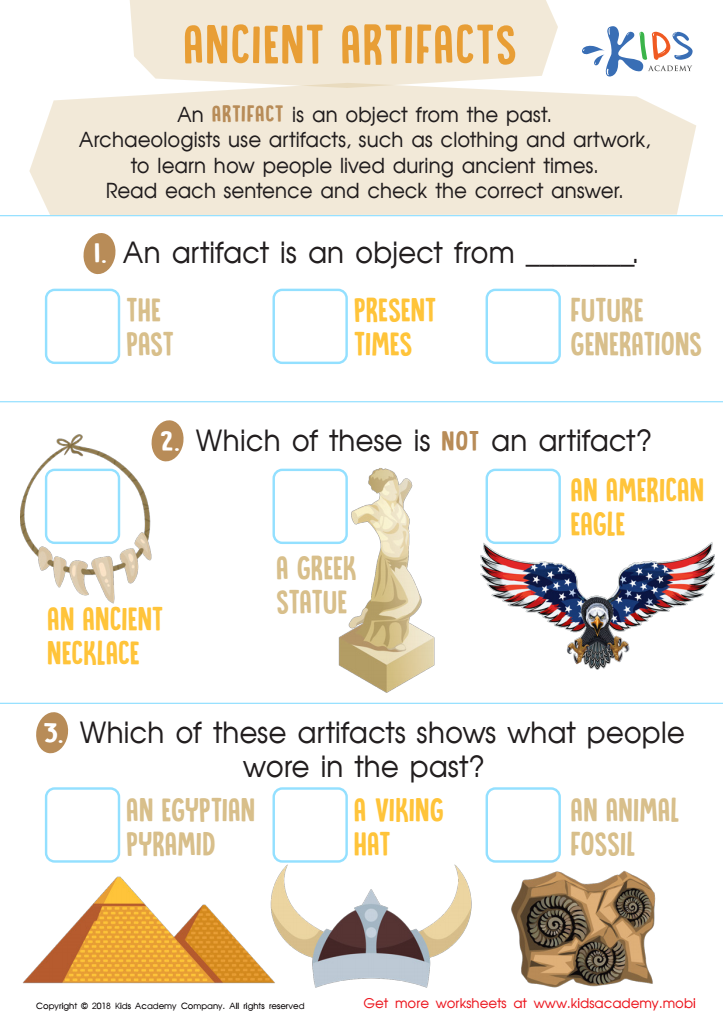
Ancient Artifacts Worksheet
 Assign to My Students
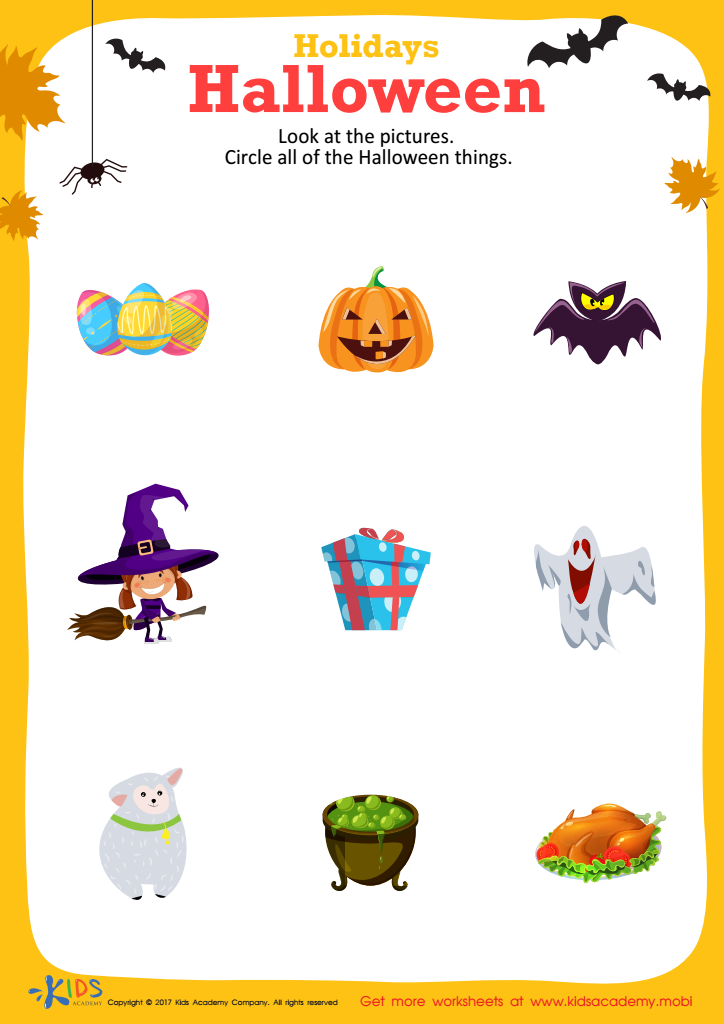
Halloween Holiday Worksheet
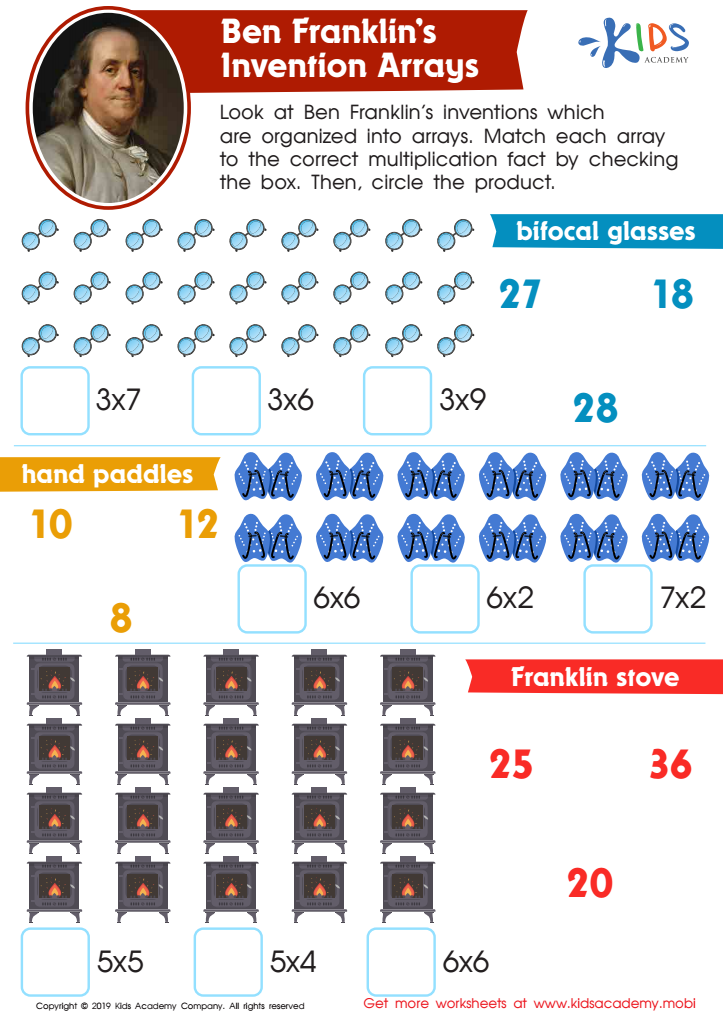
Ben Franklin’s Invention Arrays Worksheet








Vocabulary development for children aged 6-8 is critical as it lays the foundation for literacy and communication skills. At this developmental stage, children are transitioning from learning to read to reading to learn, making an expansive vocabulary essential for academic success. Understanding vocabulary history—how words have evolved and how they relate to one another—enhances this process by connecting new words to familiar concepts, improving comprehension and retention.
Parents and teachers should recognize that vocabulary is not static; it grows through exposure and usage. By engaging children in conversations, reading diverse texts, and introducing rich language, adults can significantly influence word acquisition. Historical context can make vocabulary learning more engaging, helping students to understand the origins of words, variations in usage, and their meanings.
Additionally, strong vocabulary skills contribute to effective communication, critical thinking, and the ability to express oneself clearly. When children articulate thoughts and feelings with precision, it fosters self-confidence and social interaction. Ultimately, investing in vocabulary development during these formative years supports children’s lifelong learning and communication, setting them on a path to success both in and out of the classroom.








