Color Identification Social Studies Worksheets for Ages 6-8
3 filtered results
-
From - To
Discover our engaging Color Identification Social Studies Worksheets designed specifically for children aged 6-8! These interactive worksheets not only enhance color recognition skills but also incorporate essential social studies concepts, fostering a holistic learning experience. Young learners will explore various cultural themes and environments through vibrant visuals and fun activities, making learning enjoyable and memorable. Perfectly crafted to fit in with classroom curriculums or home education, our worksheets encourage creativity and critical thinking while reinforcing essential knowledge about colors and their significance across cultures. Download today and support your child’s growth with our colorful, educational resources!

Fireman Worksheet
 Assign to My Students
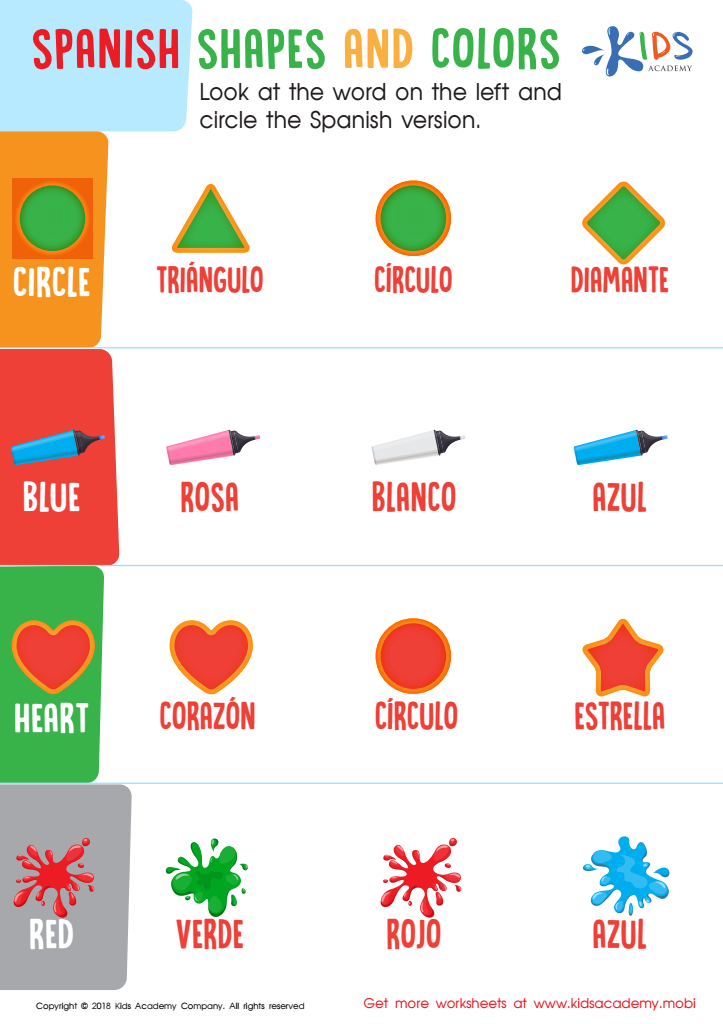
Spanish Shapes and Colors Worksheet

Playground Worksheet








Color identification is a fundamental aspect of development for children ages 6-8, playing a crucial role not only in their cognitive growth but also in social studies education. Understanding colors enhances children’s ability to categorize objects and express themselves. Notably, recognizing colors can aid in discussions about diversity and inclusion, as children learn to appreciate various cultures that often use color symbolism in their flags, clothing, and art.
In social studies, color identification enables children to engage with maps, charts, and graphics more effectively. For example, using colors to differentiate regions or demographics can make complex information more accessible and relatable. Strategies that incorporate color recognition can stimulate curiosity, drawing students into an exploration of their own communities and the wider world.
Moreover, incorporating color into lessons can foster teamwork through collaborative projects that could involve creating posters or presentations about different cultures. This active participation promotes essential social skills such as communication and cooperation. By emphasizing color identification within social studies, parents and teachers support holistic educational experiences that nurture awareness, creativity, and understanding of social connections among children, laying a foundation for future learning experiences in a diverse and colorful world.








