
Matching skills Social Studies Worksheets for Ages 6-8
3 filtered results
Difficulty Level
Grade
Age
-
From - To
Subject
Activity
Standards
Enhance your child's learning experience with our Matching Skills Social Studies Worksheets designed specifically for ages 6-8. These engaging worksheets help young learners develop essential matching skills while exploring important social studies concepts. Fun and interactive, they encourage kids to connect ideas, terms, images, and more, reinforcing their understanding of communities, cultures, and geography. Perfect for home or classroom use, our printable resources cater to various learning styles, ensuring that each child finds joy in learning. Download today and watch your child's confidence and knowledge grow as they master matching skills in social studies!
Favorites
With answer key
Interactive
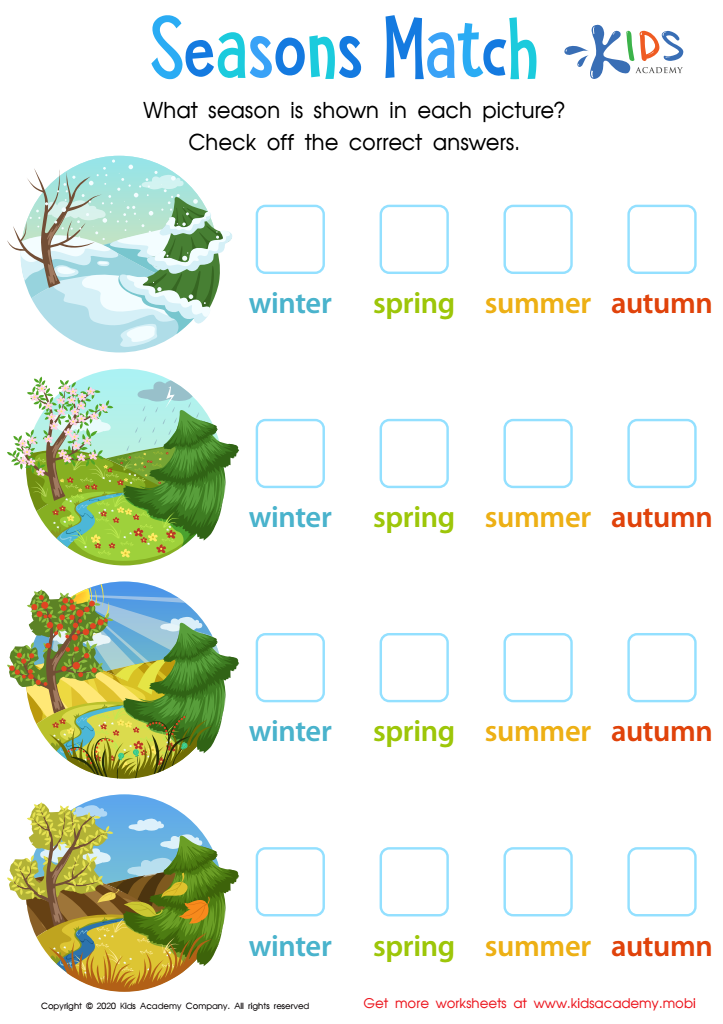
Seasons Match Worksheet
Preschoolers should begin learning about seasons and weather early. Most can tell what season it is by upcoming holidays or school activities. Test their knowledge with a printable PDF worksheet. It asks them to match each image with its corresponding season!
Seasons Match Worksheet
Worksheet
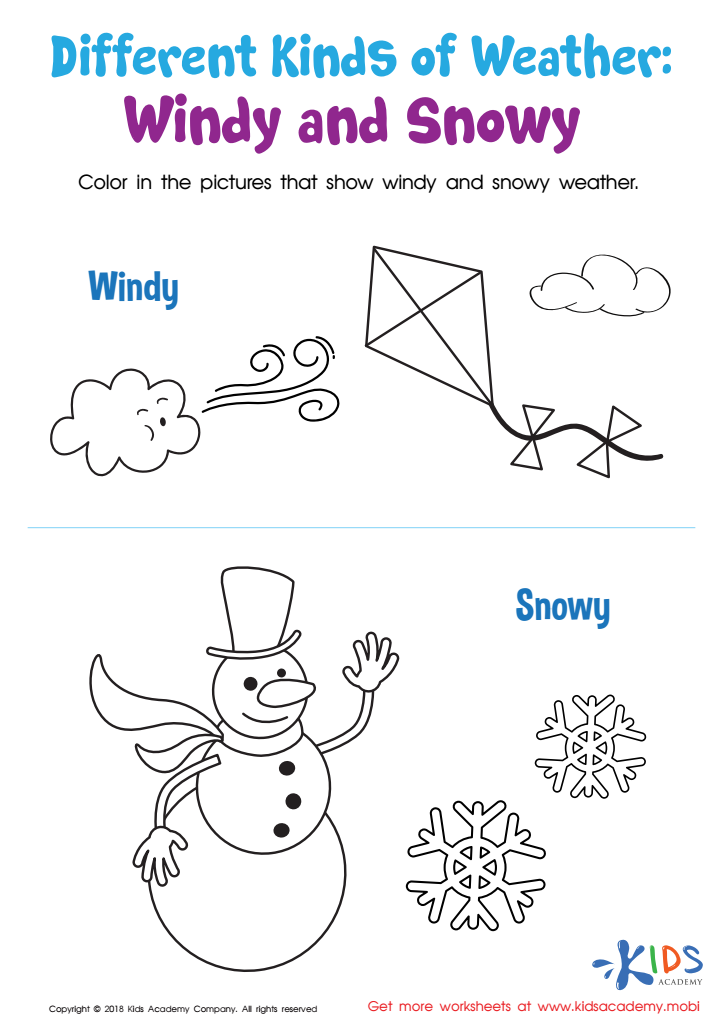
Different Kinds of Weather: Windy and Snowy Worksheet
Invite your little learner to practice their fine motor skills and learn about nature with this fun and charming PDF worksheet! Reinforce weather patterns and examine their environment as they color, giving them a foundation for understanding how weather affects them. No matter the weather, your learner will have a blast!
Download (PDF)
 Assign to My Students
Assign to My Students
Different Kinds of Weather: Windy and Snowy Worksheet
Worksheet
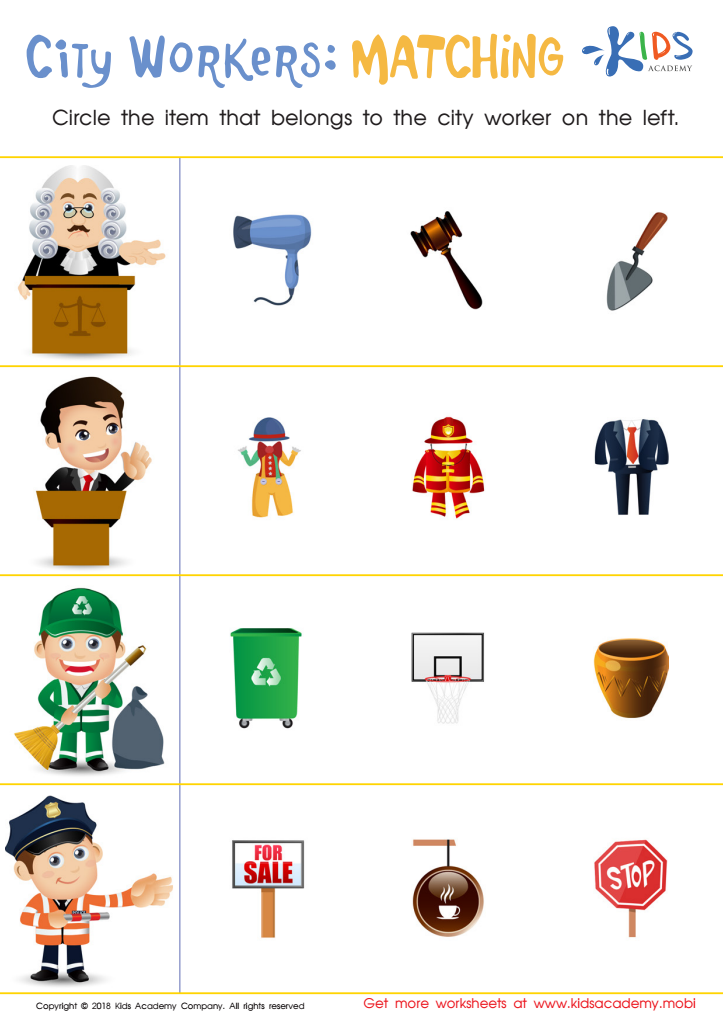
City Workers: Matching Worksheet
Examine the worksheet with your kid. Identify the individuals on the left and their jobs. Have your child circle the correct items on the right that pertain to the city workers. Help your child learn about city workers with this activity.
City Workers: Matching Worksheet
Worksheet
Join Kids Academy for Free
Who is primarily going to use this learning content?




.jpg)


Parents and teachers should prioritize matching skills in Social Studies for children ages 6-8 because these foundational competencies promote critical thinking, enhance learning engagement, and support interpersonal developments. At this stage, children are beginning to understand their communities, cultures, and history. Building matching skills—connecting terms, concepts, and images—helps students better grasp complex ideas.
Matching skills enhance cognitive development by encouraging children to identify similarities and differences, fostering analytical thinking. For instance, matching maps to places, events to time periods, or significant figures to their contributions creates a vivid context in which they can visualize history and geography. This concrete understanding lays the groundwork for deeper learning as they progress.
Moreover, engaging children in matching activities cultivates their social skills. Collaborative efforts, such as group projects or games, encourage teamwork, communication, and respect for diverse perspectives. It transforms learning from a solitary task into a shared experience.
Ultimately, proficient matching skills in Social Studies inspire curiosity, promote perseverance, and instill a desire to learn—qualities necessary for academic success and lifelong learning. Thus, parents and teachers play a crucial role in nurturing these skills, fostering not just knowledge but well-rounded, informed citizens.








