Cursive writing practice Cursive Writing Worksheets for Ages 6-8
21 filtered results
-
From - To
Introduce your child to the joy of cursive writing with our engaging Cursive Writing Worksheets, tailored specifically for ages 6-8! Designed to enhance fine motor skills and reinforce letter formation, these worksheets provide a fun and interactive way for young learners to practice their cursive handwriting. Each worksheet features a variety of exercises, including tracing and freehand writing, ensuring children master both lowercase and uppercase letters. Perfect for home or classroom use, our resources foster confidence and creativity in writing. Cultivate your child’s love for cursive writing today and watch their skills flourish as they express themselves fluently on paper!
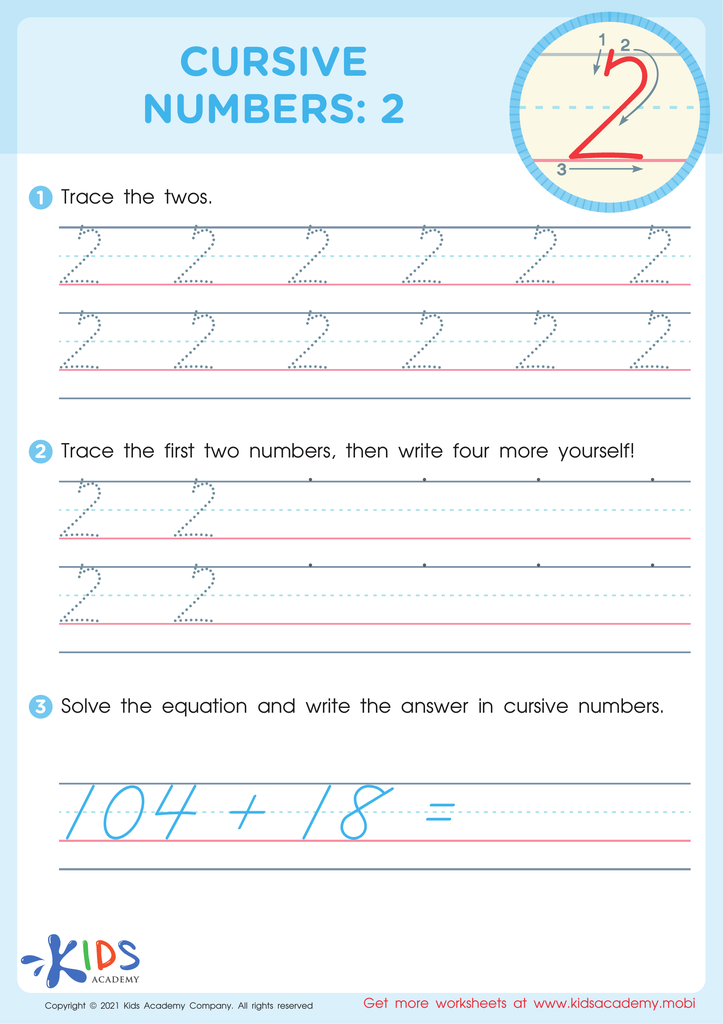
Cursive Numbers: 2 Worksheet
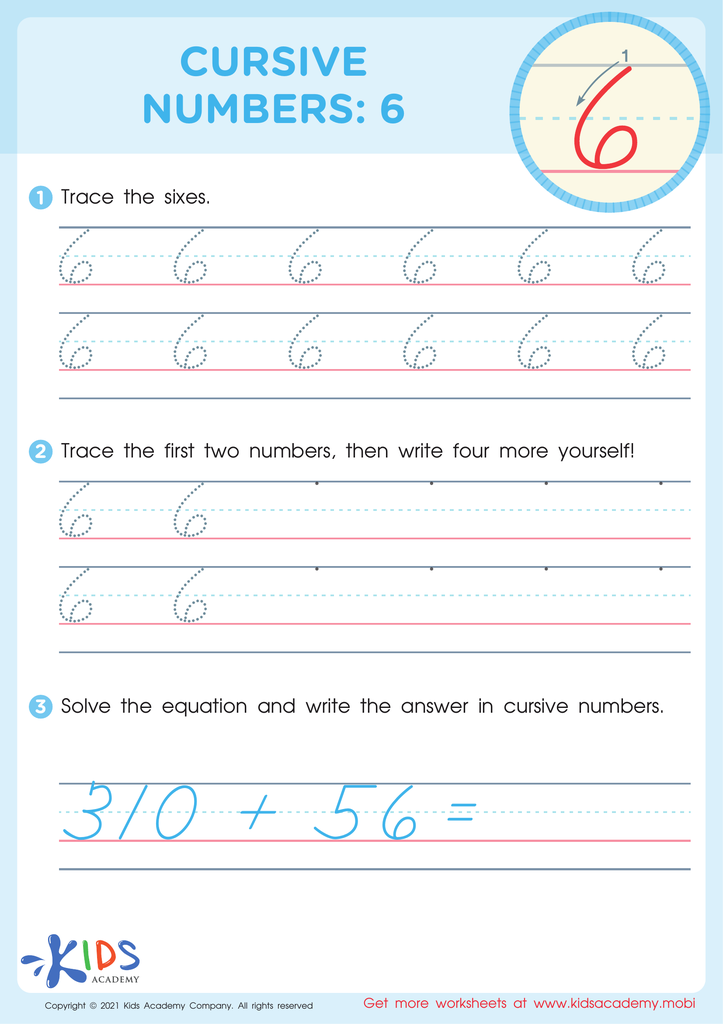
Cursive Numbers: 6 Worksheet
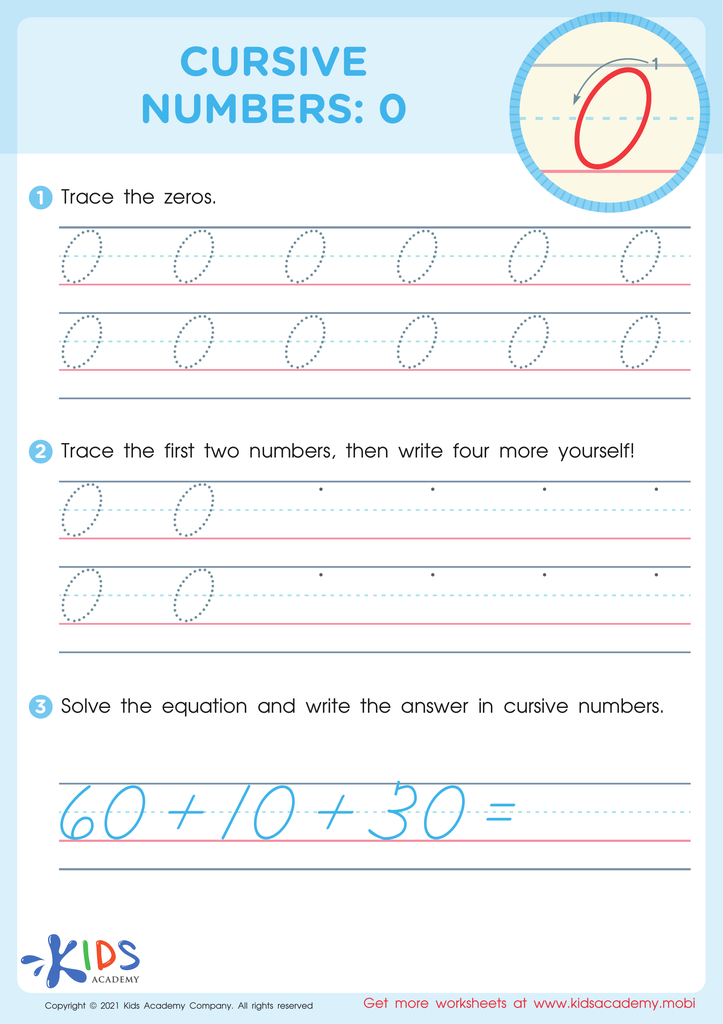
Cursive Numbers: 0 Worksheet
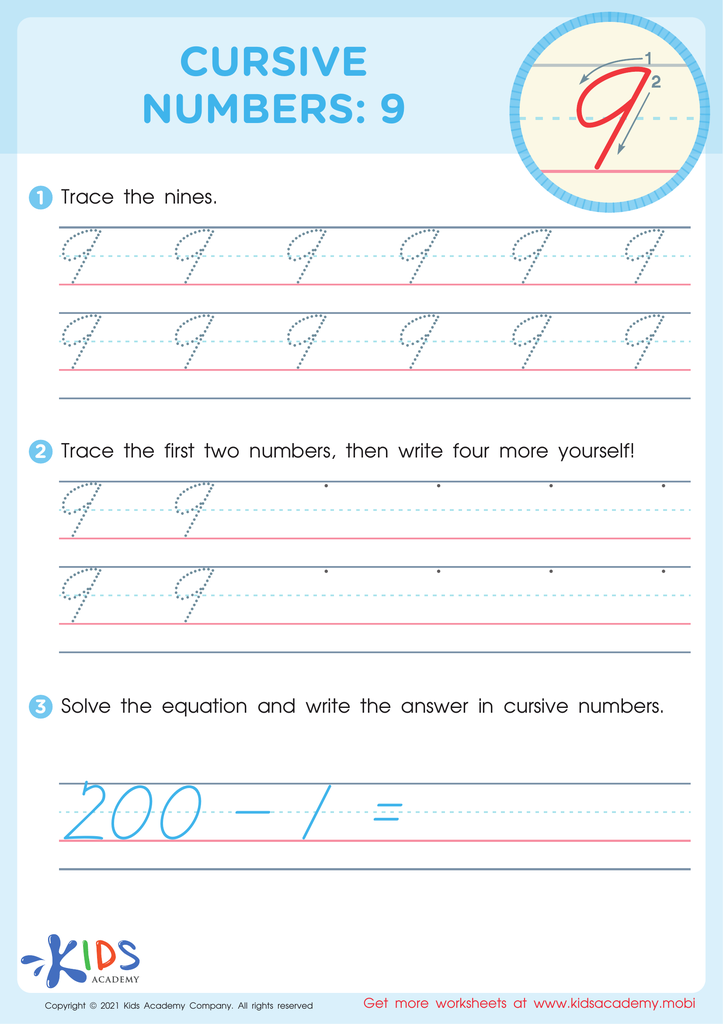
Cursive Numbers: 9 Worksheet
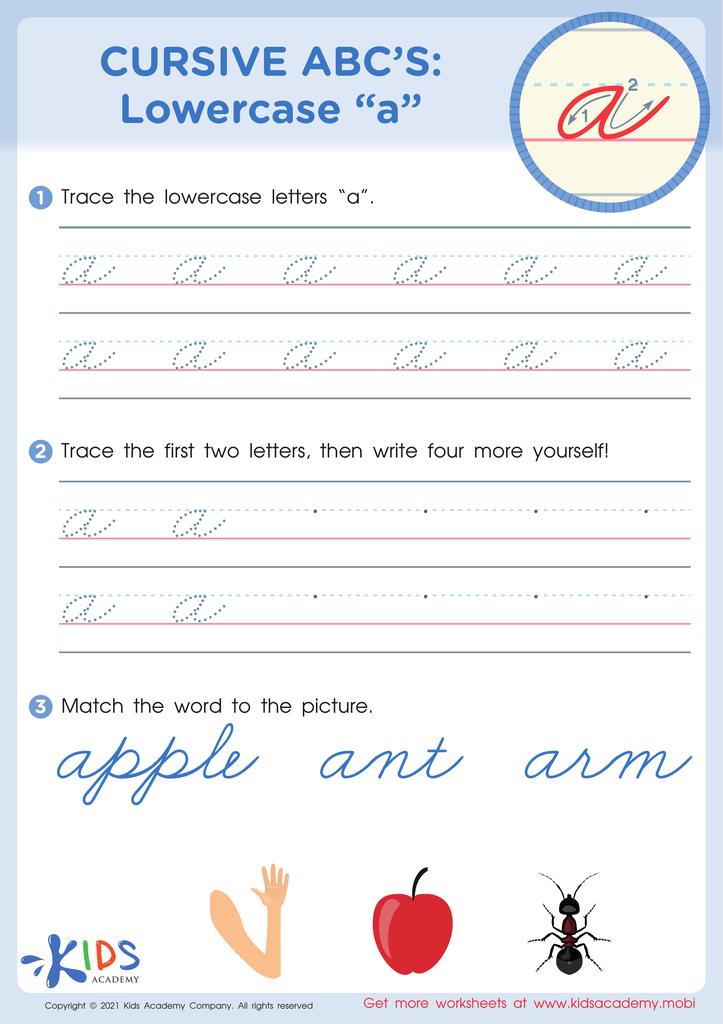
Cursive ABCs: Lowercase a
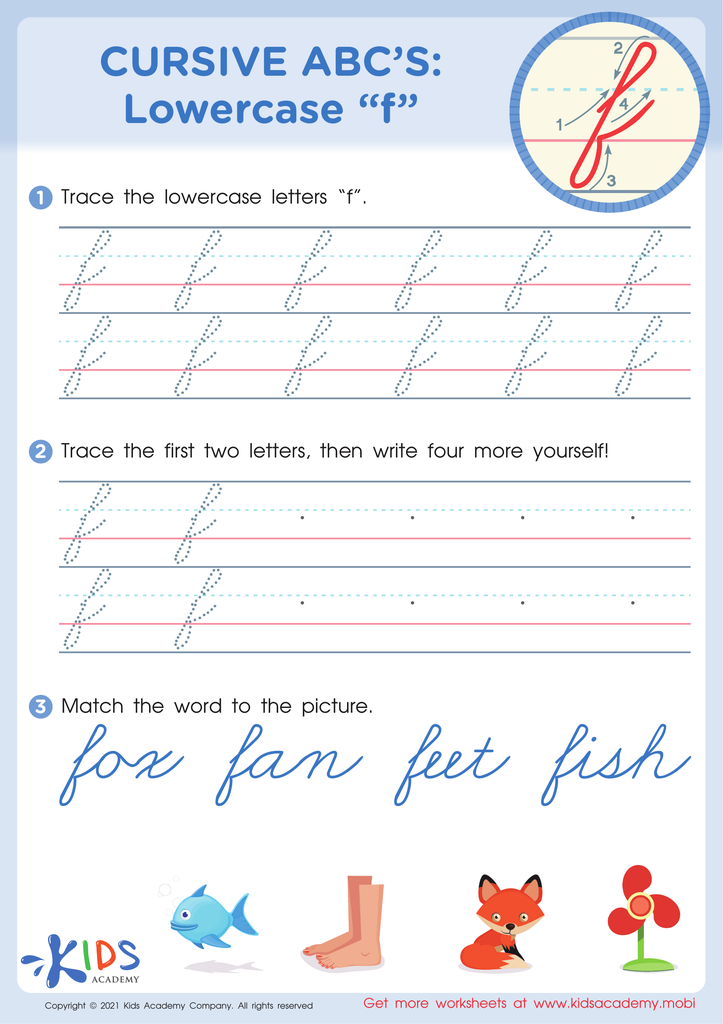
Cursive ABCs: Lowercase f
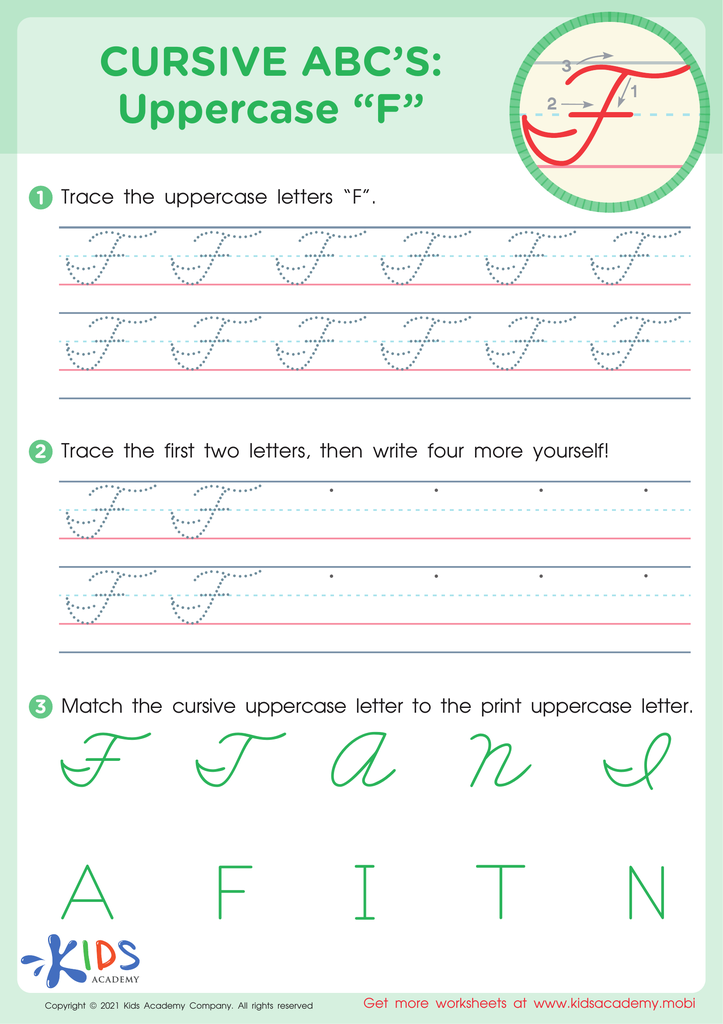
Cursive ABCs: Uppercase F
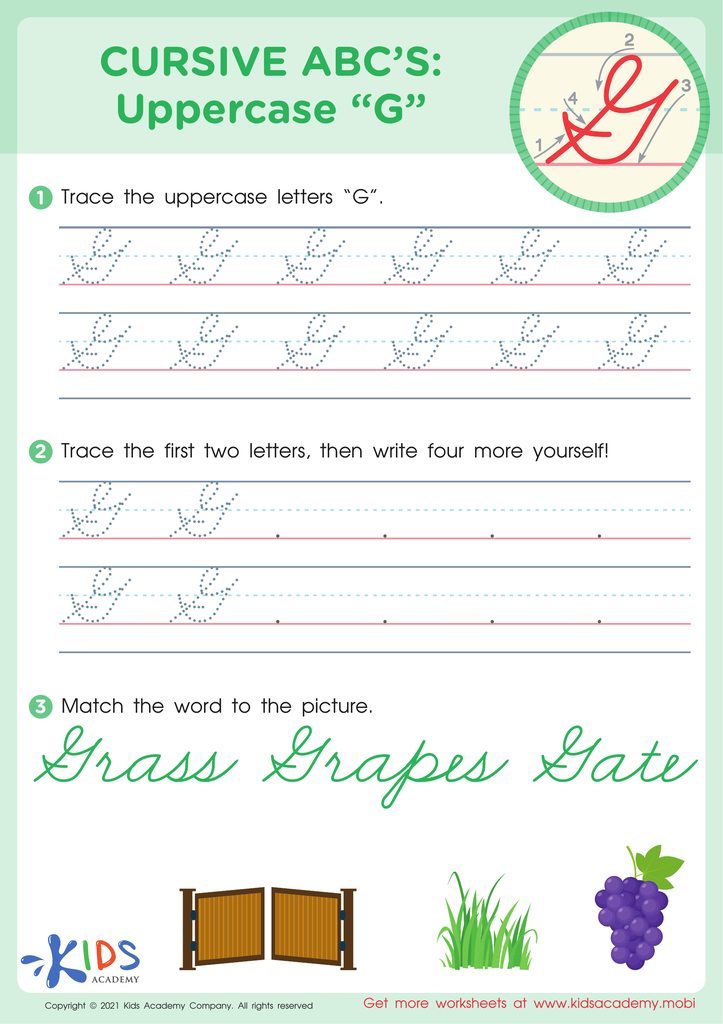
Cursive ABCs: Uppercase G
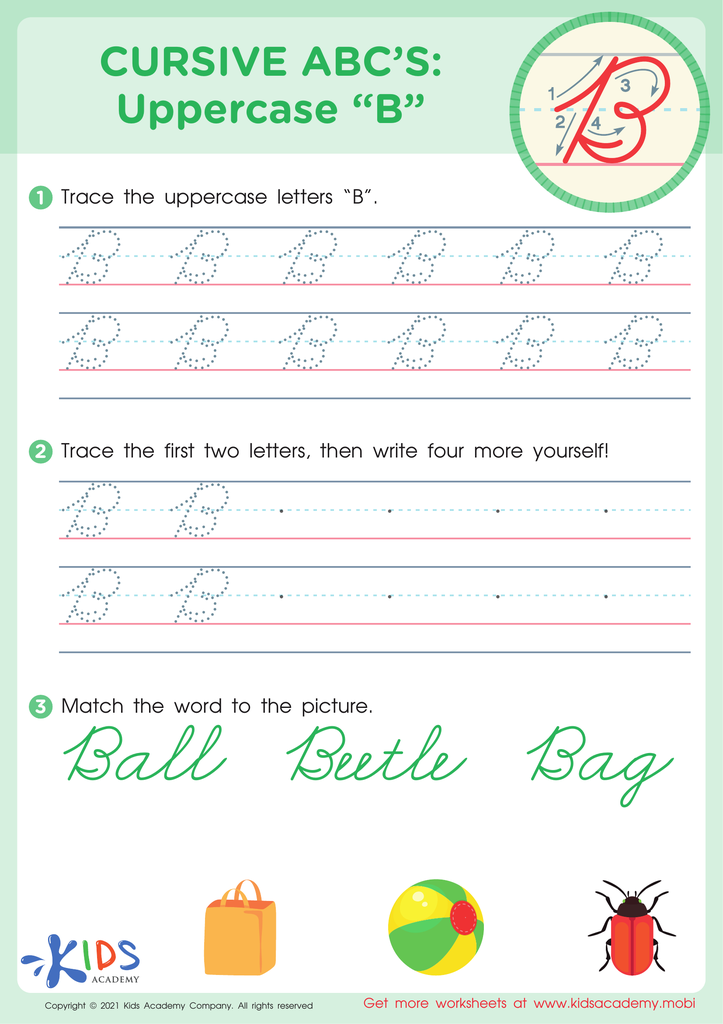
Cursive ABCs: Uppercase B
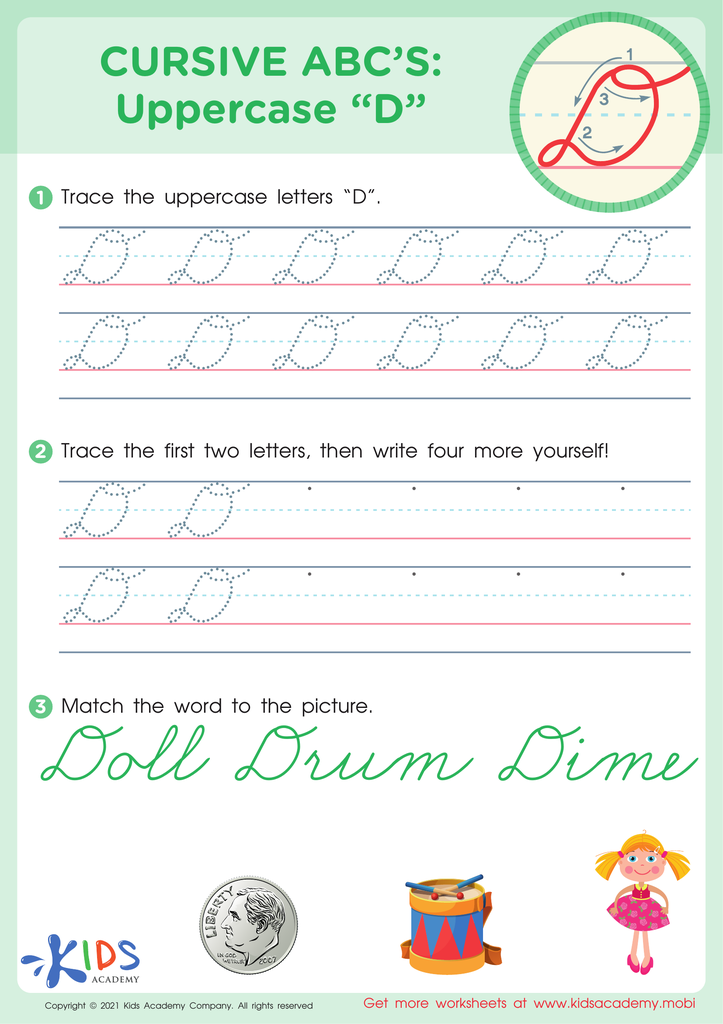
Cursive ABCs: Uppercase D
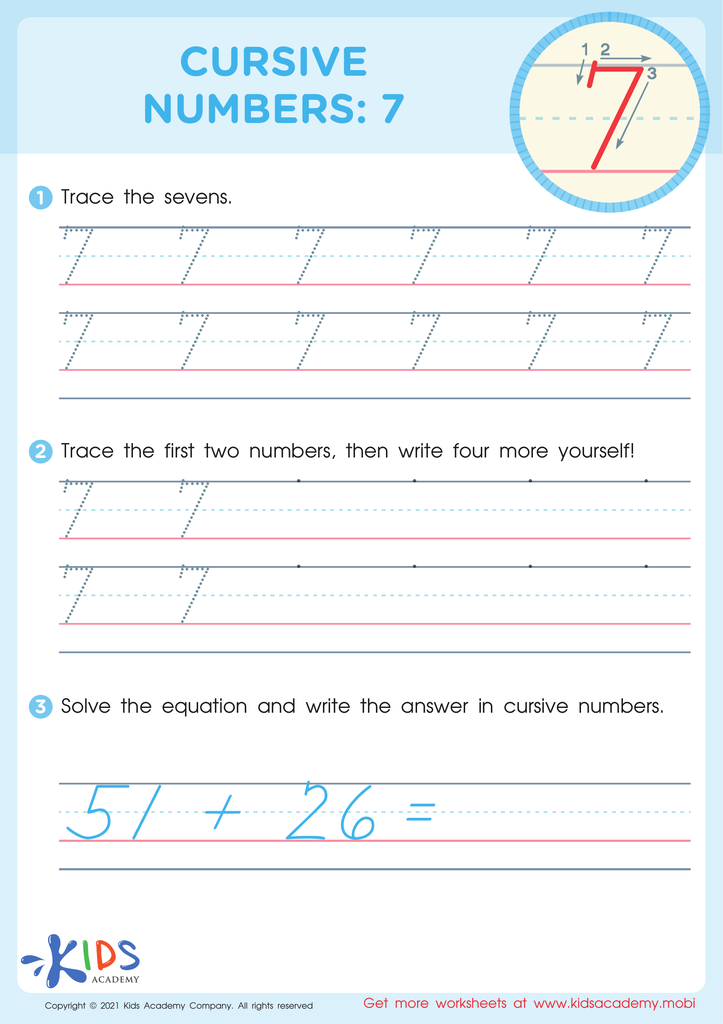
Cursive Numbers: 7 Worksheet
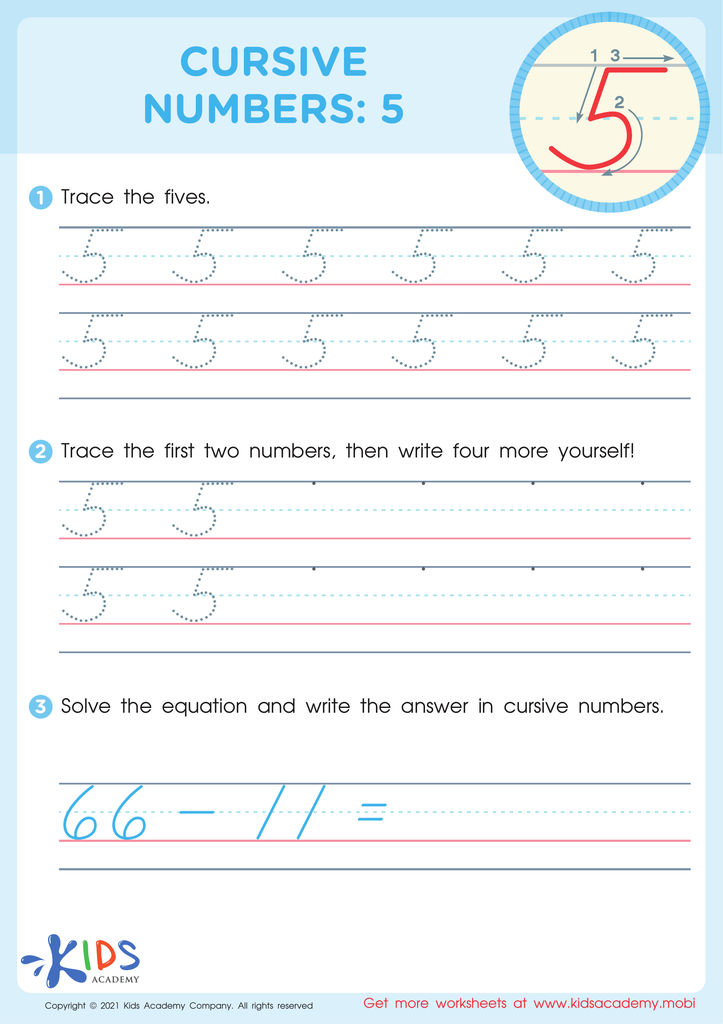
Cursive Numbers: 5 Worksheet
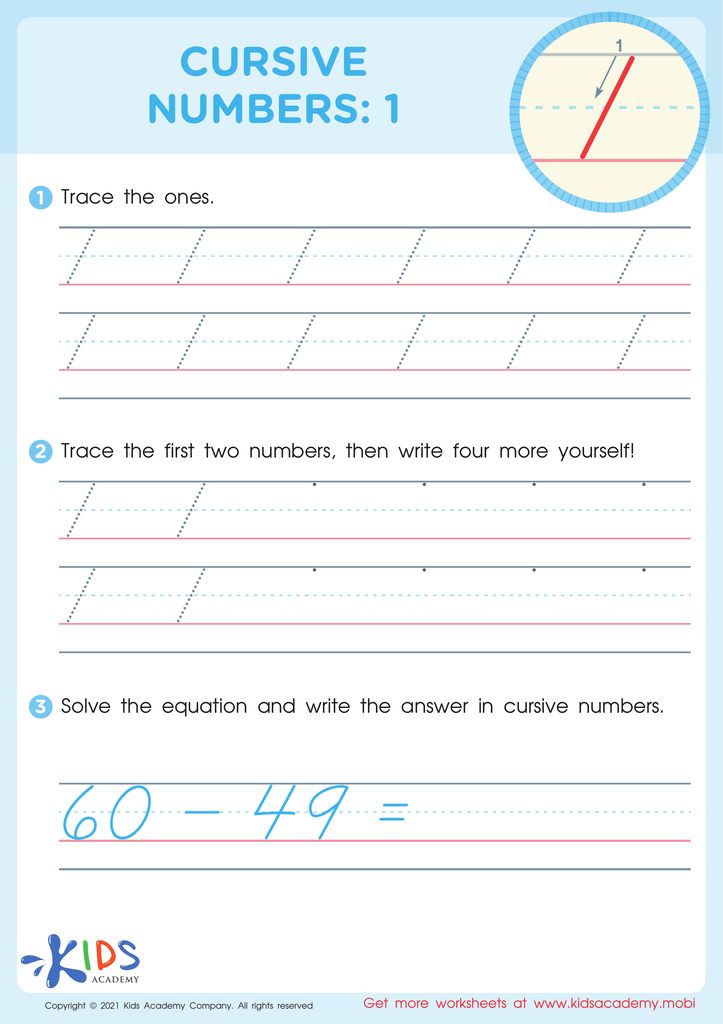
Cursive Numbers: 1 Worksheet
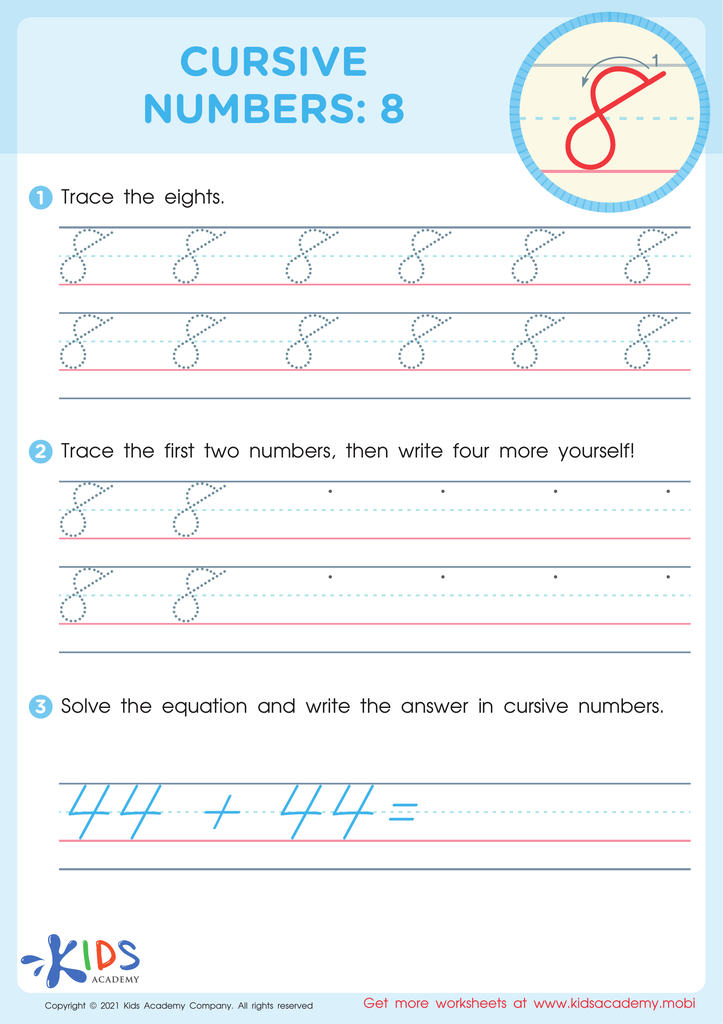
Cursive Numbers: 8 Worksheet
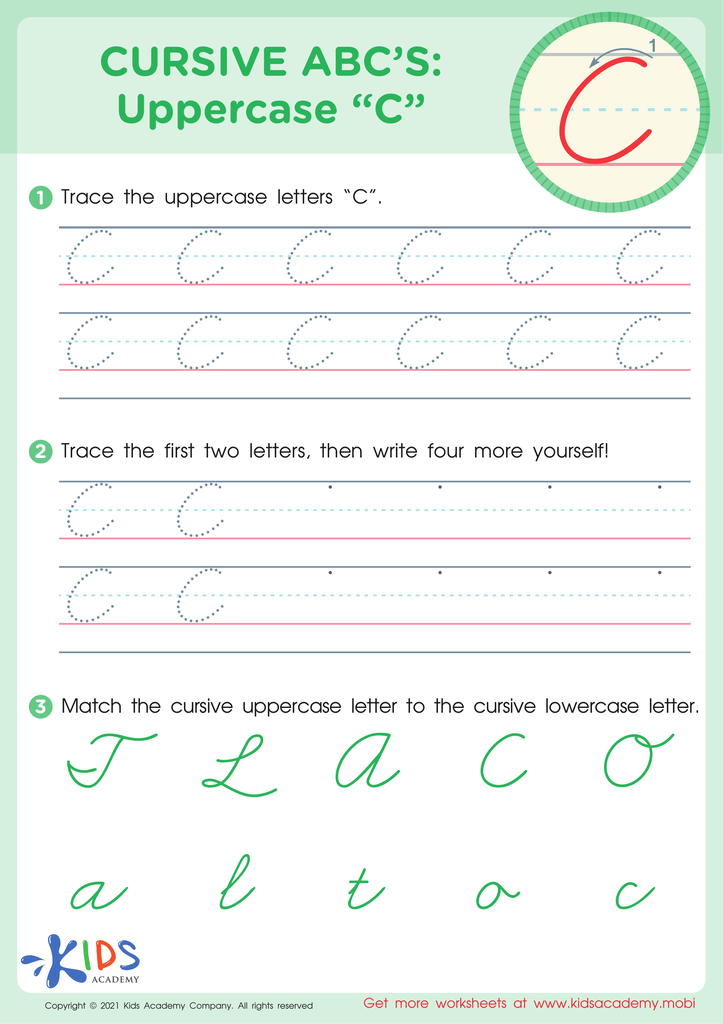
Cursive ABCs: Uppercase C
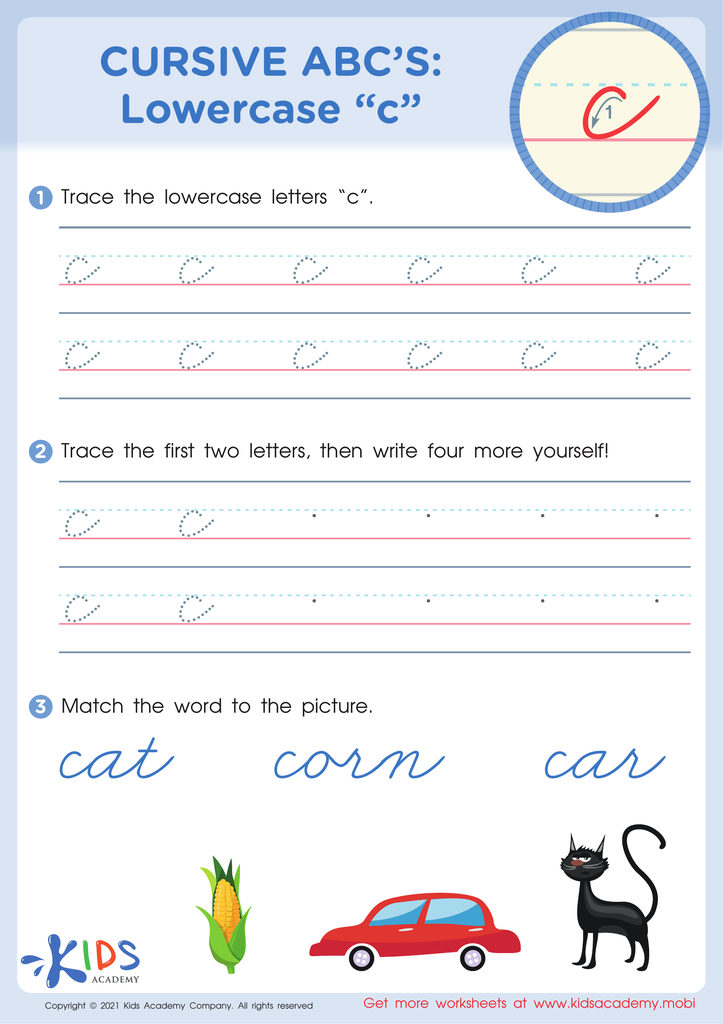
Cursive ABCs: Lowercase c
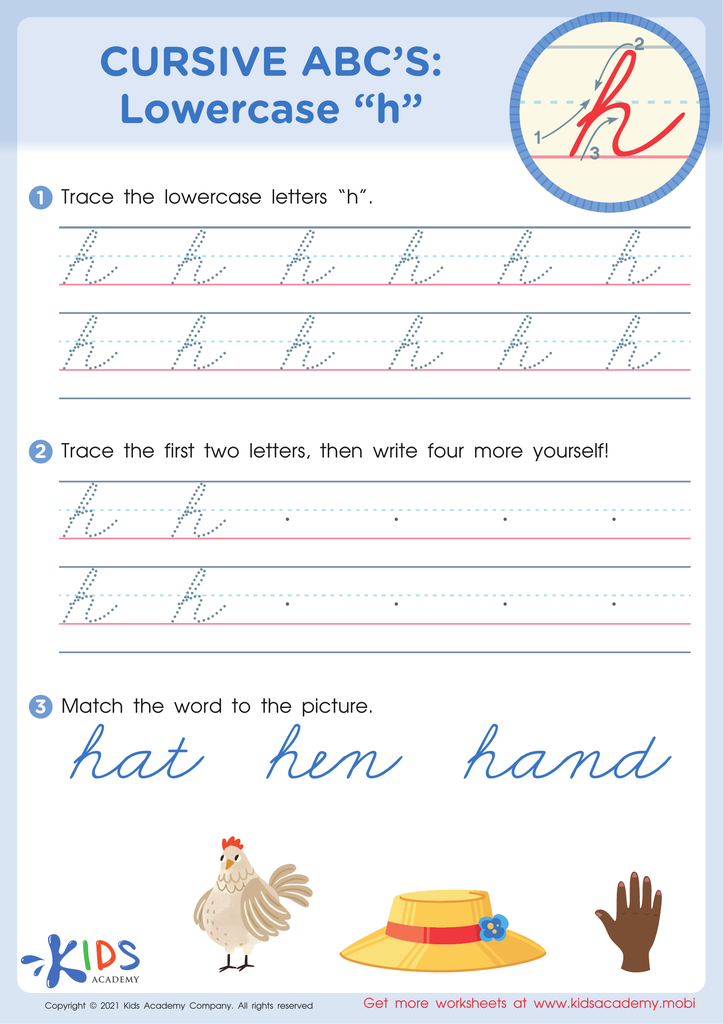
Cursive ABCs: Lowercase h
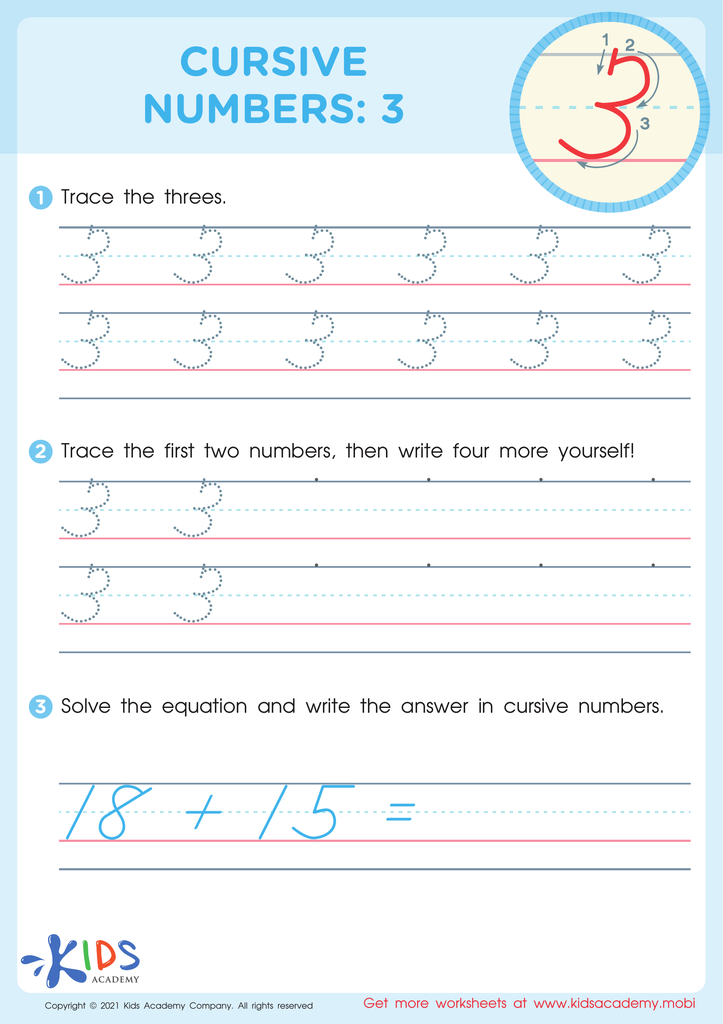
Cursive Numbers: 3 Worksheet
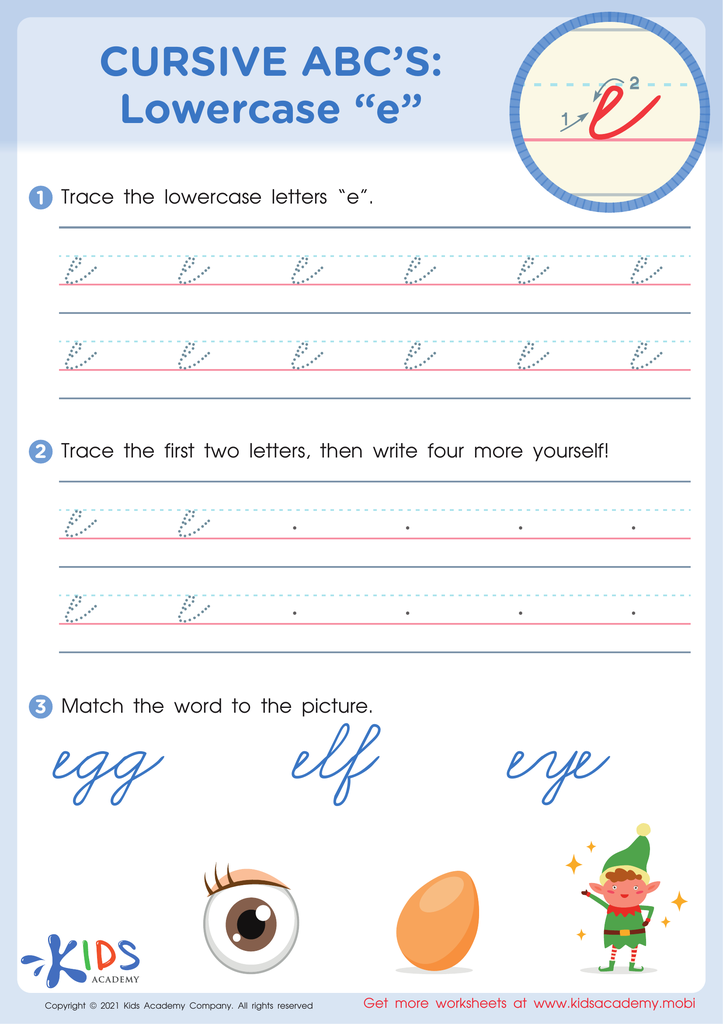
Cursive ABCs: Lowercase e
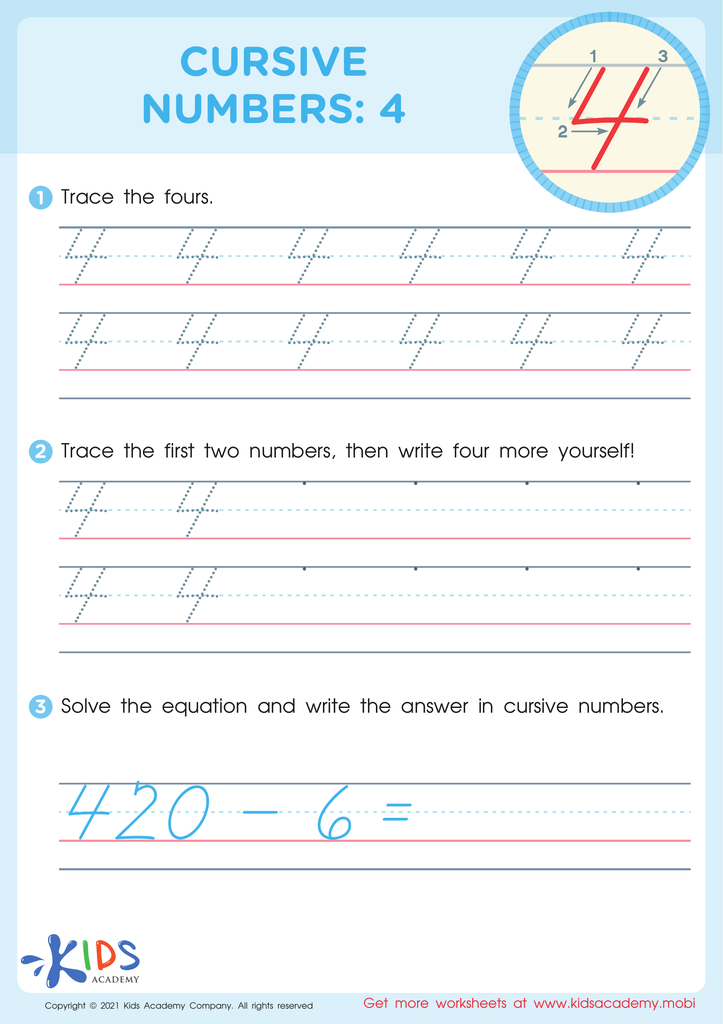
Cursive Numbers: 4 Worksheet
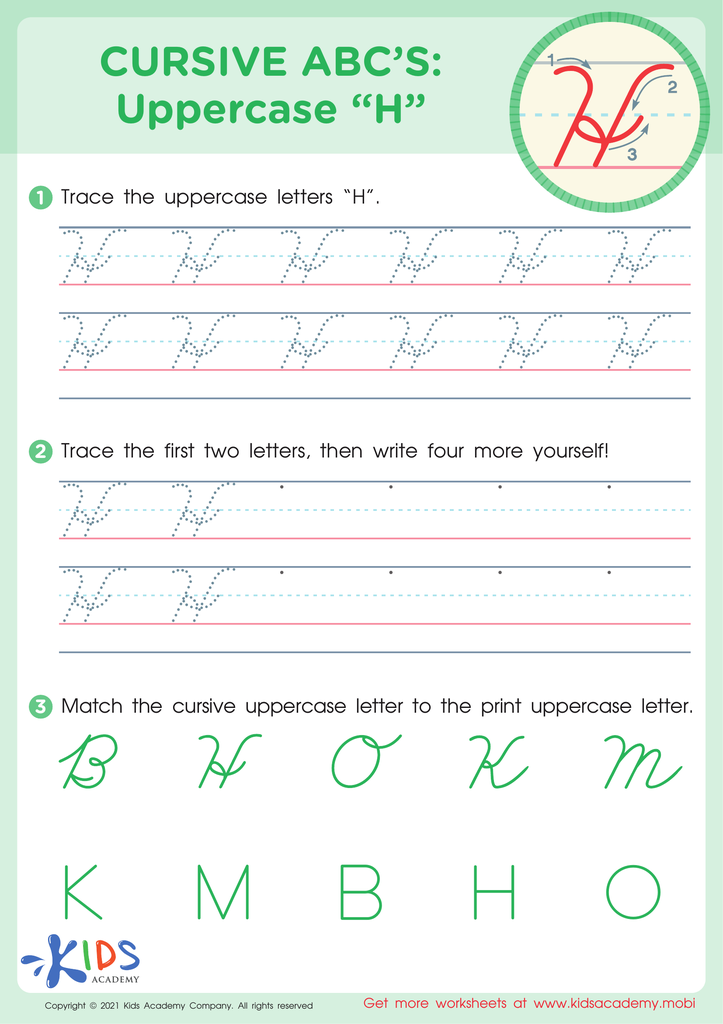
Cursive ABCs: Uppercase H






Cursive writing practice is essential for children aged 6-8 for several important reasons. First, it helps to improve motor skills and coordination. The fluid motion required in cursive writing engages different muscle groups, promoting fine motor skills that are essential for other activities, including drawing and typing.
Moreover, cursive writing enhances cognitive development. The unique flow of cursive stimulates neurological pathways, fostering better memory retention and comprehension. Research shows that handwriting, especially in cursive, can improve brain development and processing skills.
Cursive also plays a vital role in encouraging personal expression and creativity. Children can develop their unique styles, which fosters a sense of individuality and self-confidence. Learning to write in cursive enables children to read historical documents and literature that use this form, thus enriching their cultural and historical understanding.
Furthermore, studies suggest that cursive writing can lead to slower, more thoughtful composition, allowing children to express their ideas more clearly.
Lastly, in a digital age, the ability to write by hand remains a critical skill, reinforcing the importance of cursive writing in nurturing well-rounded, skilled individuals ready to communicate effectively in various environments. Parents and teachers should actively support this vital practice.