Phonics recognition Writing Worksheets for Ages 6-8
5 filtered results
-
From - To
Discover our engaging Phonics Recognition Writing Worksheets designed for children aged 6-8! These worksheets enhance early literacy skills by helping learners recognize sounds and blend them into words effectively. Featuring colorful illustrations and interactive activities, your child will cultivate essential phonics awareness while developing writing abilities. Our user-friendly materials make learning enjoyable, fostering a positive attitude towards reading and writing. Perfect for classroom or home use, these worksheets support foundational skills that prepare young learners for future literacy success. Explore our collection today and empower your child to become a confident reader and writer! Perfect for ages 6-8!
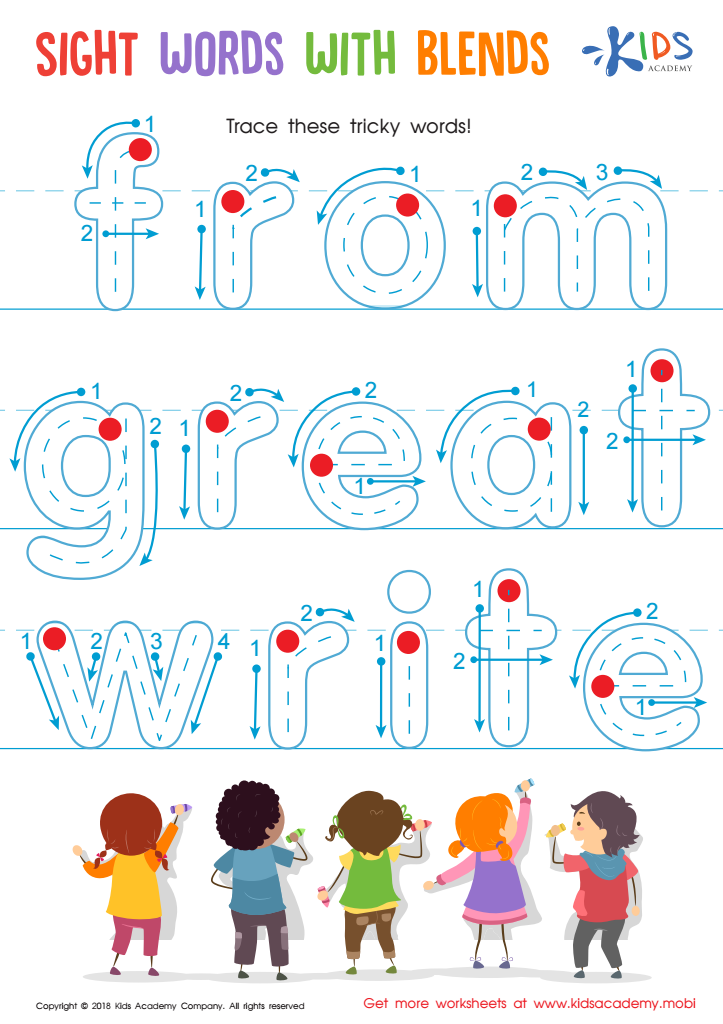
Sight Words with Blends Worksheet
 Assign to My Students
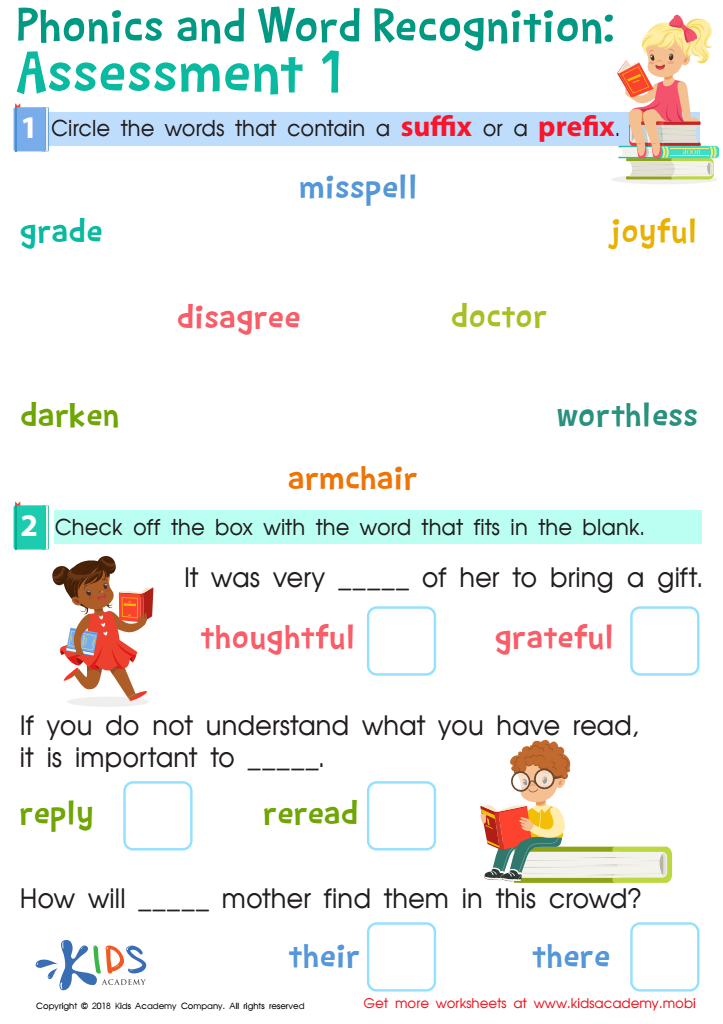
Phonics and Word Recognition: Assessment 1 Worksheet
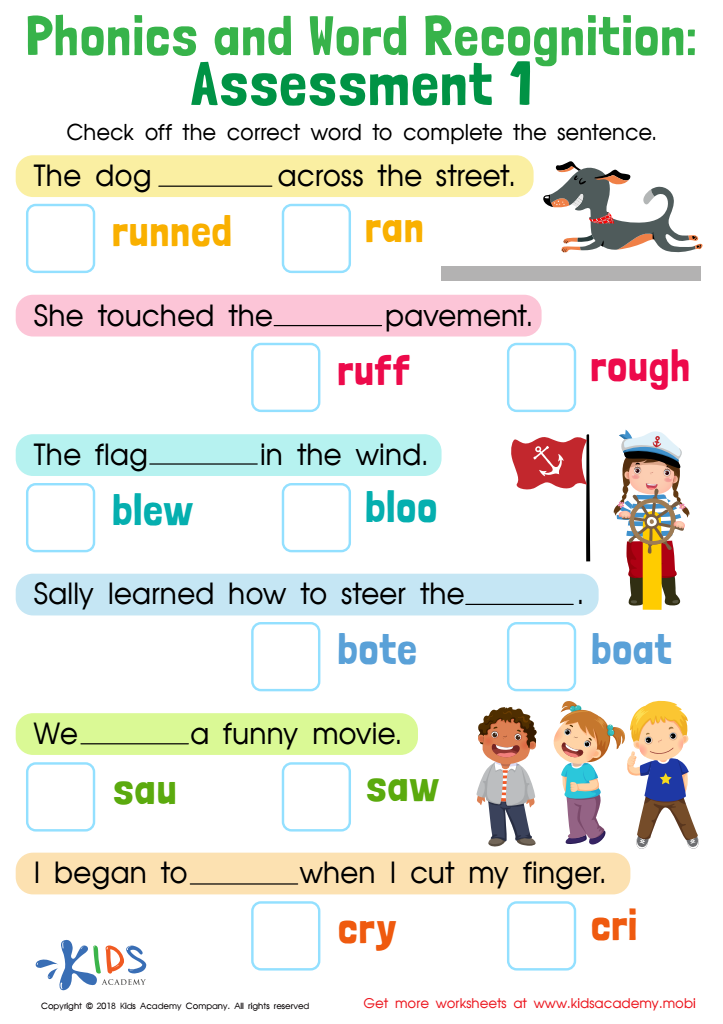
Phonics and Word Recognition: Assessment 1 Worksheet
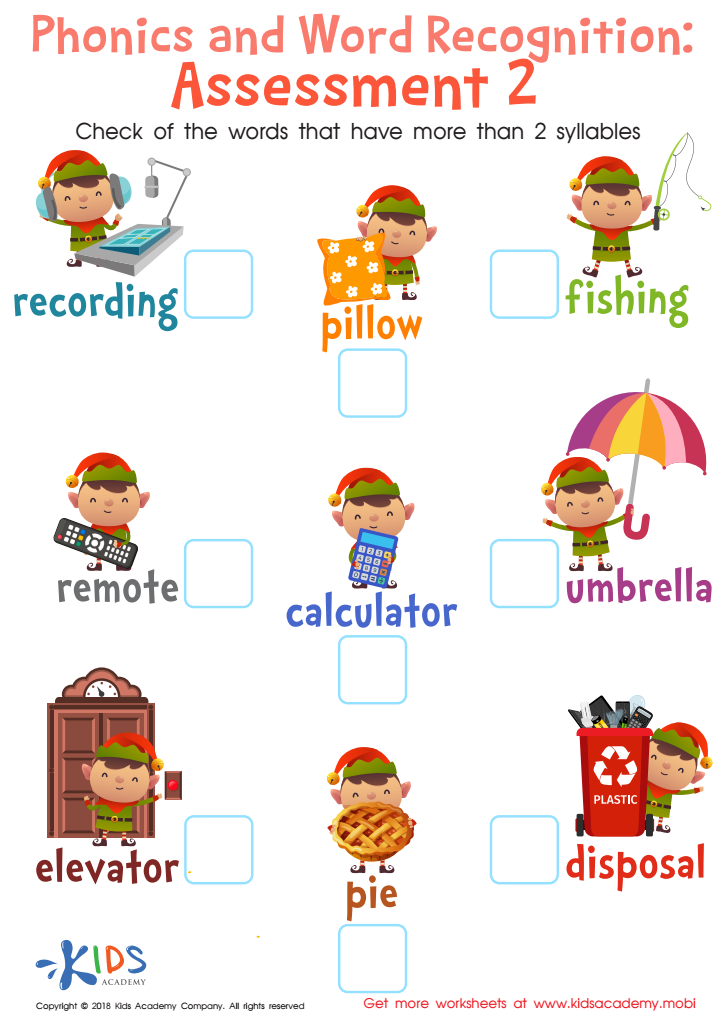
Phonics and Word Recognition: Assessment 2 Worksheet
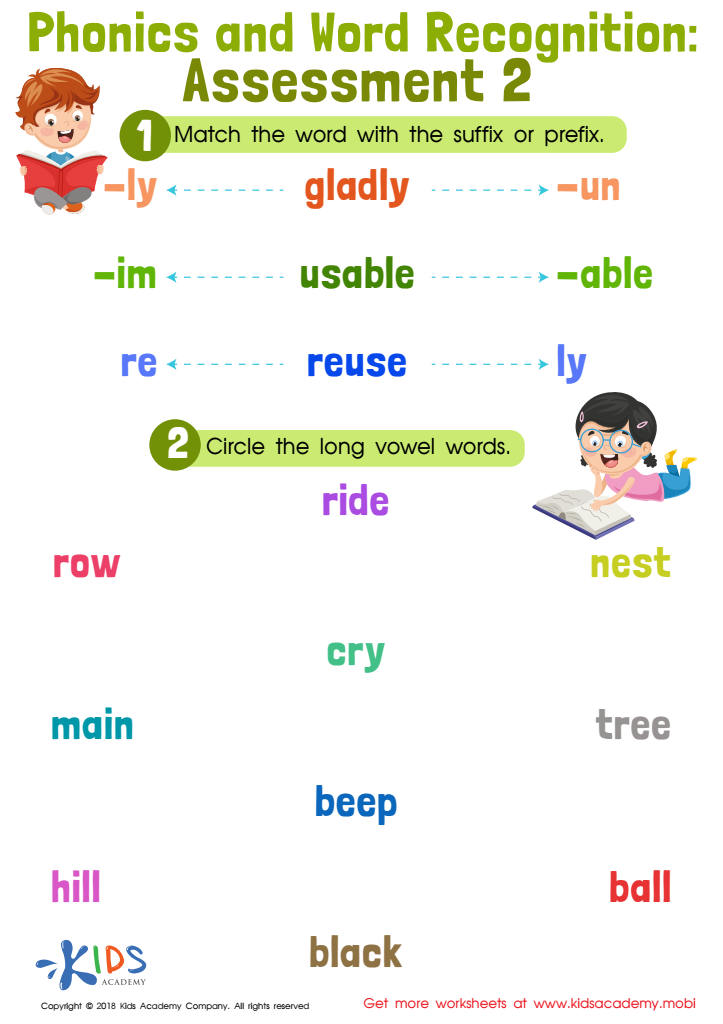
Phonics and Word Recognition: Assessment 2








Phonics recognition writing is crucial for children aged 6-8 as it plays a foundational role in literacy development. During this stage, children are transitioning from learning to read to reading to learn. Understanding phonics enables them to decode words, which is essential for reading fluency and comprehension.
When educators and parents emphasize phonics, they equip children with the skills needed to sound out unfamiliar words, fostering independence in reading. This, in turn, boosts their confidence and motivates them to explore a wider range of books and texts, further enhancing language development.
Moreover, phonics-based writing activities encourage spelling comprehension and the ability to experiment with new words in context. By recognizing sounds and linking them to letters, children can become more proficient in composing sentences, leading to stronger writing skills.
Additionally, strong phonics skills can help prevent reading difficulties later on. By ensuring that children have a solid grasp of phonics, parents and teachers can introduce more complex literacy concepts with greater ease. Ultimately, investing time and resources in phonics education leads to improved academic success, lifelong literacy skills, and better communication abilities for children as they grow.








