Sentence completion Writing Worksheets for Ages 6-8
5 filtered results
-
From - To
Discover our captivating Sentence Completion Writing Worksheets designed specifically for ages 6-8! These engaging activities help children improve their writing skills, enhance their creativity, and reinforce their understanding of sentence structure. Each worksheet invites young learners to complete sentences with a blend of carefully crafted prompts and fun illustrations, making learning an enjoyable experience. Ideal for both classroom and home use, these worksheets support literacy development, critical thinking, and vocabulary expansion. Turn writing practice into an exciting adventure and watch your child’s confidence soar with Kids Academy’s Sentence Completion Writing Worksheets!
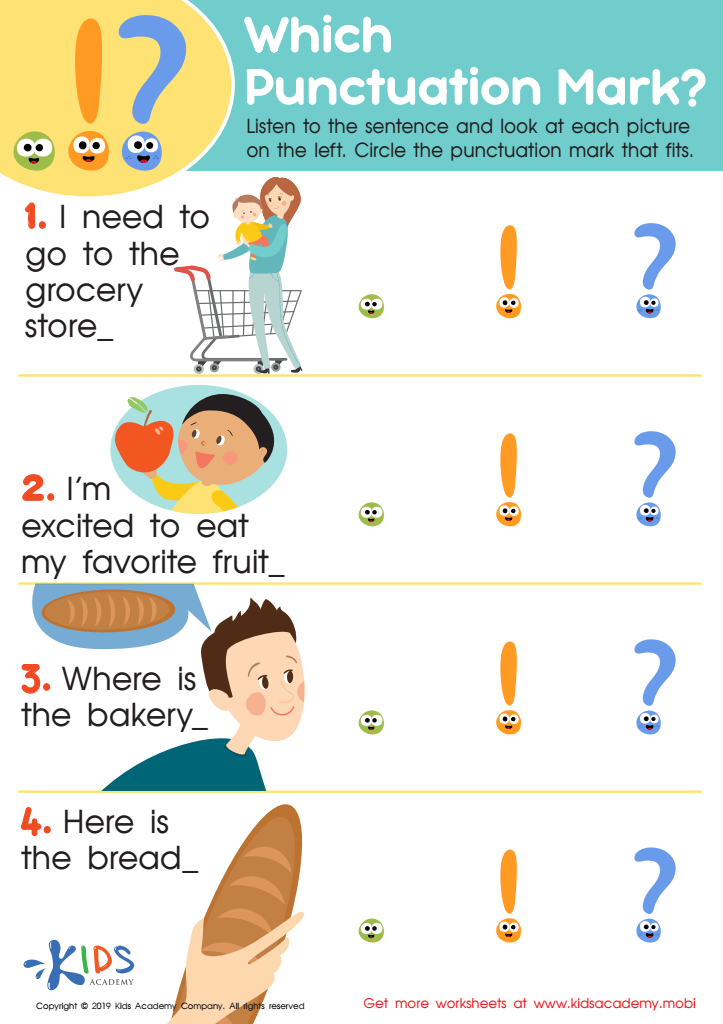
Which Punctuation Mark Worksheet
 Assign to My Students
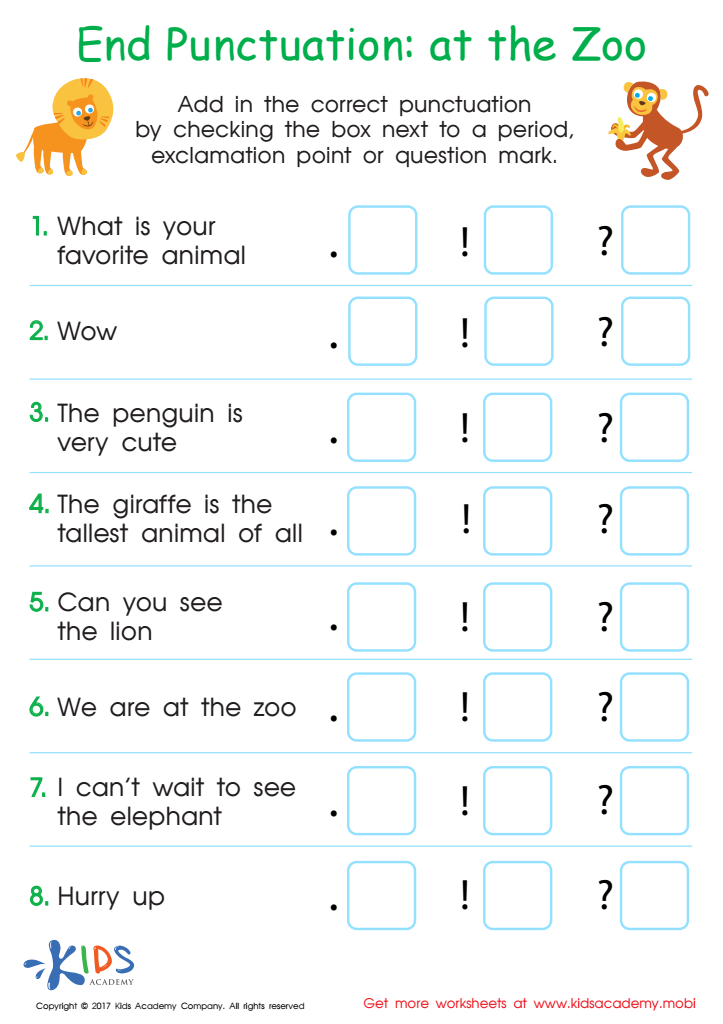
End Punctuation: At the Zoo Worksheet
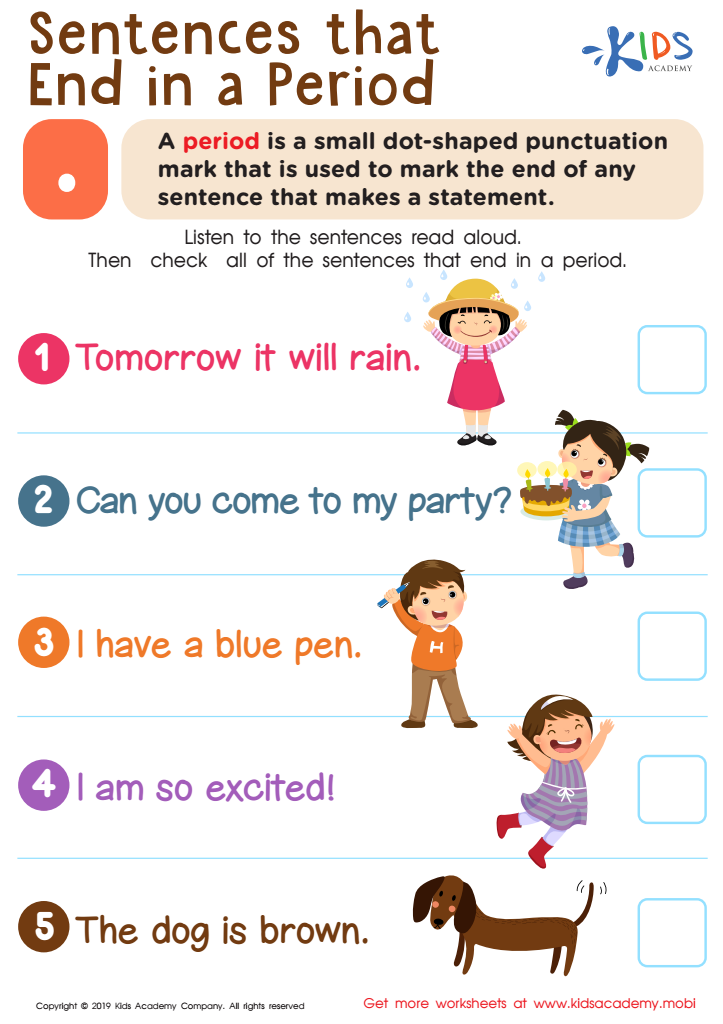
Sentences That End in a Period Worksheet
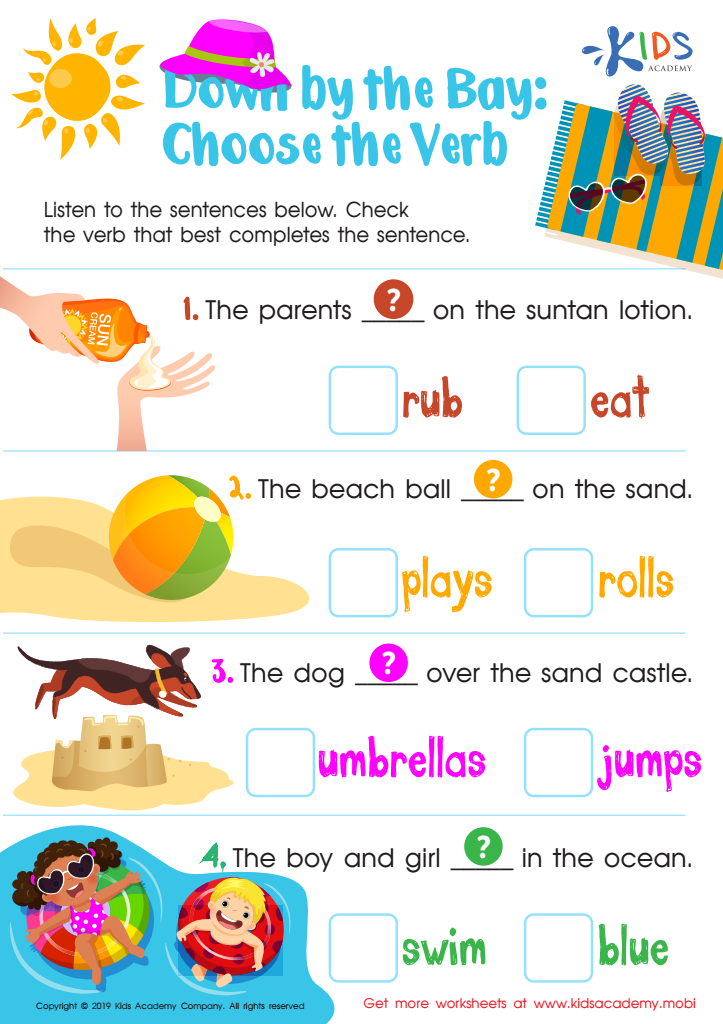
Down by the Bay: Choose the Verb Worksheet
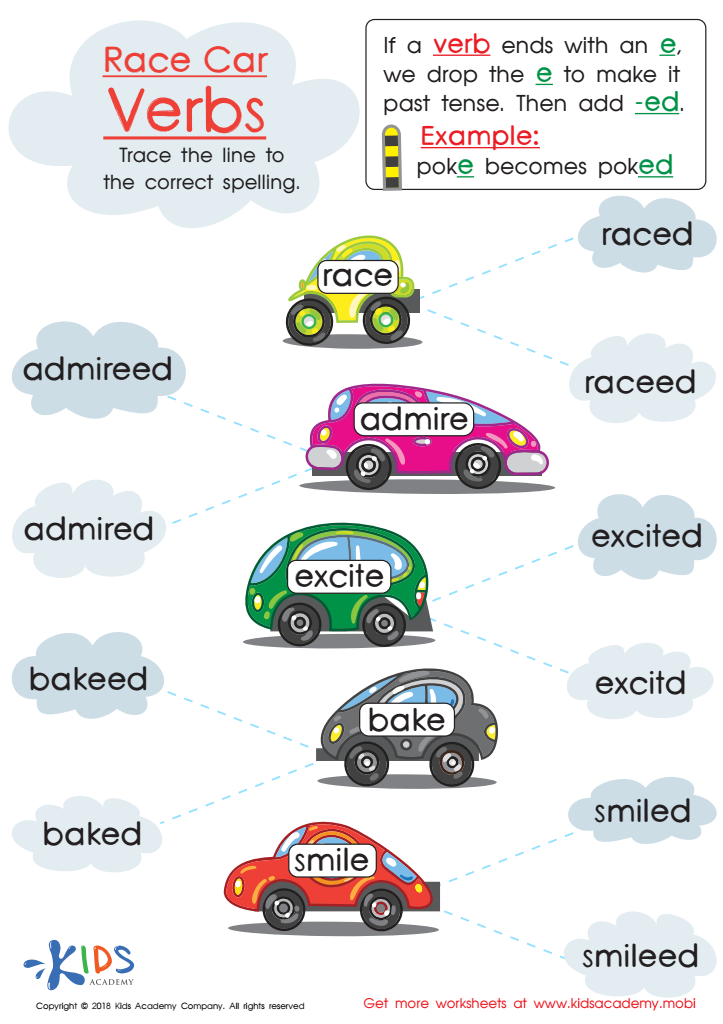
Race Car Verbs Worksheet







Parents and teachers should care immensely about sentence completion writing for children aged 6-8 because it is a fundamental skill that fosters broader linguistic and cognitive development. During this developmental stage, kids are building the foundational blocks for communication skills that they will rely on for the rest of their lives.
Sentence completion exercises enhance vocabulary and encourage children to think about the structure of language. When children fill in the blanks to complete sentences, they reflect on contextual clues and apply their understanding of syntax and grammar. This practice not only improves their writing skills but also boosts reading comprehension.
Moreover, sentence completion can spark creativity and expressiveness. Since children have the chance to provide their ideas or twists to a sentence, it encourages original thinking and imagination.
These exercises also help teachers and parents identify areas where a child might struggle, providing invaluable insight into their learning progress. Detecting issues early ensures timely interventions that can prevent future learning difficulties.
Finally, by making sentence completion a routine activity, children develop a positive attitude toward writing, setting a strong foundation for later academic success. Hence, embedding this practice in early education is key to nurturing competent, confident, and creative young learners.








