Vocabulary enhancement Writing Worksheets for Ages 6-8 - Page 4
75 filtered results
-
From - To
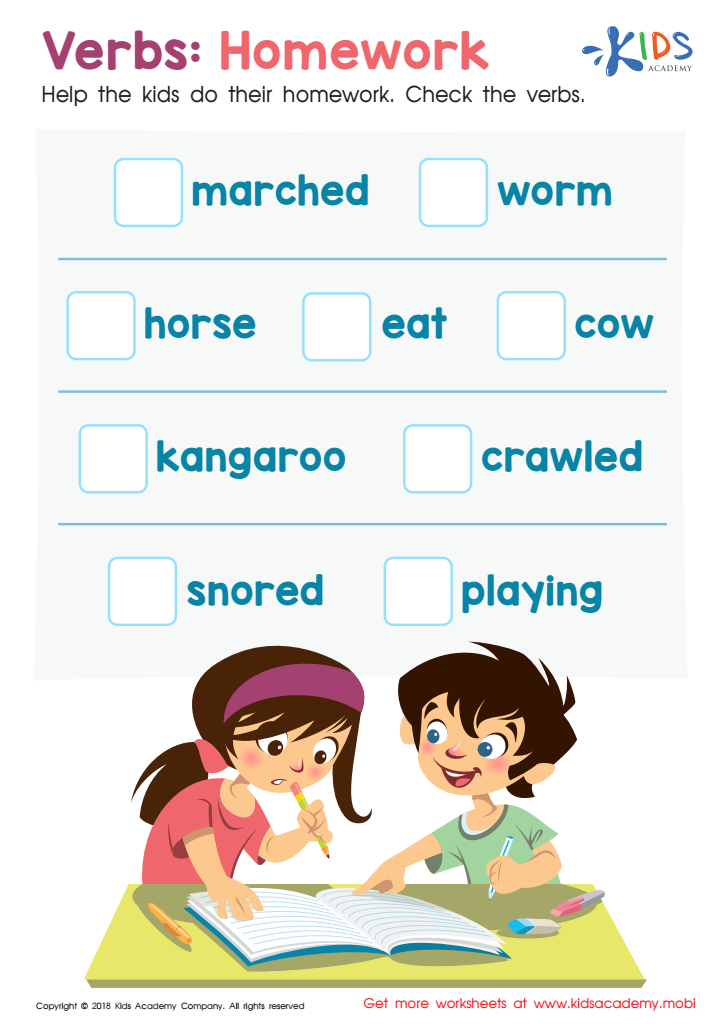
Verbs Homework Worksheet
 Assign to My Students
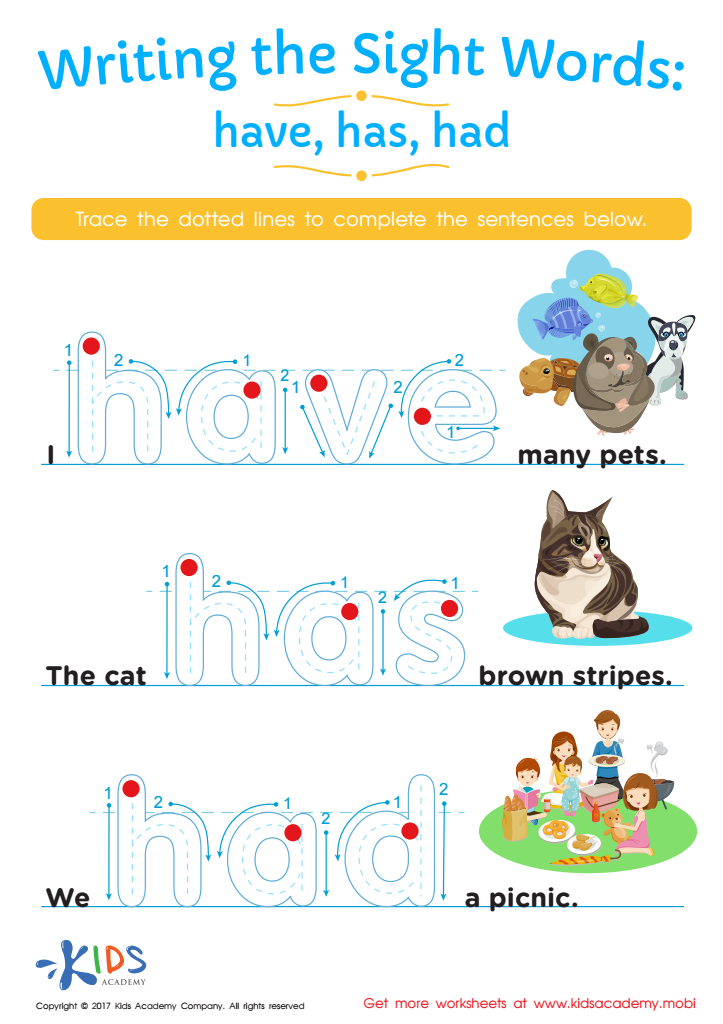
Have, Has, Had Worksheet Sight Words Worksheet
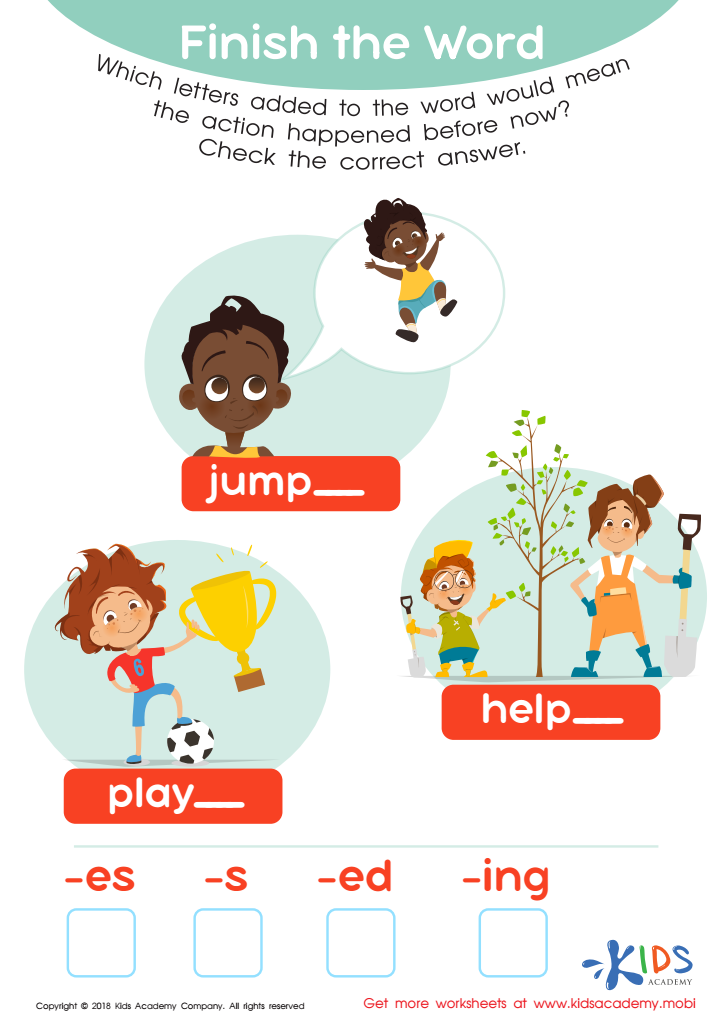
Finish the Word Worksheet








Vocabulary enhancement in writing for children aged 6-8 is crucial for several reasons. At this developmental stage, children are beginning to express their thoughts and emotions more clearly through words. Enhancing vocabulary during these formative years sets a solid foundation for effective communication, critical thinking, and literacy skills.
Firstly, a robust vocabulary allows children to articulate their ideas precisely. When they have a rich bank of words, they can convey nuanced meanings, leading to more engaging and thoughtful writing. This practice not only promotes creativity but also boosts their confidence in expressing themselves.
Moreover, strong vocabulary skills are closely linked to reading comprehension. As children learn new words, they become more adept at understanding texts, which is essential as their academic demands increase.
Lastly, focusing on vocabulary enhancement fosters a lifelong love for learning. Exposure to diverse words and concepts encourages curiosity, driving children to explore new subjects and ideas.
For parents and teachers, prioritizing vocabulary enrichment means equipping children with essential tools for success in both academic and everyday life, enabling them to navigate communication skillfully and make greater connections in their world.








