Data interpretation Worksheets for Ages 6-9
23 filtered results
-
From - To
Help your child enhance their analytical skills with our engaging Data Interpretation Worksheets for ages 6-9! Tailored for early learners, these worksheets provide a fun way to explore basic concepts of data collection and interpretation through colorful charts, graphs, and tables. Each activity encourages critical thinking as kids practice reading data, answering questions, and drawing conclusions. Ideal for homeschooling or classroom use, our resources promote essential skills while keeping learning enjoyable. Download and print the worksheets easily for interactive learning sessions that boost confidence and academic performance. Start exploring the world of data with your child today!
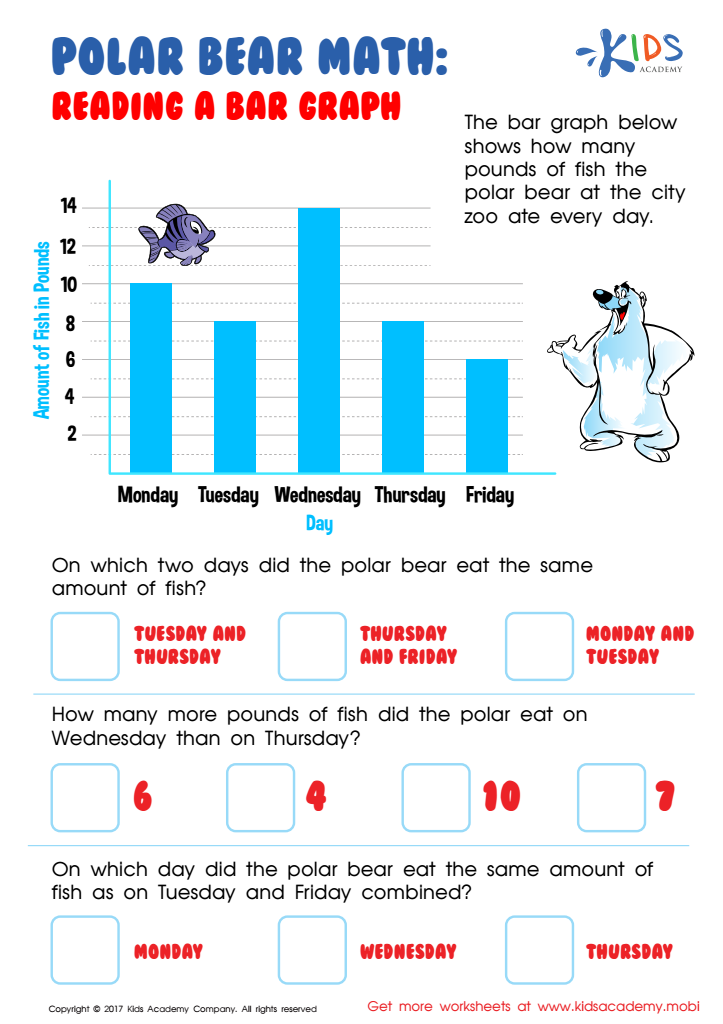
Reading Bar Graph Worksheet
 Assign to My Students
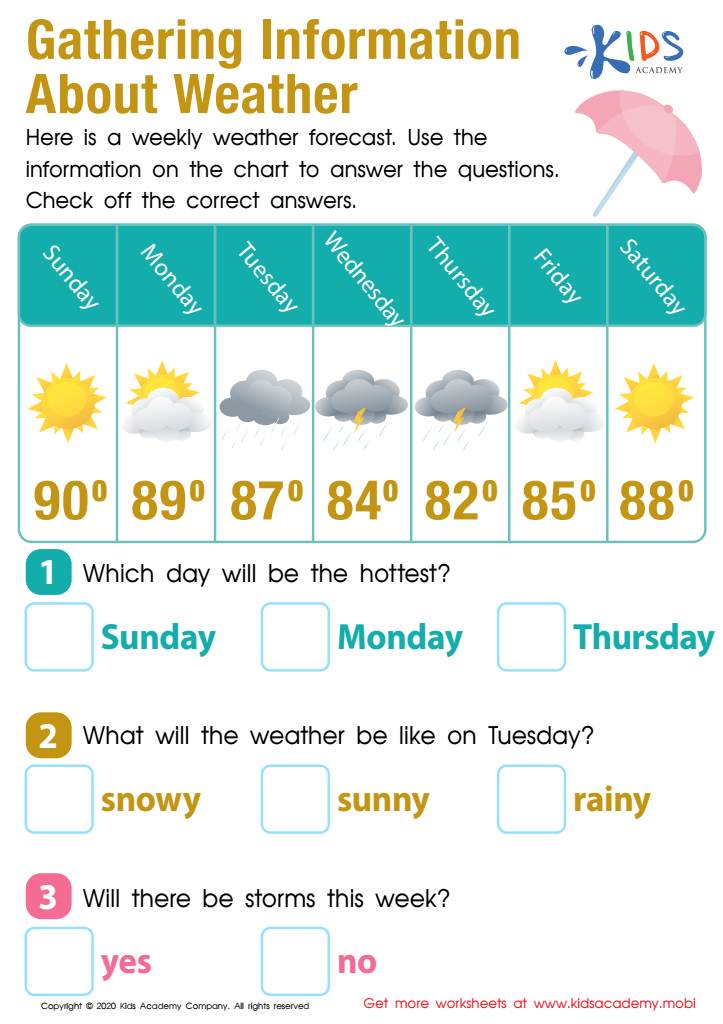
Gathering Information About the Weather Worksheet
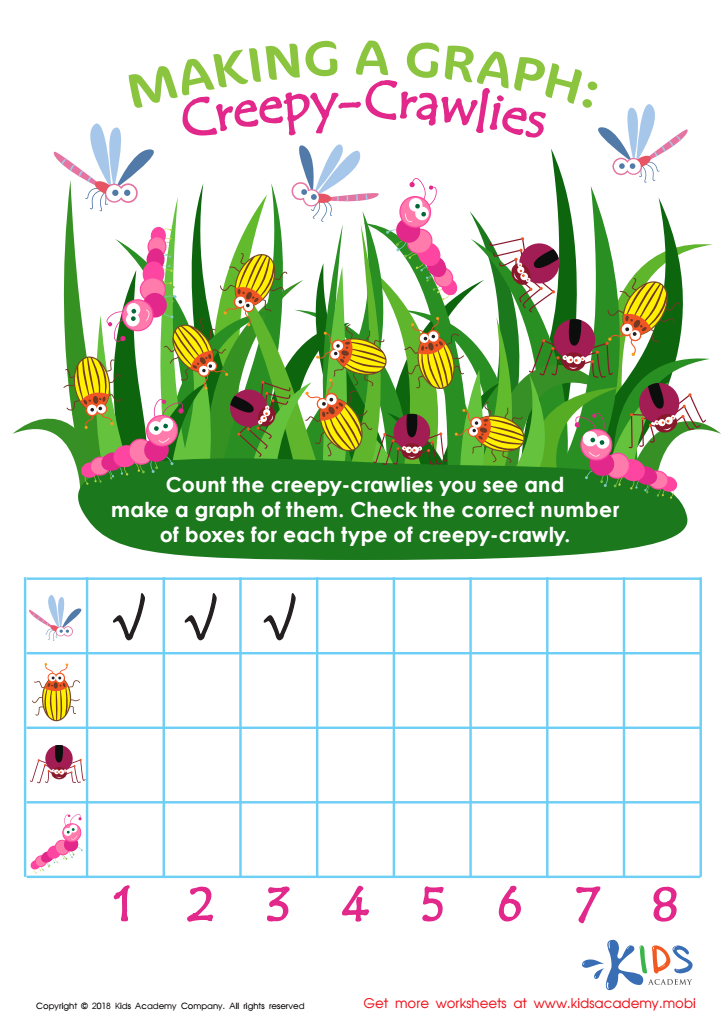
Making a Graph: Creepy Crawlies Worksheet
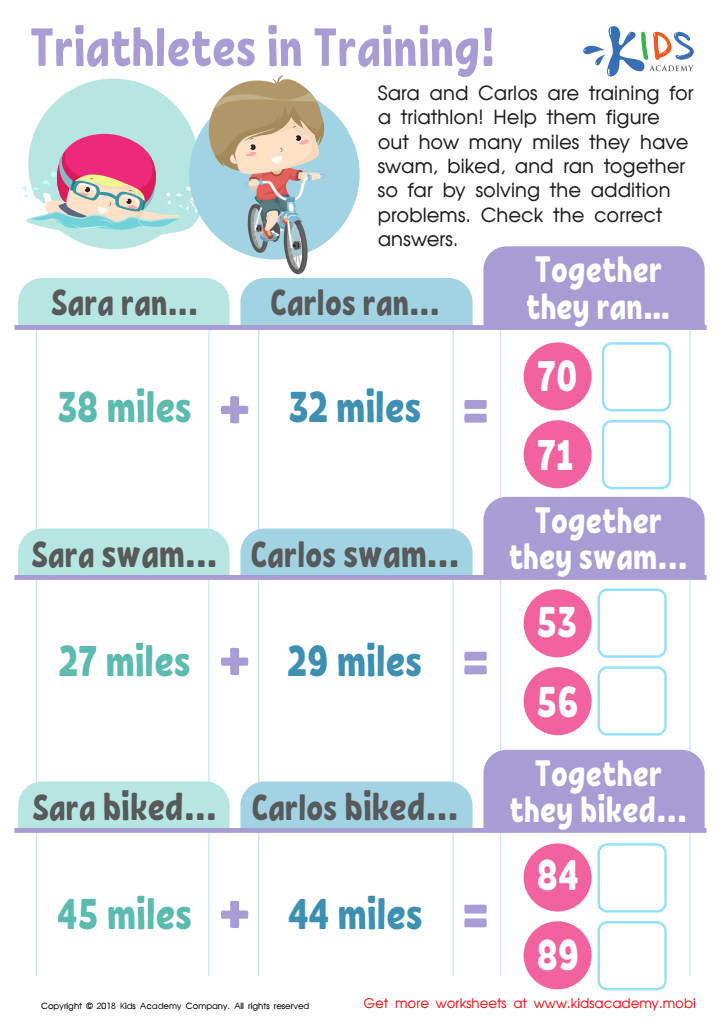
Triathletes in Training Worksheet
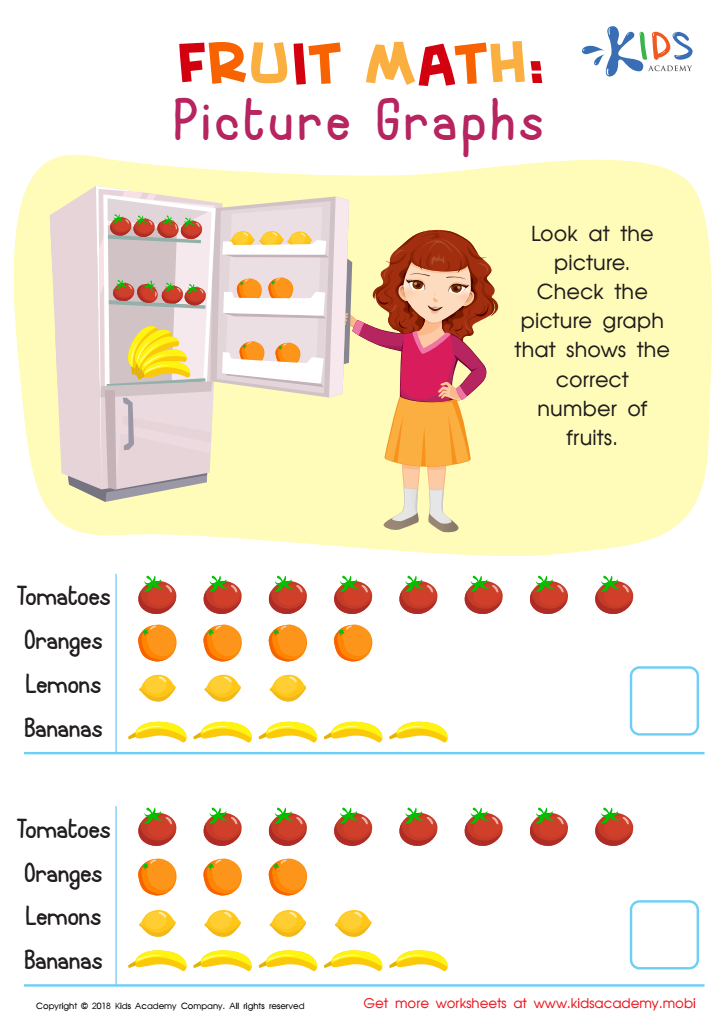
Fruit Math: Picture Graphs Worksheet
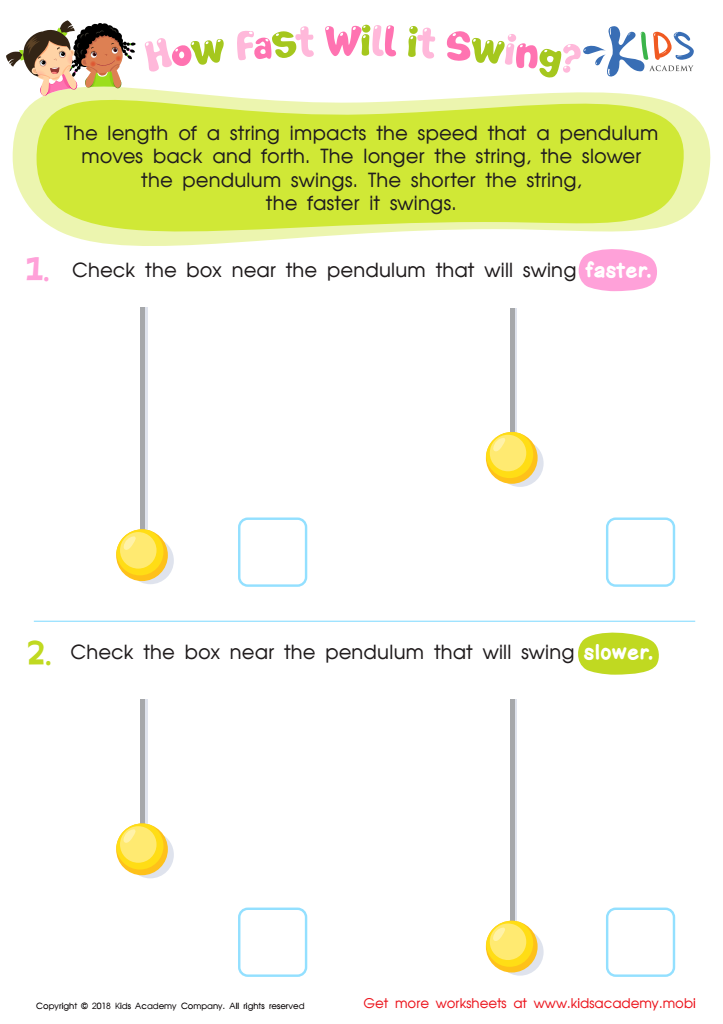
Pendulum Experiment Worksheet For 3rd Grade
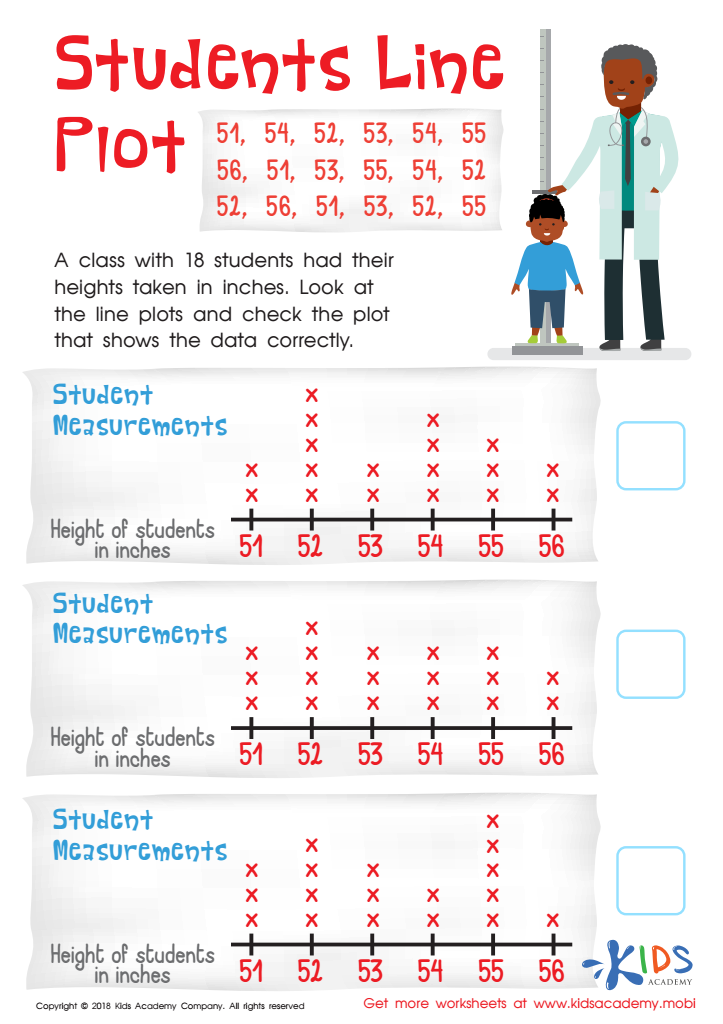
Students Line Plot Worksheet
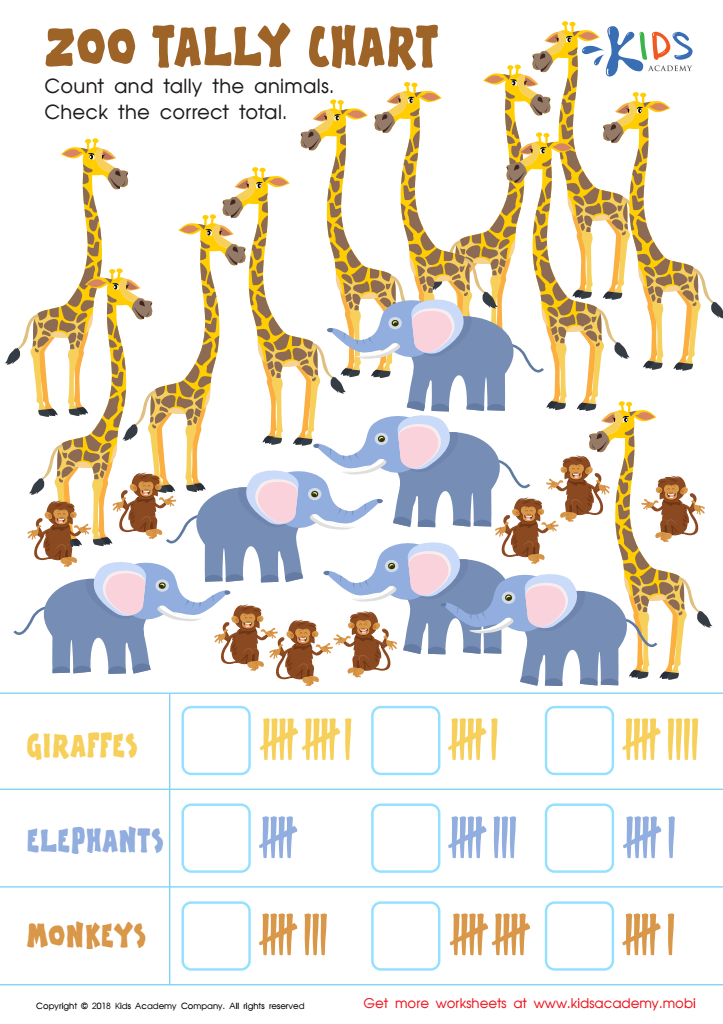
Zoo Tally Chart Worksheet
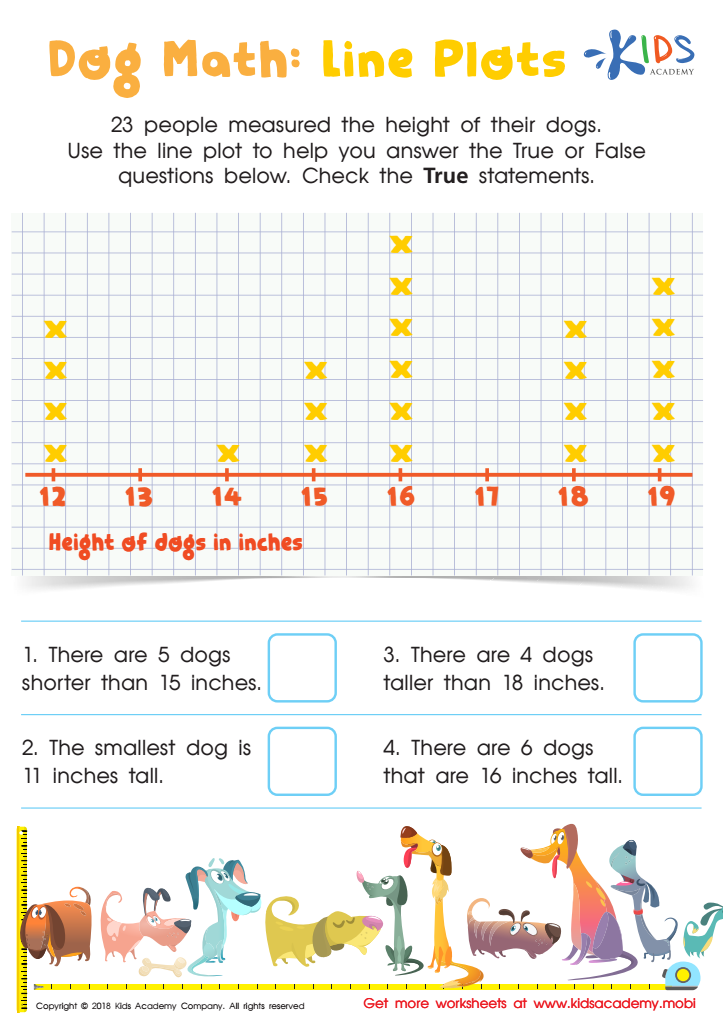
Dog Math: Line Plots Worksheet
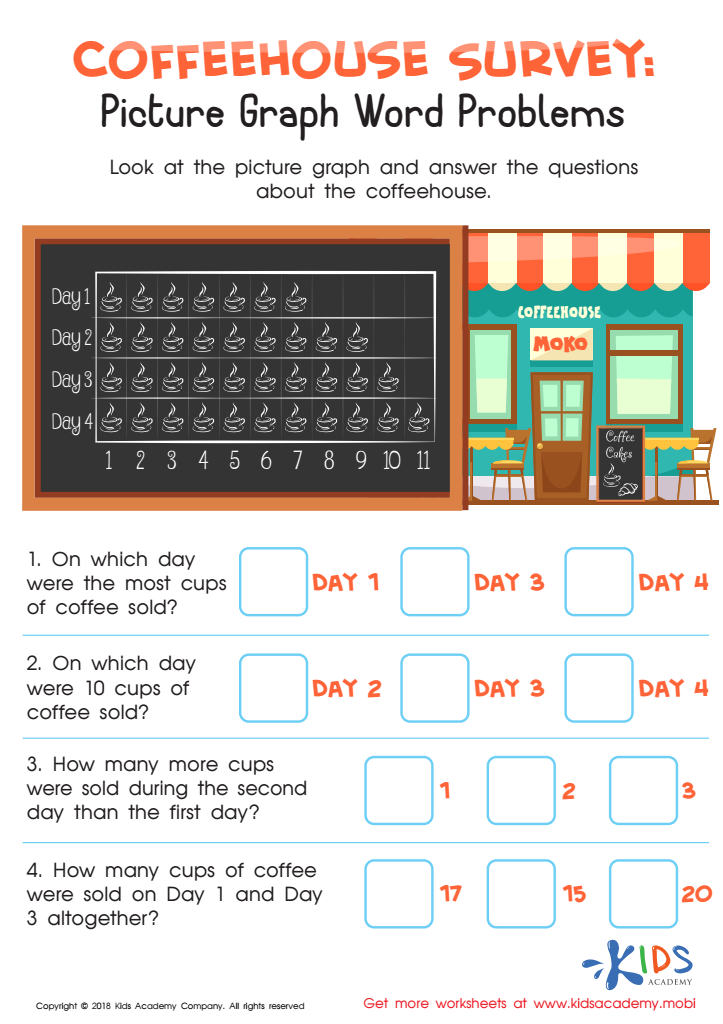
Coffeehouse Survey: Picture Graph Word Problems Worksheet
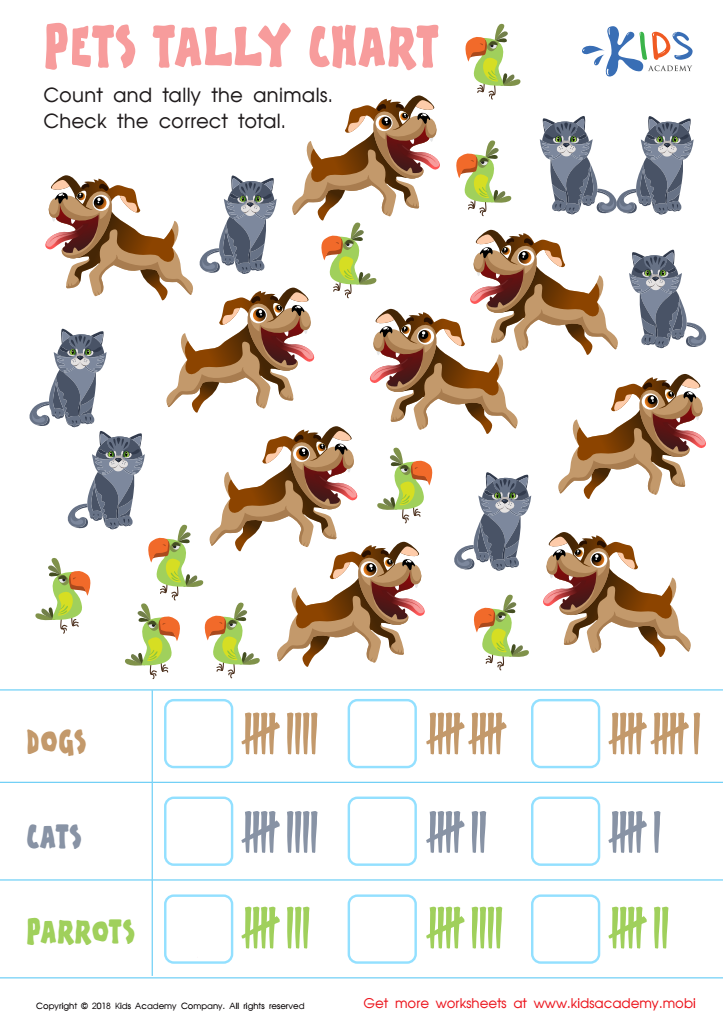
Pets Tally Chart Worksheet
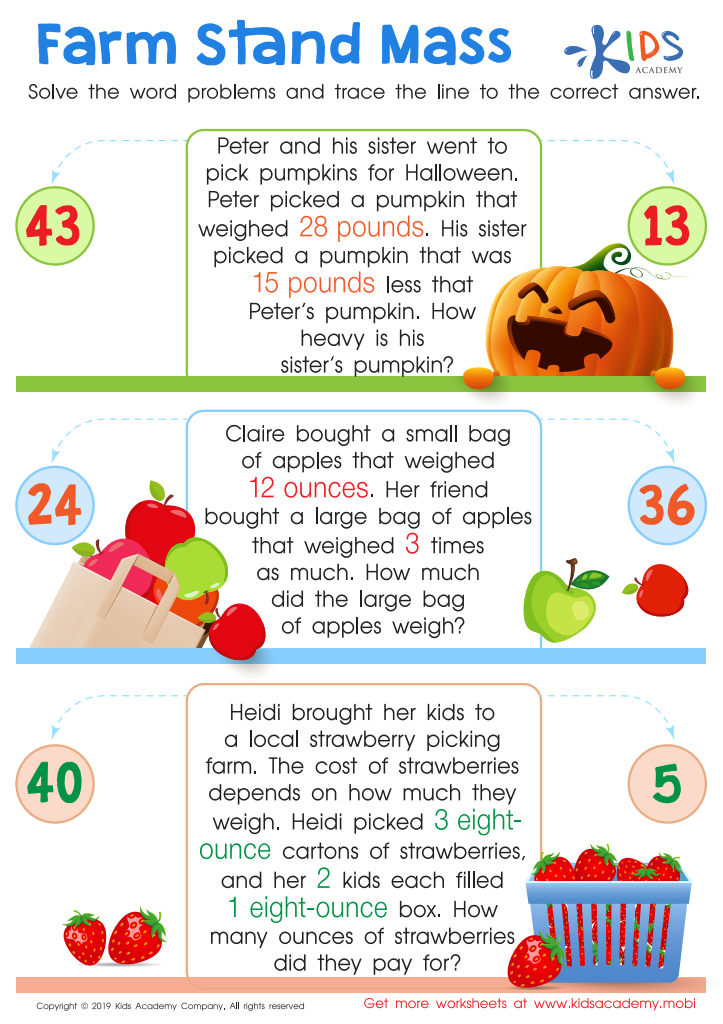
Farm Stand Mass Worksheet
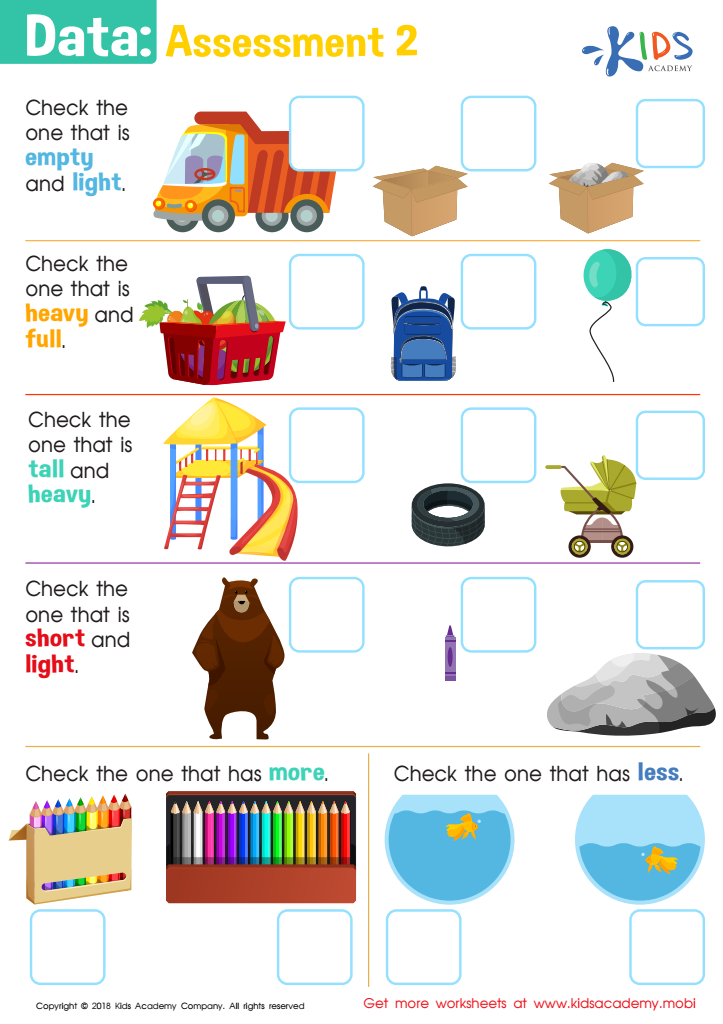
Data: Assessment 2 Worksheet
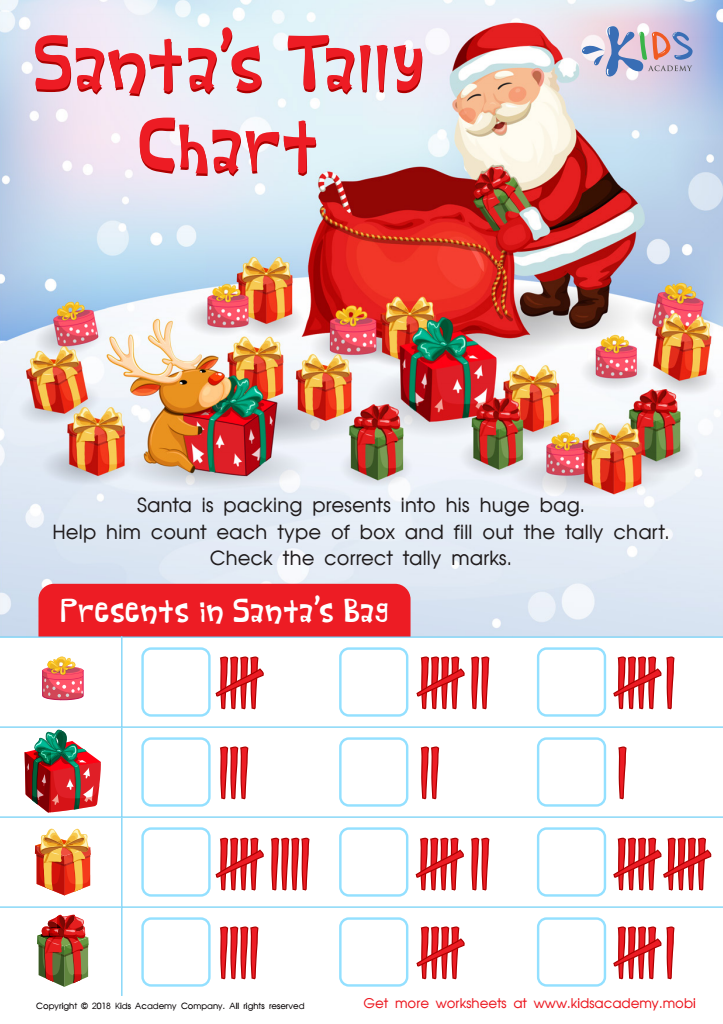
Santa Tally Chart Worksheet
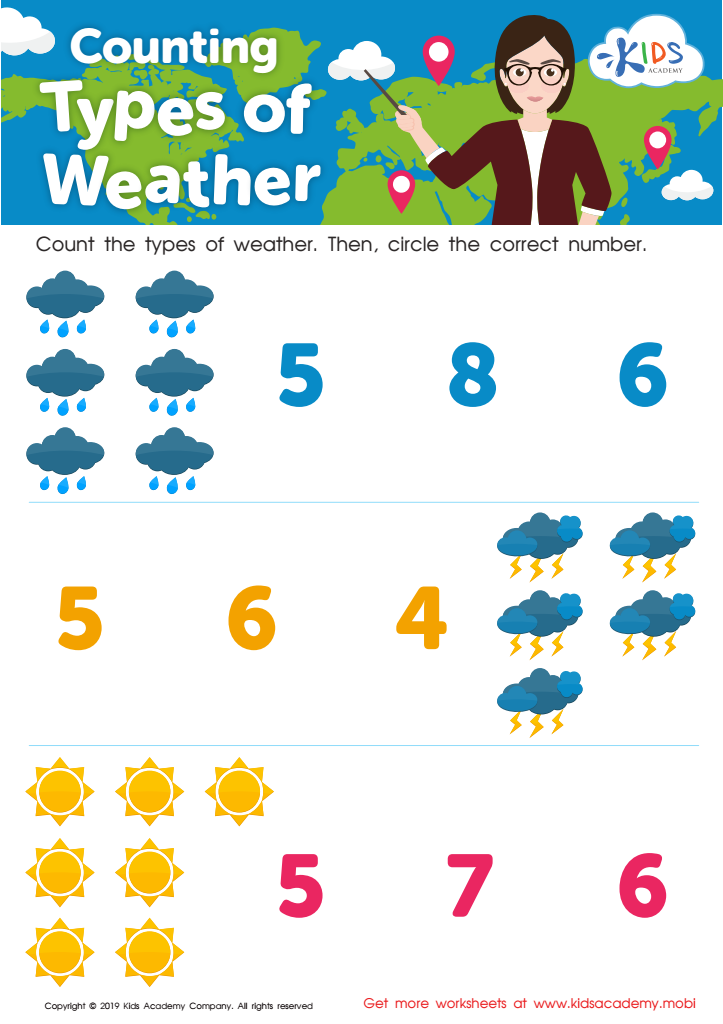
Counting Types of Weather Worksheet
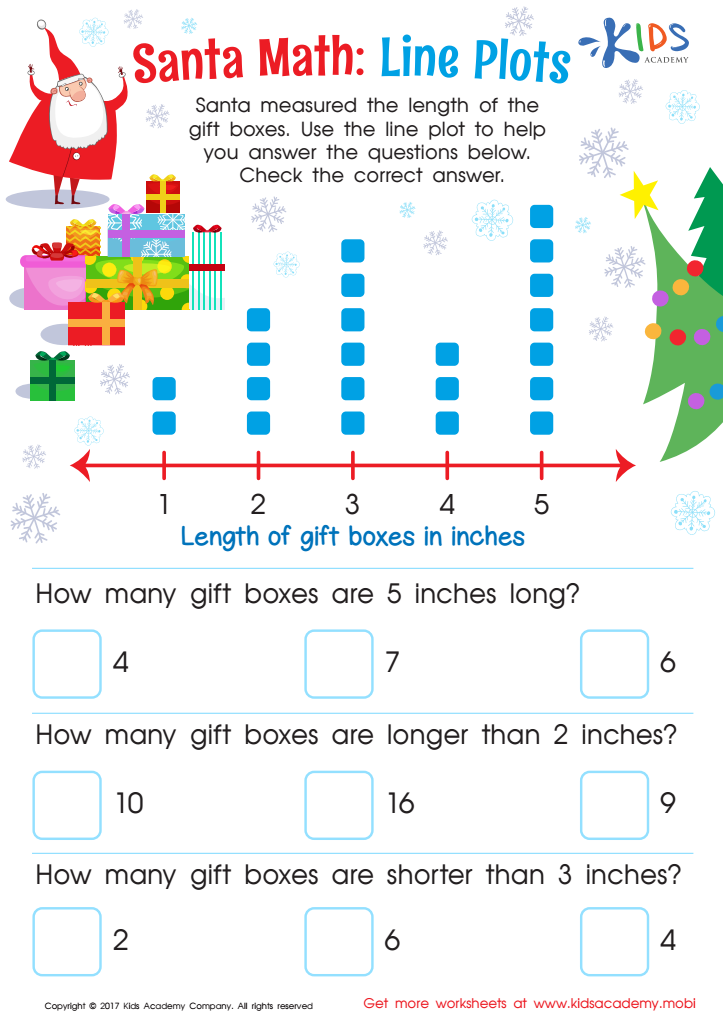
Line Plot Worksheet

Aircraft Carrier Picture Graphs Worksheet
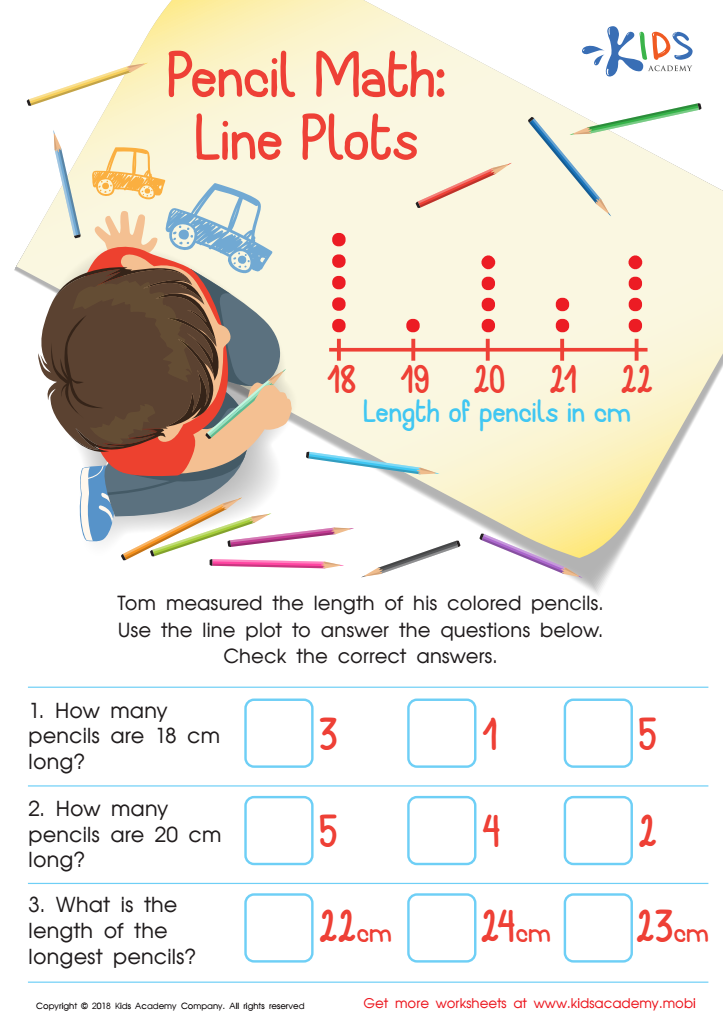
Pencil Math: Line Plots Worksheet
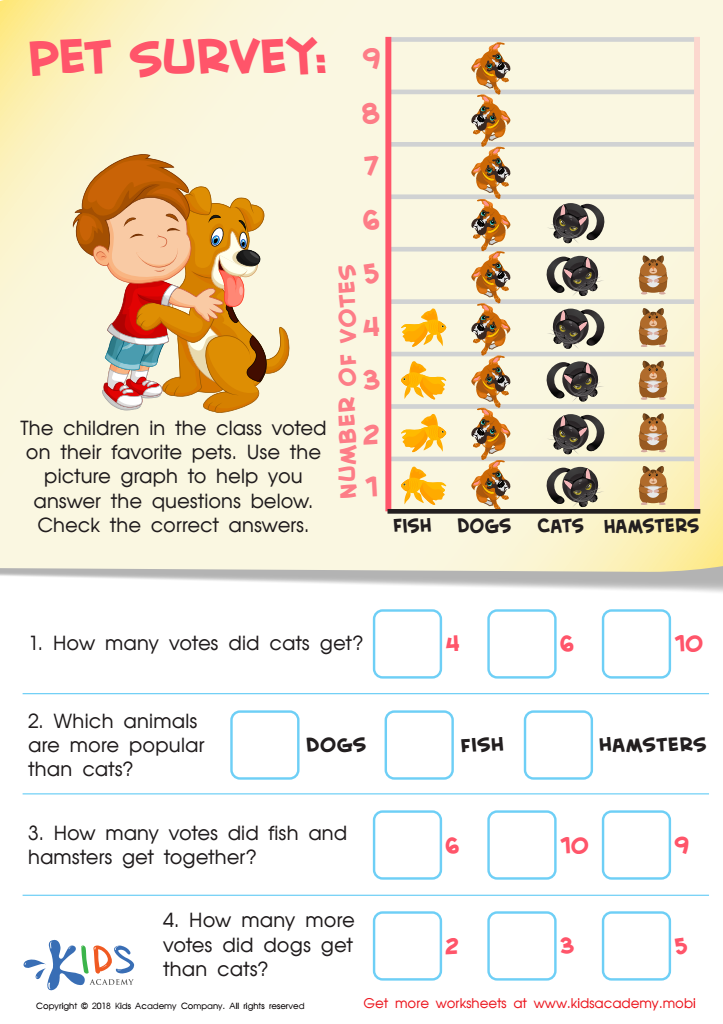
Pet Survey Worksheet
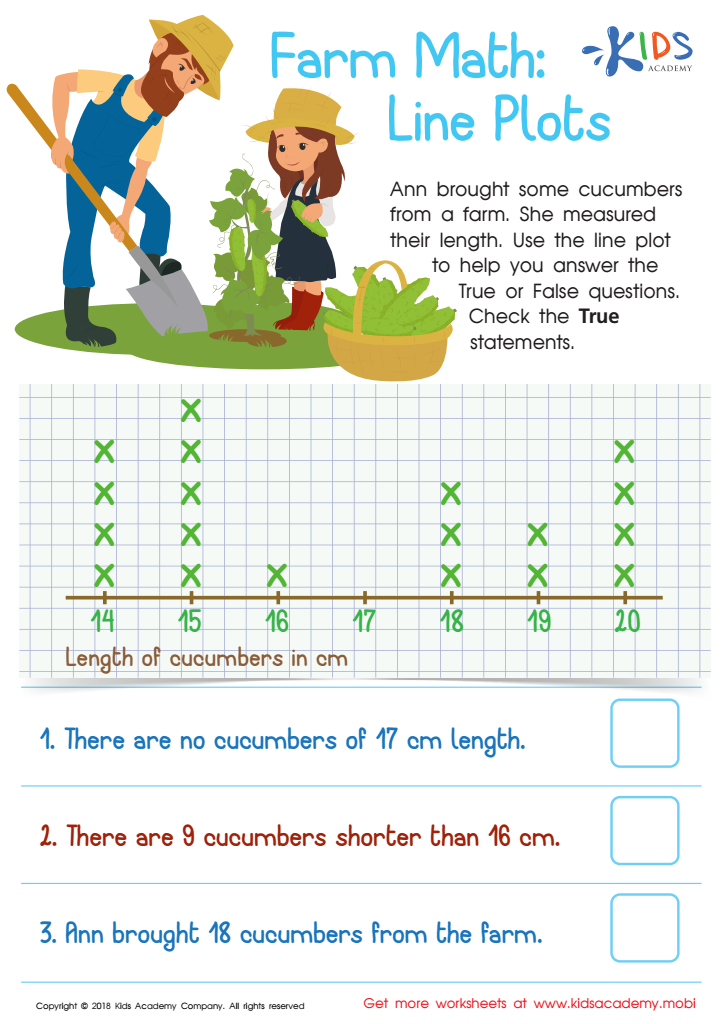
Farm Math: Line Plots Worksheet
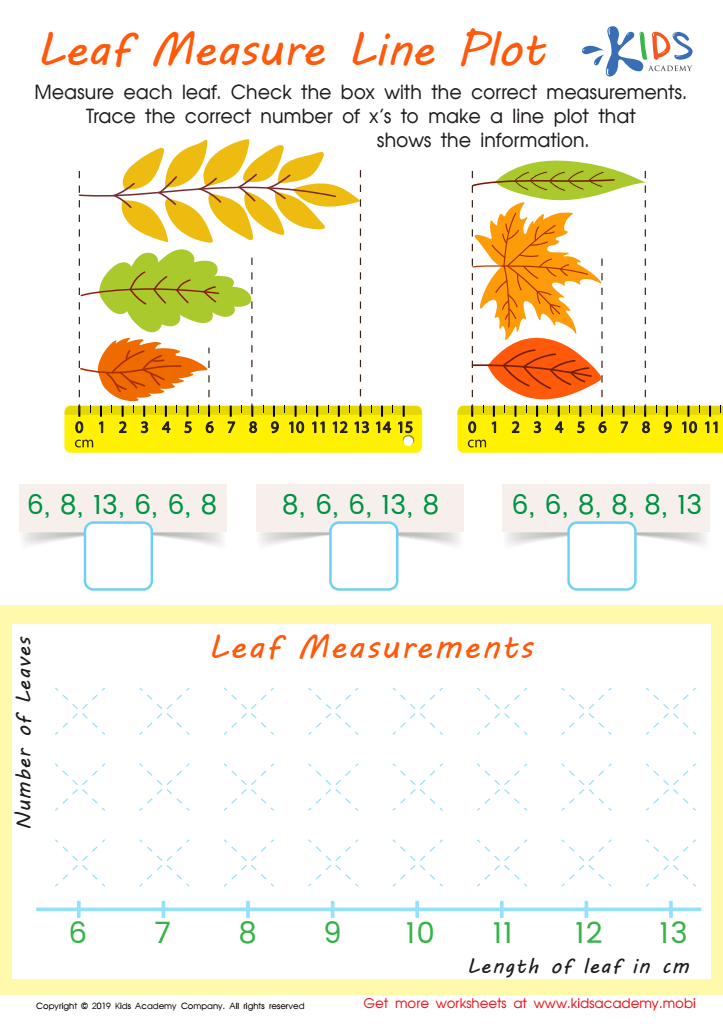
Leaf Measure Line Plot Worksheet







Data interpretation is a crucial skill for children aged 6-9, as it lays the foundation for critical thinking and informed decision-making. During these formative years, children learn to analyze information and recognize patterns, skills essential for navigating an increasingly data-driven world. By understanding and interpreting data, young learners can explore various subjects, from mathematics to science, enhancing their comprehension and problem-solving abilities.
Parents and teachers should care about data interpretation because it encourages logical reasoning and empirical thinking. Engaging with data helps children develop an intuitive sense of numbers and statistics, which is vital in a society that relies on information literacy. By fostering these skills at an early age, we prepare children to evaluate news reports, conduct scientific experiments, and understand consumer information as they grow older.
Moreover, data interpretation promotes curiosity and encourages children to ask questions. This skill empowers them to make sense of their surroundings, fostering a love for learning. When parents and teachers prioritize data interpretation, they equip children to become proactive learners, critical thinkers, and responsible citizens, able to analyze and interpret the complexities of the world around them. Ultimately, nurturing these skills is essential for children’s academic success and lifelong learning.








