Problem-Solving Skills Addition and Subtraction Word Problems Worksheets for Ages 6-9 - Page 2
33 filtered results
-
From - To
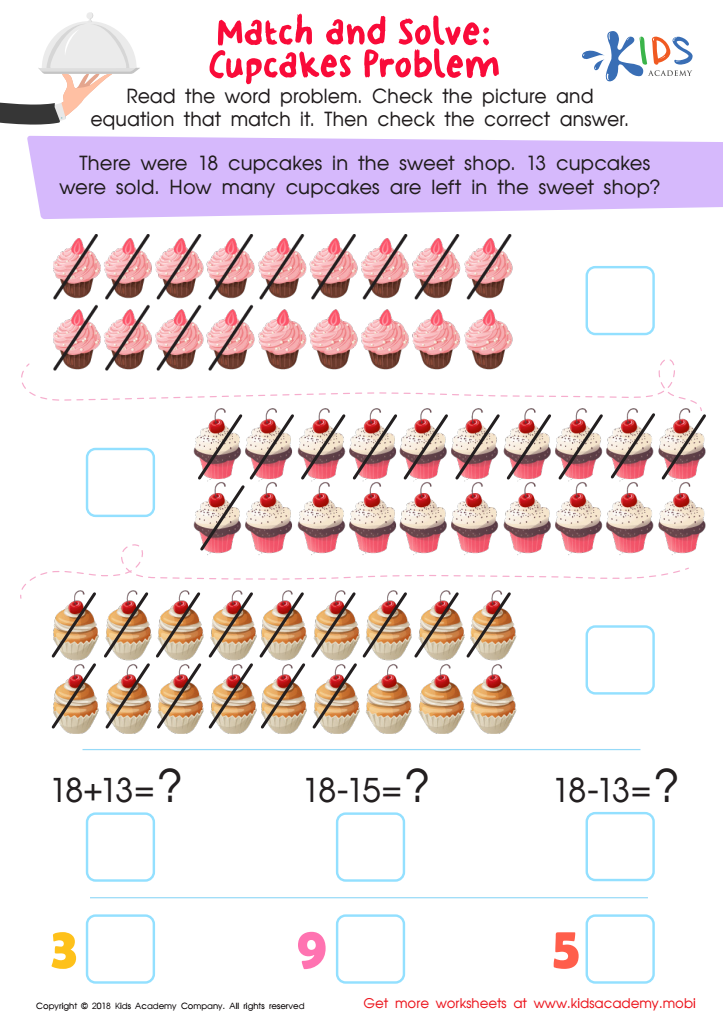
Match and Solve: Cupcakes Problem Worksheet
 Assign to My Students
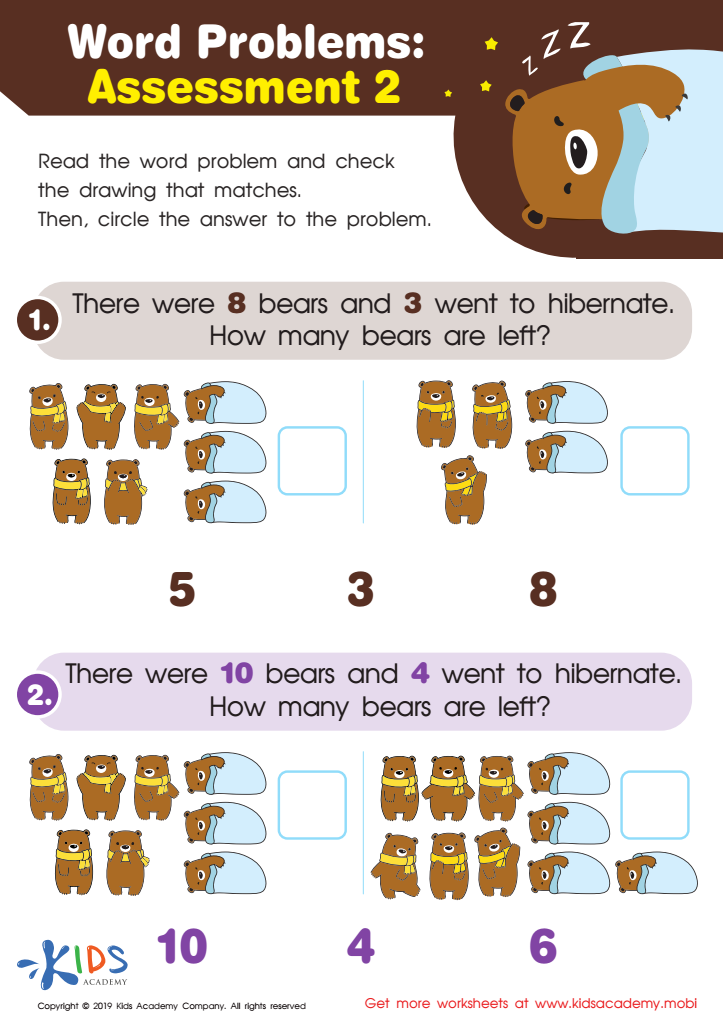
Word Problems: Assessment 2 Worksheet
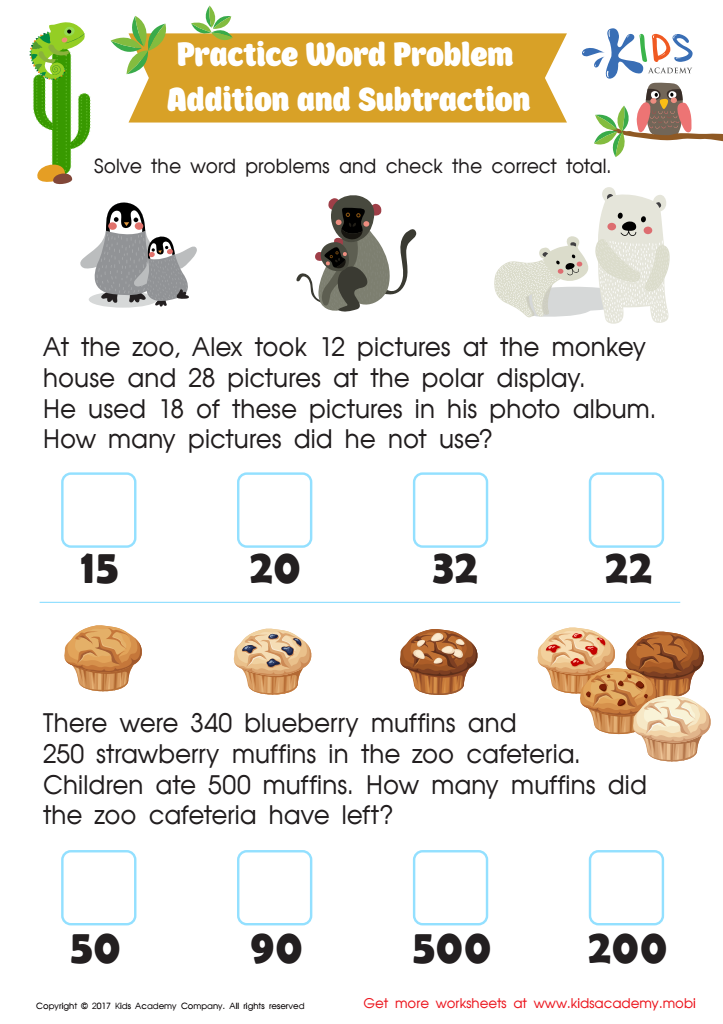
Addition and Subtraction: Word Problems Worksheet
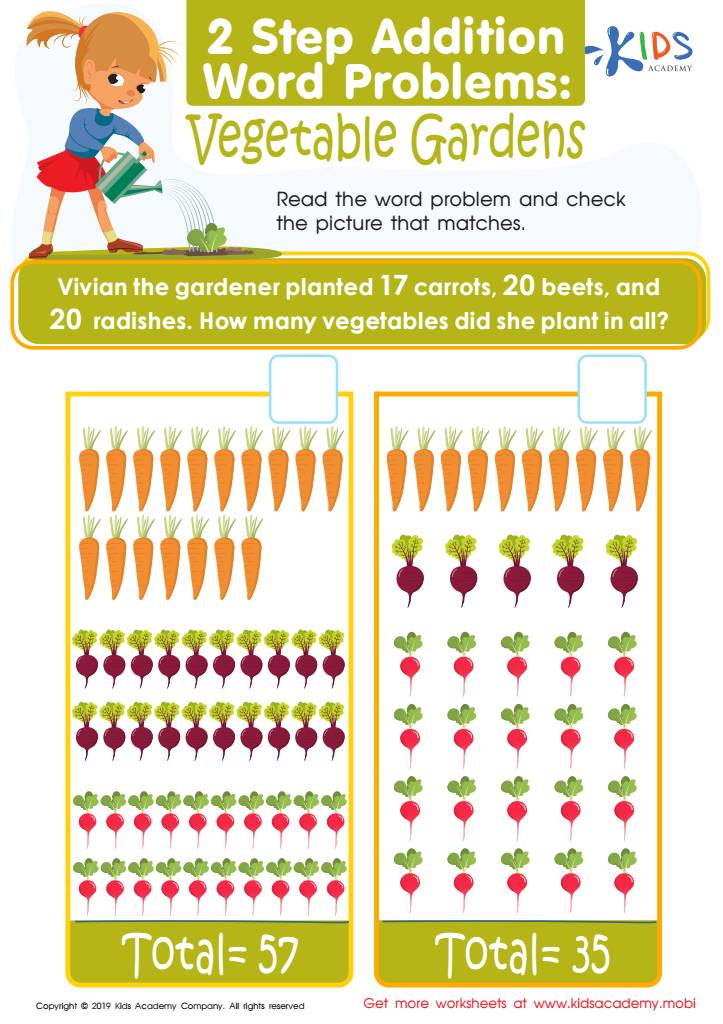
Vegetable Gardens Worksheet
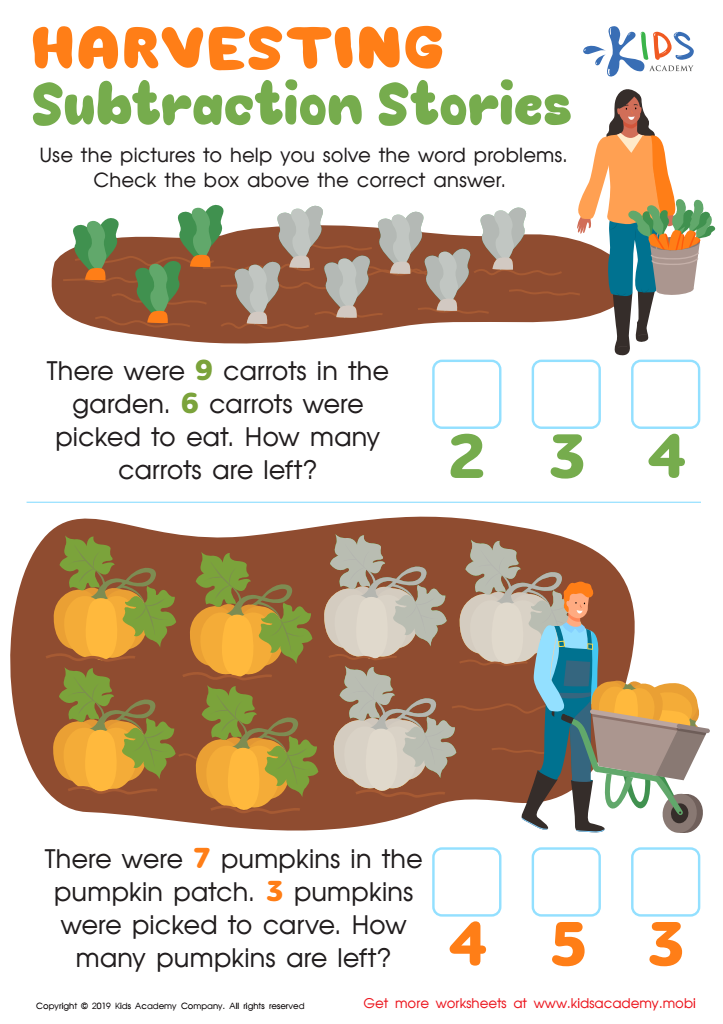
Harvesting Subtraction Stories Worksheet
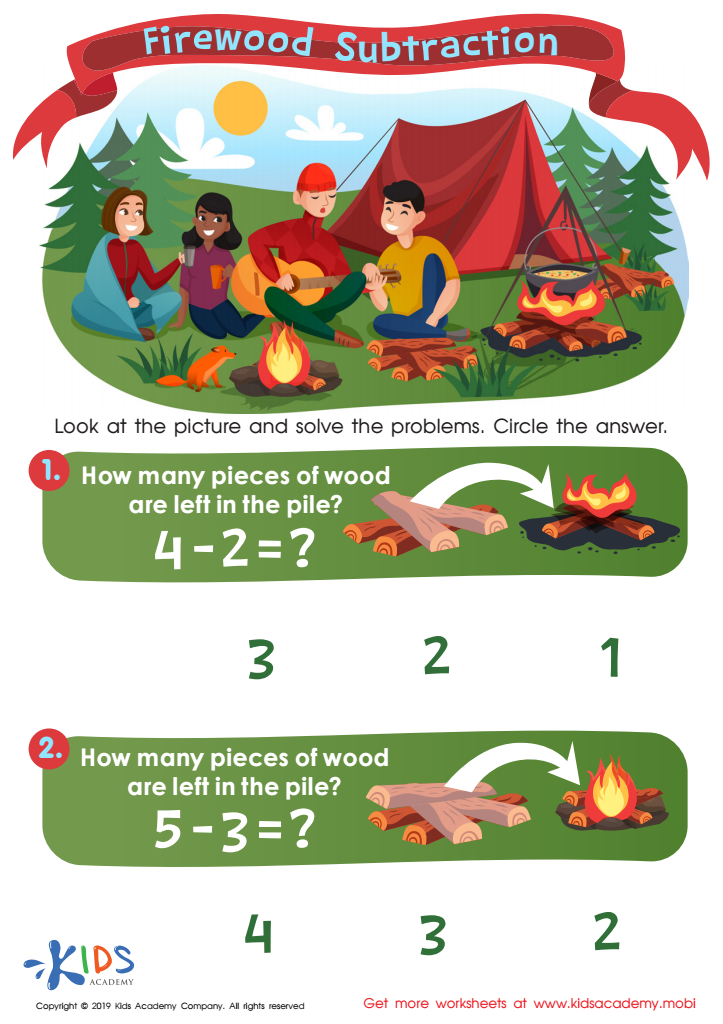
Firewood Subtraction Worksheet
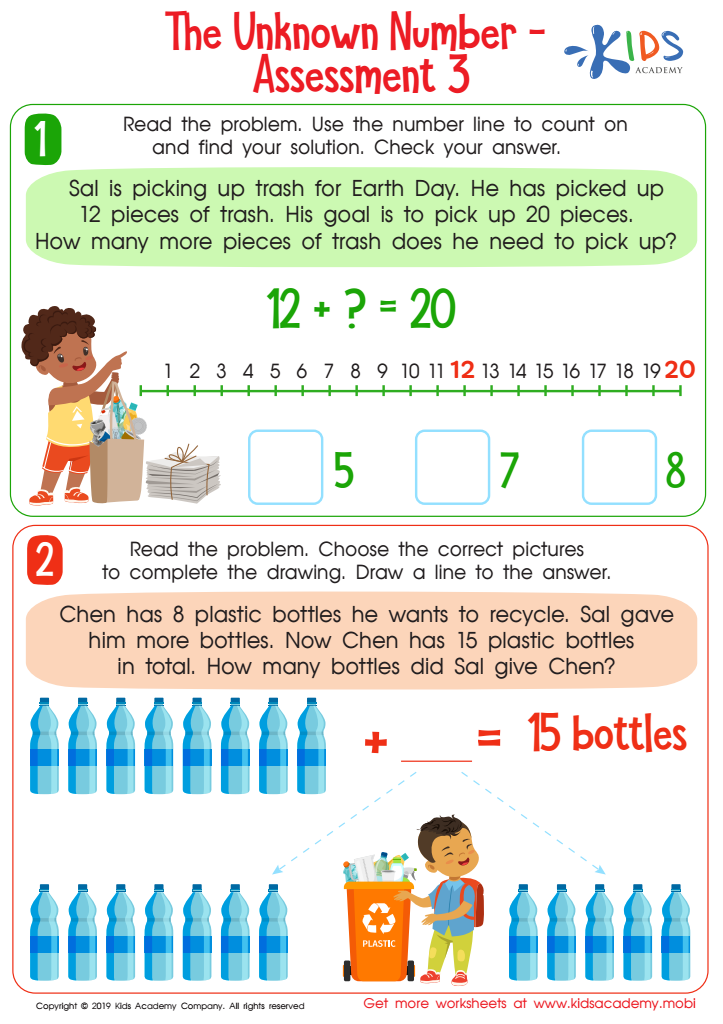
The Unknown Number - Assessment 3 Worksheet
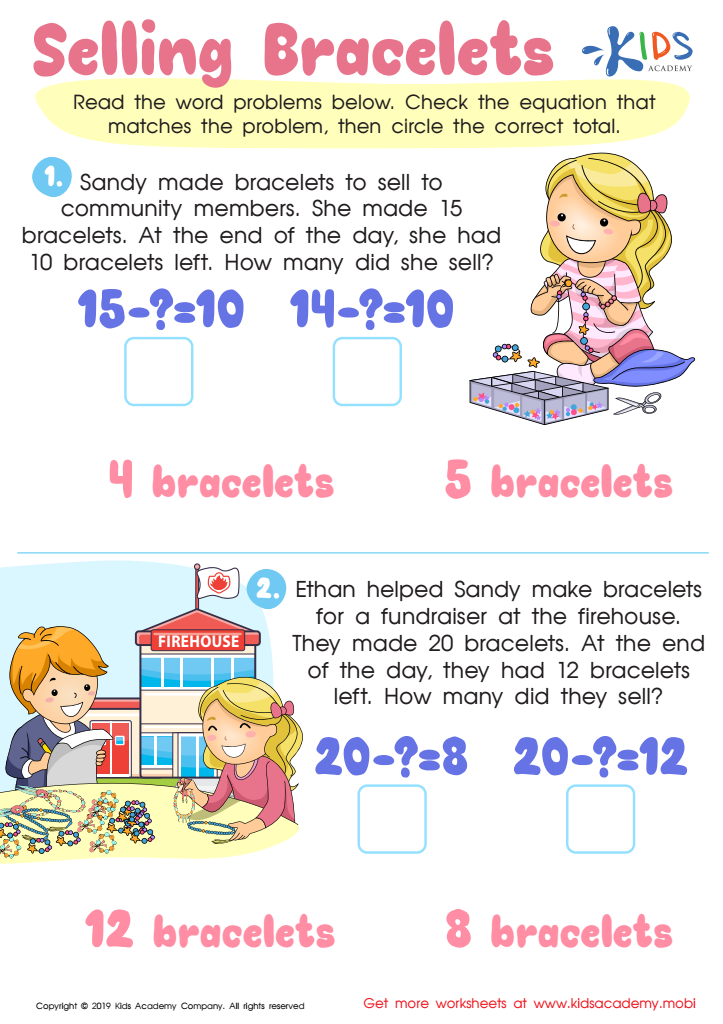
Selling the Bracelets Worksheet
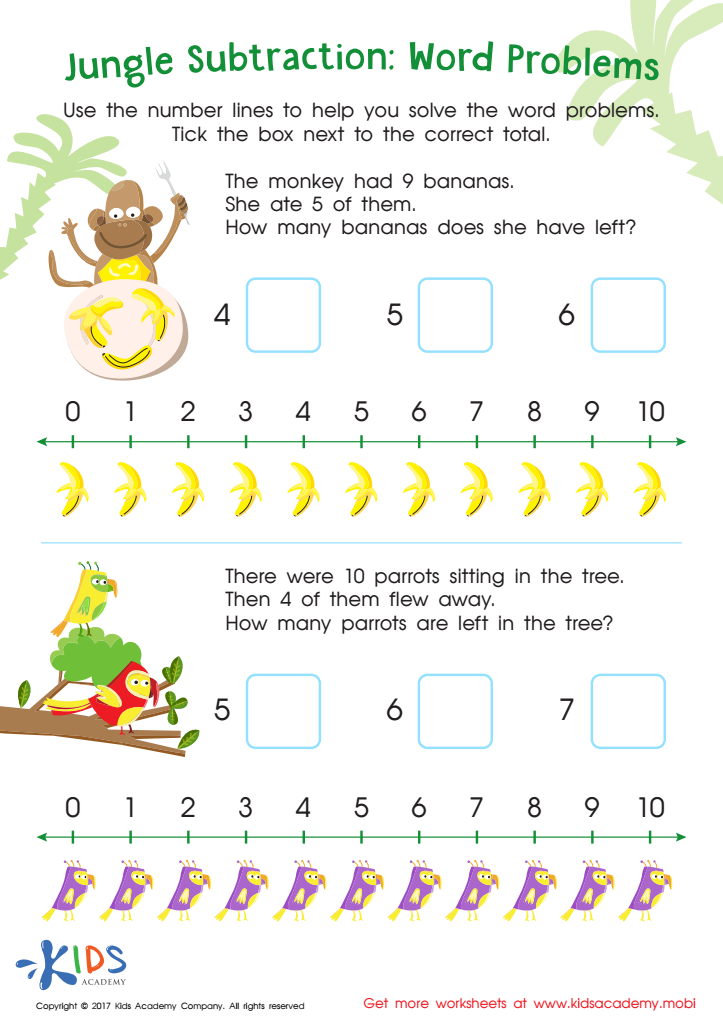
Jungle Subtraction Word Problems Substraction Worksheet








Parents and teachers should prioritize developing problem-solving skills in addition and subtraction word problems for children aged 6-9 because these foundational skills are crucial for both academic success and everyday life. At this developmental stage, children are building the mathematical groundwork that will support more advanced concepts later in their education. By focusing on word problems, children don't just learn to compute sums and differences; they also develop critical thinking and comprehension skills as they interpret the written problem and translate it into a mathematical equation.
Moreover, solving word problems requires children to practice logical thinking and reasoning, fostering their ability to approach real-world situations methodically. These problems offer context, helping children see the practical applications of their math skills in daily activities, such as shopping or planning.
Encouraging problem-solving at a young age also promotes perseverance. Children learn that tackling challenging problems is rewarding, building resilience and a positive attitude towards learning. Additionally, these activities enhance early literacy since interpreting a problem correctly relies on reading comprehension.
Therefore, investing time and effort into cultivating addition and subtraction problem-solving skills during childhood builds a solid academic foundation, equips children with essential life skills, and nurtures a lifelong love for learning and overcoming challenges.