Problem-Solving Skills Fractions Worksheets for Ages 6-9
3 filtered results
-
From - To
Unlock your child's potential with our Problem-Solving Skills Fractions Worksheets, designed for kids aged 6-9. These engaging worksheets enhance critical thinking and mathematical skills by focusing on fraction problems. Each activity is meticulously crafted to make learning fractions fun and interesting, providing interactive challenges that cater to young minds. From simple fractions to complex puzzles, our resources adapt to your child's learning pace. Build problem-solving confidence and foundational math skills, ensuring classroom success. Ignite a passion for mathematics with our expertly designed worksheets, the perfect tool for young learners eager to excel. Join our learning adventure today!
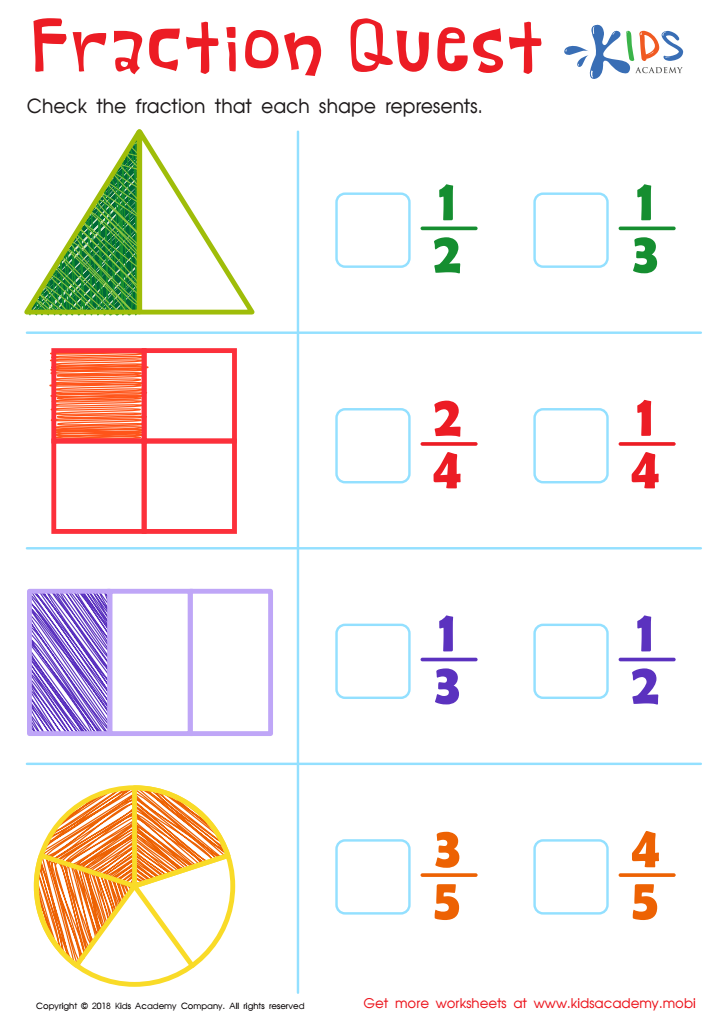
Fraction Quest Worksheet
 Assign to My Students
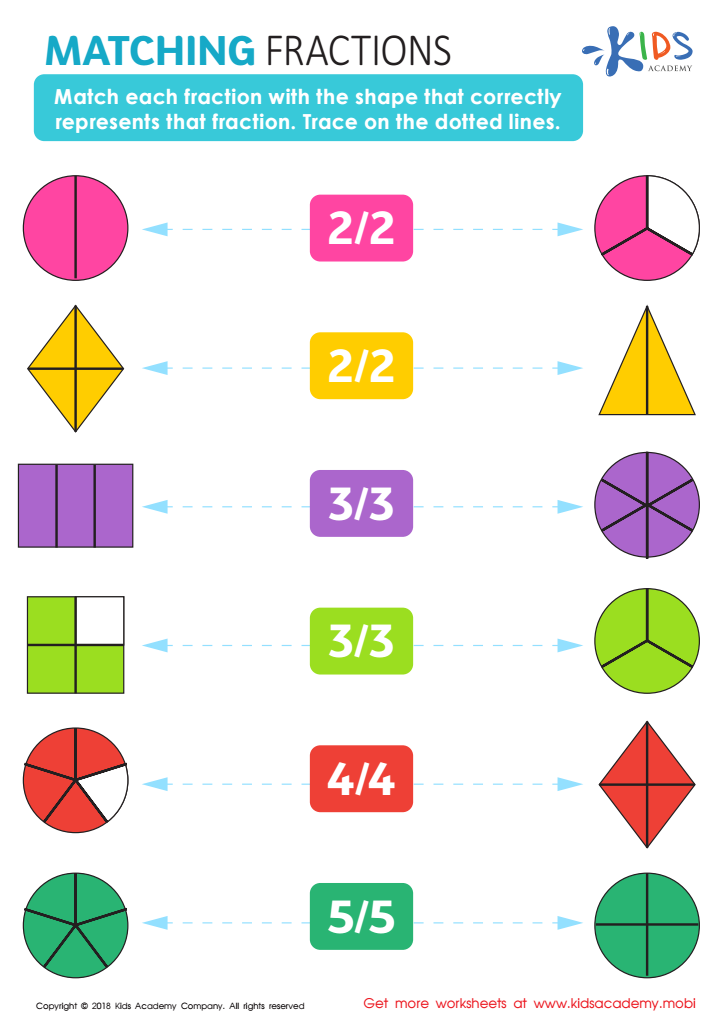
Matching Fractions Worksheet
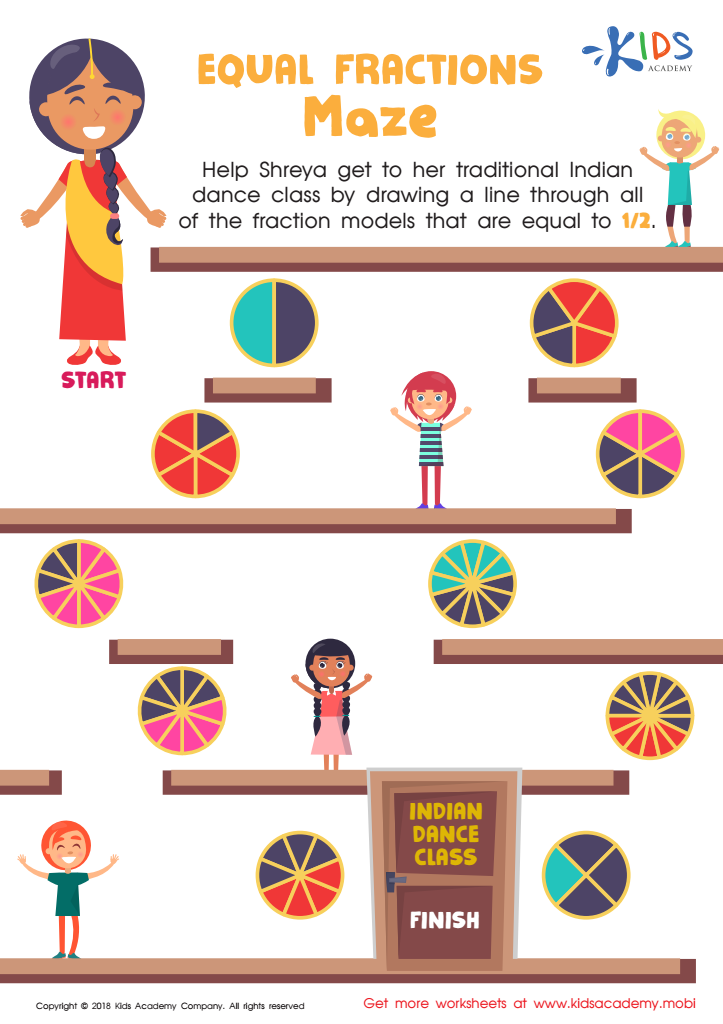
Equal Fractions Maze Worksheet








Parents and teachers should deeply care about developing problem-solving skills in fractions for children ages 6-9, as these skills are foundational for several reasons. At this age, children are at a critical stage in their cognitive development and are transitioning from concrete to more abstract thinking. Understanding fractions forms a core part of math literacy, essential for grasping more complex mathematical concepts later on, such as ratios, percentages, and algebra.
Furthermore, fraction problem-solving fosters critical thinking and analytical skills. When children solve problems involving fractions, they learn to break down complex problems into manageable parts, understand relationships between numbers, and apply logical reasoning. These cognitive skills are beneficial far beyond mathematics, supporting improved problem-solving abilities in daily life and across various subjects.
Additionally, early mastery of fractions builds confidence in math. Research shows that students who struggle with fractions often face ongoing challenges with math throughout their academic careers. Therefore, early intervention and consistent practice can remove this hurdle, setting children up for better academic success.
Involving parents in the learning process ensures that practice extends beyond the classroom. When parents engage with their children's learning, it can reinforce skills, boost morale, and establish a positive learning environment. By prioritizing fraction problem-solving skills, parents and teachers together lay the groundwork for well-rounded, confident learners.








