Comparing Fractions Numbers Worksheets for Ages 6-9
7 filtered results
-
From - To
Enhance your child's math skills with our "Comparing Fractions Numbers Worksheets for Ages 6-9." These engaging and educational worksheets are designed to help young learners understand fraction concepts and develop strong comparative skills. Through fun activities and interactive exercises, kids can practice identifying, comparing, and ordering fractions with ease. Ideal for classroom or home use, these printable worksheets cater to different learning styles and ensure that learning fractions is both enjoyable and effective. Help your child build a solid foundation in math by exploring our comprehensive collection of Comparing Fractions Numbers Worksheets today!
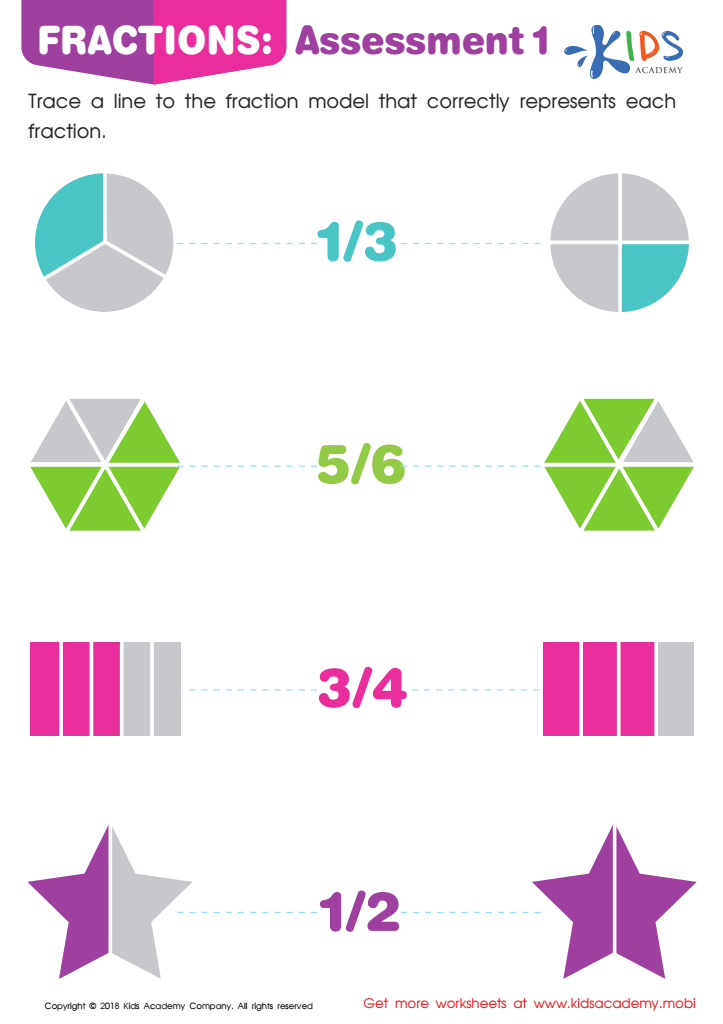
Fractions: Assessment 1 Worksheet
 Assign to My Students
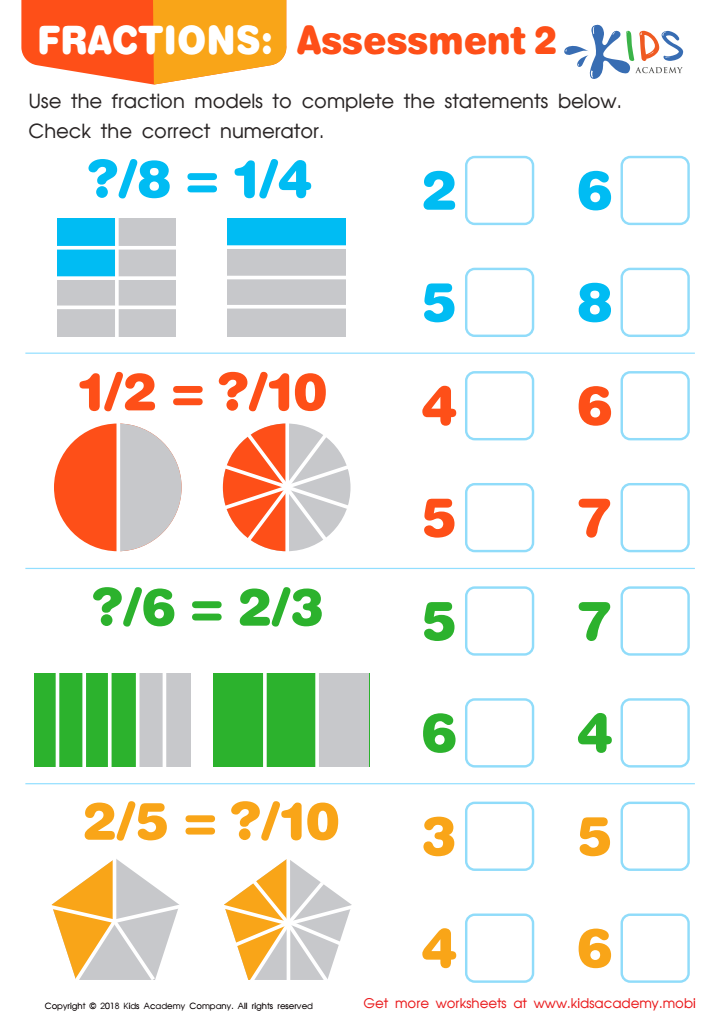
Fractions: Assessment 2 Worksheet
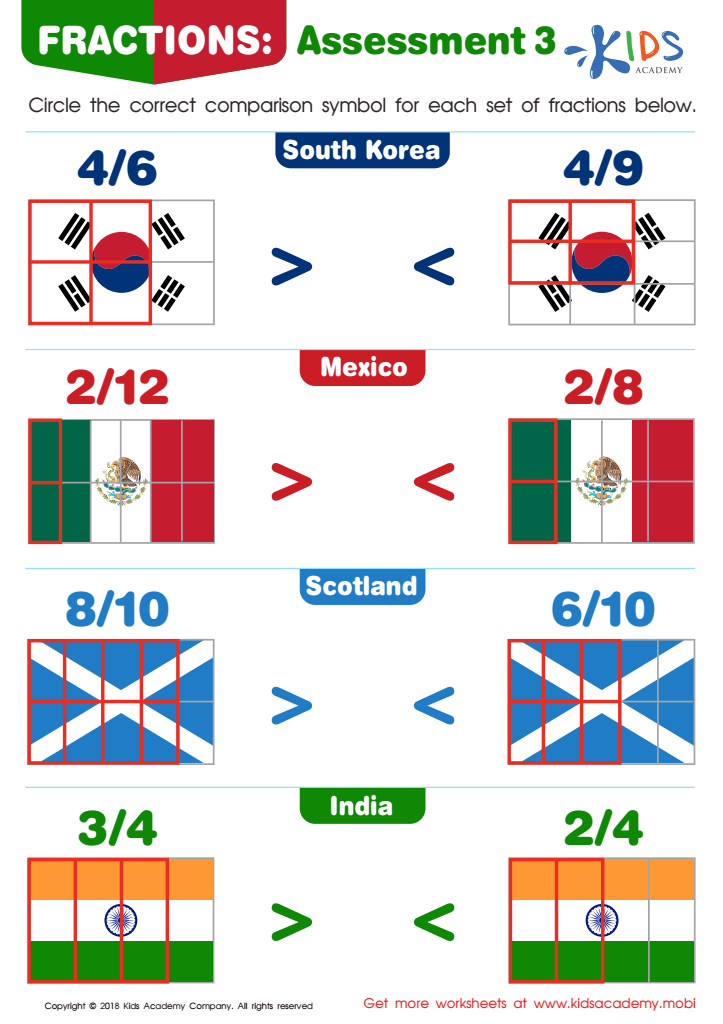
Fractions: Assessment 3 Worksheet
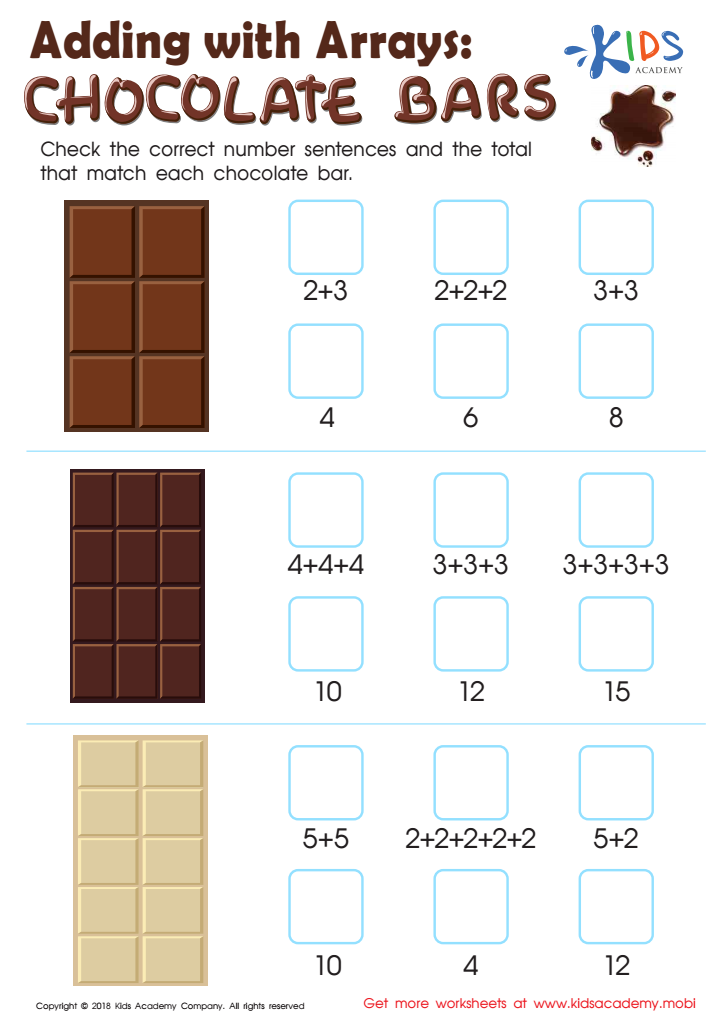
Adding with Arrays: Chocolate Bars Worksheet
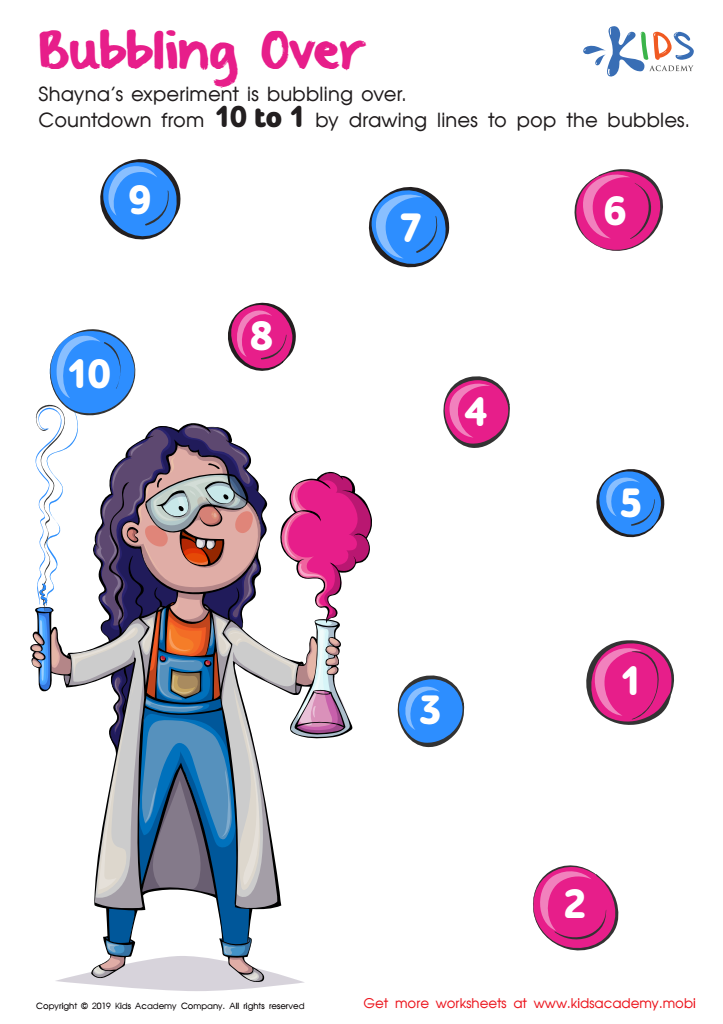
Bubbling Over Worksheet
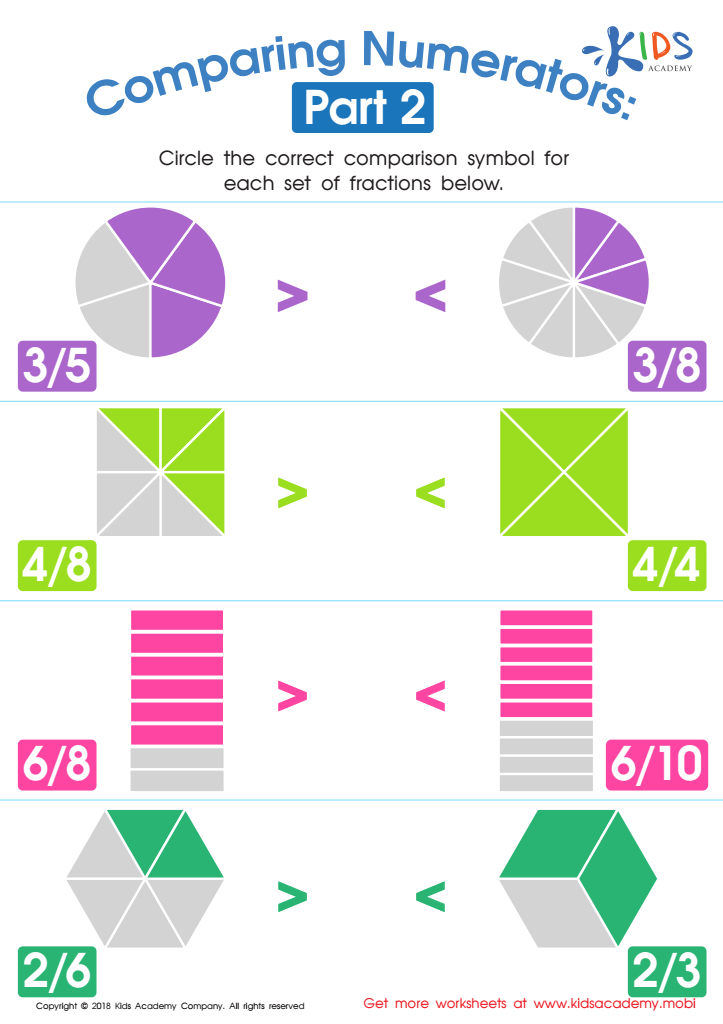
Comparing Numerators Part 2 Worksheet
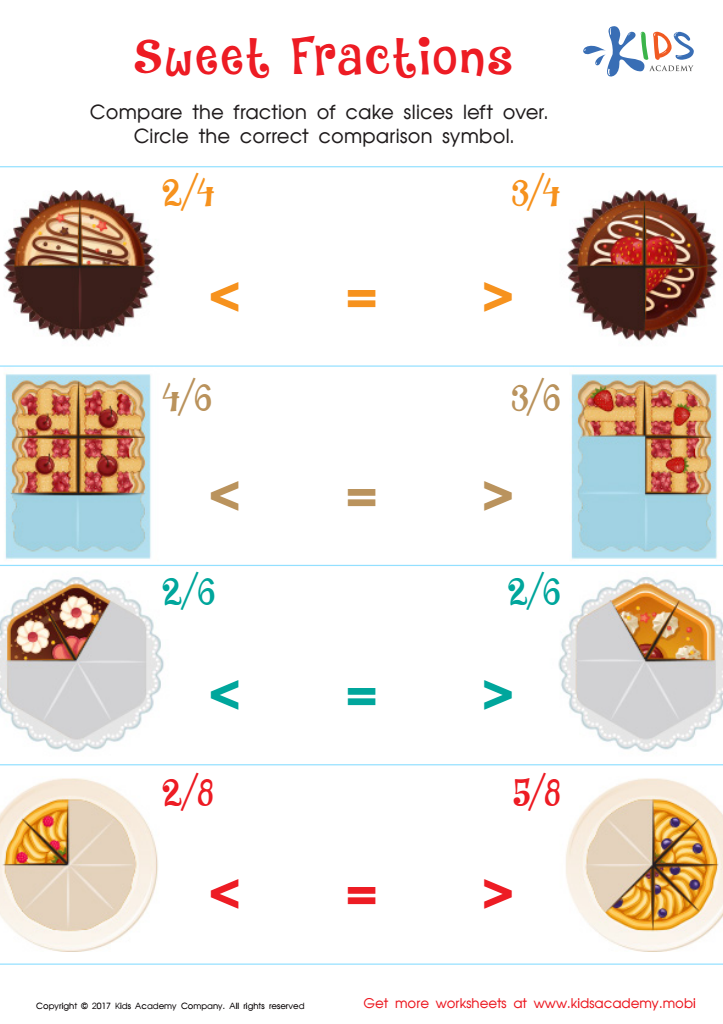
Compare Fractions Worksheet



%20(1).jpg)



Understanding fractions is a fundamental mathematical skill, and teaching children aged 6-9 to compare fractions lays a crucial foundation for their future learning. Here’s why parents and teachers should pay particular attention to this concept.
Firstly, comparing fractions helps develop number sense, which is the ability to understand, interpret, and work with numbers fluidly. By discerning the size of fractions, children grasp that numbers can be less than one or between whole numbers, broadening their comprehension of number relationships and magnitudes.
Secondly, fractions are ubiquitous in the real world. From cooking recipes to dividing pizza or candy, everyday activities often involve fractional quantities. Early familiarity with comparing fractions equips children with practical life skills and enhances their problem-solving abilities.
Thirdly, mastering fractions is essential for advanced mathematical concepts. Fractions are foundational for algebra, geometry, and data analysis. A solid grasp of comparing fractions will ease children’s transition into these more complex topics.
Lastly, learning to compare fractions nurtures critical thinking and reasoning. Children engage in discussions about why one fraction is larger than another, promoting logical thinking and analytical skills.
In summary, by focusing on comparing fractions, parents and teachers help children build necessary mathematical skills, improve everyday practical knowledge, ease future learning, and develop essential cognitive abilities.








