Understanding subtraction Numbers Worksheets for Ages 6-9
4 filtered results
-
From - To
Explore our engaging "Understanding Subtraction Numbers Worksheets" designed specifically for children ages 6-9. These worksheets help young learners grasp the concept of subtraction through fun activities suited to their developmental stage. With a variety of exercises, children will practice basic subtraction skills, enhance their number recognition, and cultivate problem-solving abilities while boosting their confidence in math. Each worksheet encourages interactive learning, allowing kids to complete subtraction problems joyfully. Perfect for home or classroom use, our materials aim to make learning subtraction enjoyable and accessible. Start your child's math journey today and watch their skills grow with our dynamic worksheets!
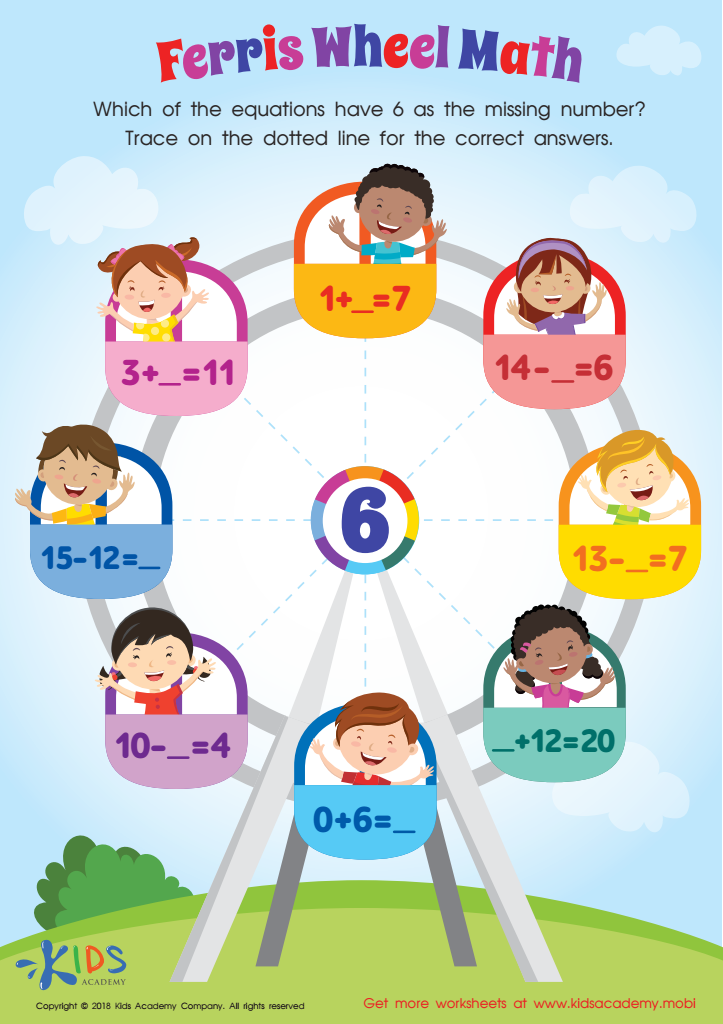
Missing Number: Ferris Wheel Math Worksheet
 Assign to My Students
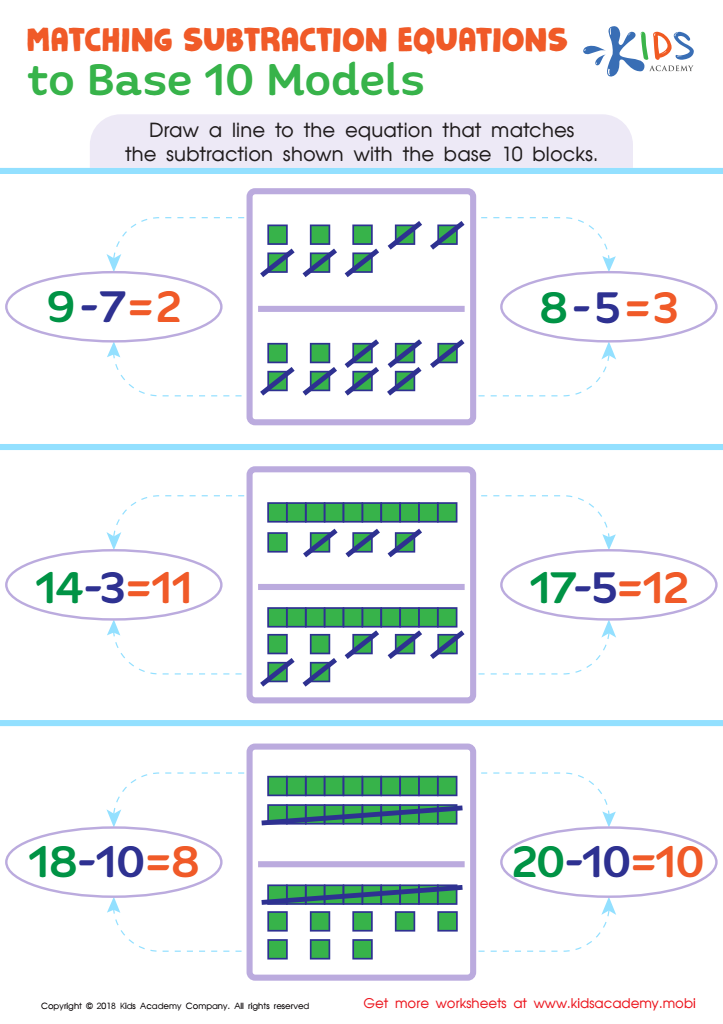
Matching Subtraction Equations To Base 10 Models Worksheet
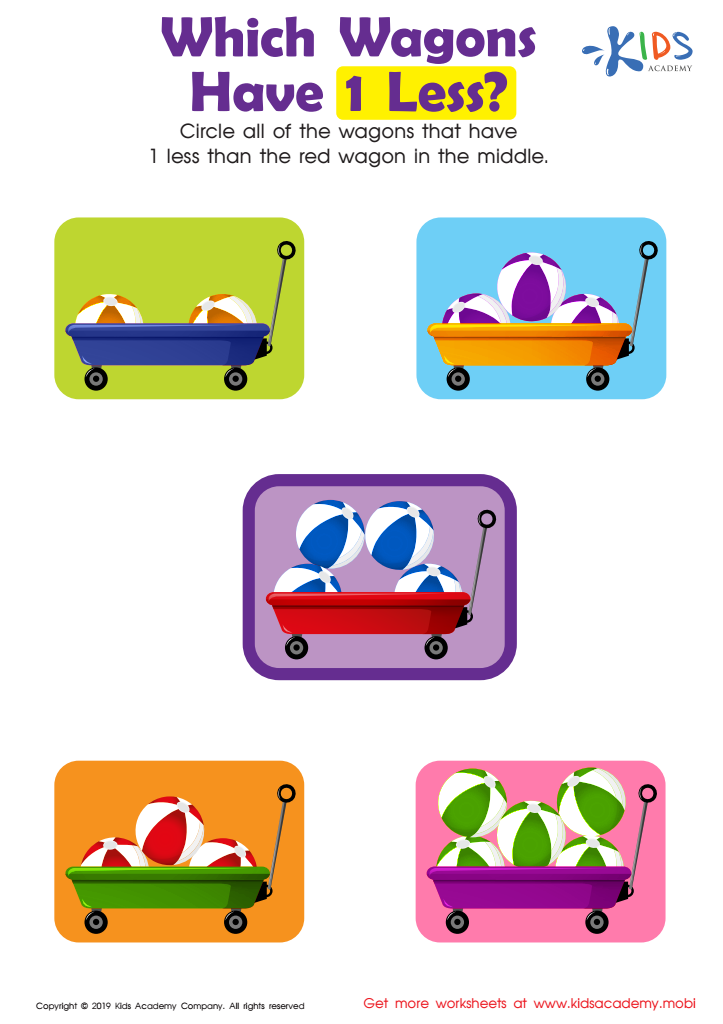
Which Wagons Have 1 Less? Worksheet
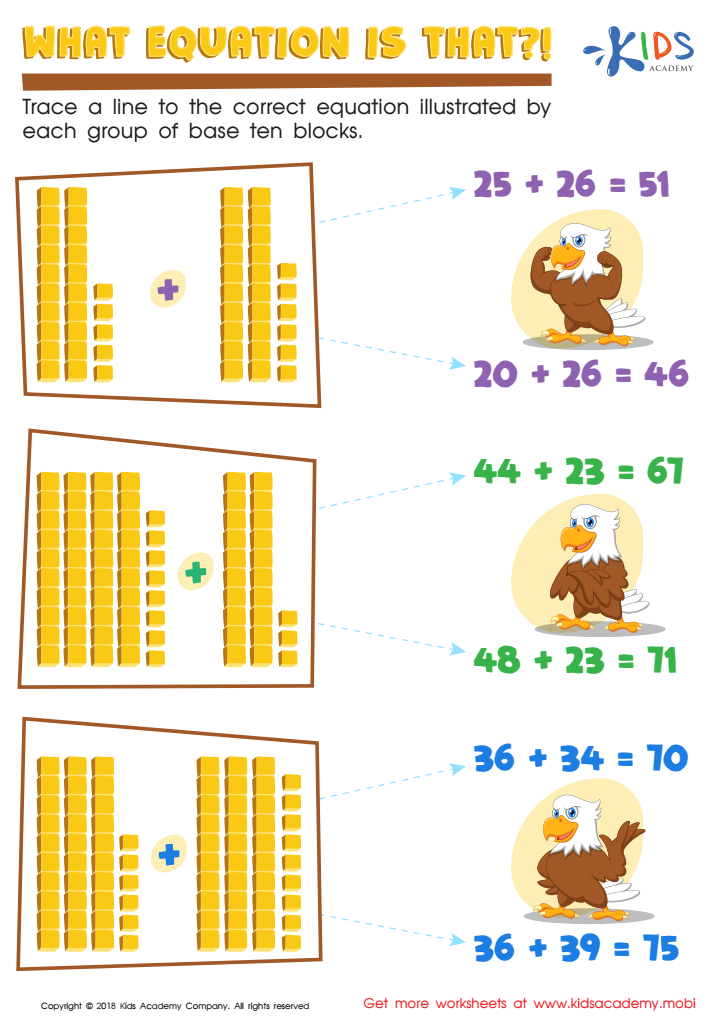
What Equation Is That? Worksheet





%20(1).jpg)

Understanding subtraction is crucial for children aged 6-9, as it lays the foundation for their mathematical skills and overall cognitive development. At this stage, kids are transitioning from basic numeral recognition to more complex mathematical concepts. Mastering subtraction not only helps them with simple calculations but also enhances their problem-solving abilities and critical thinking skills.
Subtraction is intertwined with daily life, teaching children how to manage resources, understand change in transactions, and interpret data in practical scenarios. For example, knowing how to subtract increments helps children comprehend time, distance, and quantities. Furthermore, communication becomes key as they learn to articulate their thought processes, which fosters healthy social interactions.
Parents and teachers play a vital role in this developmental phase. Engaging in fun, interactive activities—like games, puzzles, or real-life problem-solving—can make learning subtraction enjoyable and effective. Moreover, addressing misconceptions early on can prevent future math anxiety or difficulties. By emphasizing subtraction's importance, adults can instill confidence in young learners, ensuring they have supportive foundations to tackle more complex mathematical and logical concepts as they progress in their education. Ultimately, understanding subtraction equips children with essential tools for both academic success and everyday life.








