Pattern recognition Matching Worksheets for Ages 6-9
5 filtered results
-
From - To
Unlock your child's potential with our Pattern Recognition Matching Worksheets designed for ages 6-9. These engaging worksheets from Kids Academy are crafted to boost critical thinking and problem-solving skills. Through an array of delightful matching activities, children will improve their ability to recognize, anticipate, and extend patterns. These exercises not only foster mathematical reasoning but also enhance cognitive development, preparing young learners for future academic success. Perfect for both classroom use and at-home practice, our worksheets turn learning into a fun adventure, ensuring that essential skills are mastered with ease and enjoyment.
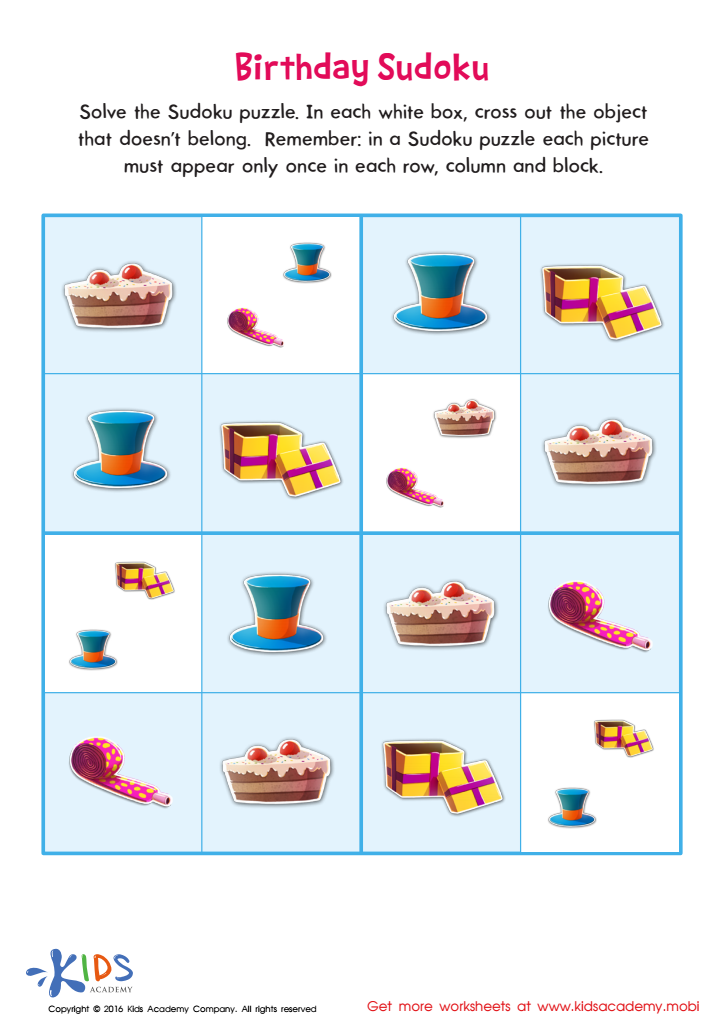
Birthday Sudoku Sorting Worksheet
 Assign to My Students
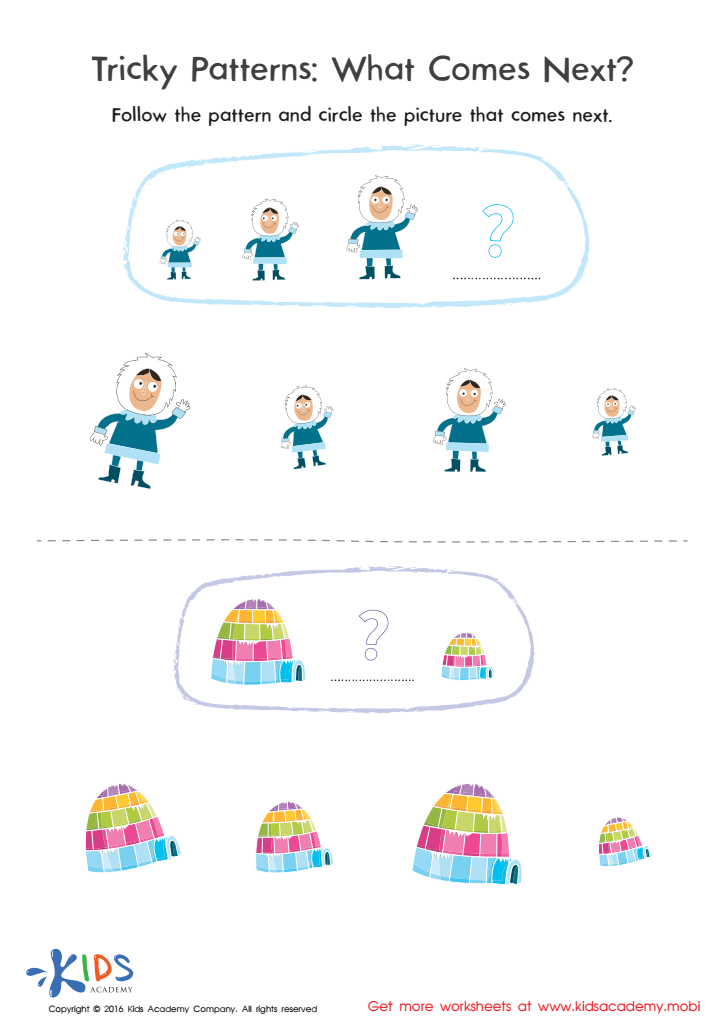
Tricky Patterns Size Worksheet
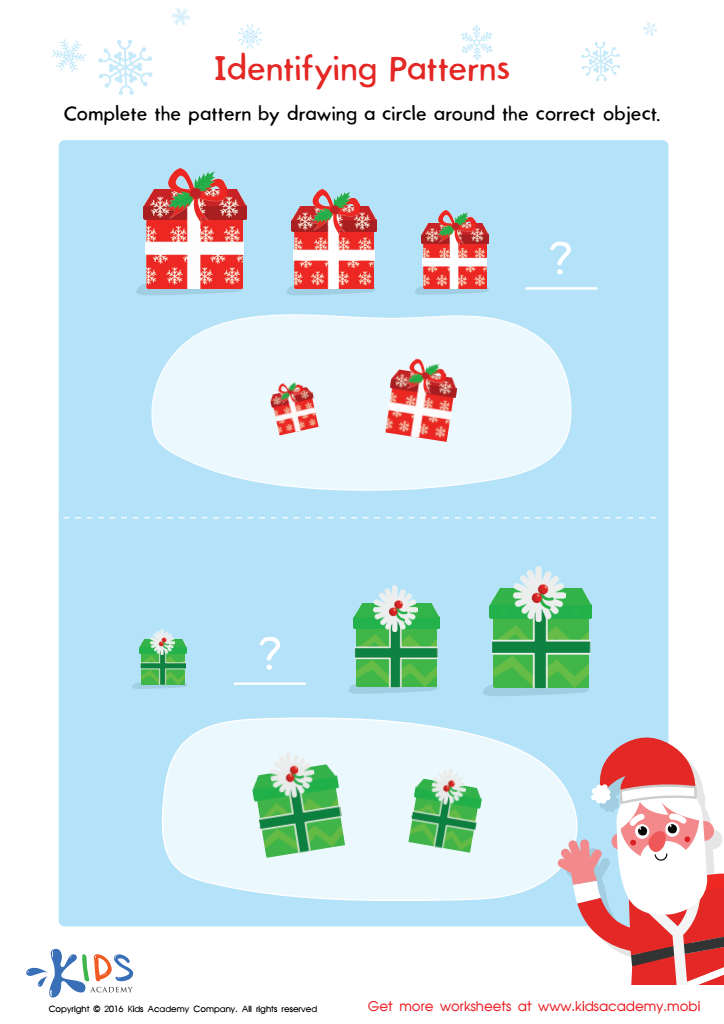
Identifying Patterns Worksheet
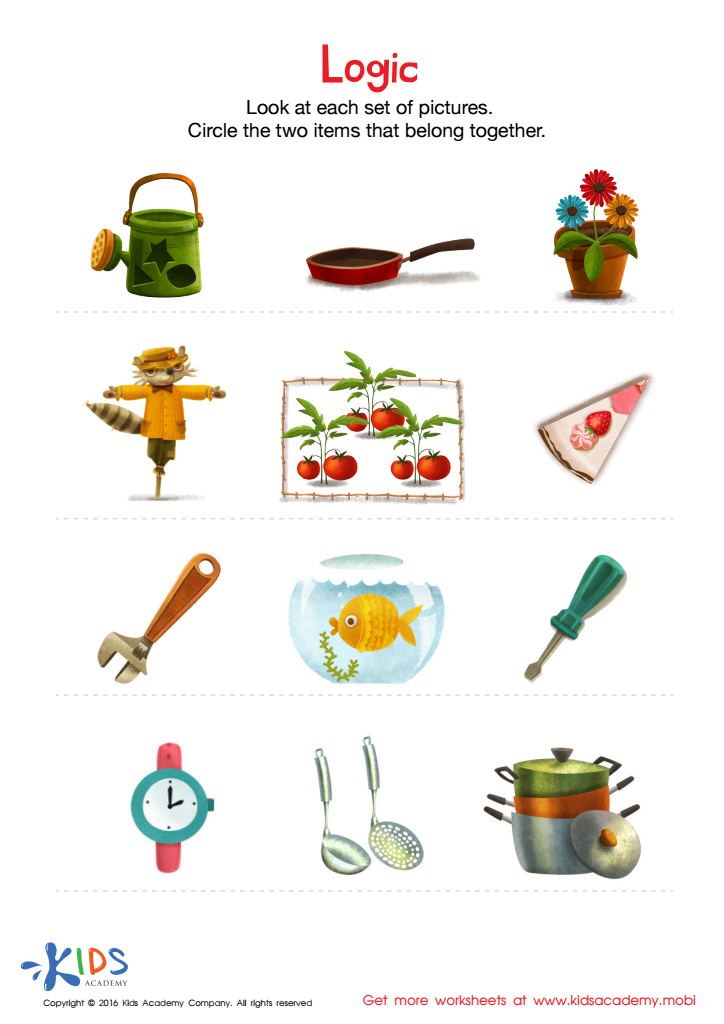
Logic Game Sorting Worksheet
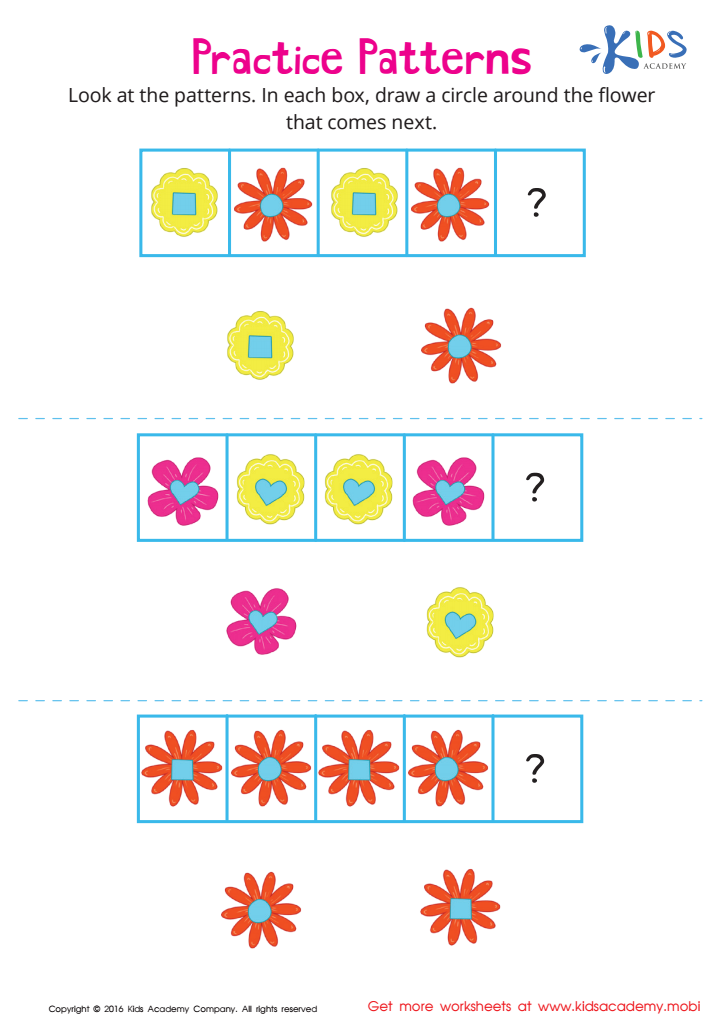








Pattern recognition and matching are critical foundational skills that play a significant role in cognitive development for children ages 6-9. These abilities are not only essential for understanding mathematical concepts but also for enhancing critical thinking and problem-solving skills.
In mathematics, patterns help children recognize sequences and make predictions. When children practice patterning activities, such as identifying repeating sequences with colors, shapes, or numbers, they develop a sense of order and logic. This understanding can improve their ability to grasp more advanced mathematical concepts like arithmetic and algebra.
Beyond math, pattern recognition sharpens observational skills and enhances memory. For example, when children learn to discern patterns in reading and writing, such as recognizing word families (cat, hat, bat) or punctuation patterns in texts, it aids in literacy development. Recognizing patterns in daily routines and natural phenomena fosters scientific reasoning and inquiry.
Moreover, pattern-related activities bolster neural pathways related to executive functions, aiding in skills such as attention, impulse control, and flexible thinking. This also extends to socio-emotional learning. Understanding social patterns helps children predict and interpret social cues, improving their interactions and empathy.
In summary, focusing on pattern recognition and matching engages multiple dimensions of a child's growth, establishing a robust educational foundation that supports ongoing learning and development across various domains.








