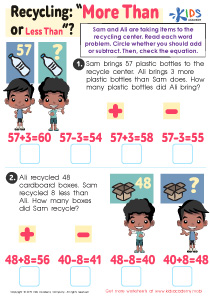
Numbers up to 100 Worksheets for Ages 6-9 - Page 3
51 filtered results
-
From - To
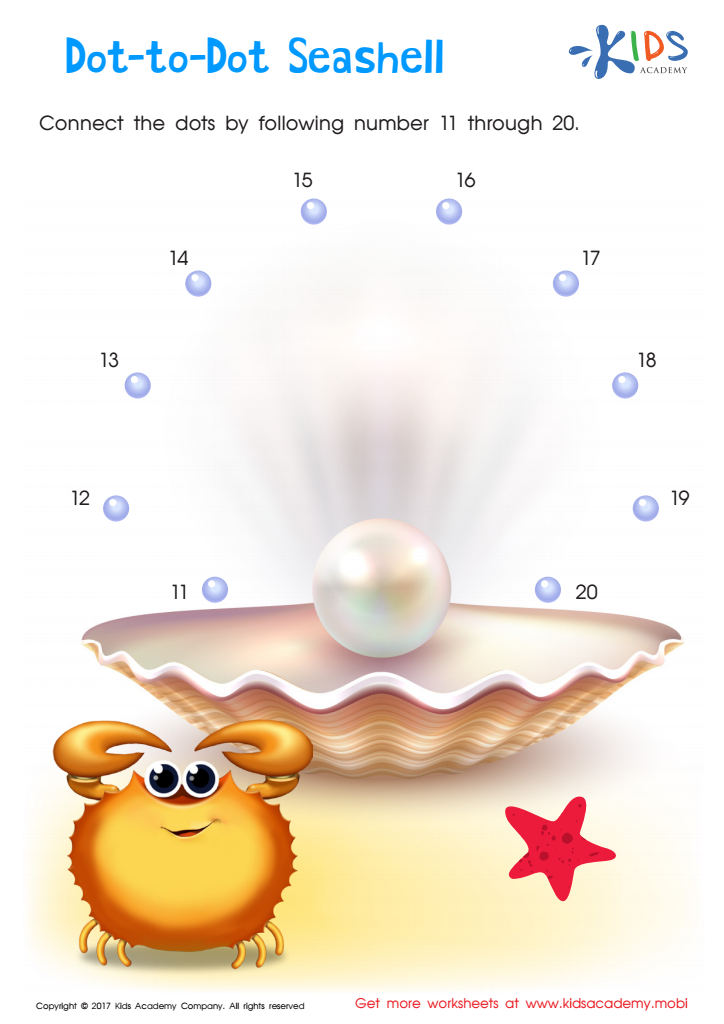
Ordering 11–20: Dot–to–dot Seashell Printable
 Assign to My Students
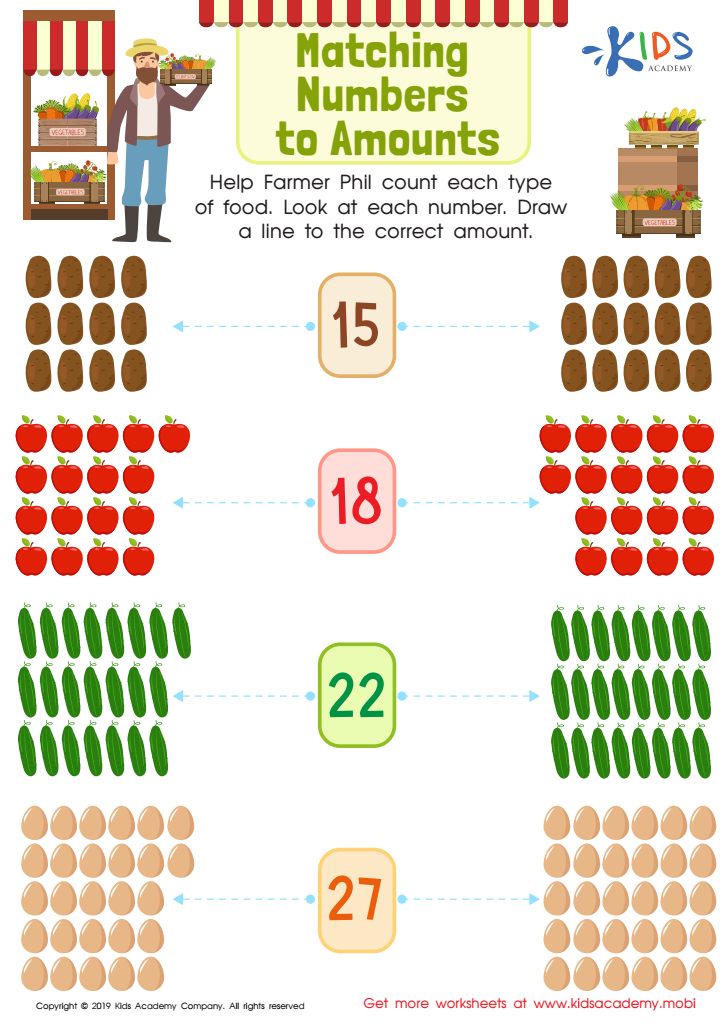
Matching Numbers to Amounts Worksheet

Counting on the City Skyline: Dot-to-Dot Worksheet








Understanding numbers up to 100 is crucial for children aged 6-9 as it forms the foundation for their future math skills and everyday life application. At this age, children transition from basic counting to more sophisticated mathematical concepts. Mastery of numbers up to 100 helps children gain confidence in their numerical abilities, as it includes crucial concepts like place value, which is the stepping stone for addition, subtraction, and understanding larger numbers.
Having a strong grasp on these numbers equips children to handle money, time, and measurements better. Recognizing and manipulating double-digit numbers enhances their problem-solving skills and logical thinking. Furthermore, a solid number sense can spark an interest in math and reduce anxiety related to the subject, fostering a positive attitude that can benefit them long-term.
For teachers, ensuring that students understand numbers up to 100 can ease the progression to more complex math topics in higher grades. For parents, supporting this learning can be as simple as involving children in everyday activities like counting groceries, telling the time, or playing number games. Both parents and teachers who prioritize this early math knowledge provide children with tools for academic success and practical competence in their daily lives.