
Number Sequencing Numbers up to 100 Worksheets for Ages 6-9
6 filtered results
Difficulty Level
Grade
Age
-
From - To
Subject
Activity
Standards
Unlock your child's potential with our engaging Number Sequencing Numbers up to 100 Worksheets, designed for ages 6-9. Perfect for developing essential math skills, these worksheets provide numerous activities that help children practice sequencing, numbering, and pattern recognition. Each sheet is crafted to boost learners’ confidence and ensure a solid understanding of number order, enhancing their arithmetic skills in a fun, interactive way. Ideal for both classroom and at-home learning, these worksheets are an excellent resource for parents and educators looking to make math both enjoyable and educational. Download now to inspire a love for numbers!
Favorites
With answer key
Interactive
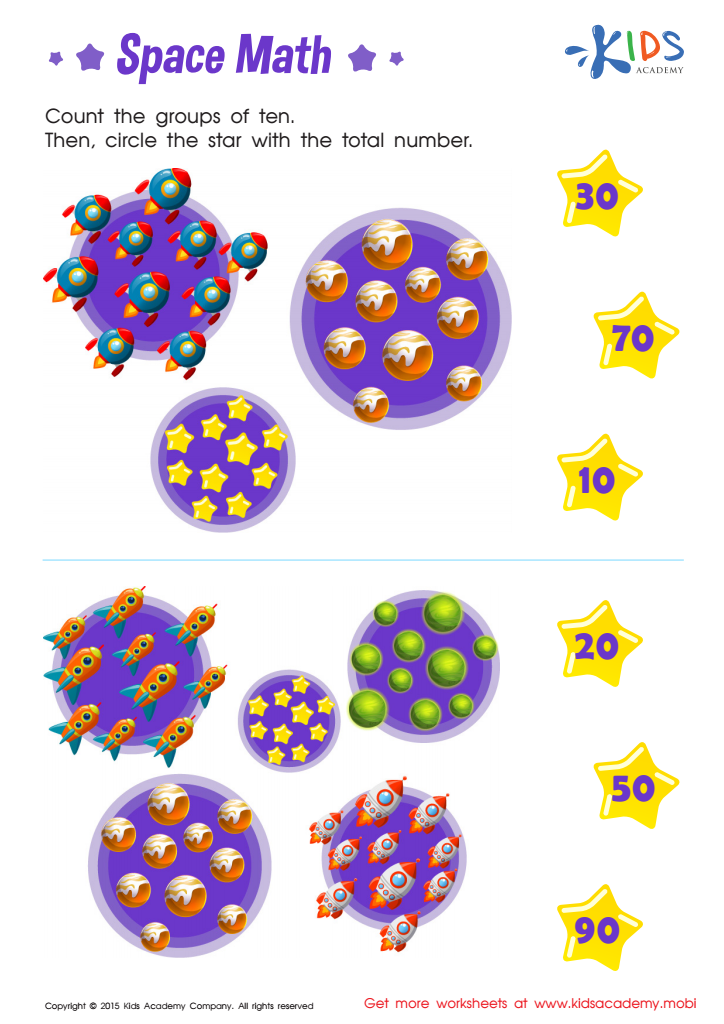
Learn dozens: Space math Worksheet
This worksheet uses Singapore Math's approach to help your child visually understand basic counting and math problems.
 Assign to My Students
Learn dozens: Space math Worksheet
Worksheet
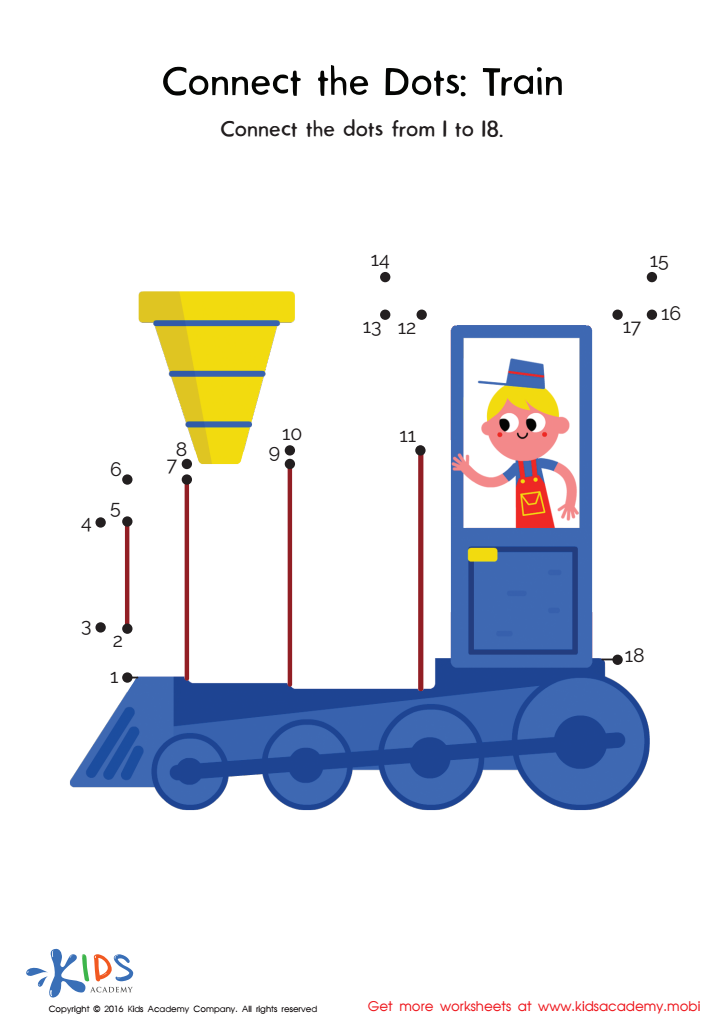
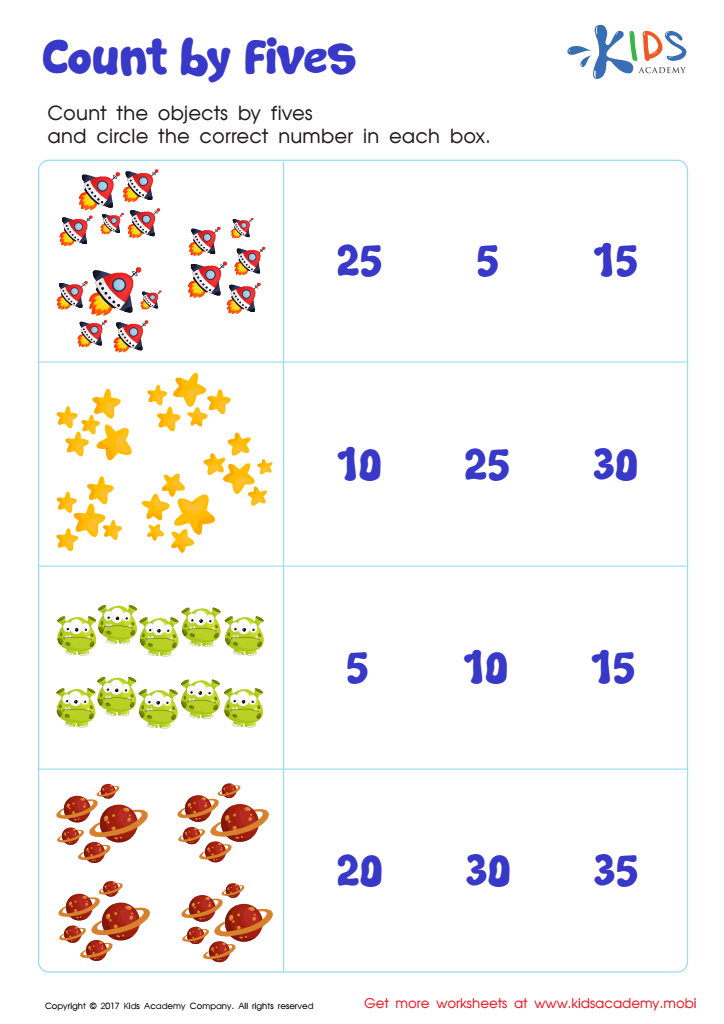
Skip Counting by 5s: Space Math Printable
This worksheet will provide your child with fun and practice counting by 5's. It'll help them visually count numbers, use problem solving skills and make connections between individual and groups of numbers. Counting money and various math concepts will become easier with this invaluable skill. Blast off with this fun and educational worksheet featuring space graphics.
Skip Counting by 5s: Space Math Printable
Worksheet
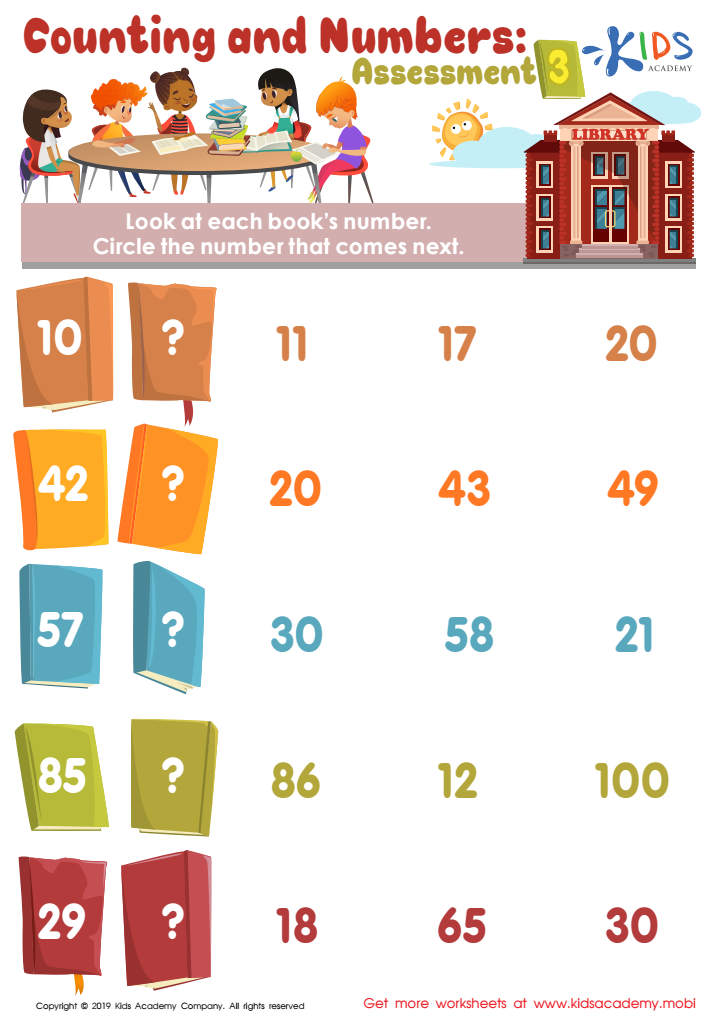
Counting and Numbers: Assessment Worksheet
Number line thinking is an essential math skill. Kids using this skill can compute math problems accurately and quickly. Our free assessment tests number line recognition; have your child pick the right number from the given options to follow the current number on the line. This assessment will give you an idea of their counting skills.
Counting and Numbers: Assessment Worksheet
Worksheet
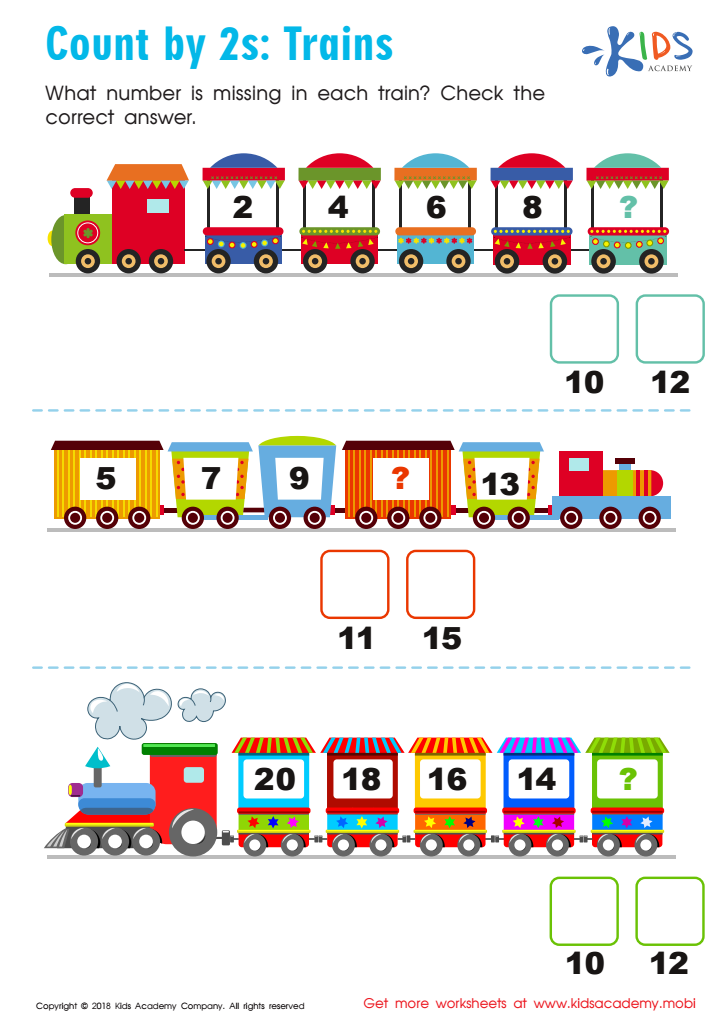
Count by 2's: Trains Worksheet
Teaching your kids quick computations? Get them skip-counting by 2s! They'll love filling in the colors of the train while counting, and it will help with 'counting up' or backward on paper or in their heads - essential for quick computations later.
Count by 2's: Trains Worksheet
Worksheet
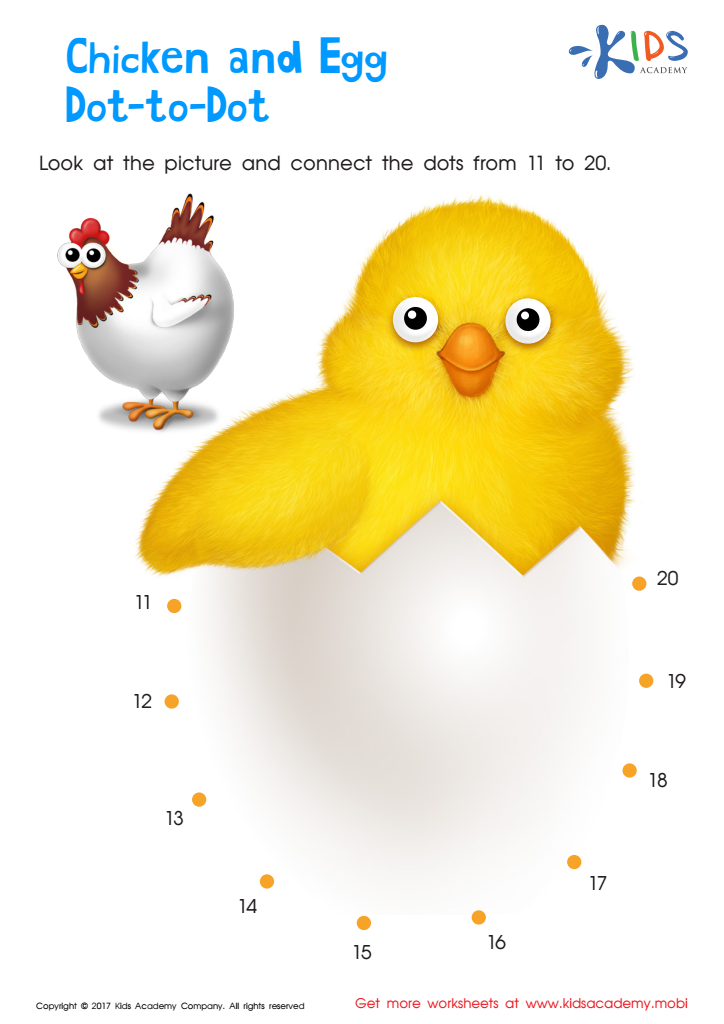
Ordering 11–20: Chicken & Egg Dot–to–dot Worksheet
Help your child hatch the chick and practice their counting skills with this dot to dot worksheet – the chicken came first! Connect the dots 11-20 to have fun and learn at the same time. Experience meaningful practice and gain confidence while drawing great pictures.
Ordering 11–20: Chicken & Egg Dot–to–dot Worksheet
Worksheet
Join Kids Academy for Free
Who is primarily going to use this learning content?








Number sequencing up to 100 is fundamental for children aged 6-9 because it forms the basis of their numerical understanding and overall mathematical literacy. When children learn to sequence numbers correctly, they enhance their ability to recognize patterns, which is crucial for future math concepts like addition, subtraction, multiplication, and division. Understanding number sequences builds a strong foundation for place value comprehension—the cornerstone of our base-10 number system.
Knowing how to sequence numbers also helps children develop logical thinking and problem-solving skills. For instance, identifying and predicting what comes next in a sequence requires analytic thinking that translates to real-world situations, such as organizing objects or understanding time.
Additionally, mastery in number sequencing boosts children's confidence and fosters a positive attitude toward math. Having a solid grasp of fundamental skills makes advanced mathematical concepts less intimidating, paving the way for academic success across all subjects. For teachers and parents, supporting children's learning in this area ensures they are well-prepared for future educational challenges, turning math into a tool rather than an obstacle. Thus, it's critically important to nurture these skills during these formative years to cultivate lasting competencies and enthusiasm for math.








