Word association Reading Worksheets for Ages 6-9
4 filtered results
-
From - To
Discover our engaging Word Association Reading Worksheets designed for children aged 6-9! These interactive worksheets help young learners enhance their vocabulary and reading comprehension skills through fun, associative thinking exercises. By connecting words and identifying relationships between them, your child will develop critical linguistic abilities while enjoying the learning process. Our thoughtfully crafted activities cater to various learning styles, making it easy for kids to grasp concepts in an entertaining way. Perfect for classroom use or at-home learning, our worksheets are an excellent resource for fostering a love of reading and promoting cognitive development. Start your child’s journey towards literacy success today!
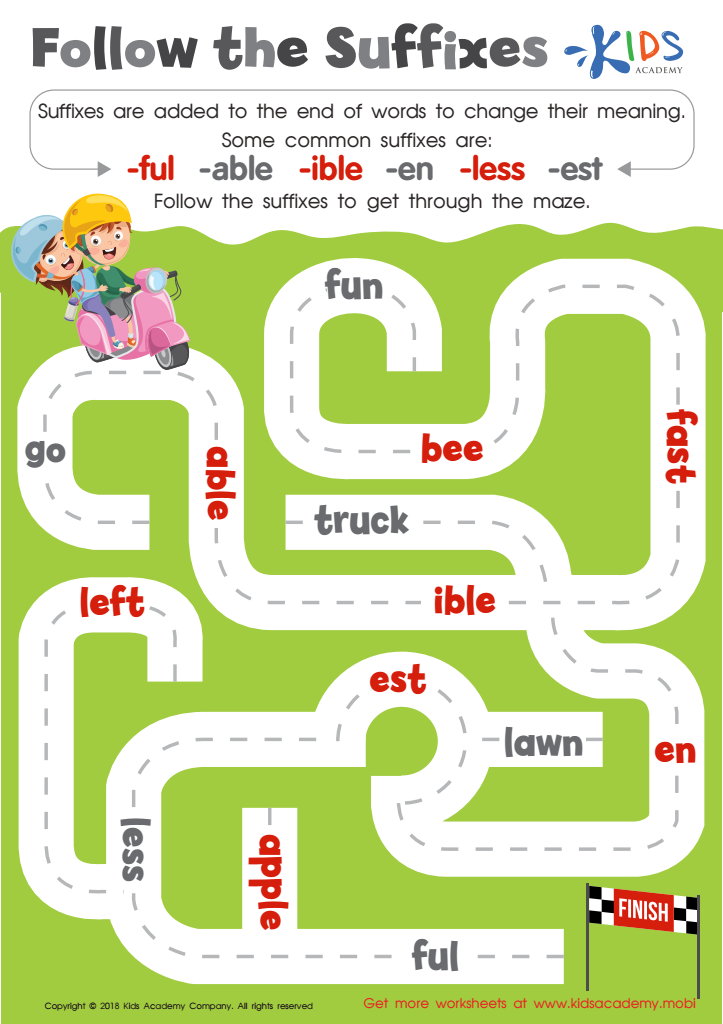
Reading: Follow the Suffixes Worksheet
 Assign to My Students
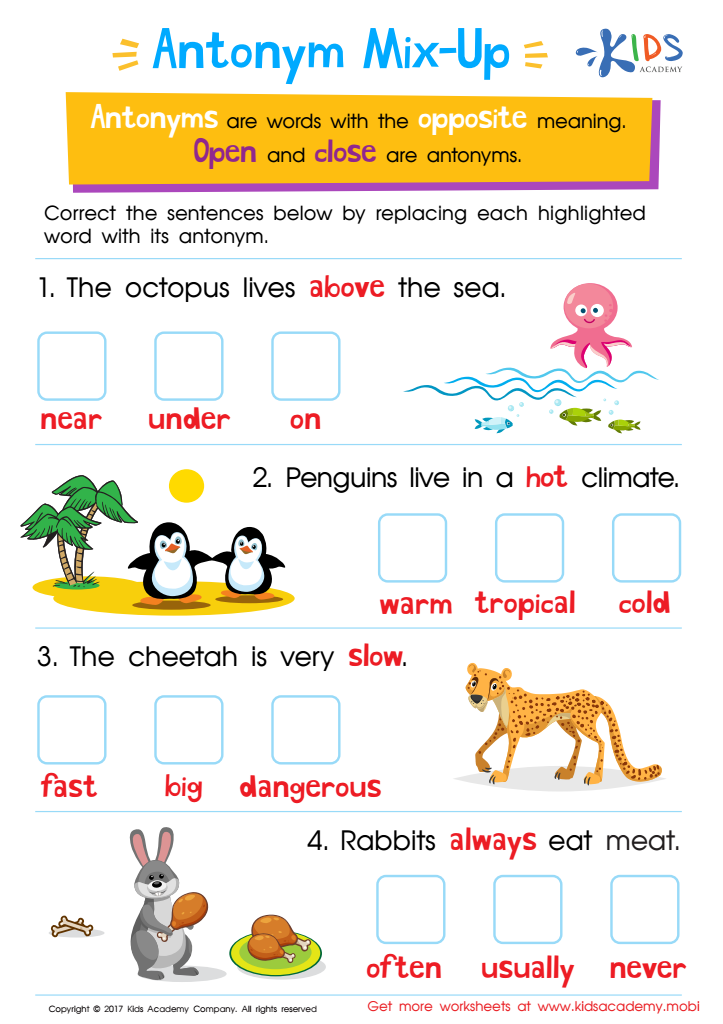
Vocabulary Antonyms Worksheet
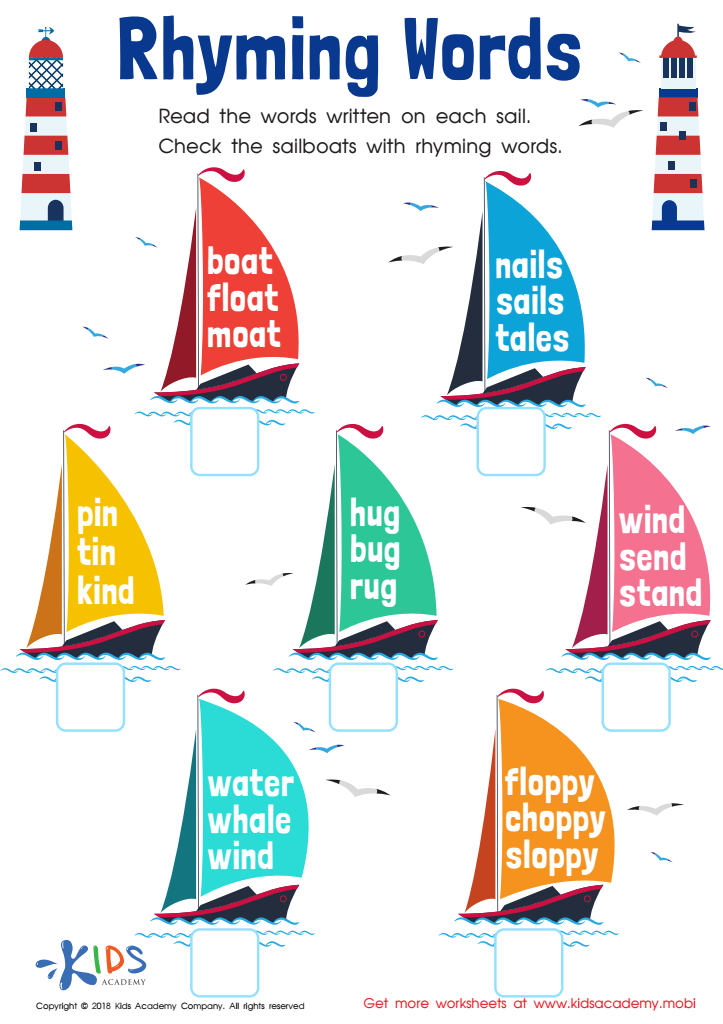
Rhyming Words Worksheet
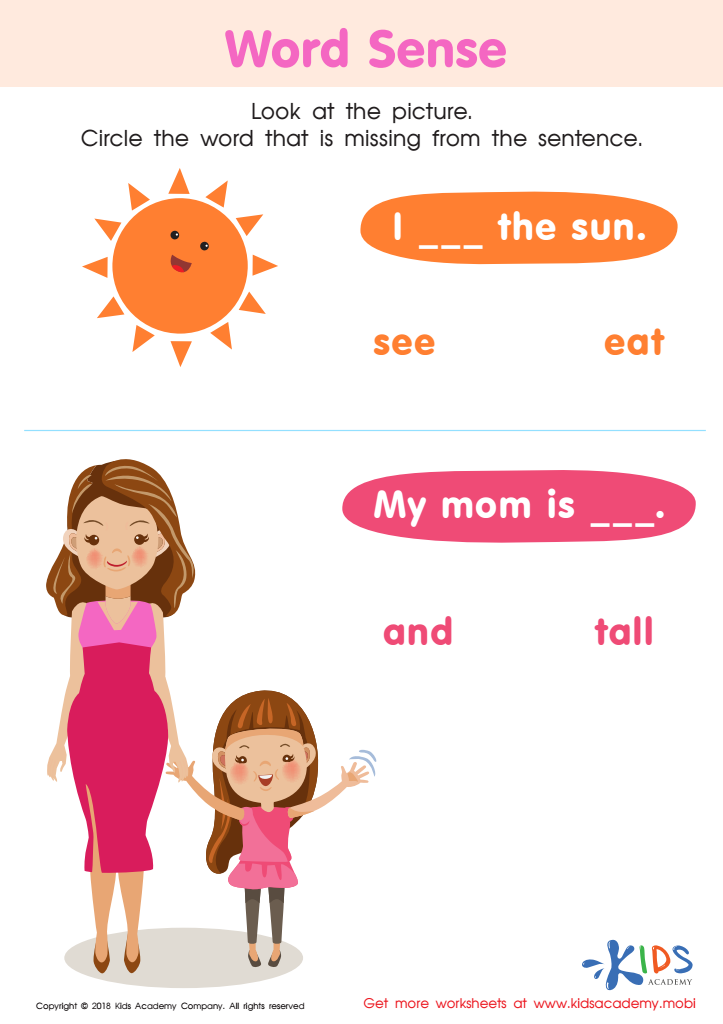
Word Sense Worksheet







Word association reading is a vital activity for children aged 6-9 because it fosters language development and enhances literacy skills in formative years. At this age, children are actively developing their vocabulary and comprehension abilities. Engaging in word association helps them connect words with meanings, improving their understanding of language structure and context.
Moreover, word association games make learning interactive and enjoyable, capturing children's attention and encouraging their enthusiasm for reading. This playful approach can transform reading from a mundane task into an exciting and engaging experience, fostering a love for books that can last a lifetime.
Parents and teachers should care because word association reading also supports critical thinking and cognitive skills. Children learn to make connections between words and ideas, enhancing their reasoning and analytical abilities. These skills are essential not only for literacy but also for overall academic success.
Additionally, by cultivating a rich vocabulary and comprehension skills, children are better prepared for future reading and writing challenges. By emphasizing word association reading, parents and teachers can lay a strong foundation for lifelong learning, ensuring that children become confident and capable readers. Thus, incorporating this approach into literacy practices can spill positively into all areas of a child’s educational journey.








