
Contextual understanding Reading Comprehension Worksheets for Ages 6-9
5 filtered results
Difficulty Level
Grade
Age
-
From - To
Subject
Activity
Standards
Enhance your child's reading skills with our Contextual Understanding Reading Comprehension Worksheets for ages 6-9. Designed to improve critical thinking and analysis, these worksheets help young learners grasp the meaning of texts within various contexts. With engaging stories and relatable scenarios, children will develop the ability to make connections, draw inferences, and understand nuances in language. Our thoughtfully crafted resources not only promote literacy but also encourage a love for reading. Perfect for classroom use or home study, these worksheets ensure your child builds confidence and proficiency in reading, setting a solid foundation for future academic success. Discover the joy of learning today!
Favorites
With answer key
Interactive
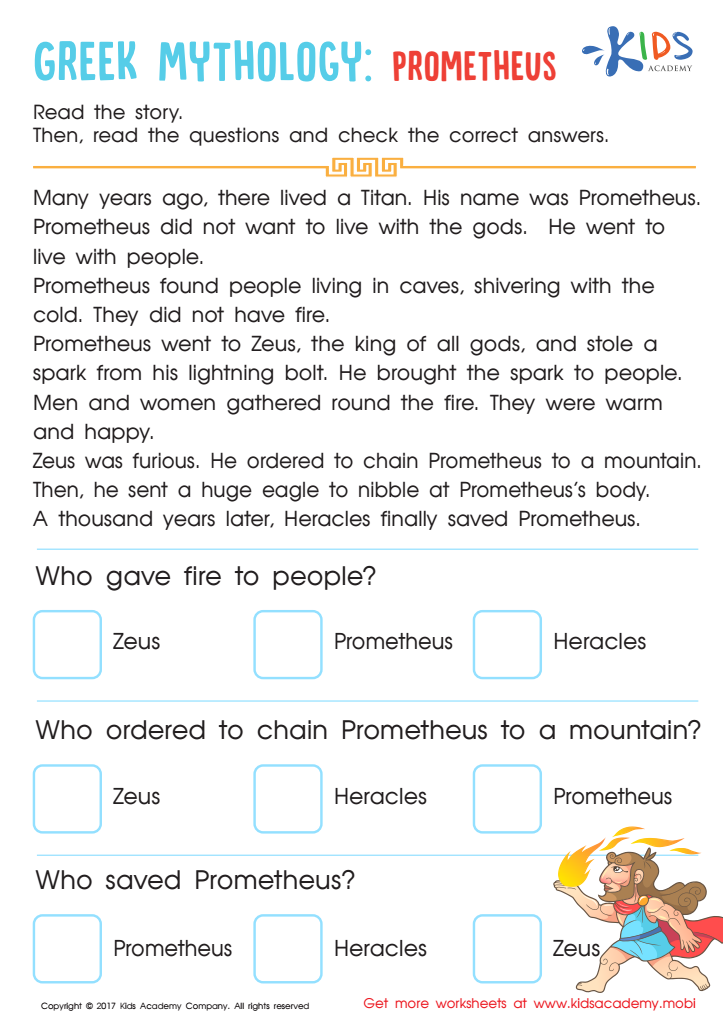
Prometheus Story Worksheet
Help kids improve reading comprehension with this Prometheus story worksheet! Learn about this classic mythological tale and break down the plot into understandable parts. By doing so, children will understand the story each step of the way.
 Assign to My Students
Prometheus Story Worksheet
Worksheet
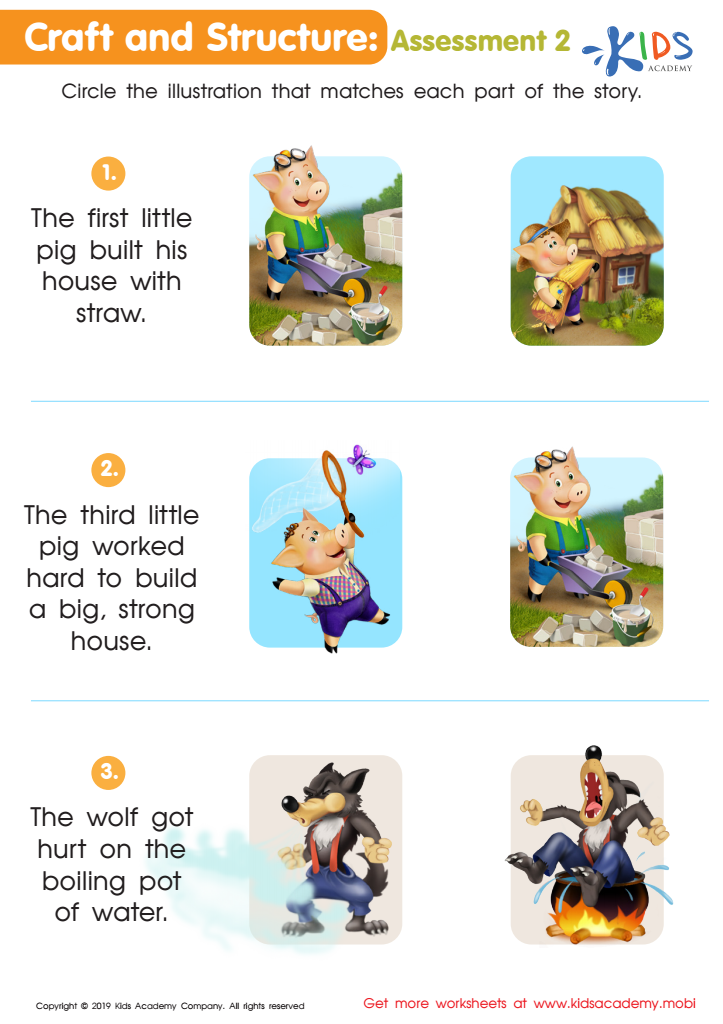
Craft and Structure: Assessment 2 Worksheet 2
This fun printout with colorful illustrations will assess how much your kids pay attention to story time. Go through the pictures and help them circle the ones that match each part of the story. Stimulate their brains and have fun in the process!
Craft and Structure: Assessment 2 Worksheet 2
Worksheet
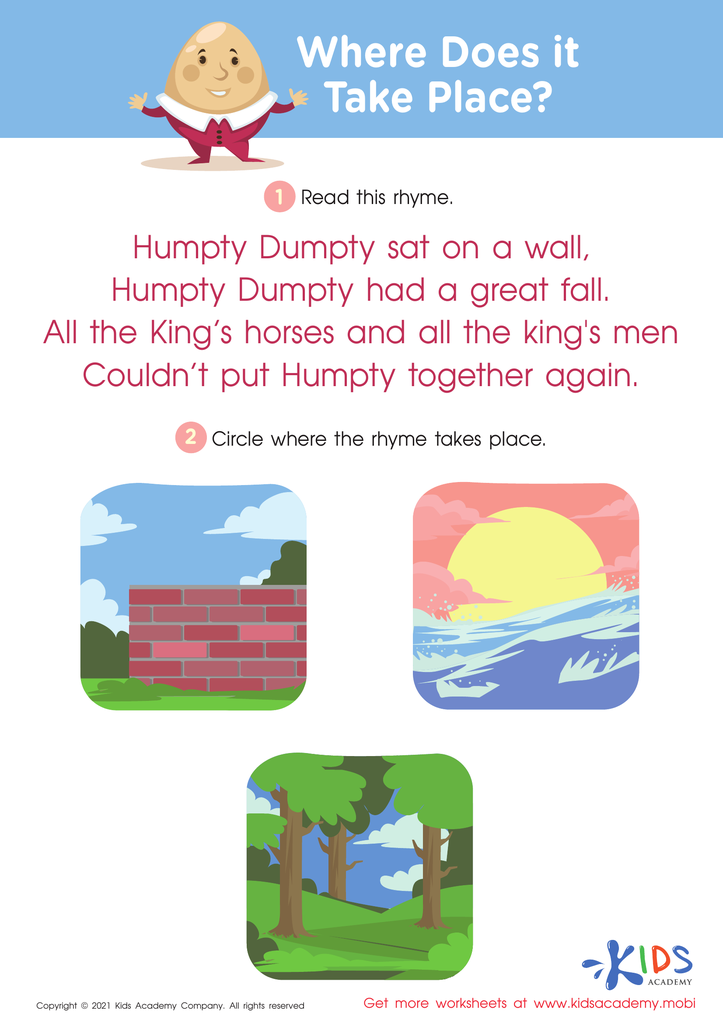
Where Does It Take Place? Worksheet
Original:
The number of children who are enrolled in the school has increased by 10% from the previous year.
Enrollment in the school has increased 10% from last year, with more children attending.
Where Does It Take Place? Worksheet
Worksheet
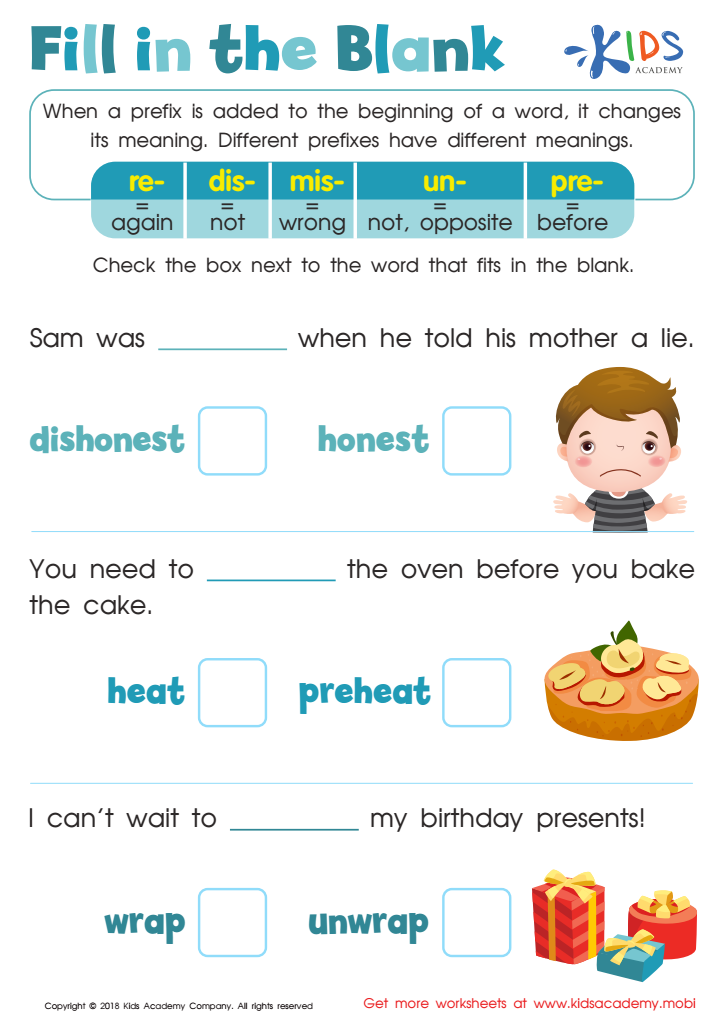
Reading: Fill in the Blank Worksheet
Students can practice understanding the meaning of common prefixes with this worksheet. They read sentences and pick the correct word with the appropriate prefix to complete it. Downloadable and a great addition to reading and vocabulary resources, this helps improve comprehension with mastery of the skill!
Reading: Fill in the Blank Worksheet
Worksheet
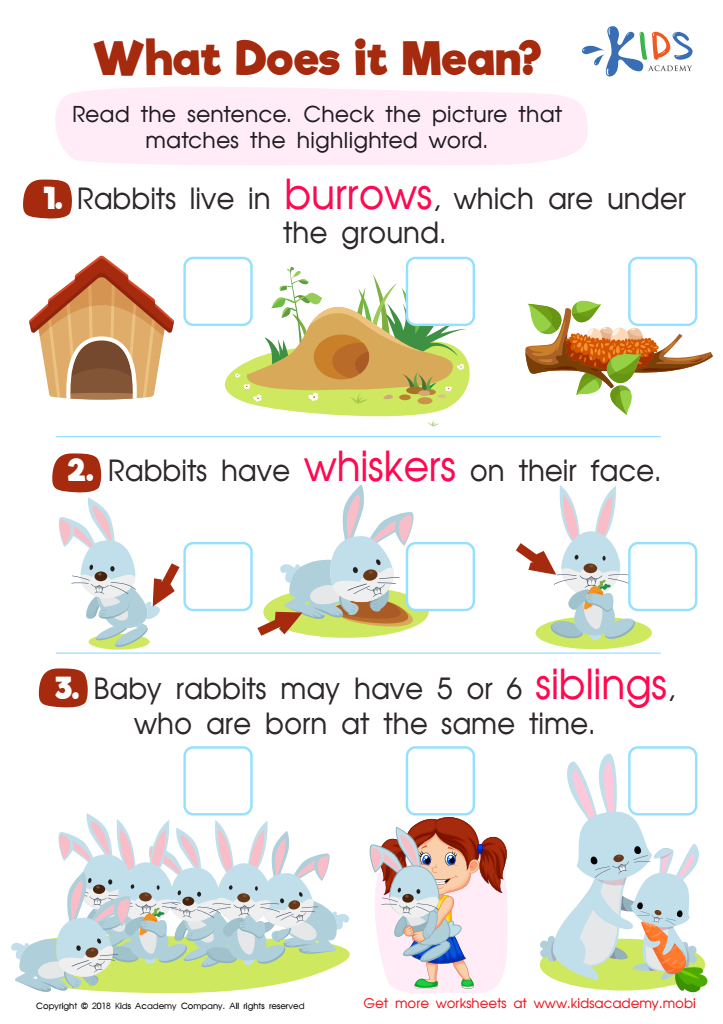
What Does It Mean? Worksheet
Teach your child to use context clues with this engaging Kids Academy worksheet. Read the sentences and find the pink-highlighted word. Use the other words in the sentence to figure out the meaning, then check the box next to the picture that represents it.
What Does It Mean? Worksheet
Worksheet
Join Kids Academy for Free
Who is primarily going to use this learning content?







Contextual understanding in reading comprehension is vital for children ages 6-9, as it lays the foundation for critical thinking and effective communication. This skill allows young readers to grasp the meaning of texts not just through the words themselves but also through the surrounding context. When parents and teachers emphasize contextual understanding, they help children to recognize that language is nuanced and influenced by various factors such as culture, tone, and prior knowledge.
At this age, children are making significant developmental strides in their cognitive abilities. As they encounter diverse texts—be it stories, poetry, or informative articles—their comprehension can significantly improve when they learn to consider the setting, purpose, and perspective behind the written word. This approach encourages them to ask questions, make predictions, and connect new information with what they already know, fostering engagement and retention.
Moreover, strong contextual understanding leads to greater empathy and awareness of different viewpoints. In today's diverse world, equipping children with these skills is not only crucial for their academic success but also for their social development. By nurturing contextual comprehension, parents and teachers give children the tools to become not just better readers, but also thoughtful and informed individuals.








