Critical thinking skills Reading Comprehension Worksheets for Ages 6-9
5 filtered results
-
From - To
Our "Critical Thinking Skills Reading Comprehension Worksheets for Ages 6-9" empower young minds to explore and analyze text deeply. Designed to enhance reading comprehension, these engaging worksheets challenge students to think critically while developing essential skills such as inference-making, logical reasoning, and evidence-based conclusions. Tailored for early learners, each worksheet presents captivating stories and thought-provoking questions that encourage imaginative thinking and thorough understanding. Perfect for home or classroom use, these tools not only foster a love for reading but also equip children with vital cognitive skills that lay the foundation for lifelong learning and problem-solving abilities.
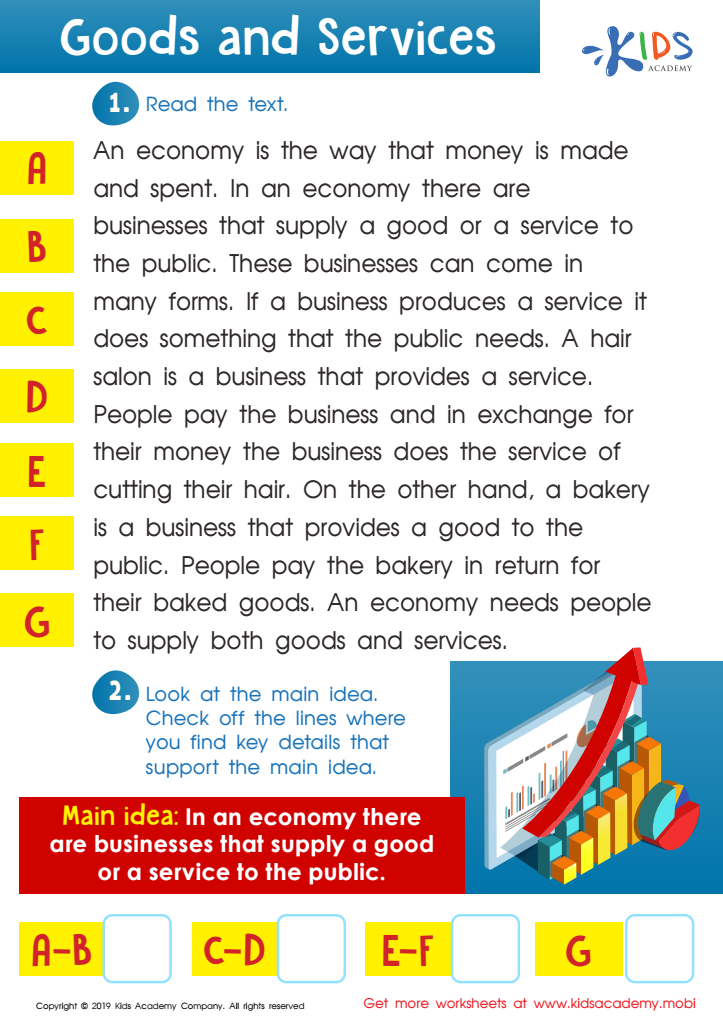
Goods and Services Worksheet
 Assign to My Students
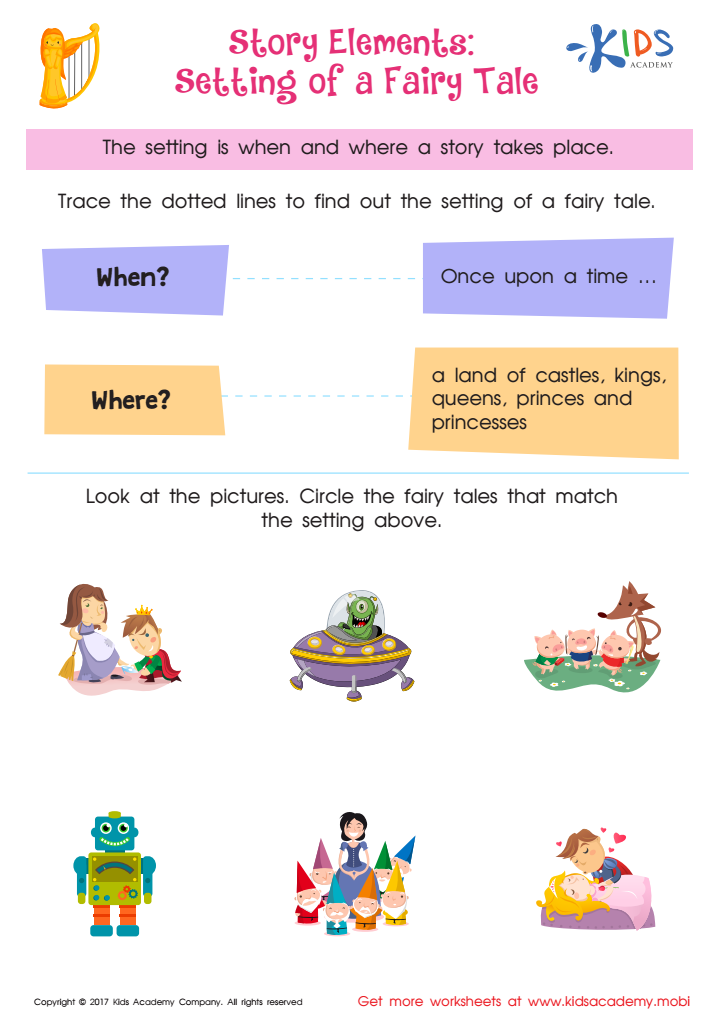
Story Elements: Setting of a Fairy Tale Printable
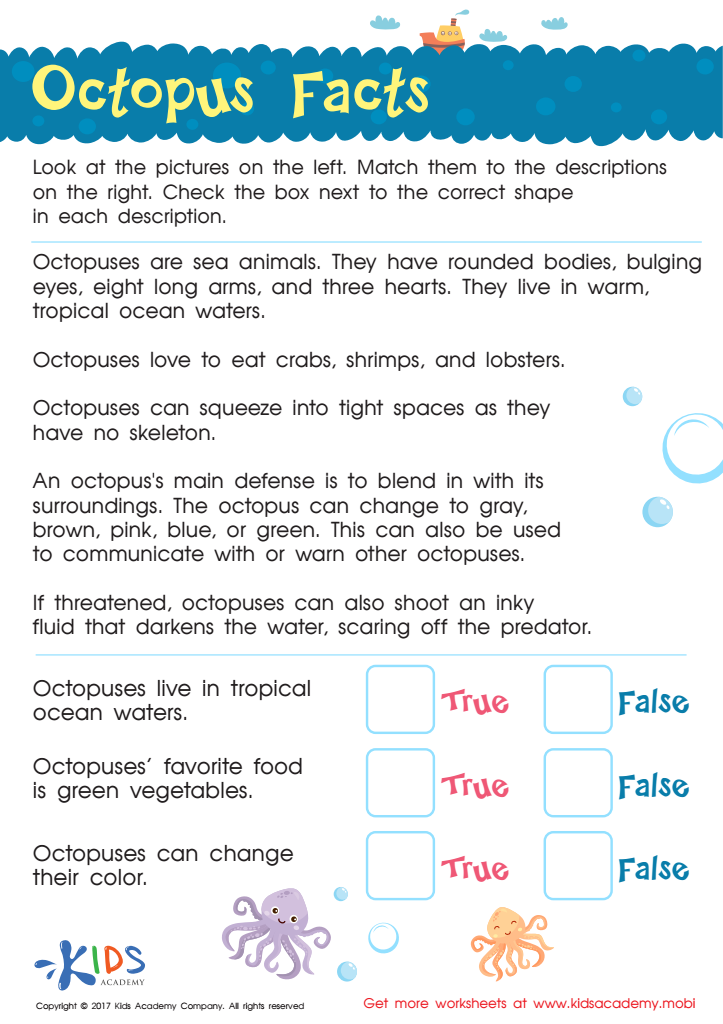
Octopus Facts Worksheet For Kids
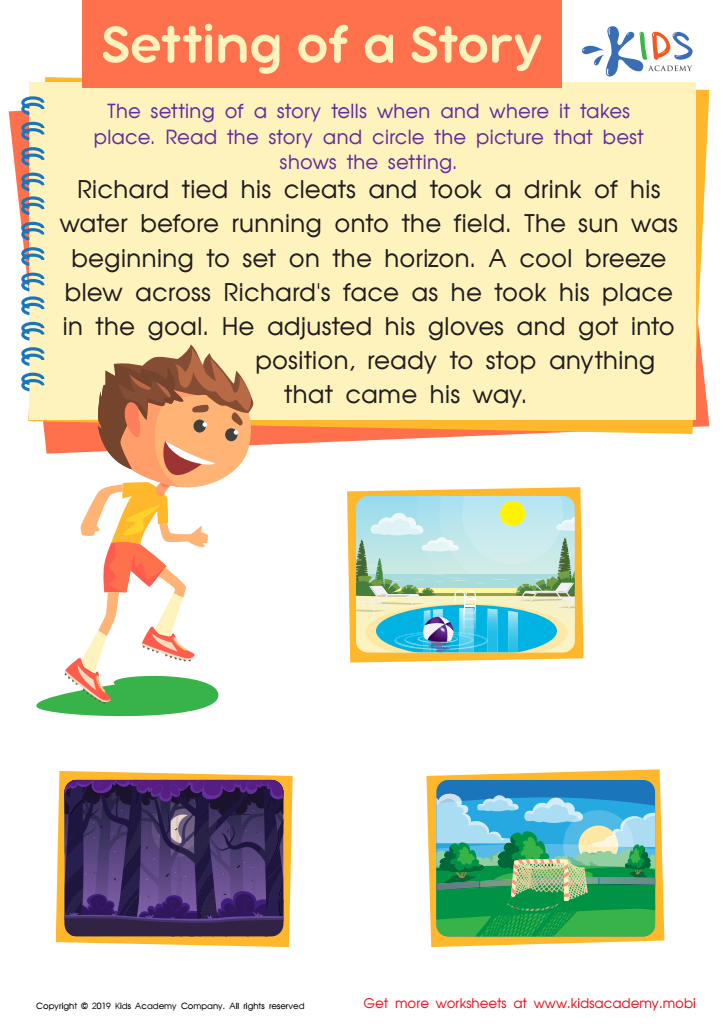
Setting of a Story Worksheet
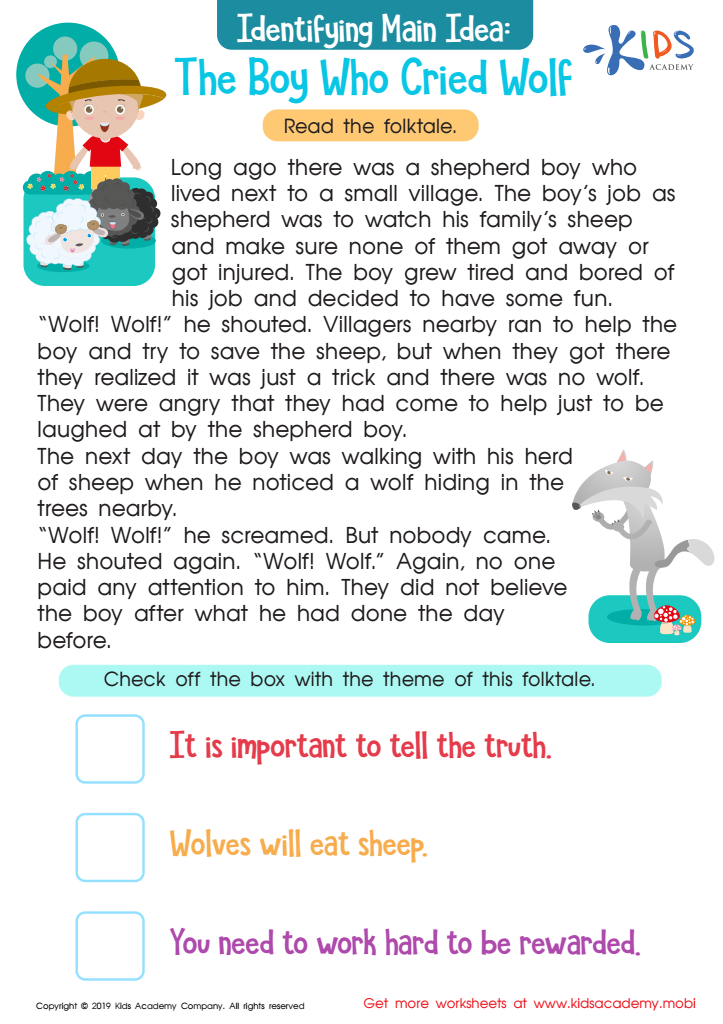
The Boy Who Cried Wolf Part 2 Worksheet


.jpg)





Parents and teachers should prioritize the development of critical thinking skills and reading comprehension abilities for children aged 6-9 because these skills are foundational for overall academic success and personal growth. Critical thinking cultivates a child's ability to analyze, evaluate, and synthesize information, leading to better problem-solving skills and more thoughtful decision-making. At this young age, children are highly receptive to learning and forming cognitive habits that will last a lifetime. Encouraging critical thinking helps them to question assumptions, explore alternative solutions, and recognize connections between ideas.
Reading comprehension is equally important as it enables children to understand and process the information they read, turning mere words into meaningful knowledge. This skill is crucial not just in language arts, but across all subjects, including math, science, and social studies. Good reading comprehension aids in preventing misunderstandings and fosters a love for reading and lifelong learning.
Moreover, strong critical thinking and reading comprehension skills contribute to a child's self-confidence and independence. Children who can think critically and understand what they read are better equipped to navigate complex social situations, engage in meaningful conversations, and develop empathy through understanding different perspectives.
In sum, investing in these skills during the formative years of 6-9 lays a robust foundation for a child's future educational achievements and personal development.








