Counting practice Science Worksheets for Ages 6-9
6 filtered results
-
From - To
Enhance your child's math and science skills with our "Counting Practice Science Worksheets for Ages 6-9." Tailored to young learners, these engaging worksheets combine counting exercises with scientific concepts to foster both numerical proficiency and a love for science. Perfect for home or classroom use, each worksheet offers fun, interactive challenges that encourage kids to count and analyze objects, recognize patterns, and explore basic scientific ideas. Designed to nurture curiosity and confidence, these resources are ideal for developing foundational counting skills while sparking interest in the natural world. Download and start your child's educational journey today!
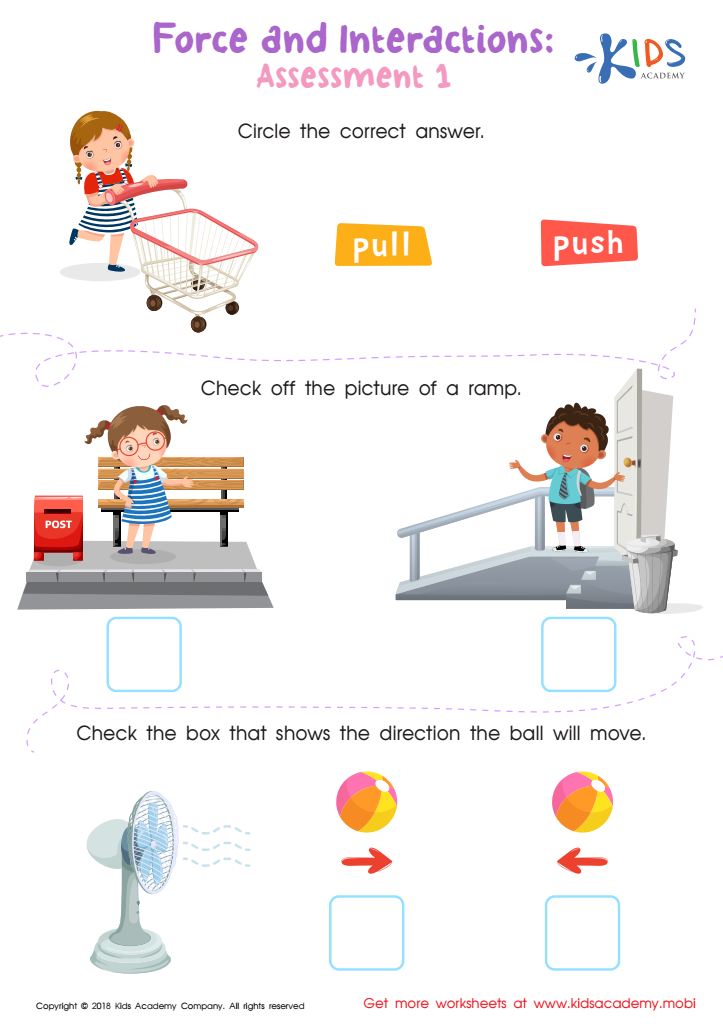
Force and Interactions: Assessment 1 Worksheet
 Assign to My Students
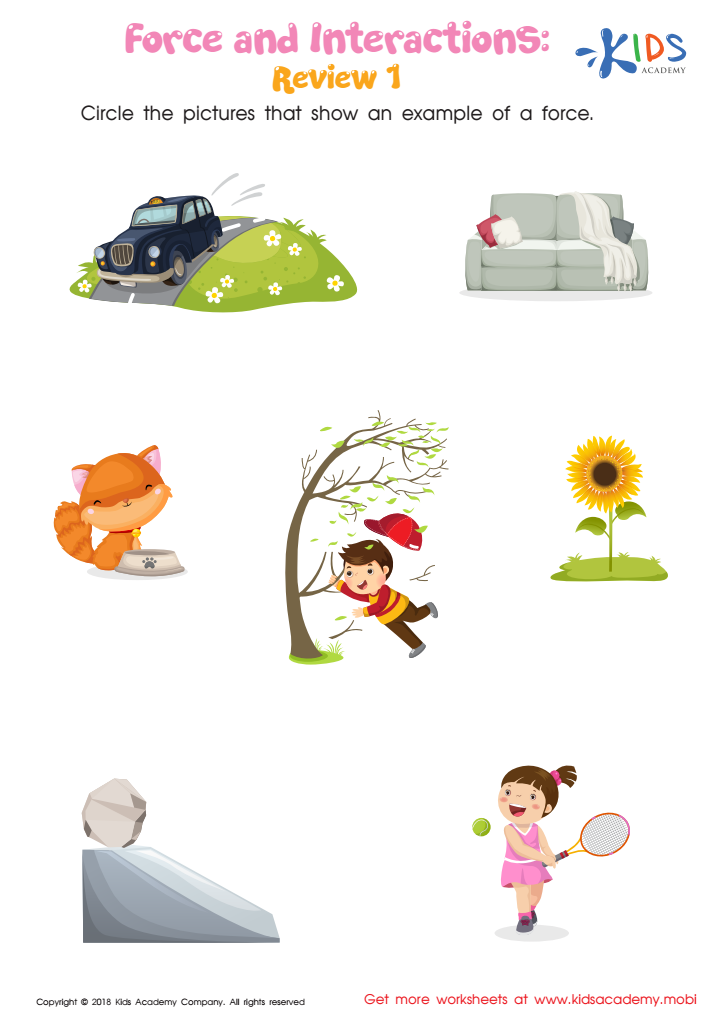
Force and Interactions: Review 1 Worksheet
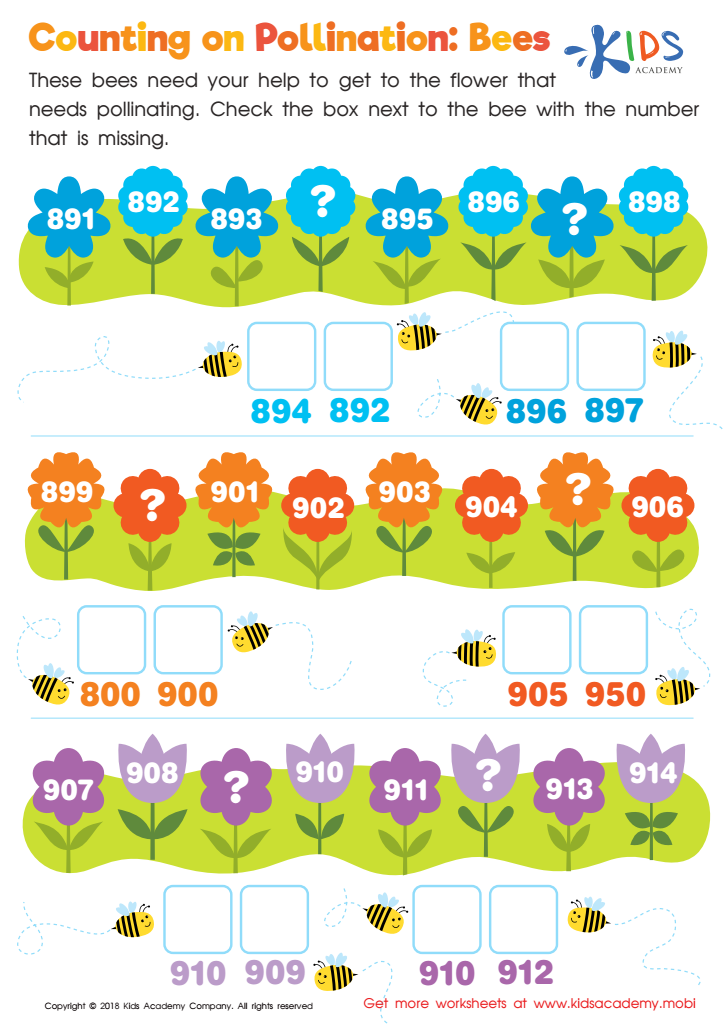
Counting on Pollination: Bees Worksheet
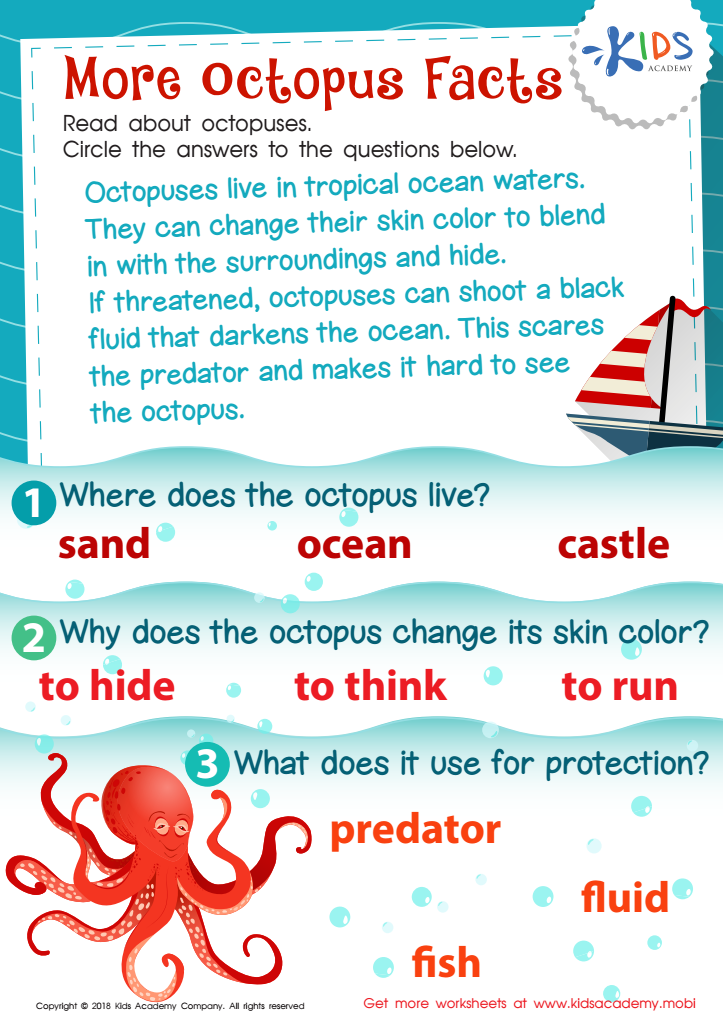
More Octopus Facts Worksheet
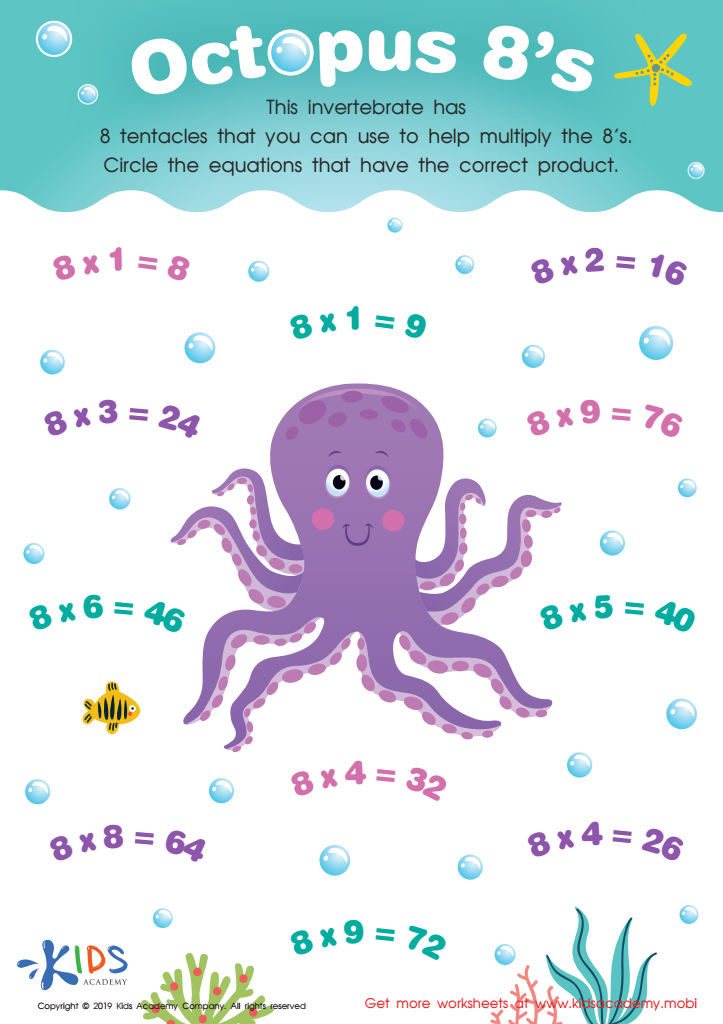
Octopus 8’s Worksheet







Counting practice is fundamental for children aged 6-9, providing a crucial foundation for their mathematical understanding and cognitive development. During these formative years, kids develop number sense—a vital skill enabling them to understand and manipulate numbers effectively.
Parents and teachers play key roles in fostering these skills. Encouraging counting practice helps children to see patterns, learn sequencing, and understand basic arithmetic operations, augmenting their overall math proficiency. Engaging activities like counting objects, playing math games, or integrating counting in daily routines make math enjoyable and relevant.
Importantly, early exposure to counting supports problem-solving abilities, fostering logical thinking and reasoning, which are essential for future scientific learning. Familiarity with numbers and their relationships builds a child's confidence in tackling more advanced mathematical concepts.
Incorporating counting exercises into a child's daily routine not only makes learning seamless but also combats math anxiety. Positive early experiences with math can instill a lifelong interest in the subject. Research shows that early mathematical competency is a significant predictor of academic success across disciplines, including science and technology fields.
Therefore, the combined effort of parents and teachers in prioritizing counting practice can provide children with a robust mathematical foundation, catalyzing their academic growth and lifelong learning.







