Division practice Science Worksheets for Ages 6-9
5 filtered results
-
From - To
Unlock your child's potential with our "Division Practice Science Worksheets for Ages 6-9"! Designed to enhance both Math and Science skills, these worksheets offer a fun and engaging way to practice division concepts while exploring scientific topics. Perfect for children ages 6 to 9, our exercises transform learning into an adventure, combining numbers and nature. Children will improve their math proficiency and become budding scientists. Ideal for in-class activities or at-home practice, these worksheets ensure a seamless blend of education and excitement. Start your child's journey toward academic success with our expertly crafted division practice science worksheets!
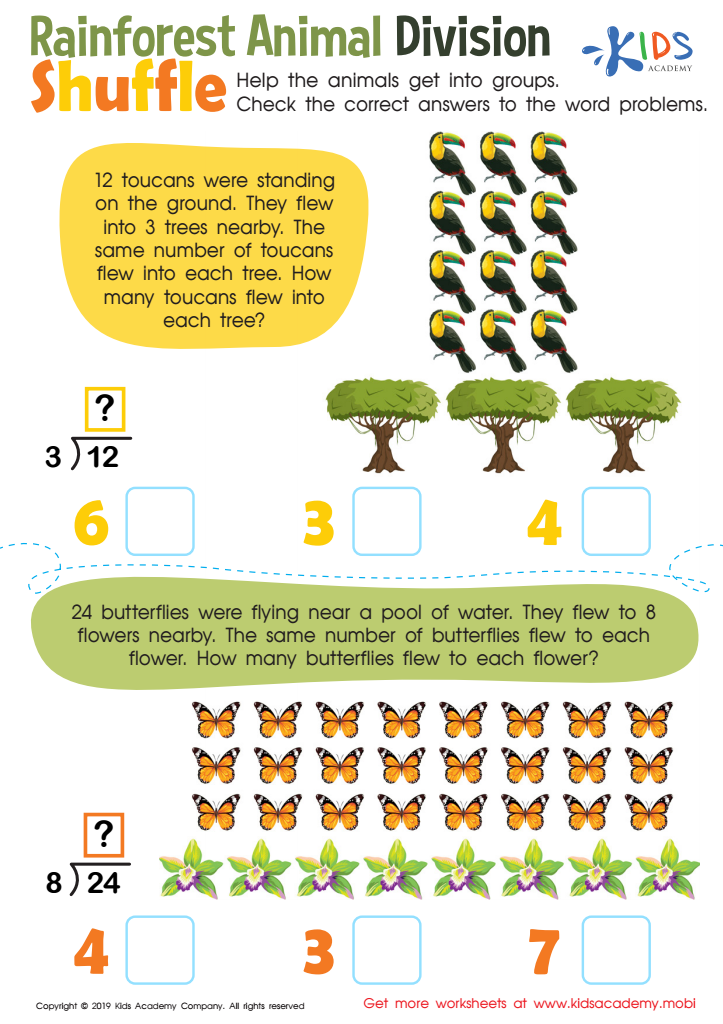
Rainforest Animal Division Worksheet
 Assign to My Students
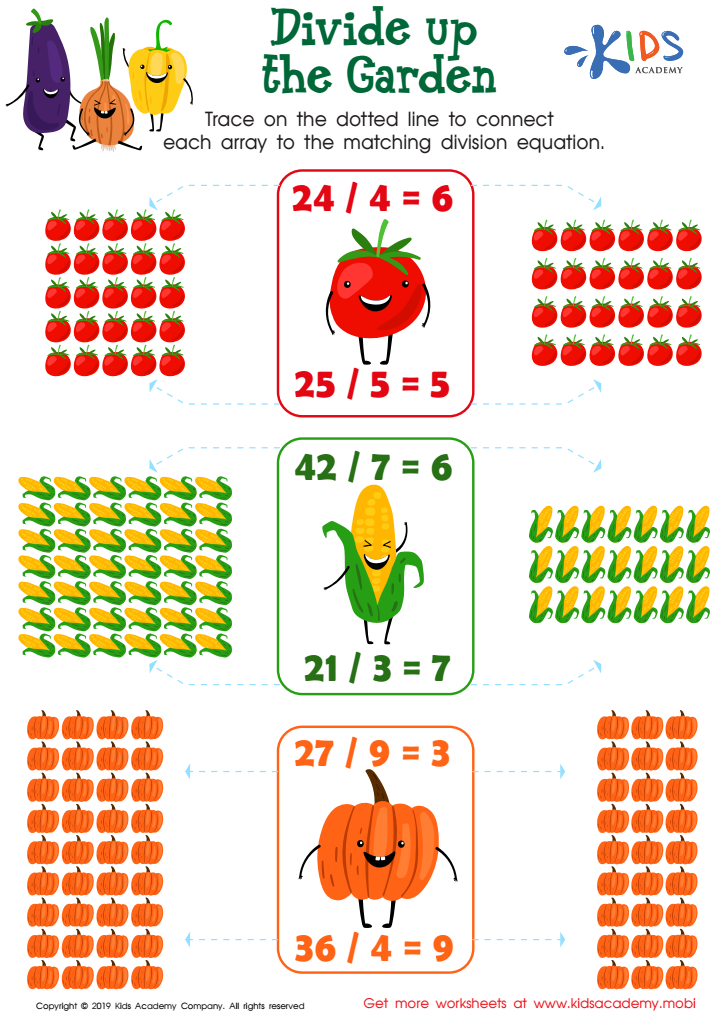
Divide up the Garden Worksheet
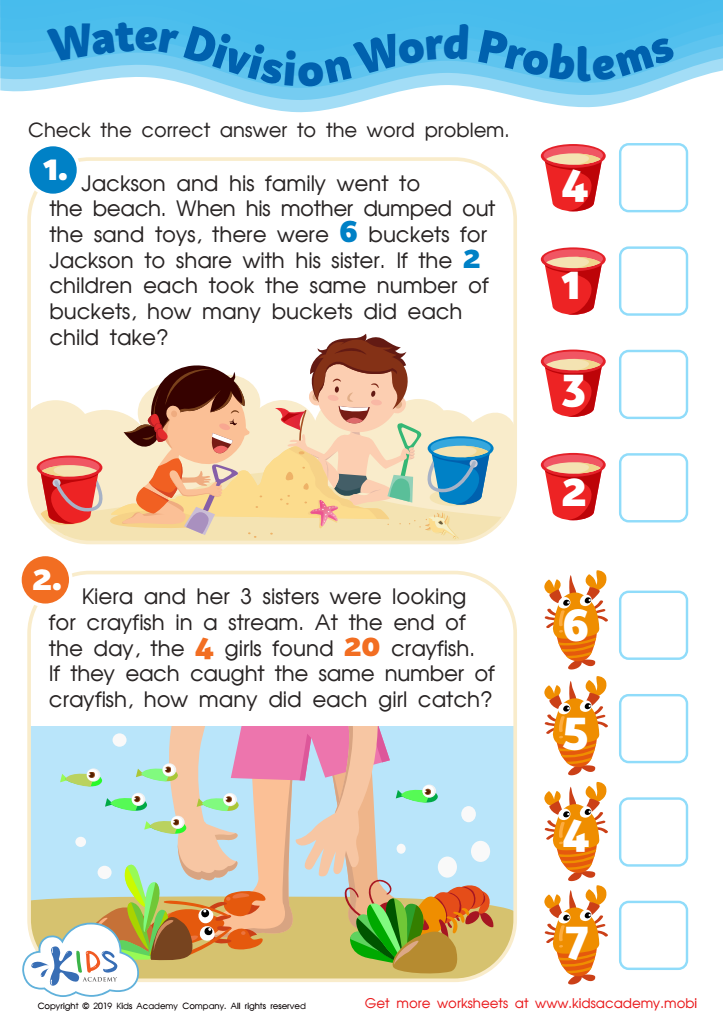
Water Division Word Problems Worksheet
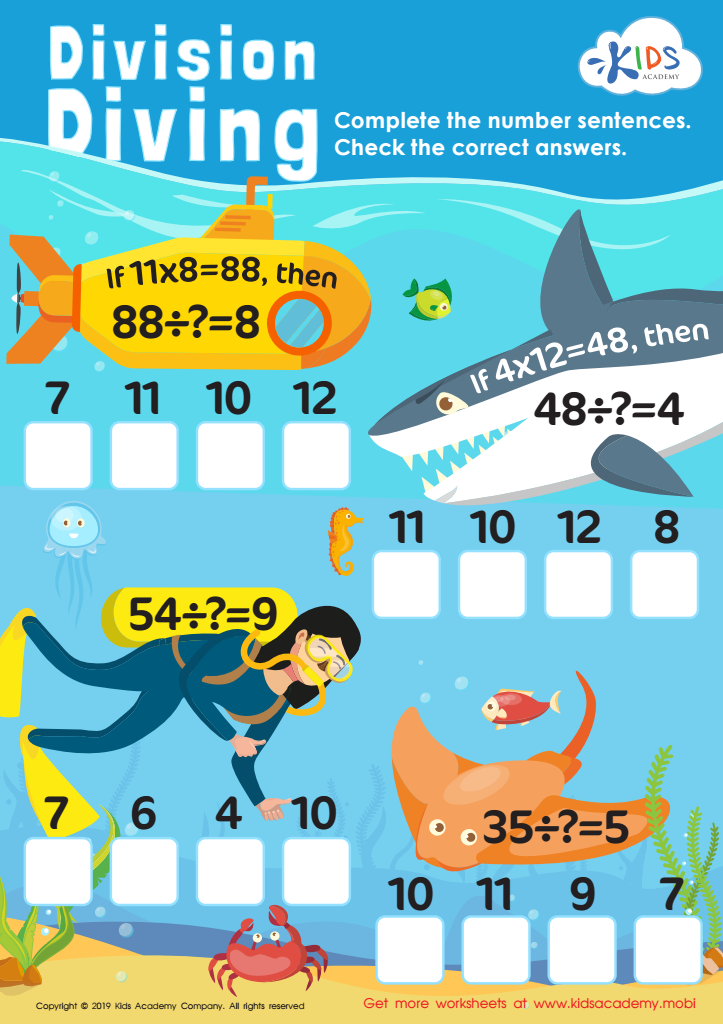
Division Diving Worksheet
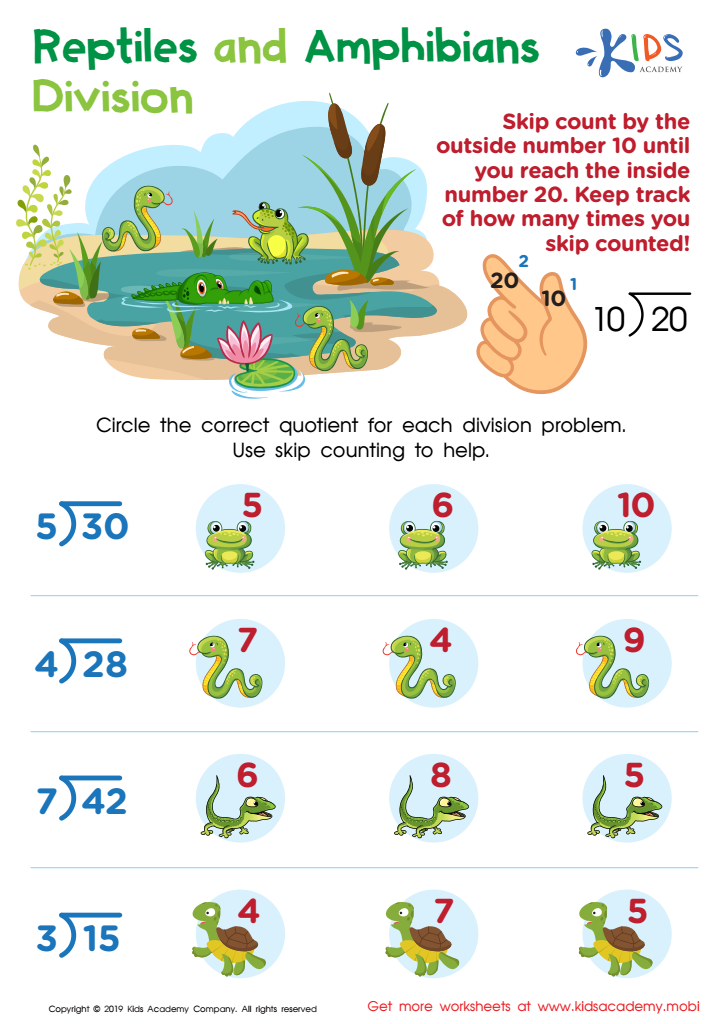
Reptile and Amphibians Division Worksheet







Parents and teachers should care about division practice in science for ages 6-9 because it fosters essential mathematical and scientific literacy, which are foundational to a child's educational development. At this formative age, children are naturally curious and open to learning new concepts. Introducing division within the context of science lessons helps them understand the world quantitatively and logically. For example, dividing groups of objects in a science experiment can make abstract concepts more tangible and relatable, enhancing comprehension.
Moreover, practicing division cultivates problem-solving skills and logical reasoning, which are crucial not only in academics but also in daily life. By weaving division into science activities, children learn to apply mathematical principles in real-world situations, such as sharing resources, understanding measurements, or analyzing data. This interdisciplinary approach motivates students by showing them the relevance of math in various contexts, thereby increasing engagement and retention.
Additionally, early exposure to such integrative techniques builds confidence and a positive attitude towards math and science. Studies indicate that competence in these areas in early grades can predict future academic achievement. Therefore, incorporating division practice in science sets a solid foundation for lifelong learning and interest in STEM (Science, Technology, Engineering, and Mathematics) fields, which are critical in today’s technologically driven society.







