
Understanding directions Science Worksheets for Ages 6-9
4 filtered results
Difficulty Level
Grade
Age
-
From - To
Subject
Activity
Standards
Boost your child's science skills with our "Understanding Directions" worksheets designed specifically for ages 6-9. These engaging printable resources help young learners navigate scientific concepts while enhancing their ability to follow instructions accurately. Each worksheet includes fun activities that promote critical thinking and comprehension, making learning both enjoyable and effective. As children explore fundamental scientific ideas, they'll also develop essential skills in following directions, problem-solving, and decision-making. Perfect for homeschoolers and classroom use, these worksheets support a hands-on approach to education, fostering a love for science while building confidence in young readers and thinkers. Download today and spark curiosity in your child!
Favorites
With answer key
Interactive
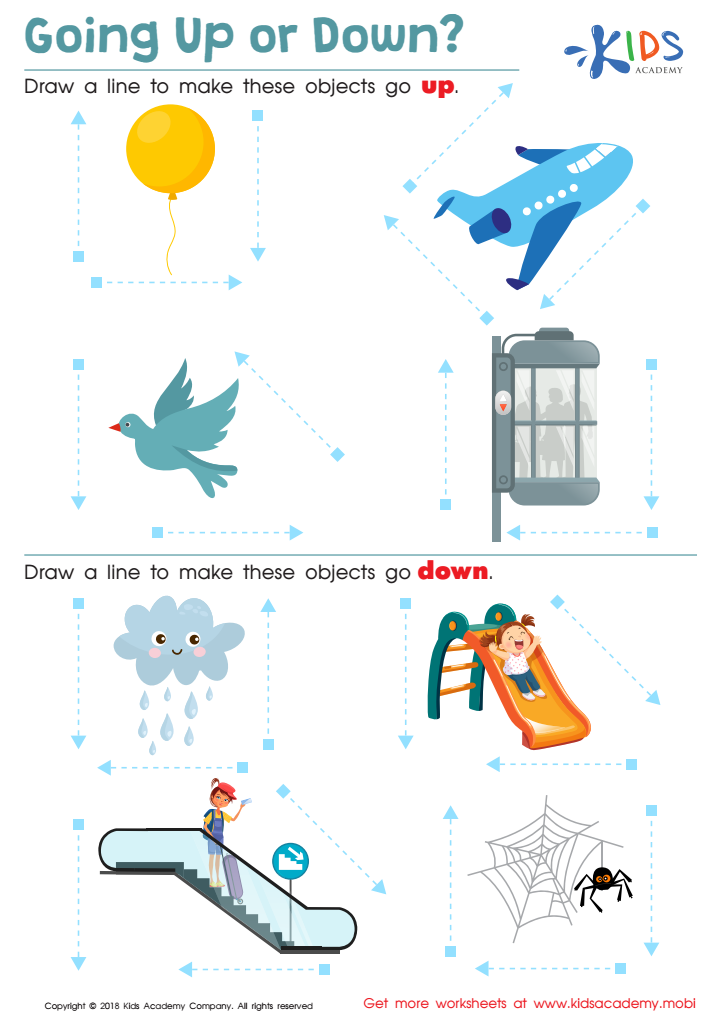
Going up or Down? Worksheet
Young students learn the concept of up and down with this geometry worksheet. They trace lines to identify relative positioning as an object travels. Kids can use position words to describe an object's movement, enhancing their spatial relationship skills - an important geometry foundation.
 Assign to My Students
Going up or Down? Worksheet
Worksheet
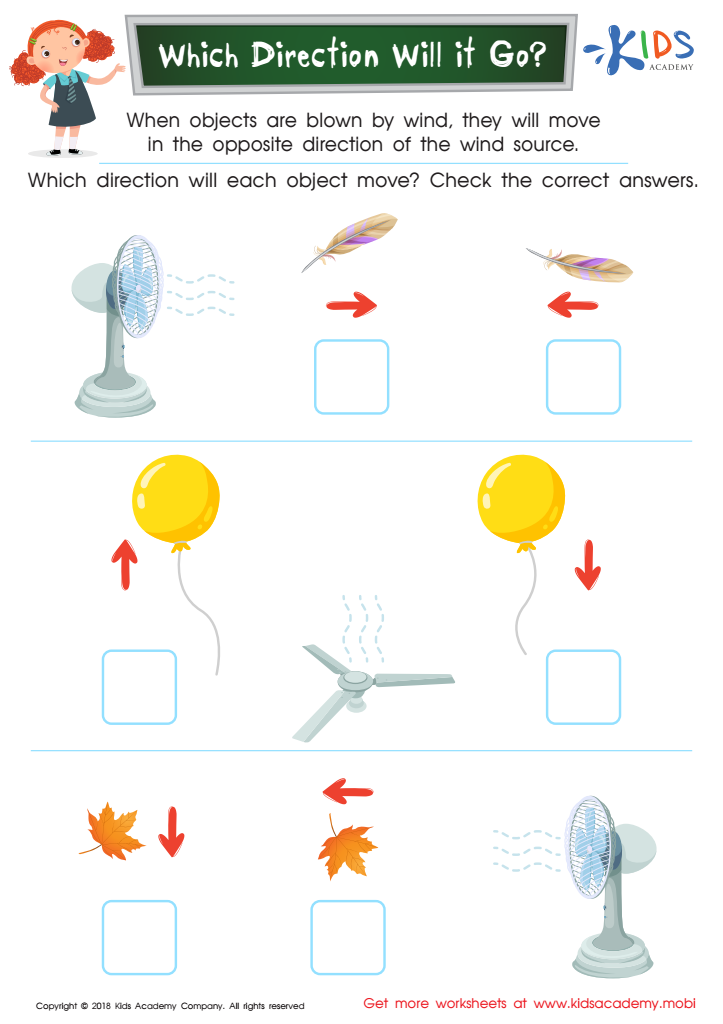
Which Direction Will it Go? Worksheet
Explain to your students: when objects are blown by wind, they will move in the opposite direction. In the worksheet, there are pictures of wind sources and objects being blown by the wind. Ask your child to identify and check the direction each object will move.
Which Direction Will it Go? Worksheet
Worksheet
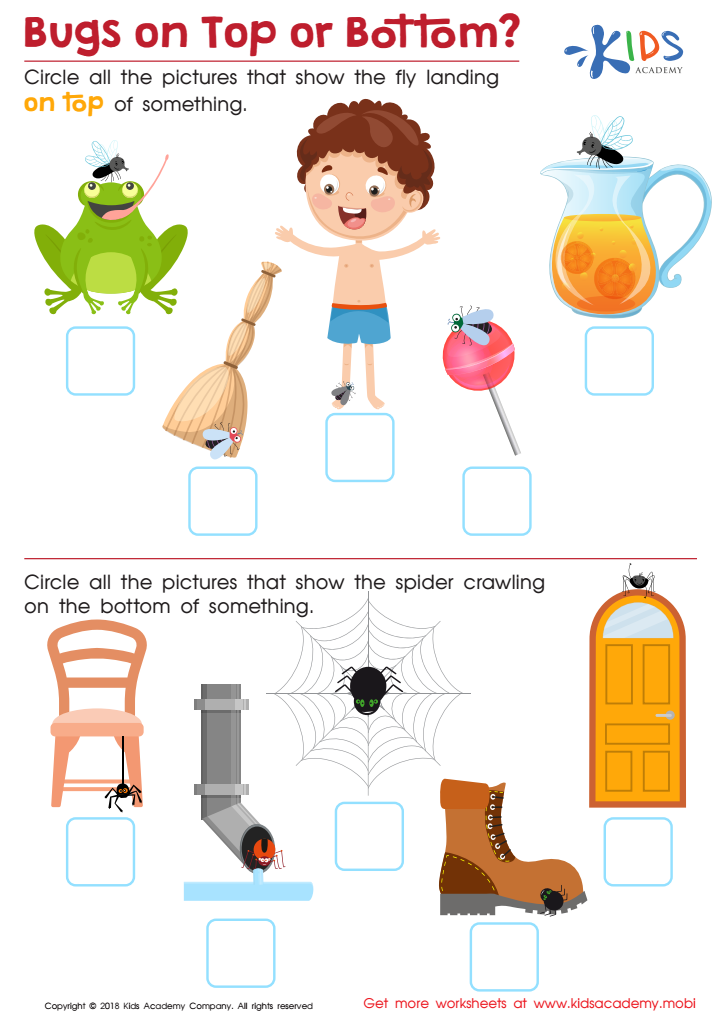
Bugs on Top or Bottom? Worksheet
Preschoolers need to learn directional skills such as top and bottom. This PDF worksheet helps them recognize bugs on the top or bottom using fun visuals. It builds their spatial reasoning while teaching prepositional words in an engaging way.
Bugs on Top or Bottom? Worksheet
Worksheet
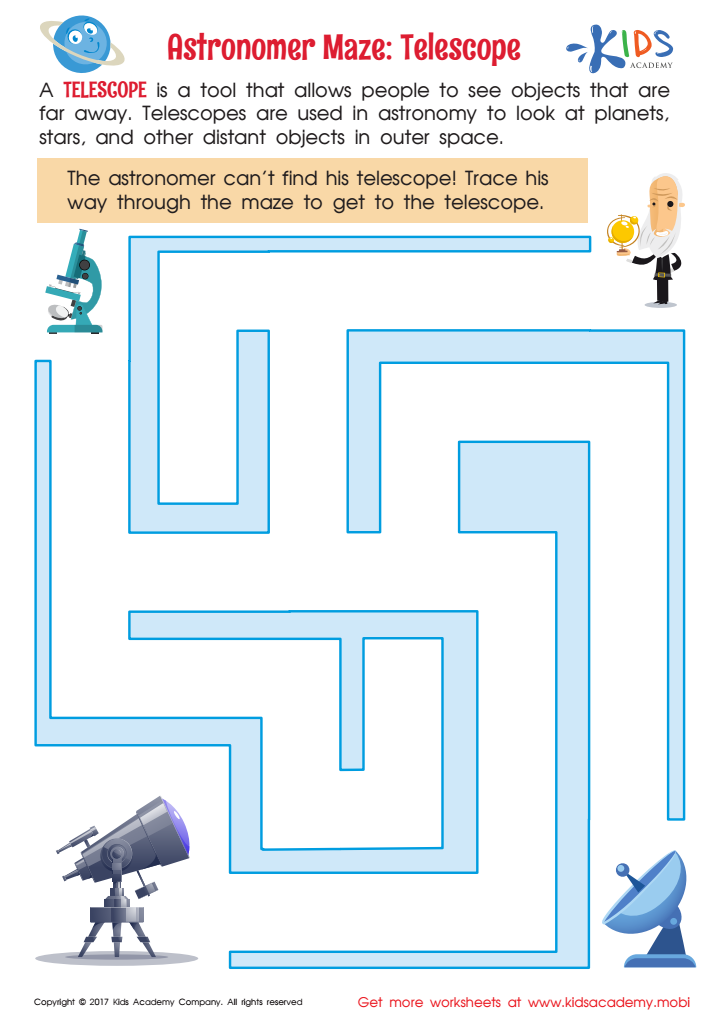
Astronomer Maze: Telescope Worksheet
Let your mini astronomer explore the galaxy with this fun and puzzling space maze worksheet – Telescope! Your child will have a great time navigating the maze, while learning how telescopes help scientists study the stars.
Astronomer Maze: Telescope Worksheet
Worksheet
Join Kids Academy for Free
Who is primarily going to use this learning content?







Understanding directions in science is crucial for children aged 6-9, as it lays the foundation for critical thinking and exploration. At this age, children are naturally curious about the world around them. By helping them understand scientific directions, parents and teachers encourage hands-on learning experiences that spark curiosity and a love for discovery.
These directions often involve following steps to conduct experiments, make observations, or analyze results. This process not only teaches them the essential scientific method but also promotes skills such as patience, attention to detail, and the ability to follow sequential instructions. Moreover, understanding directions enhances their comprehension and literacy skills, as they learn to interpret language and symbols in a practical context.
Furthermore, encouraging comprehension of scientific directions helps nurture life skills like problem-solving and critical thinking that are important beyond the classroom. When children engaged in science activities can successfully grasp and act on directions, they develop confidence in their abilities, which fosters a positive attitude toward learning in general. In summary, parents and teachers should care about this aspect of science education, as it plays a key role in shaping young learners into inquisitive, methodical thinkers who are prepared for future academic challenges.







