Understanding pollination Science Worksheets for Ages 6-9
3 filtered results
-
From - To
Explore the fascinating world of pollination with our engaging science worksheets designed for kids aged 6-9! These interactive worksheets help young learners grasp essential concepts about how pollination works, the roles of pollinators like bees and butterflies, and its importance in nature. Each worksheet is thoughtfully crafted to include fun activities such as coloring, matching tasks, and simple questions, fostering curiosity and understanding. Perfect for use in classrooms or at home, these resources not only enhance scientific literacy but also encourage a love for nature. Dive into this essential ecological process and inspire the next generation of environmental stewards!
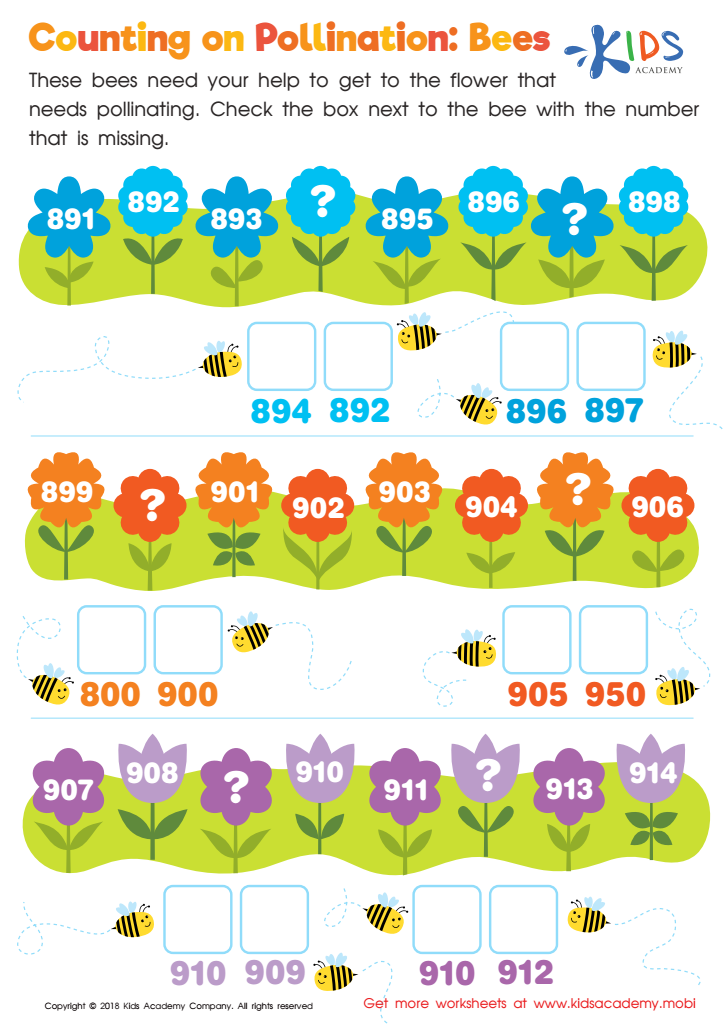
Counting on Pollination: Bees Worksheet
 Assign to My Students
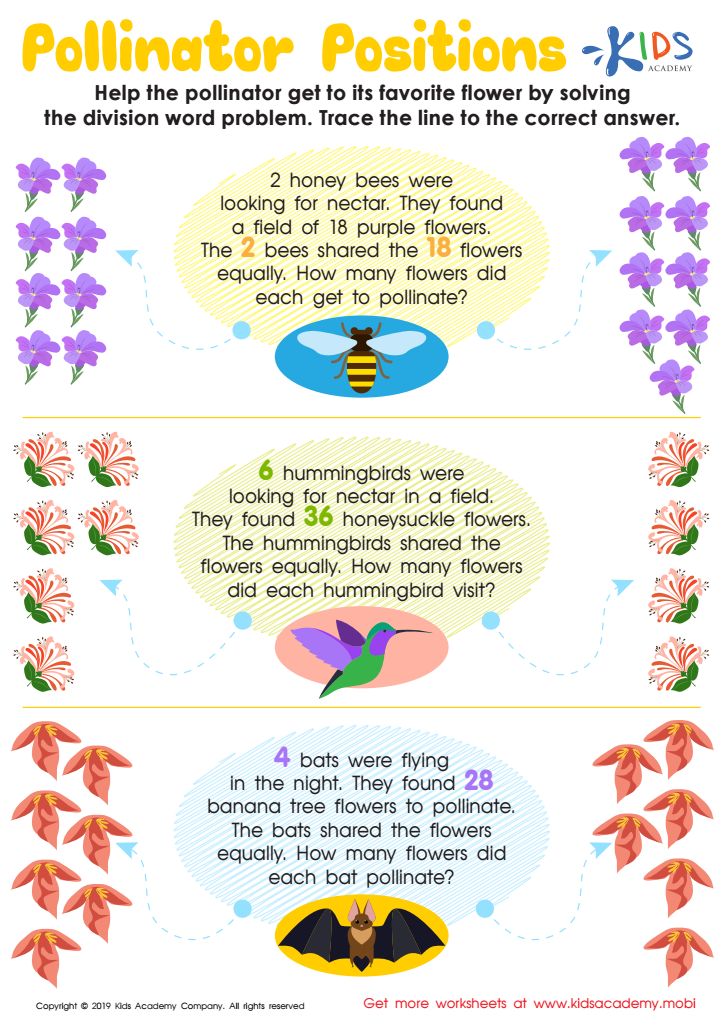
Pollinator Positions Worksheet
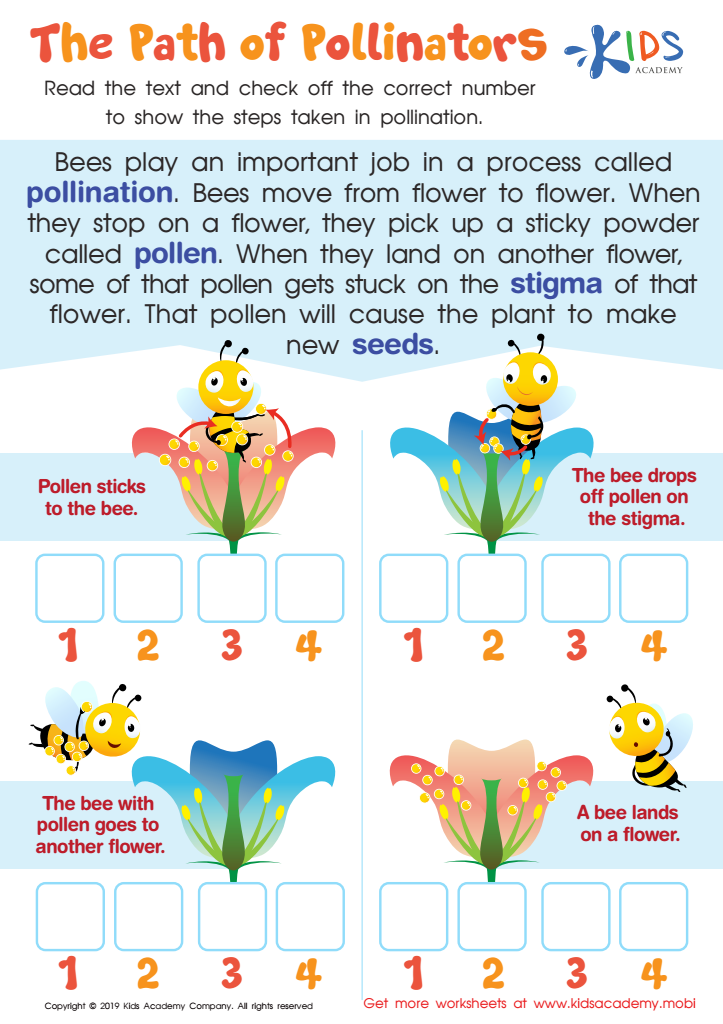
The Path of Pollinators Worksheet







Understanding pollination science is crucial for parents and teachers who work with children aged 6-9. This foundational knowledge fosters an appreciation for nature and encourages curiosity about the environment. Pollination plays a vital role in the lifecycle of plants and the production of many foods, affecting the health and ecosystem balance. By exploring this topic, children learn about the interconnectedness of living organisms and the importance of biodiversity.
Introducing these concepts at a young age can inspire children to become stewards of the environment, motivating them to protect pollinators, like bees and butterflies, which are critical to our food supply. Engaging activities, such as observing the pollination process in gardens or crafting models, can enhance their learning experience, making science tangible and enjoyable.
Moreover, understanding pollination aligns with curriculum goals in science, math, and literacy, offering a multidisciplinary approach to education. It stimulates critical thinking skills, encouraging children to ask questions and seek answers. Overall, knowledge of pollination enriches children's education, empowers them to think responsibly about their role in the environment, and prepares them to tackle broader ecological issues in the future.







