
Counting practice Plants and Animals Worksheets for Ages 6-9
3 filtered results
Difficulty Level
Grade
Age
-
From - To
Subject
Activity
Standards
Encourage your child's love for science and math with our "Counting Practice Plants and Animals Worksheets" designed for ages 6-9. These engaging and educational worksheets blend nature with numbers, allowing young learners to count, categorize, and learn about different plants and animals. Each worksheet is crafted to sharpen counting skills while introducing fascinating facts about the natural world, making learning fun and interactive. Perfect for both classroom and at-home activities, these worksheets provide an enjoyable way for kids to practice counting and enhance their understanding of nature. Cultivate curiosity and numeracy skills together!
Favorites
With answer key
Interactive
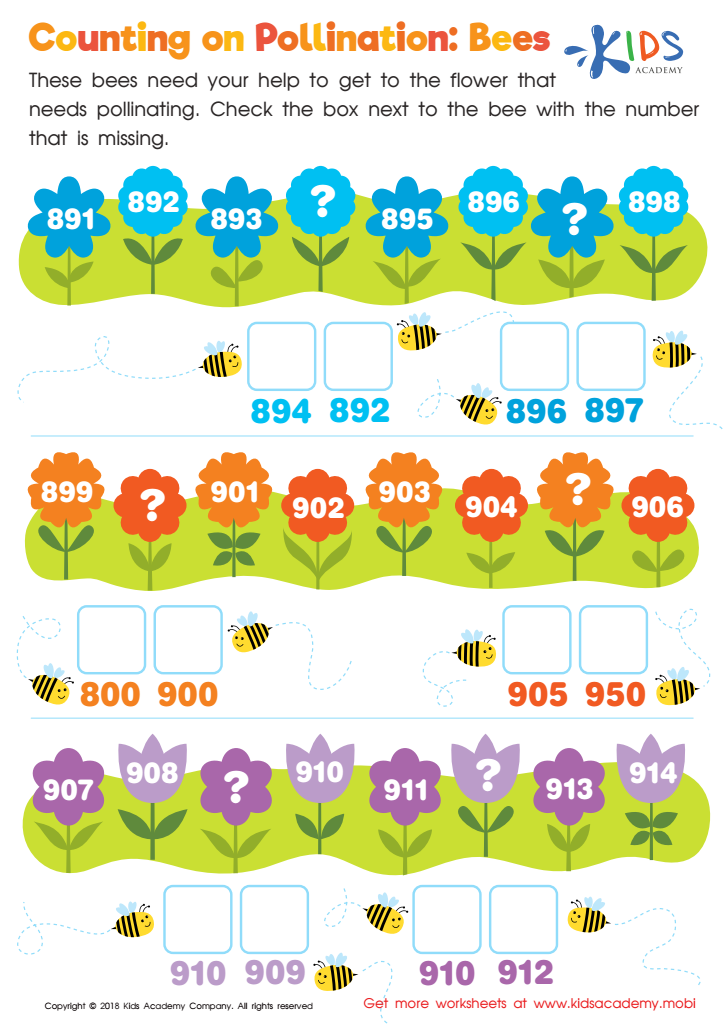
Counting on Pollination: Bees Worksheet
This downloadable worksheet helps kids improve their math skills while having fun - they'll help the bees pollinate the flowers by finding the missing number. It's an entertaining way to practice number patterns, sequences and number line skills, aiding in fast and efficient math computations.
 Assign to My Students
Counting on Pollination: Bees Worksheet
Worksheet











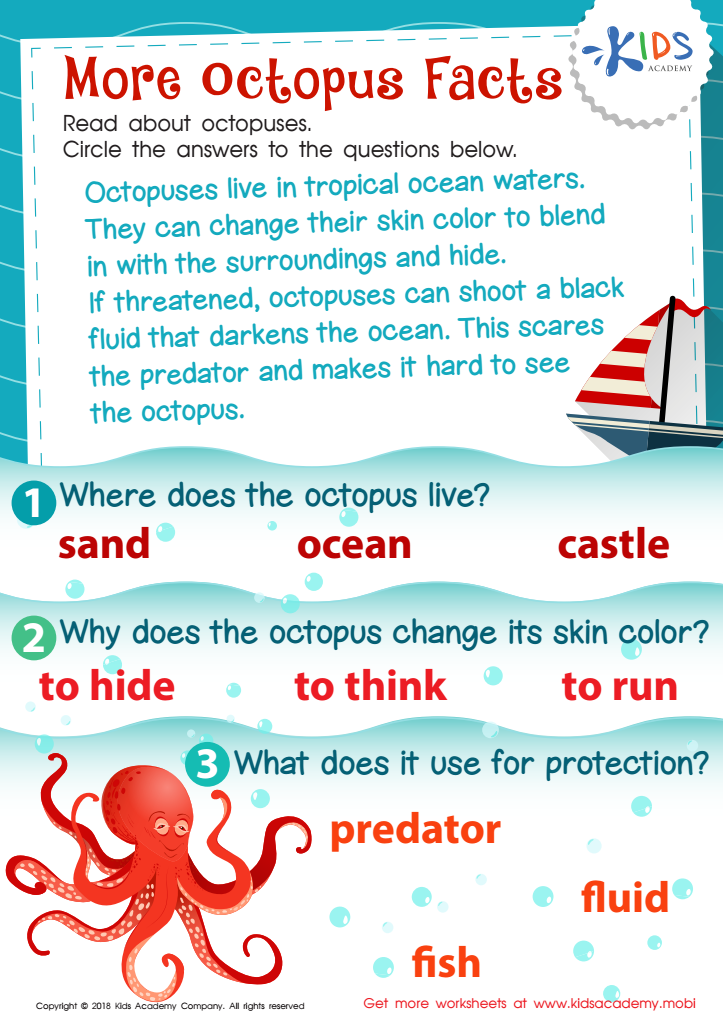
More Octopus Facts Worksheet
This worksheet will help your kids learn about the Octopus. Read the text carefully and have kids read with you. Now, ask them questions based on it and help them answer them by circling the right choices. Teaching your kids facts about animals will help them in the long run.
More Octopus Facts Worksheet
Worksheet
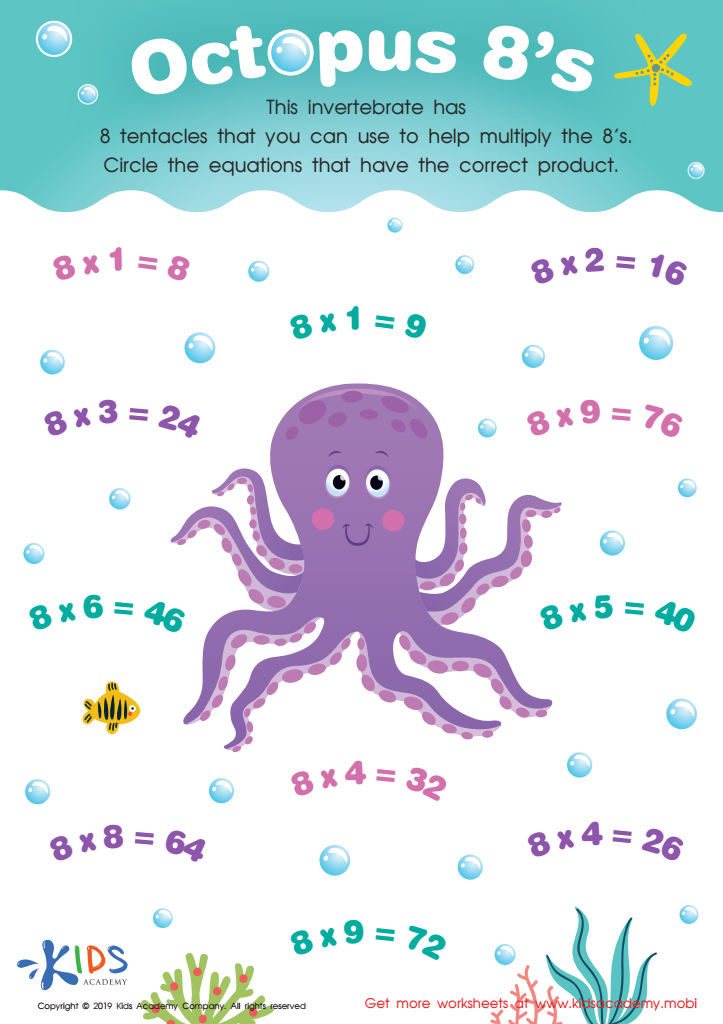
Octopus 8’s Worksheet
Can your child identify the octopus in the worksheet? It's an invertebrate with 8 tentacles. Have your child circle the equations with the correct products, and see if they can tell you some other features of the octopus too.
Octopus 8’s Worksheet
Worksheet
Join Kids Academy for Free
Who is primarily going to use this learning content?








Parents and teachers should care about incorporating counting practice with plants and animals for children aged 6-9 because it promotes both mathematical and environmental literacy. At this developmental stage, children are naturally curious and benefit from hands-on, engaging activities. Counting practice using plants and animals merges learning with elements of the natural world, making math more accessible and interesting.
Firstly, counting plants and animals helps solidify foundational math skills. By grouping and counting objects in nature, children can practice number recognition, addition, subtraction, and categorization. This active learning encourages better retention through concrete experiences rather than abstract numbers alone.
Moreover, engaging with nature fosters environmental awareness and responsibility. Children who regularly explore flora and fauna develop an appreciation for the environment, aiding in holistic education. Counting butterflies, leaves, or trees while on a nature walk teaches mathematical concepts and conveys the importance of biodiversity.
By integrating counting activities with elements of the natural world, educators can nurture critical thinking and observation skills. This pedagogical approach aligns with early childhood education philosophies that emphasize experiential learning, making math relatable and fun while also cultivating a lifelong appreciation for nature. This dual focus on math and nature not only enhances cognitive development but also instills values of stewardship and curiosity.








