Learning about ecosystems Plants and Animals Worksheets for Ages 6-9
4 filtered results
-
From - To
Discover the fascinating world of ecosystems with our "Plants and Animals Worksheets for Ages 6-9." These engaging and educational worksheets are designed to introduce young learners to the diverse habitats, relationships, and life cycles within ecosystems. Children will explore topics such as food chains, habitats, producers, and consumers, all tailored to their grade level. Each worksheet encourages critical thinking, observation, and a love for nature through fun activities and colorful illustrations. Perfect for home or classroom use, our printables make learning about ecosystems an exciting adventure. Support your child’s science education with our expertly crafted resources.
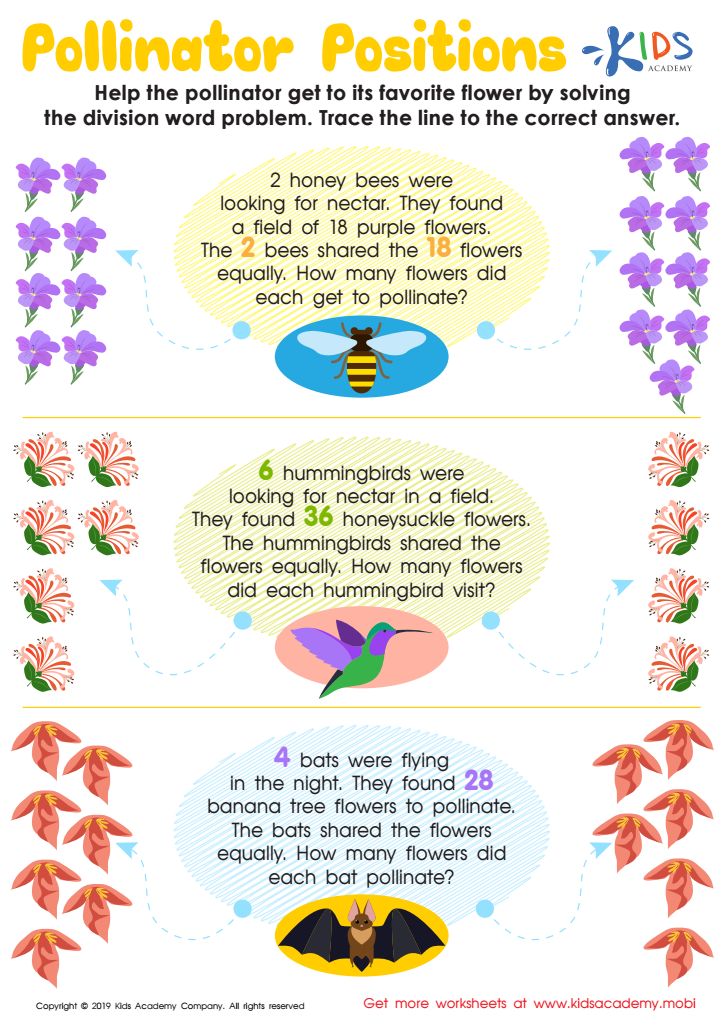
Pollinator Positions Worksheet
 Assign to My Students











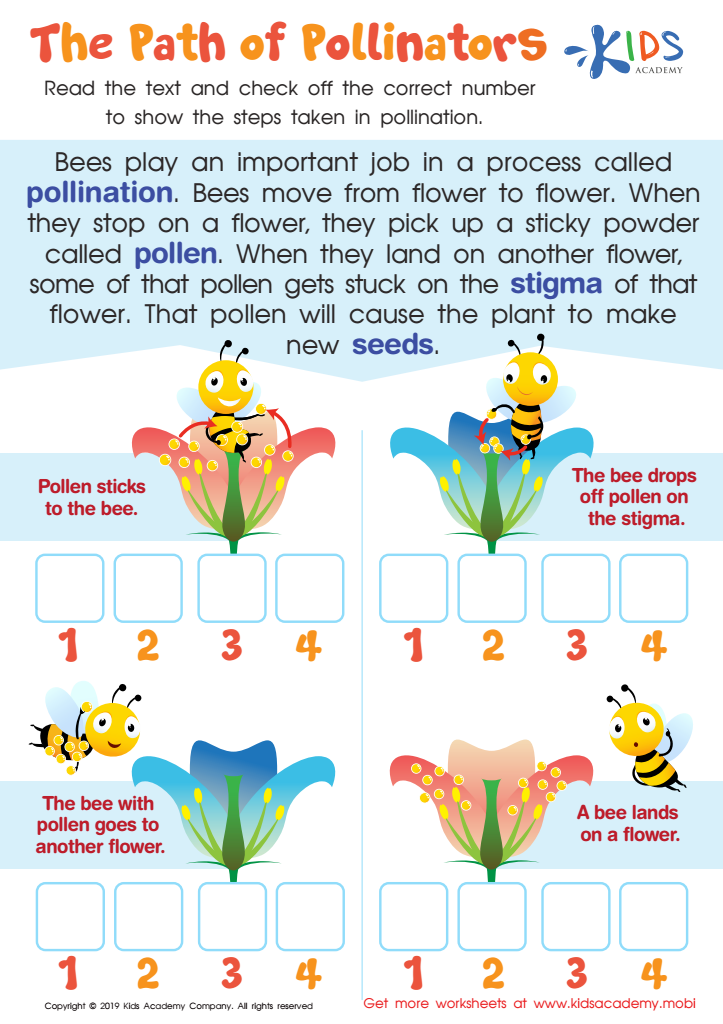
The Path of Pollinators Worksheet
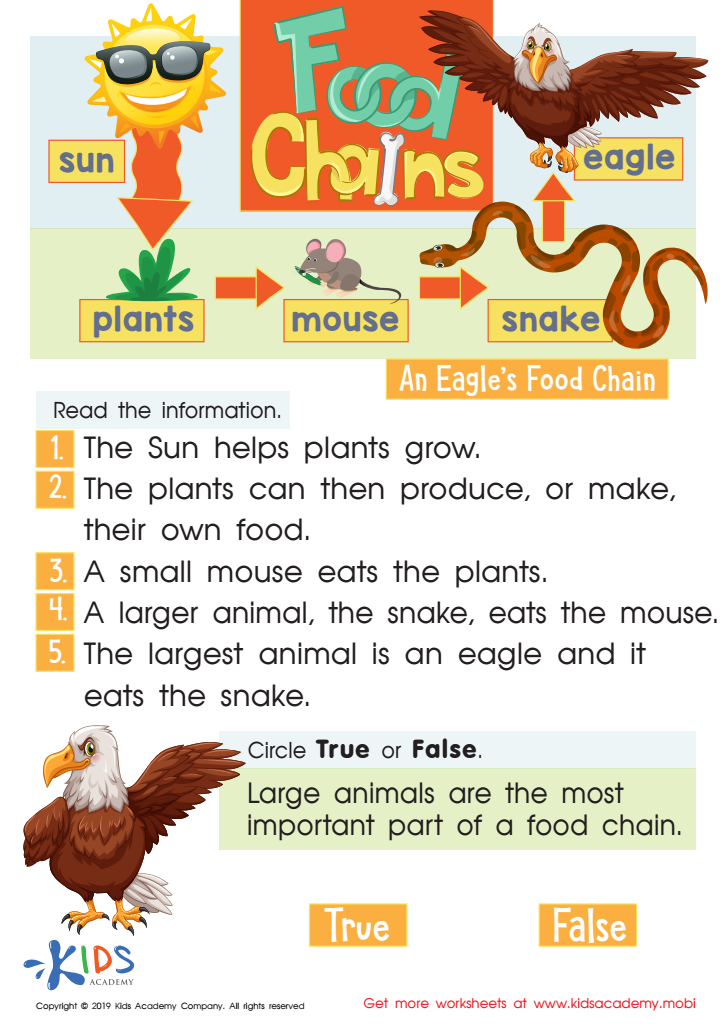
Food Chains Worksheet
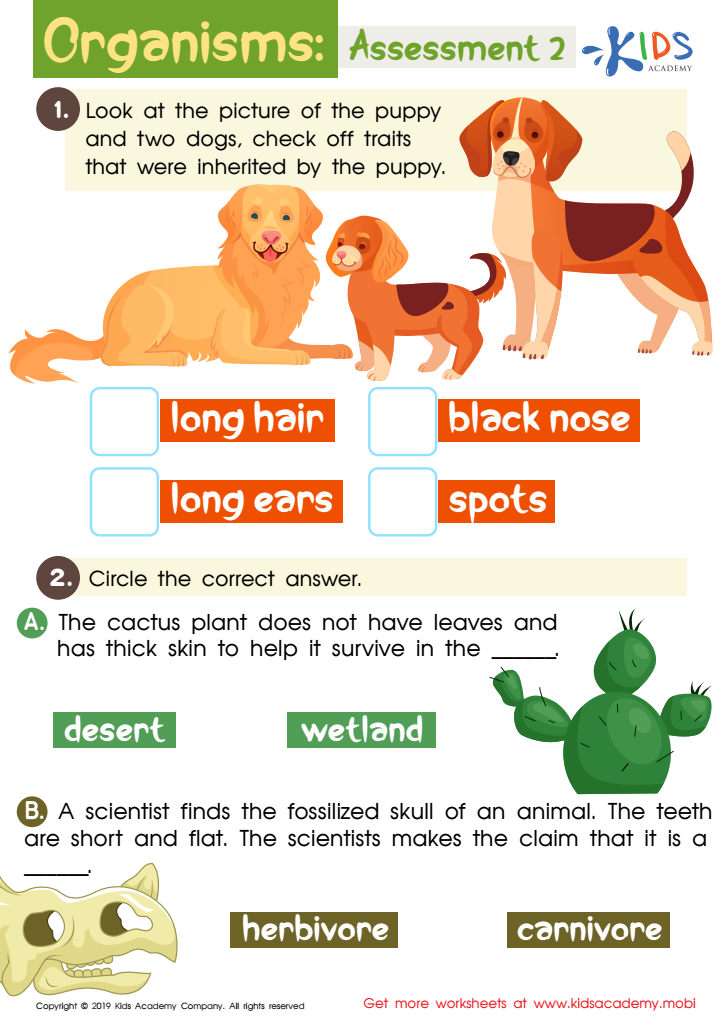
Organisms: Assessment 2 Worksheet







It's essential for parents and teachers to introduce children ages 6-9 to the concepts of ecosystems, plants, and animals. At this age, kids are naturally curious and their brains are developing rapidly, laying the foundation for future learning. Understanding ecosystems fosters a sense of environmental stewardship and appreciation for nature. This early knowledge helps children grasp the interconnectedness of life and the importance of balance within natural systems.
Learning about plants and animals also strengthens observational skills and critical thinking. Kids come to realize how living organisms interact with their environment and depend on each other for survival. This knowledge encourages them to become more responsible and empathetic about their living world.
Moreover, lessons about ecosystems can be easily tied into various subjects. For example, science lessons become more engaging with hands-on activities like planting seeds or exploring local habitats. Math skills can also be reinforced through counting and graphing plant growth or animal populations. Literature and art projects related to ecosystems stimulate creativity and improve language skills.
Overall, teaching young kids about ecosystems, plants, and animals sets a foundation for an informed, conscious, and engaged future generation. It promotes lifelong values of curiosity, responsibility, and respect for our planet's diverse living organisms.








