Understanding life cycles Plants and Animals Worksheets for Ages 6-9
6 filtered results
-
From - To
Unlock the wonders of nature with our "Understanding Life Cycles: Plants and Animals Worksheets for Ages 6-9." Perfectly tailored for curious minds, these engaging worksheets foster a deep comprehension of nature’s cycles. Young learners will explore the growth patterns of both plants and animals through interactive activities. Vivid illustrations guide every step, making science both fun and educational. Encourage a love for biology and environmental stewardship as children observe seed sprouting, learn about metamorphosis, and witness lifecycle transformations. Let’s inspire future scientists by providing valuable, hands-on learning experiences today. Start your educational journey with us now!
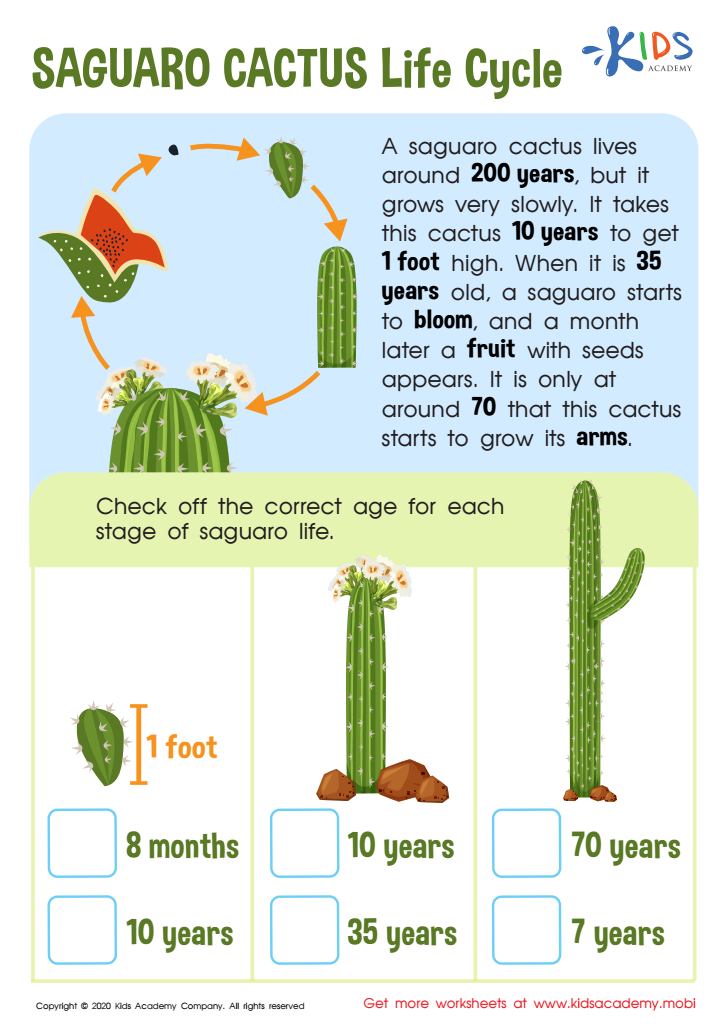
Saguaro Cactus Life Cycle Worksheet
 Assign to My Students






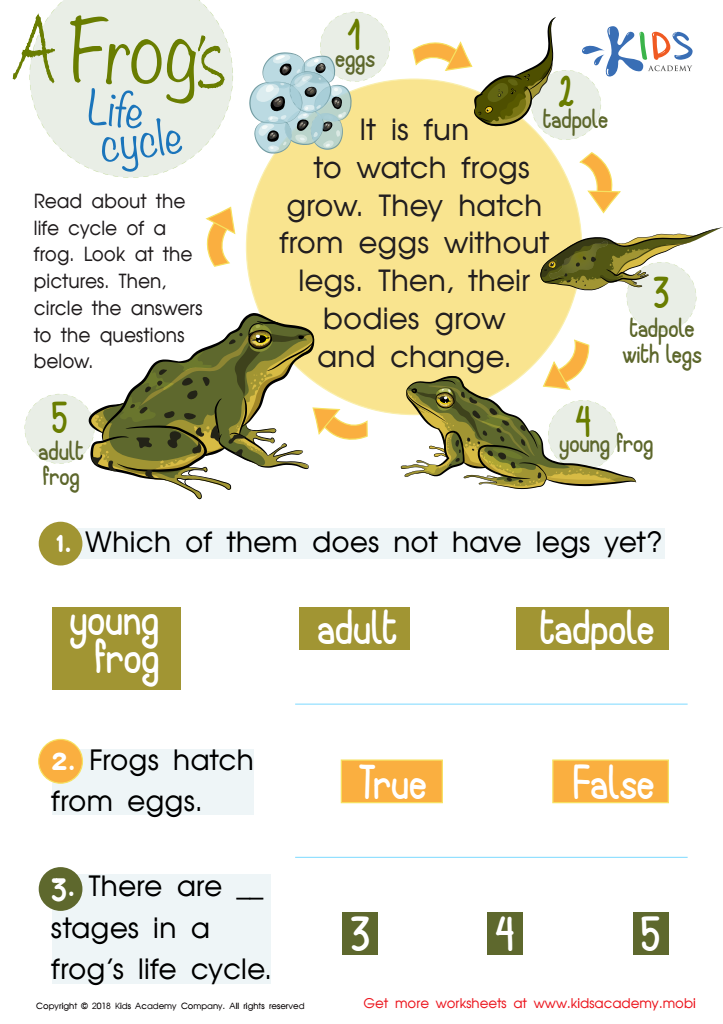
A Frog’s Life Cycle Worksheet
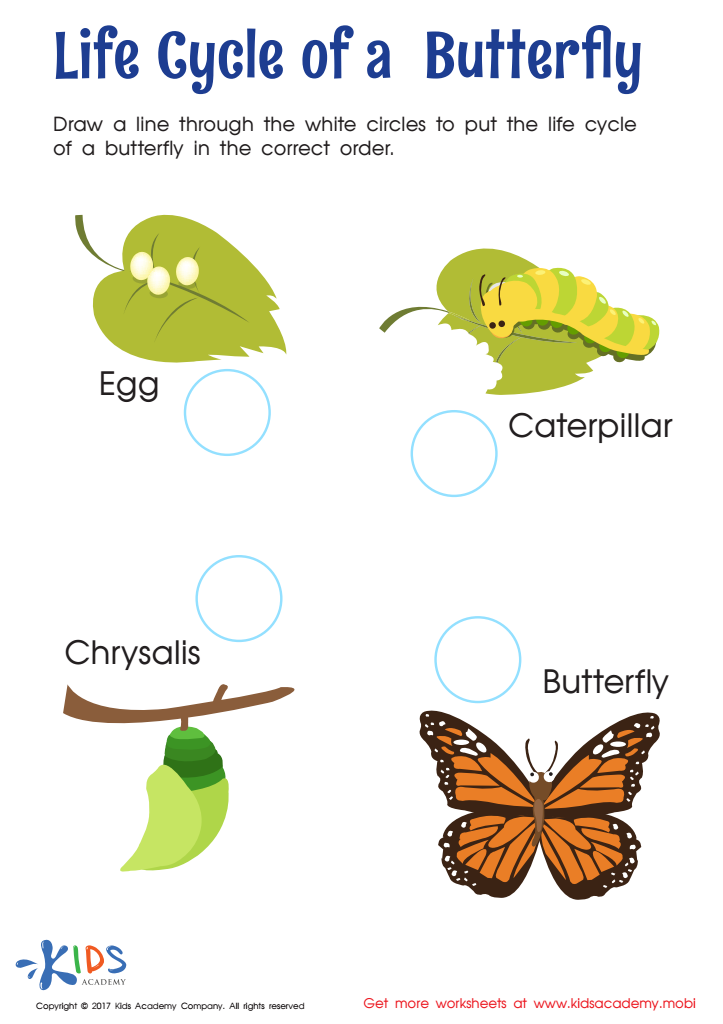
Life Cycle of Butterfly Worksheet
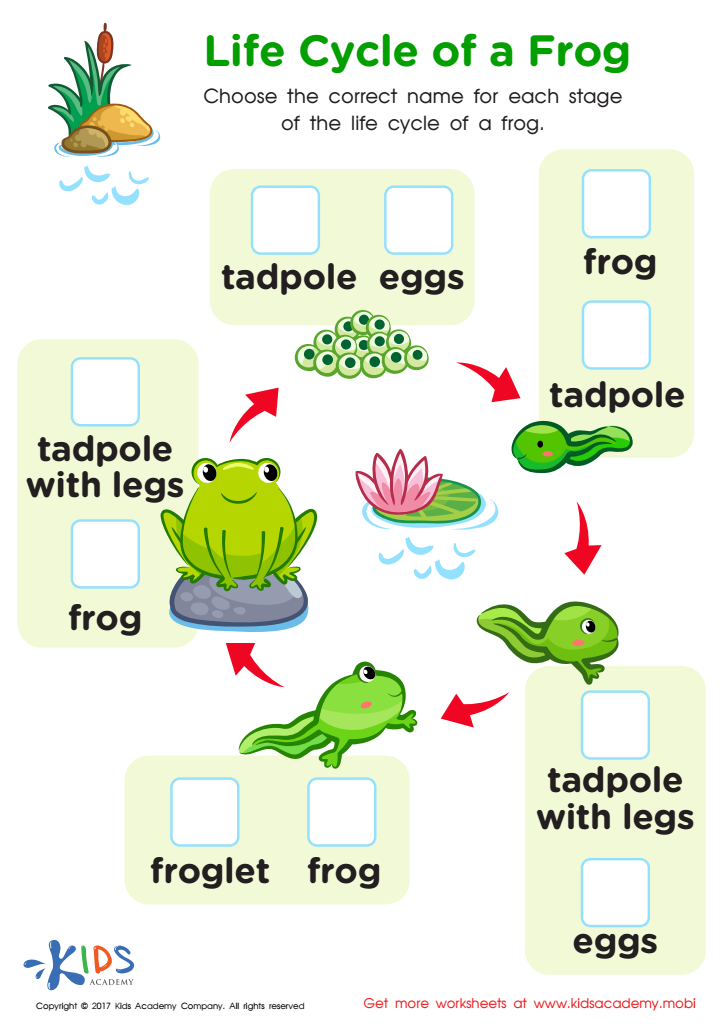
Life Cycle Frog Printable
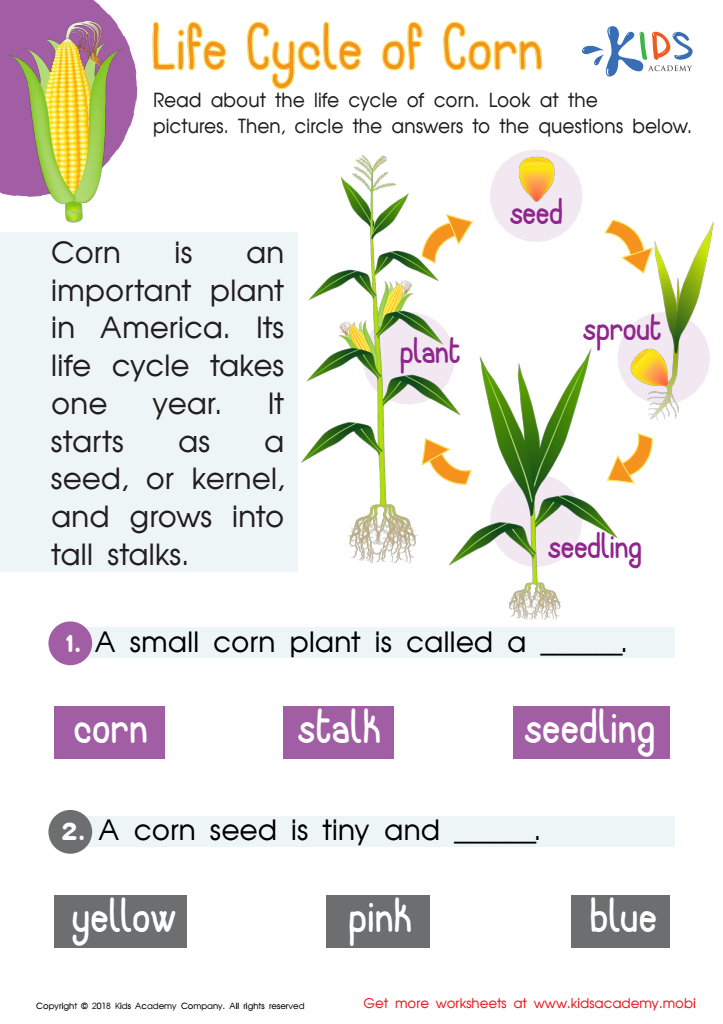
Life Cycle of Corn Worksheet
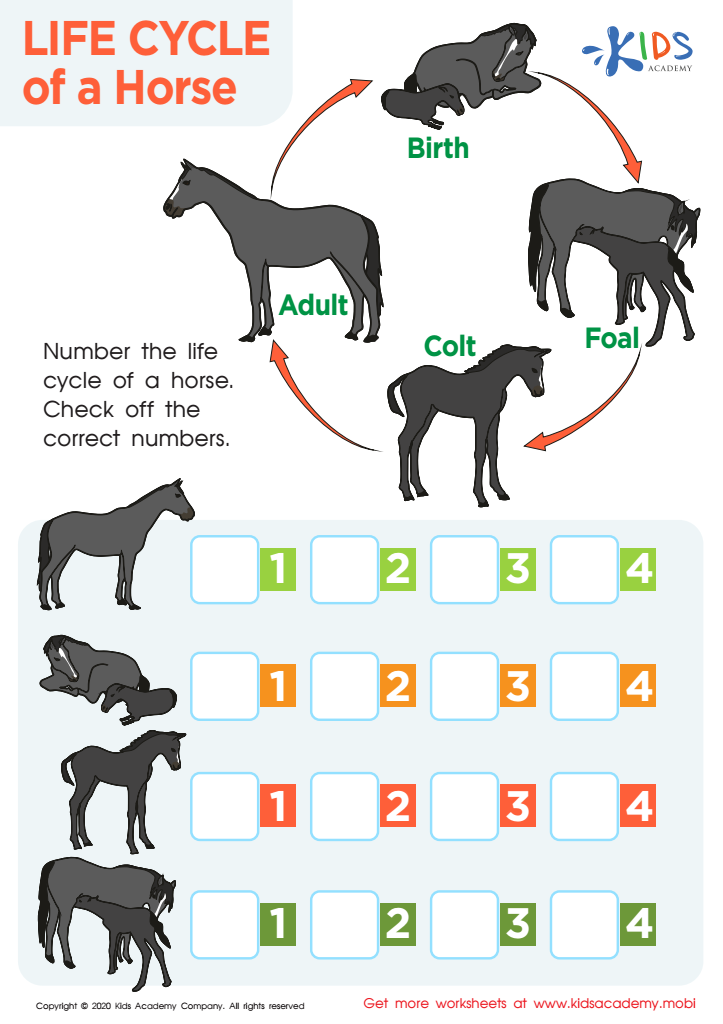
Life Cycle of a Horse Worksheet







Understanding life cycles of plants and animals is crucial for children aged 6-9, as it plants the seeds for critical thinking, responsibility, and respect for nature. At this formative age, kids are naturally curious and observant, making it an ideal time to introduce concepts that help them comprehend the world around them. Knowing about life cycles demystifies where things come from, how they grow, and what essential roles they play in our ecosystem.
For parents and teachers, fostering this understanding can enhance a child's academic growth and emotional development. Studying life cycles nurtures a child's sense of empathy by showing the interconnectedness of all life forms. It boosts science literacy, laying the groundwork for more complex concepts in biology and environmental science later on. This knowledge also promotes critical thinking and observational skills, as children learn to recognize patterns and make predictions.
Moreover, children who understand life cycles are more likely to appreciate nature and practice sustainability from a young age. This can translate into future behaviors that protect our planet. When educators and parents emphasize these topics, they are investing in a child's intellectual growth and instilling a sense of environmental stewardship that lasts a lifetime.








