Weather Vocabulary Weather Worksheets for Ages 6-9
3 filtered results
-
From - To
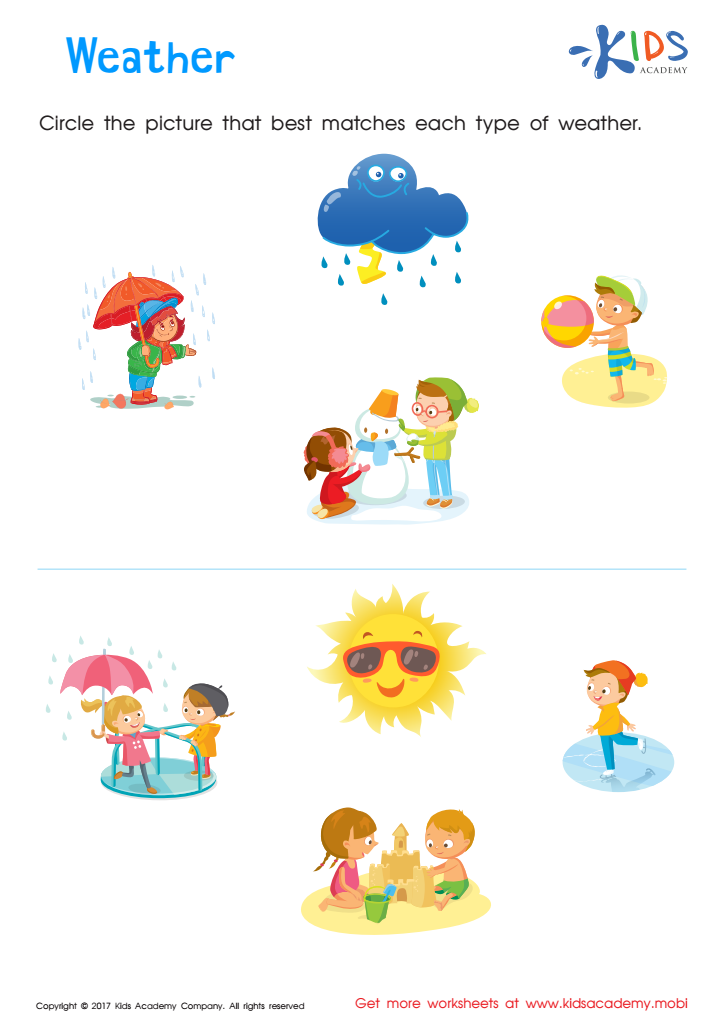
Explore our engaging "Weather Vocabulary Worksheets" designed for children ages 6-9! Our resources aim to enhance young learners' understanding of essential weather terms through fun and interactive activities. From matching games to fill-in-the-blank exercises, these worksheets cater to different learning styles while promoting vocabulary retention. Each activity is designed to spark curiosity about the weather, making science enjoyable and accessible for young minds. Ideal for classroom use or at-home practice, our worksheets will help your child build a solid foundation in weather vocabulary. Download and watch as your little ones develop their language skills while learning about the world around them!
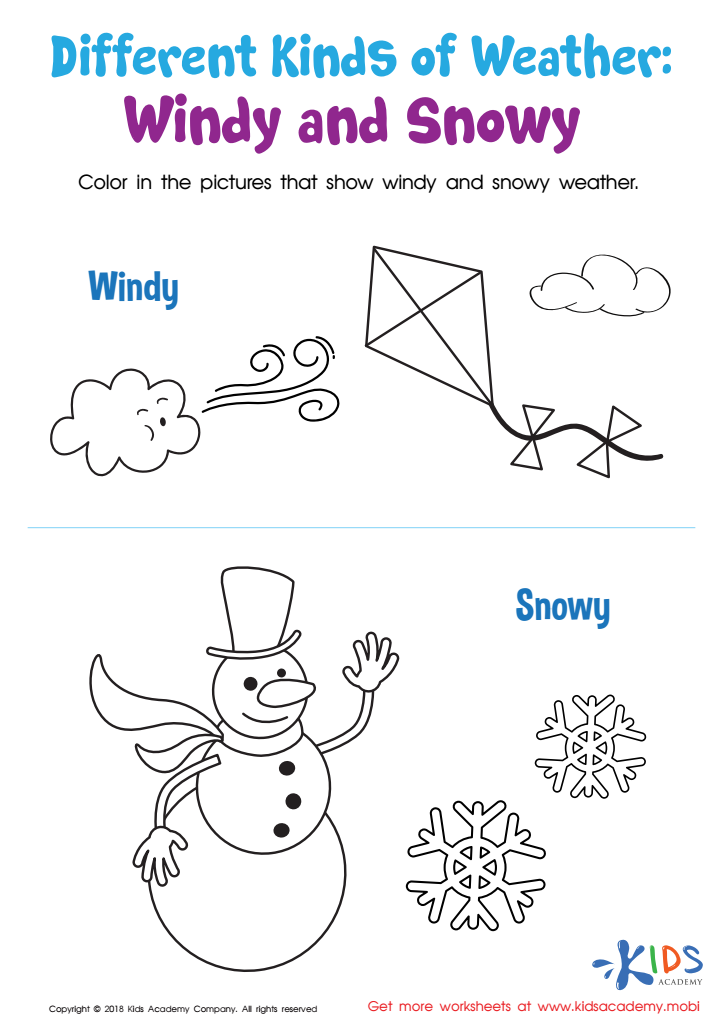
Different Kinds of Weather: Windy and Snowy Worksheet
 Assign to My Students
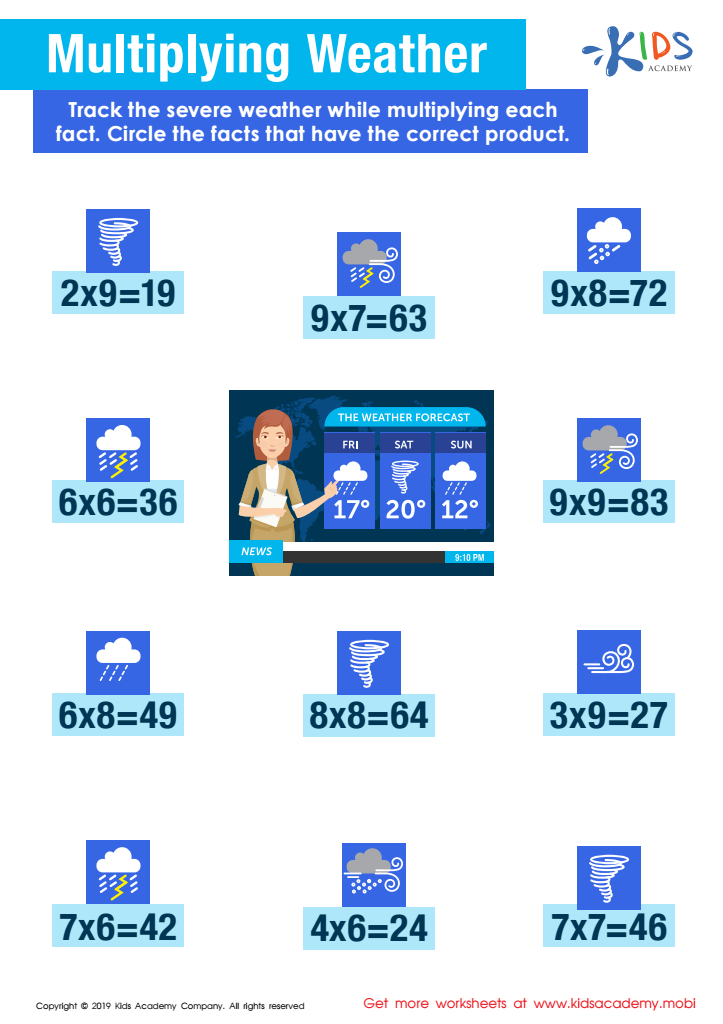
Multiplying Weather Worksheet


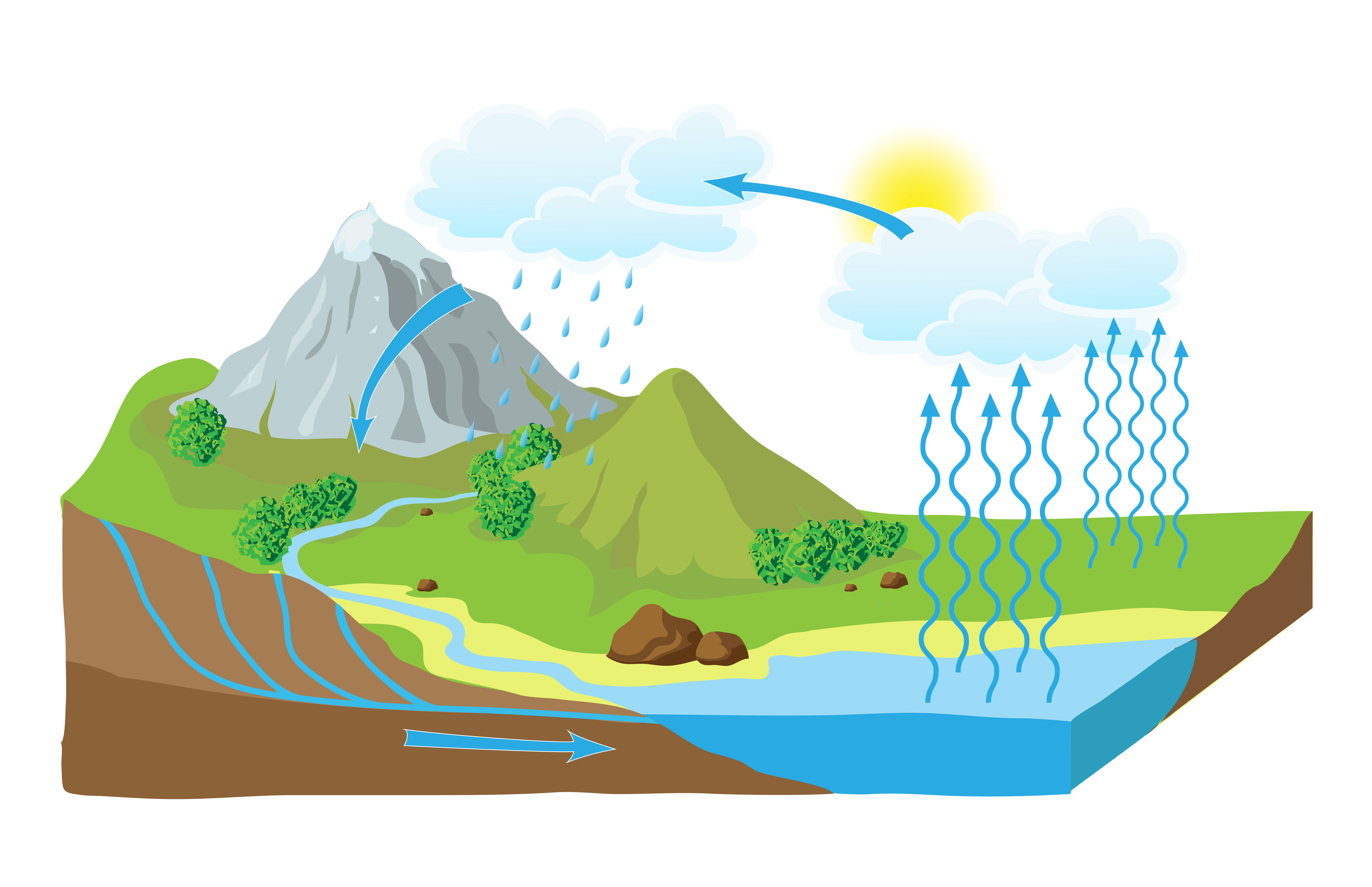





Understanding weather vocabulary is crucial for children aged 6-9 as it lays the foundation for their scientific literacy and comprehension of the world. By learning terms such as "precipitation," "humidity," and "forecast," children become more equipped to grasp complex concepts related to climate and environmental changes. This knowledge fosters curiosity about natural phenomena, encouraging inquisitive minds to ask questions about their surroundings.
Additionally, mastering weather vocabulary helps children articulate their thoughts and experiences better. For instance, knowing how to describe a storm or sunny day enables them to share what they observe, enhancing their communication skills. Teachers and parents can use weather discussions to connect lessons in science, language arts, and math, making learning interdisciplinary and more impactful.
Furthermore, a solid grasp of weather terms aids in decision-making, as children learn to prepare for various weather situations—important for their safety. This vocabulary fosters a sense of responsibility and awareness, helping them understand consequences and how to navigate different environments. Engaging with weather vocabulary ultimately promotes critical thinking, academic performance, and a lifelong appreciation for nature, making it a vital aspect of early education.







