Critical Thinking Community Worksheets for Ages 6-9
6 filtered results
-
From - To
Introduce young learners to the fun and engaging world of critical thinking with our Community Worksheets designed for ages 6-9. These worksheets help children explore and understand their surroundings while fostering essential problem-solving skills. Each activity encourages logical reasoning, fosters curiosity, and promotes independent thinking. From analyzing community roles to addressing real-world scenarios, our worksheets are an excellent resource for cultivating young minds. Perfect for both classroom and home use, these critical thinking activities provide a solid foundation in social studies and beyond. Empower your child to think deeply and make informed decisions with our comprehensive community worksheets.
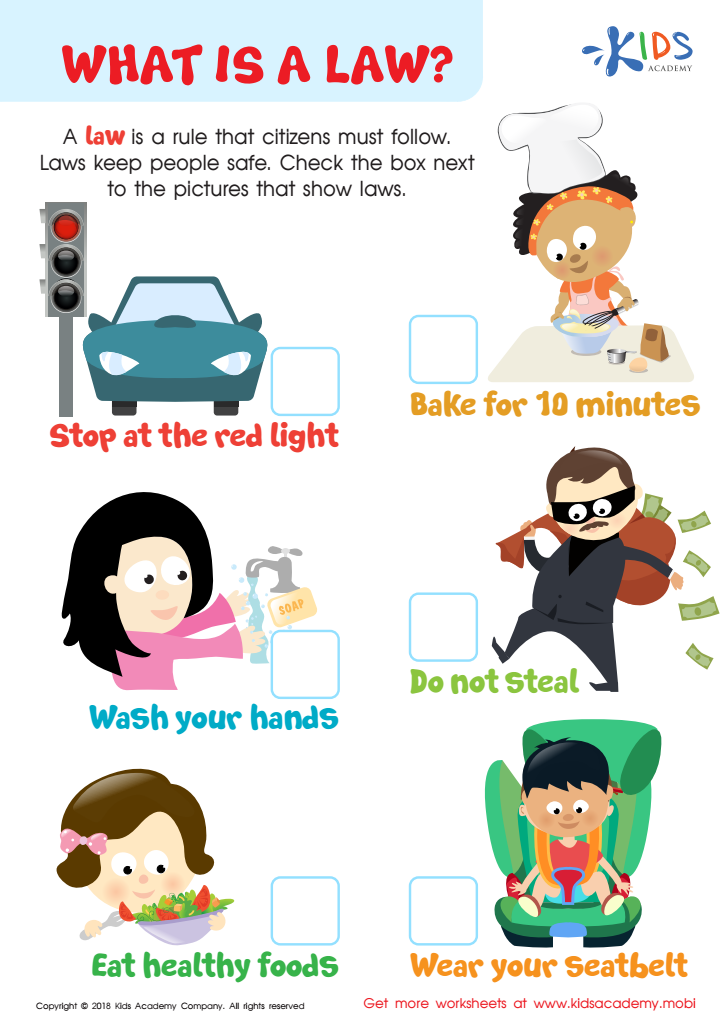
What is a Law? Worksheet
 Assign to My Students
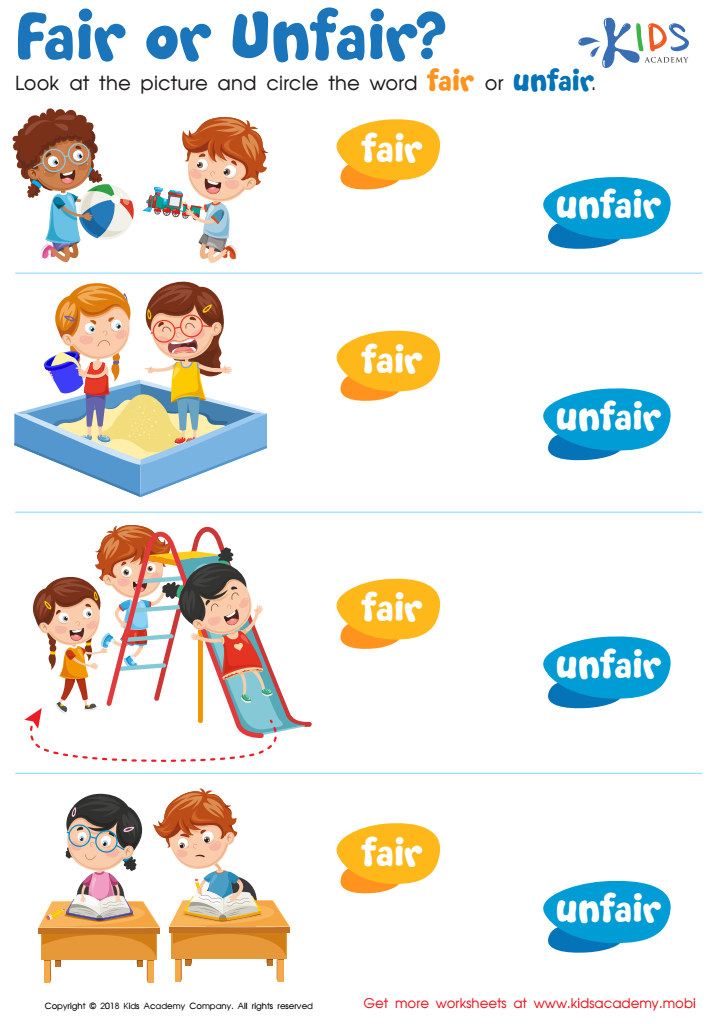
Fair or Unfair Worksheet
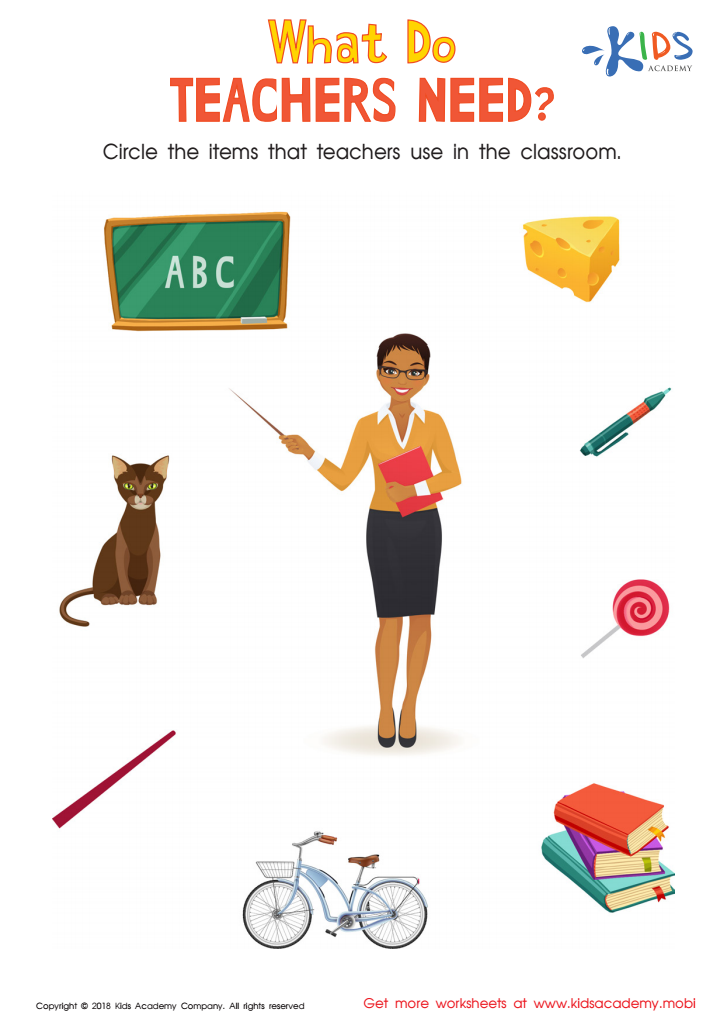
What Do Teachers Need Worksheet

Traditional Music Worksheet
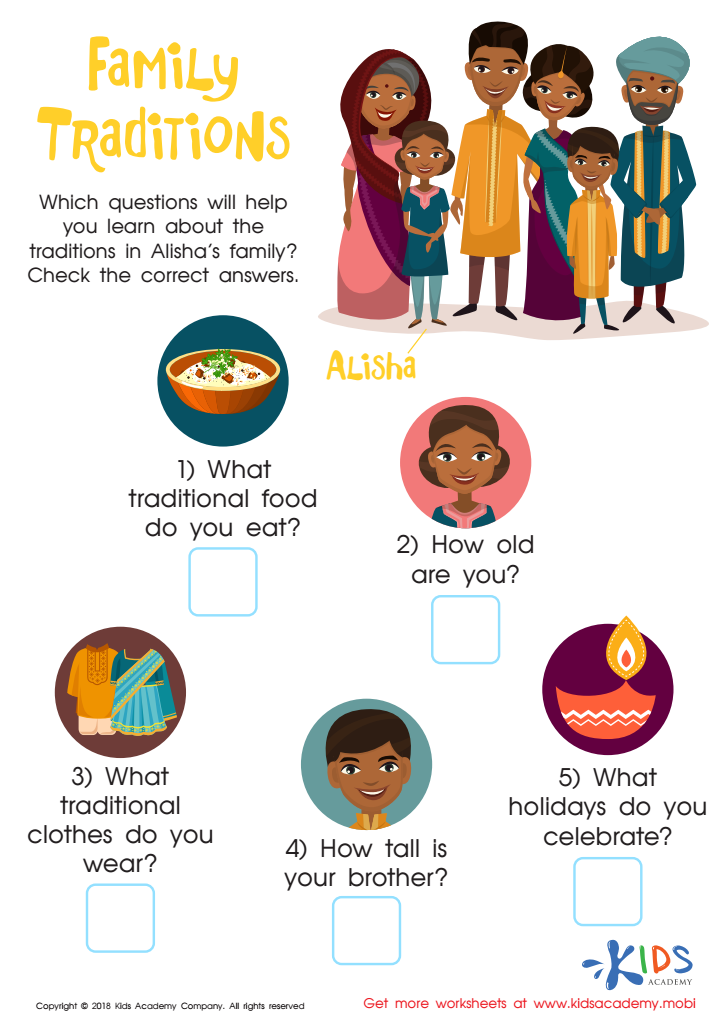
Family Traditions Worksheet
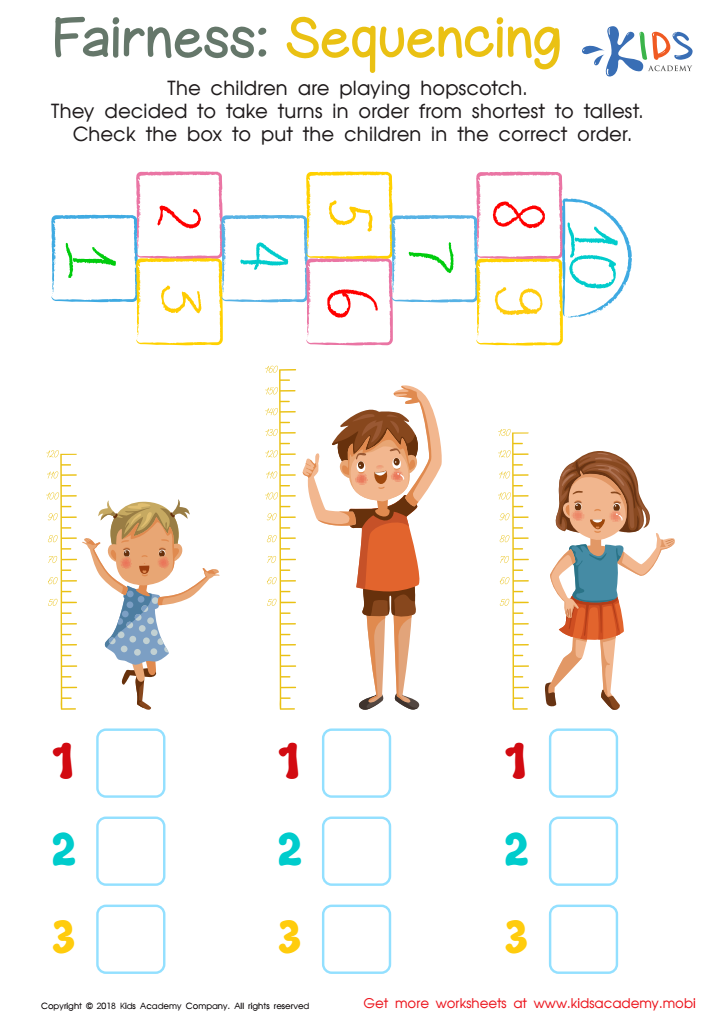
Fairness: Sequencing Worksheet








The Critical Thinking Community for Ages 6-9 is crucial for both teachers and parents who care about nurturing well-rounded and successful children. At this developmental stage, young minds are incredibly impressionable and capable of forming the foundational thought processes that will shape their future learning experiences and decision-making skills.
Critical thinking fosters important skills such as problem-solving, logical reasoning, and the ability to analyze information objectively. When these skills are cultivated early on, they can significantly boost a child's academic achievement by equipping them to better understand and engage with complex subjects. For example, in reading comprehension, a critical thinker can identify main ideas and themes, predict outcomes, and ask pertinent questions, deepening their understanding.
Beyond academics, critical thinking helps in social and emotional development. It teaches children to evaluate situations, consider different perspectives, and make informed decisions, thereby enhancing their interpersonal communication and empathy.
Parents and teachers who invest in critical thinking programs are essentially preparing children to navigate life's various challenges with confidence and discernment. They are planting the seeds for adults who can think for themselves, contributing to society in meaningful ways. Given the increasingly complex and information-rich world, the ability to think critically is more than just an academic skill—it's a vital life skill.








