Enhancing critical thinking Social Studies Worksheets for Ages 6-9
5 filtered results
-
From - To
Enhancing Critical Thinking Social Studies Worksheets for Ages 6-9 are expertly designed to engage young learners in the exciting world of social studies while fostering essential critical thinking skills. Each worksheet encourages exploration, inquiry, and analysis, helping children build a strong foundation in history, geography, civics, and more. These activities prompt kids to ask questions, make connections, and understand cause and effect, thus promoting intellectual growth and curiosity. Tailored for children aged 6-9, these printable resources ensure learning is both enjoyable and educational, preparing young minds for future challenges through enriched comprehension and thoughtful reflection.

What is a Citizen? Worksheet
 Assign to My Students
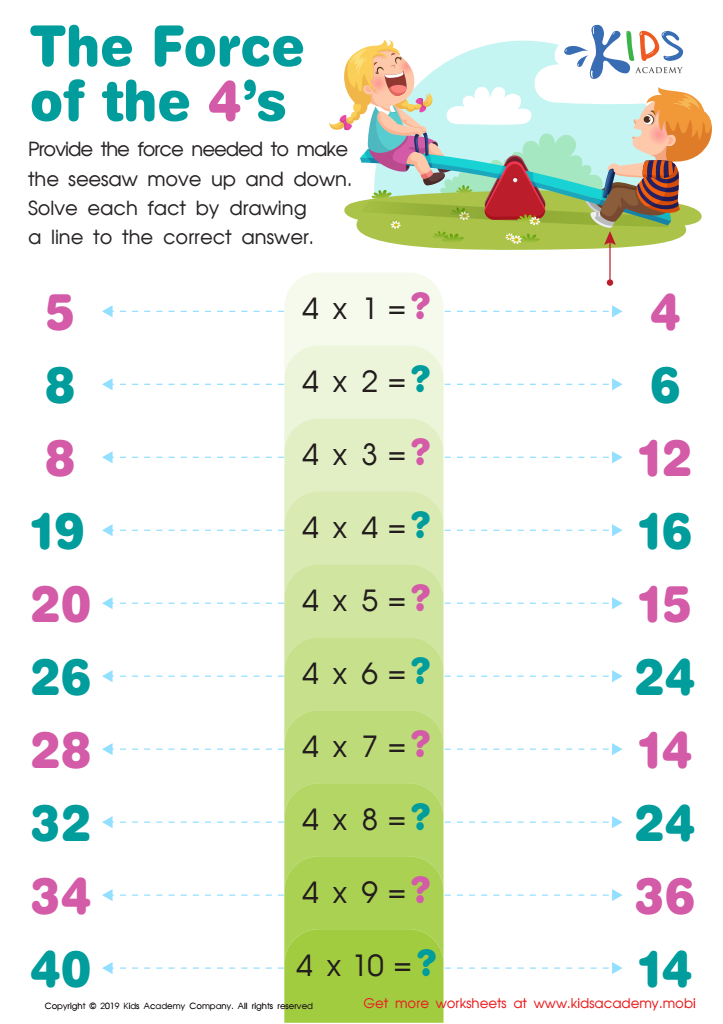
The Force of the 4's Worksheet
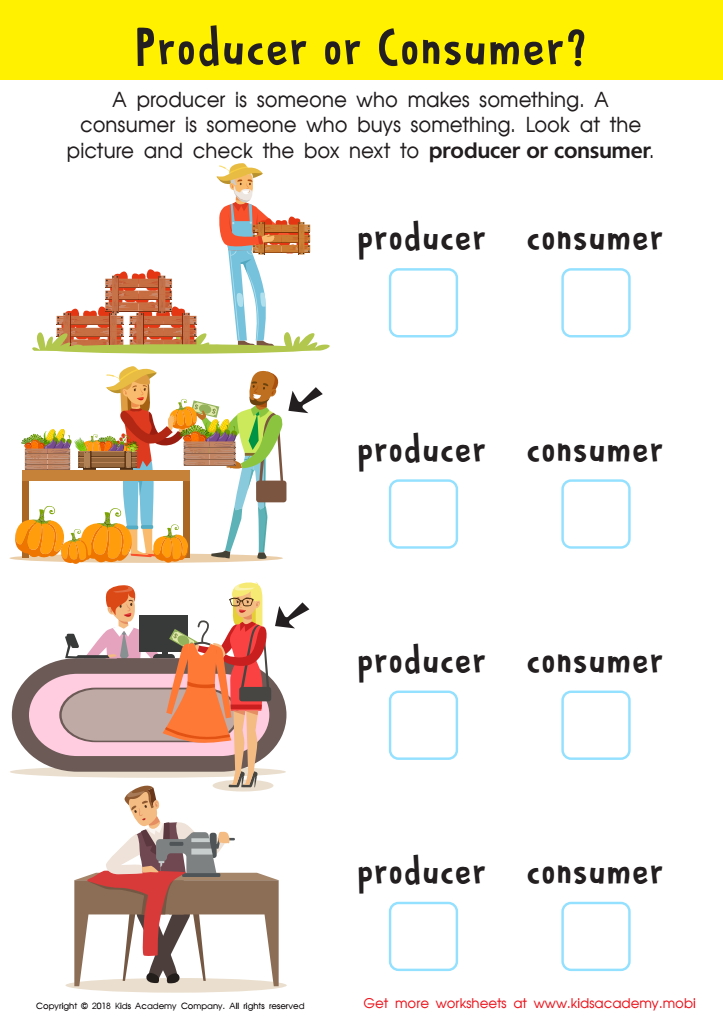
Producer or Consumer? Worksheet
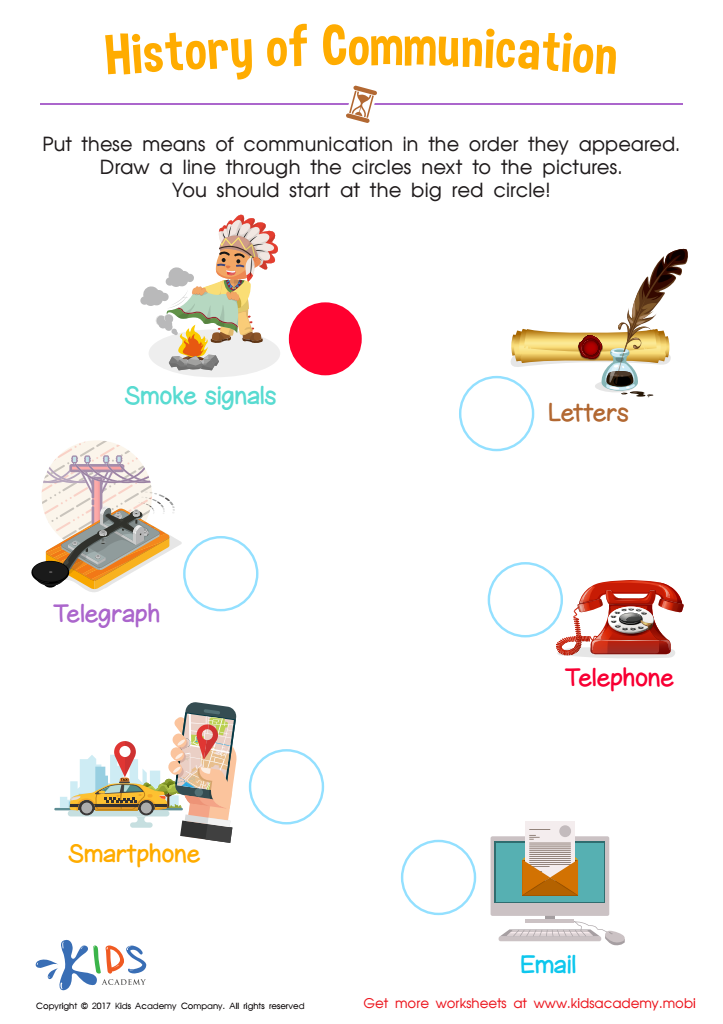
History of Communication Worksheet

Colonial Times Worksheet








Enhancing critical thinking in Social Studies for children aged 6-9 is crucial because it lays a foundational framework for lifelong learning and informed citizenship. At this developmental stage, children are naturally curious and eager to make sense of the world around them. Introducing critical thinking skills helps them learn to question, analyze, and interpret information rather than merely accepting it at face value.
Firstly, critical thinking promotes cognitive development by encouraging children to draw connections between historical events, cultural practices, and contemporary societal issues. This paves the way for deeper understanding and more meaningful learning experiences. It empowers them to identify biases, recognize multiple perspectives, and cultivate empathy for diverse experiences—a skill essential in today’s globally connected society.
Moreover, enhancing critical thinking skills helps children become proactive problem-solvers and confident decision-makers. They learn to weigh evidence, consider differing viewpoints, and develop sound conclusions. This analytical approach benefits them not just academically but also in everyday situations, fostering resilience and adaptability.
For parents and teachers, investing in critical thinking through Social Studies nurtures responsible, enlightened future citizens who are equipped to participate meaningfully in democratic processes, understand their civic duties, and contribute positively to their communities. It is an investment in both the individual child's growth and the collective betterment of society.