Reading comprehension improvement Social Studies Worksheets for Ages 6-9
4 filtered results
Difficulty Level
Grade
Age
-
From - To
Subject
Activity
Standards
Enhance your child's reading comprehension skills with our engaging Social Studies worksheets designed for ages 6-9. These printable resources provide a fun and interactive way for young learners to delve into important social concepts while improving their reading abilities. Each worksheet combines informative texts with thought-provoking questions that encourage critical thinking and promote retention. Topics are tailored to spark curiosity and foster a love for learning about the world around them. Whether at home or in the classroom, these worksheets are perfect for reinforcing reading comprehension in a meaningful context. Start your child’s journey towards academic success today!
Favorites
With answer key
Interactive
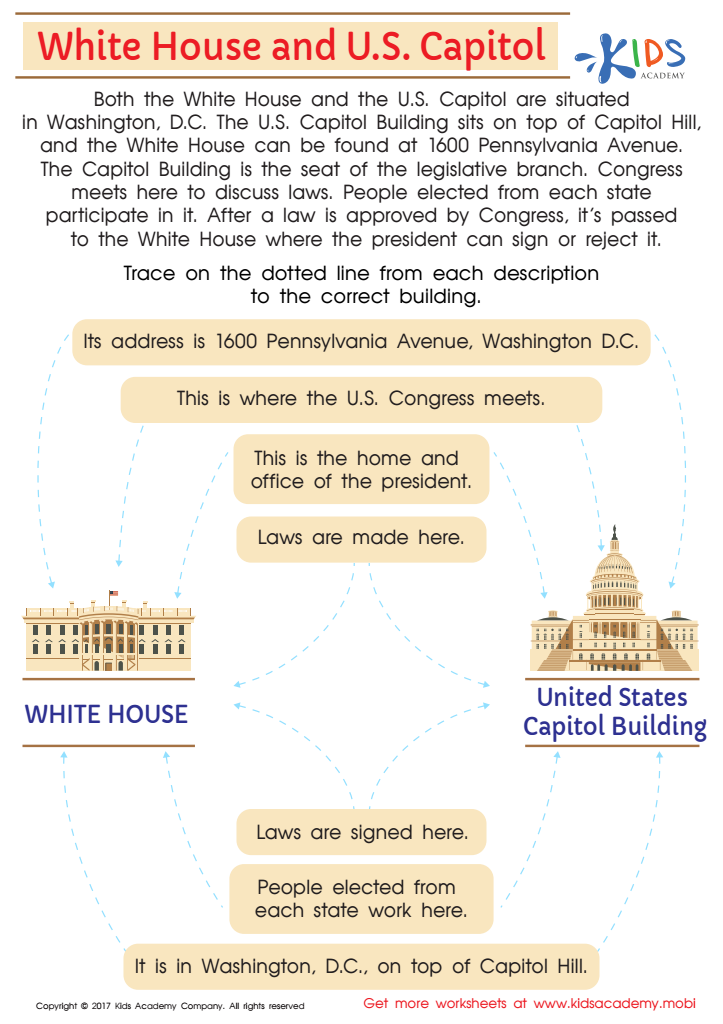
White House and US Capitol Worksheet
Take a virtual tour of the US capital with your child! This worksheet on the White House and Capitol buildings will help them understand their purpose and differences. Let them explore the nation's most important buildings without leaving the house!
 Assign to My Students
White House and US Capitol Worksheet
Worksheet
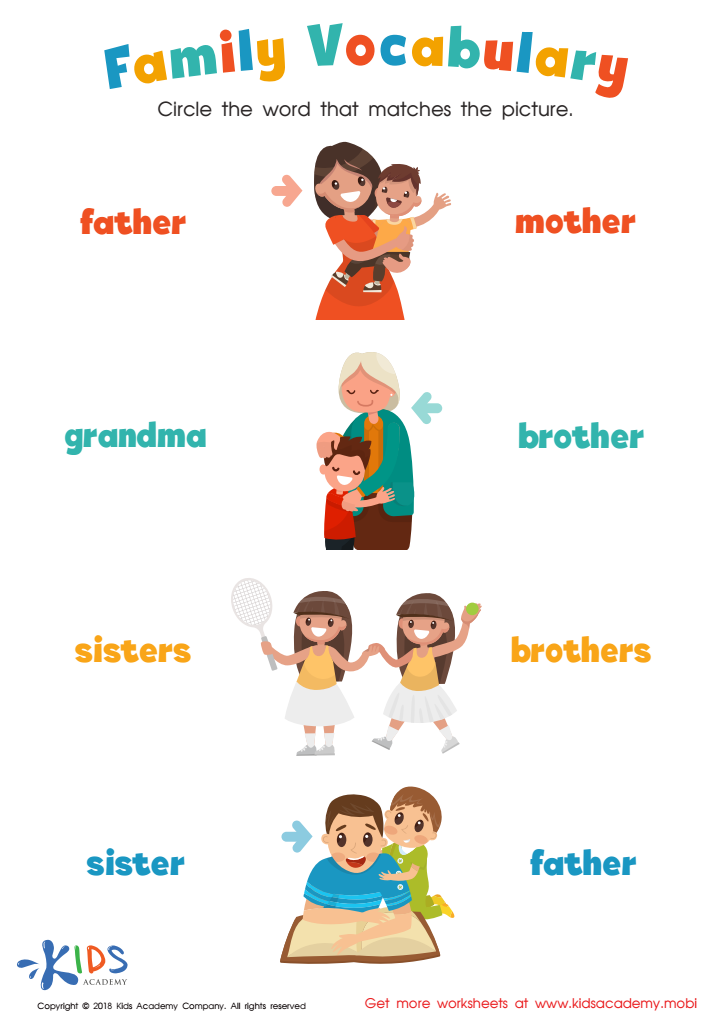
Family Vocabulary Worksheet
Students learn about families in social studies. This worksheet helps them identify family members by looking at a picture and circling the corresponding word. To extend their learning, ask them to talk about their own family members.
Family Vocabulary Worksheet
Worksheet
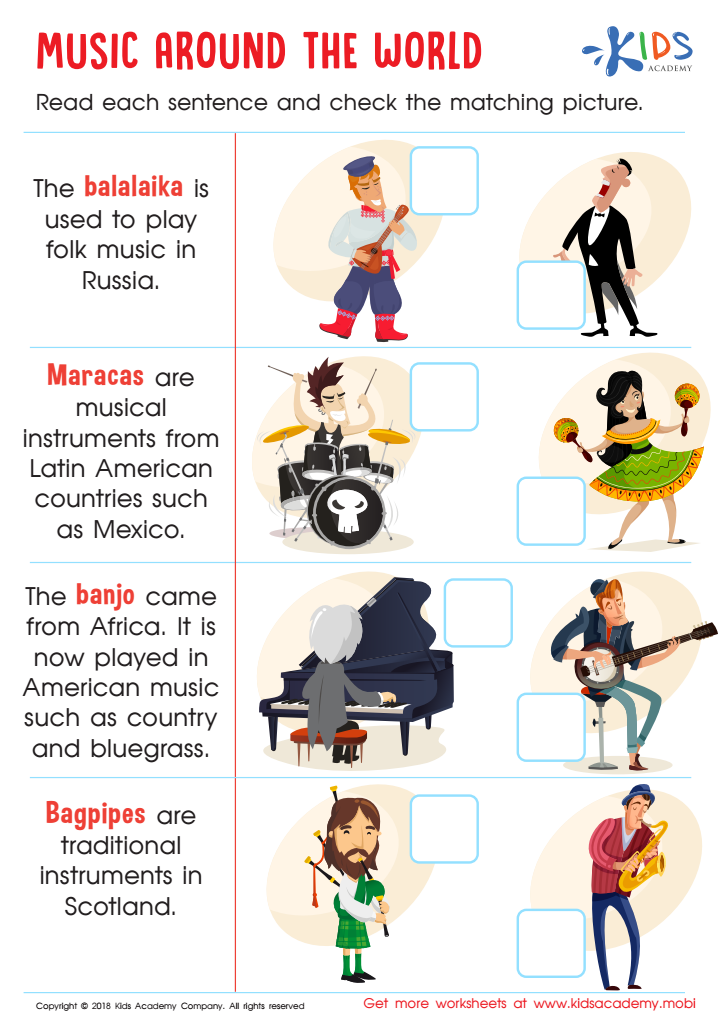
Music Around the World Worksheet
Have your kids read the sentences in this exercise, or assist them if they're not confident readers. The pictures teach them about different cultures' music, like the banjo which comes from Africa and is a part of some American genres. Read each sentence and have them match it to the right image.
Music Around the World Worksheet
Worksheet
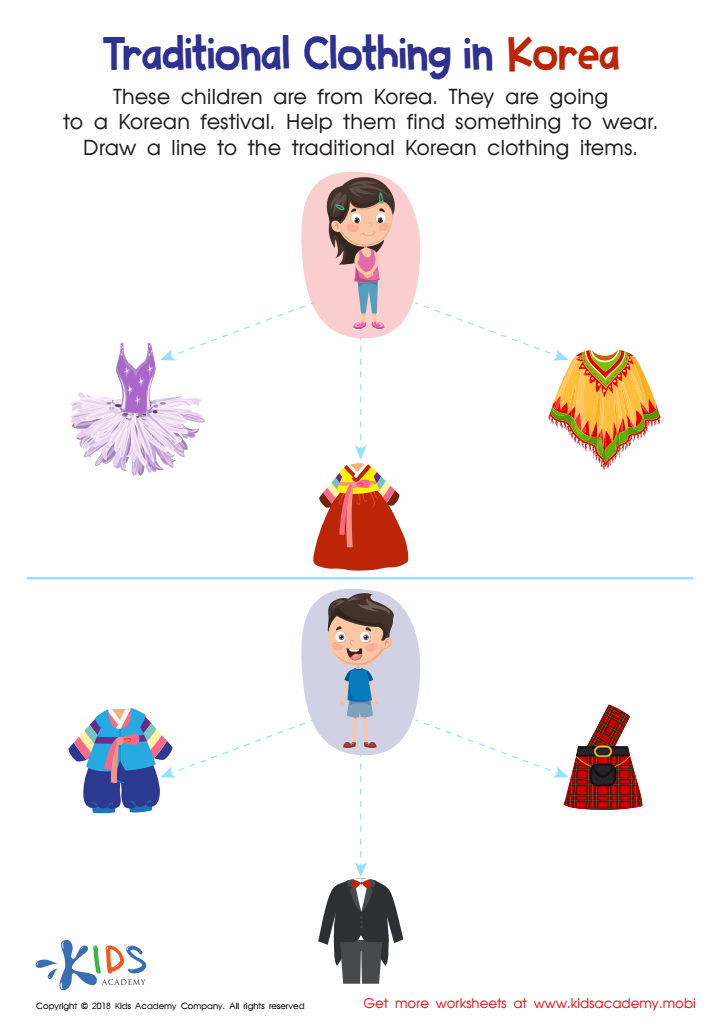
Traditional Clothing in Korea Worksheet
Students can explore global cultures through this fun PDF worksheet. It introduces Korean children and a Korean festival. Students can choose the children's clothing using traceable lines. It's essential for our globally connected students to learn about different traditions, clothing, foods and cultures of other countries.
Traditional Clothing in Korea Worksheet
Worksheet
Learning Skills
Join Kids Academy for Free
Who is primarily going to use this learning content?







Reading comprehension is a critical skill, especially in Social Studies for children aged 6-9. At this stage in their development, young learners are beginning to make connections between their reading and the world around them. Improved reading comprehension allows them to better understand key concepts in Social Studies, such as community roles, historical events, and cultural diversity.
When parents and teachers prioritize reading comprehension, they empower children to think critically about the material. This not only enhances their knowledge of social studies topics but also cultivates curiosity and a love for learning. As children learn to analyze and interpret texts, they develop essential analytical skills that are invaluable in today's information-rich environment.
Moreover, fostering reading comprehension helps children express their thoughts and understand perspectives different from their own, which is essential for social competence in a diverse world. For teachers, integrating reading strategies in Social Studies can also bridge curriculum areas, enriching the educational experience and drawing connections that make learning more meaningful.
In summary, improving reading comprehension in Social Studies is crucial because it lays a foundation for informed and engaged citizens. Fostering this skill enhances both educational outcomes and emotional intelligence in young students.