Reading proficiency Writing Worksheets for Ages 6-9
3 filtered results
-
From - To
Boost your child's reading proficiency with our engaging writing worksheets designed for ages 6-9! Our comprehensive resources focus on enhancing reading skills through fun and interactive writing exercises. Each worksheet encourages young learners to connect what they read with their writing, helping to reinforce comprehension and vocabulary. Ideal for home or classroom use, these worksheets make learning enjoyable while promoting critical thinking. Watch your child's confidence soar as they develop necessary skills to excel in reading and writing. Perfect for early-grade teachers and parents alike, these worksheets are the key to building a solid foundation for literacy. Start exploring today!
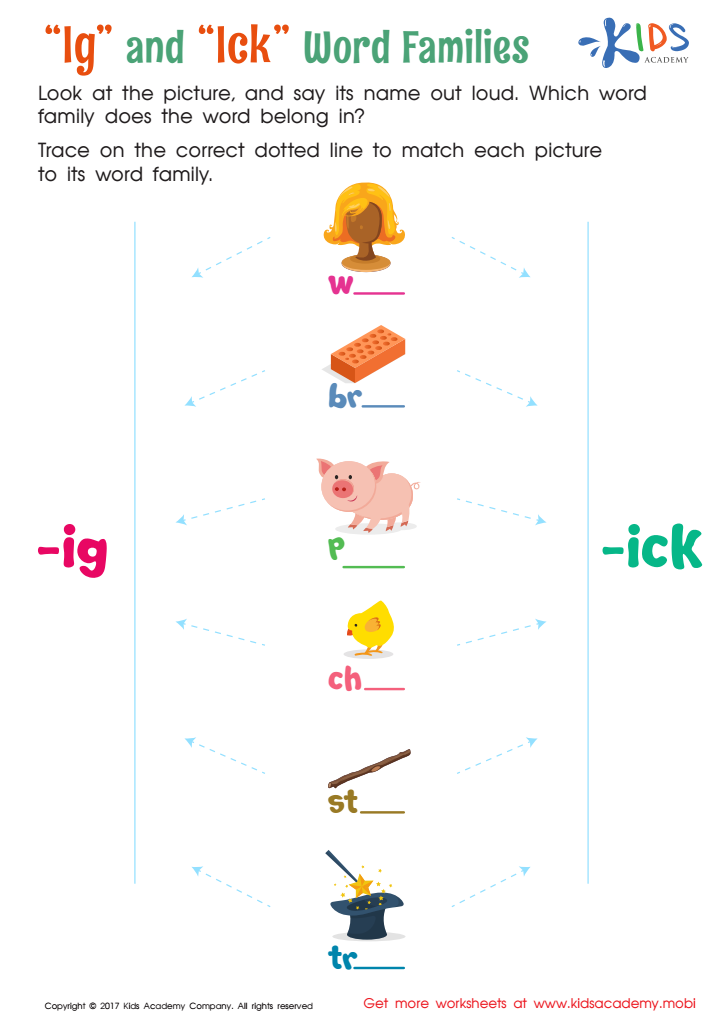
Words Families "ig" and "ick" Spelling Worksheet
 Assign to My Students
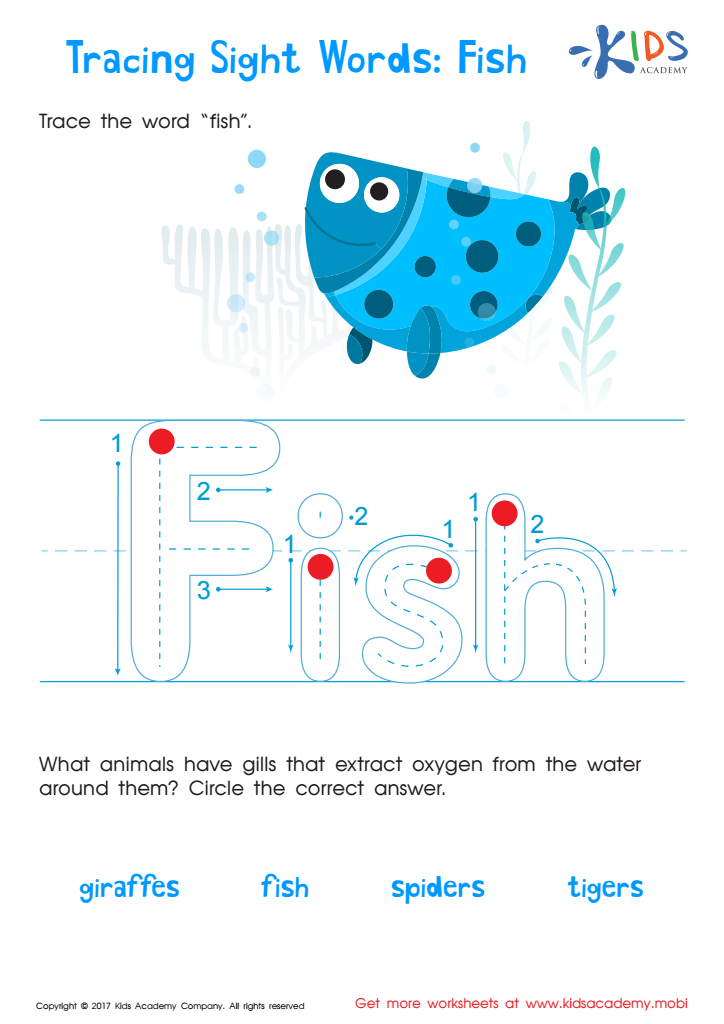
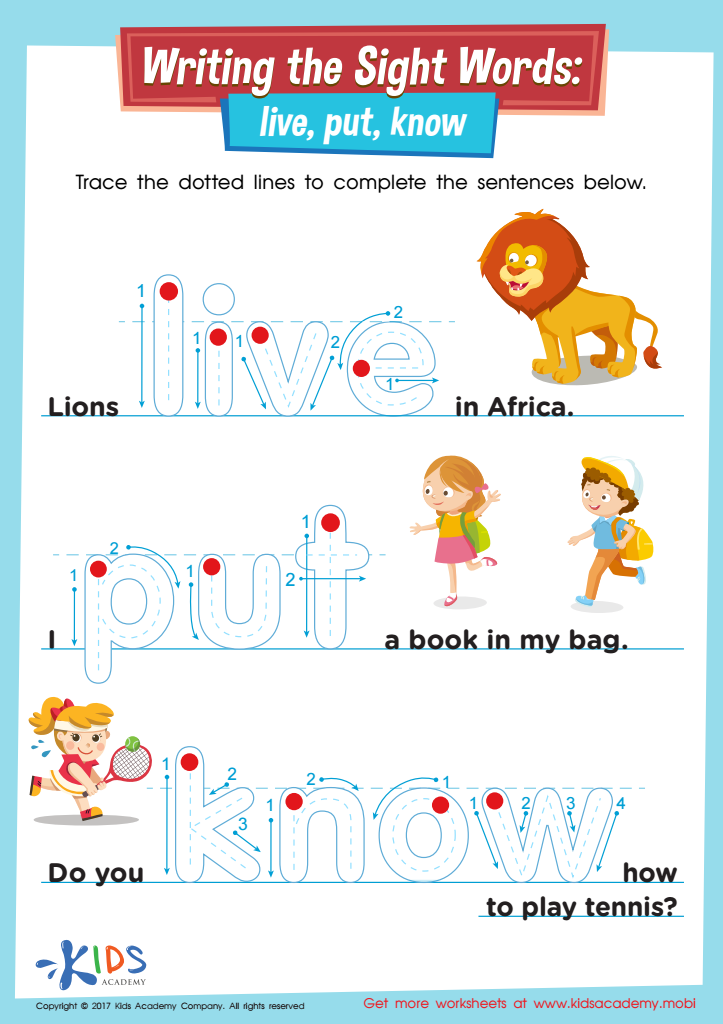
Live, Put, Know Printable Sight Words Worksheet








Reading proficiency and writing skills are foundational to a child’s overall academic success, particularly for ages 6-9. During these formative years, children are transitioning from learning to read to reading to learn. Proficient reading allows them to explore diverse subjects, fostering critical thinking and comprehension. When children can decode and understand what they read, they are more likely to engage with texts, which enhances their curiosity and expands their knowledge.
Writing proficiency is equally important, as it enables children to express their thoughts, ideas, and creativity. During this age, children begin to understand the mechanics of writing, including grammar, punctuation, and sentence structure, which are critical for effective communication. Encourage parents and teachers to prioritize literacy as these skills not only aid academic performance but also promote self-confidence and emotional expression.
Moreover, proficient reading and writing skills contribute to lifelong learning and success. They set the stage for higher-level literacy skills, enabling students to tackle more complex concepts in later years. As such, creating a supportive literacy-rich environment at home and in schools is vital. By ensuring early literacy development, we empower children to become informed, articulate, and engaged citizens in our increasingly complex world.








