Lowercase identification Worksheets for 6-Year-Olds
5 filtered results
-
From - To
Enrich your 6-year-old’s reading journey with our engaging Lowercase Identification Worksheets. Perfectly designed for young learners, these printable exercises help master the recognition of lowercase letters through a series of fun and interactive activities. Each worksheet fosters confidence as children match, trace, and identify letters, enhancing their literacy skills. Tailored to align with early education standards, our worksheets provide the practice necessary for proficient reading development. Ideal for home or classroom use, these resources support both individual and group learning environments. Elevate your child’s alphabet proficiency with Kids Academy’s expertly crafted Lowercase Identification Worksheets.
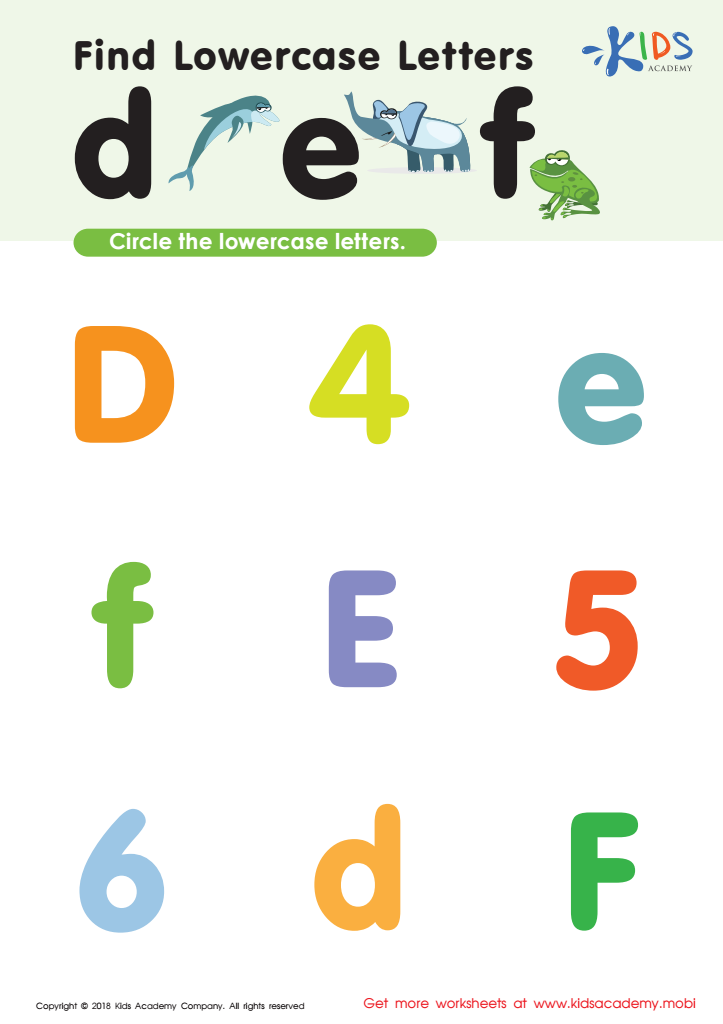
Find Lowercase Letters d e f Worksheet
 Assign to My Students
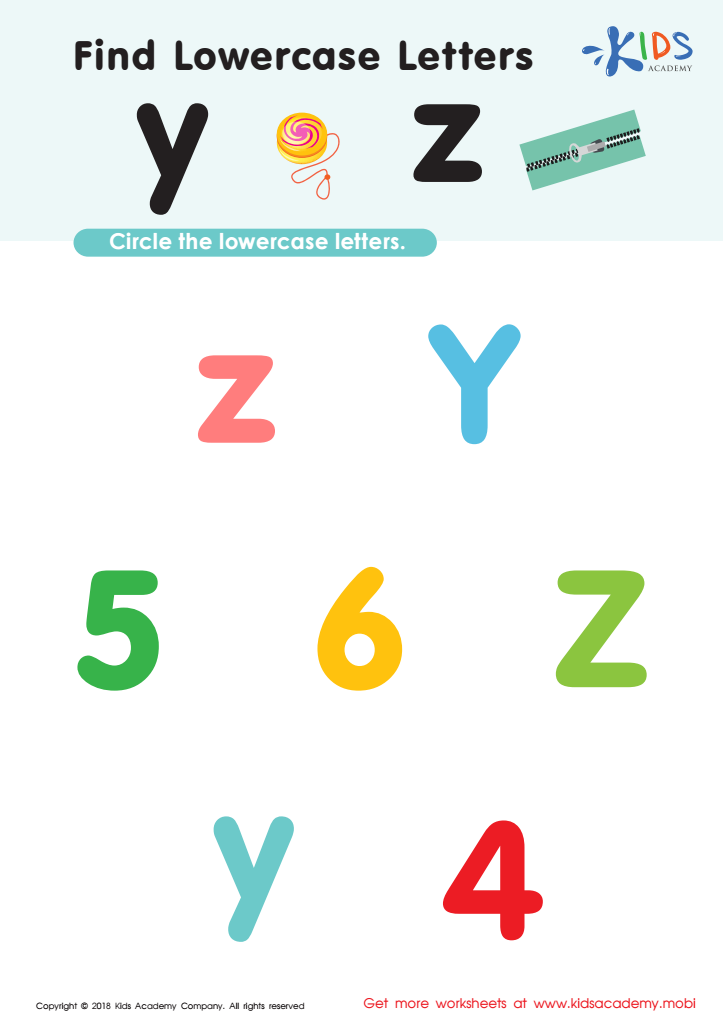
Find Lowercase Letters y z Worksheet
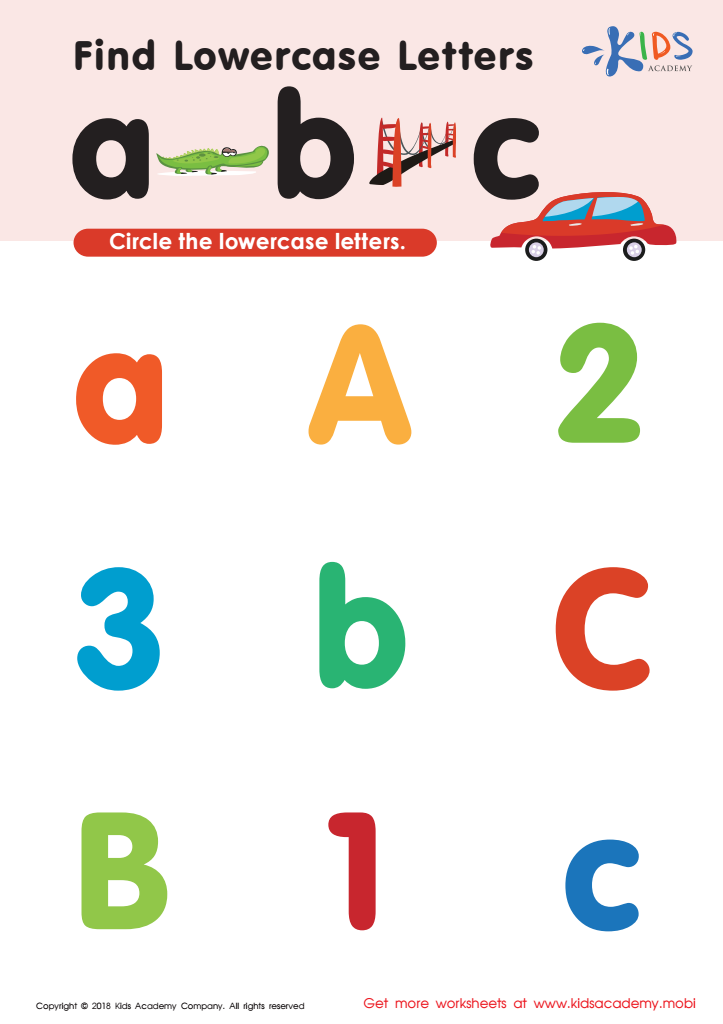
Find lowercase letters a b c Worksheet
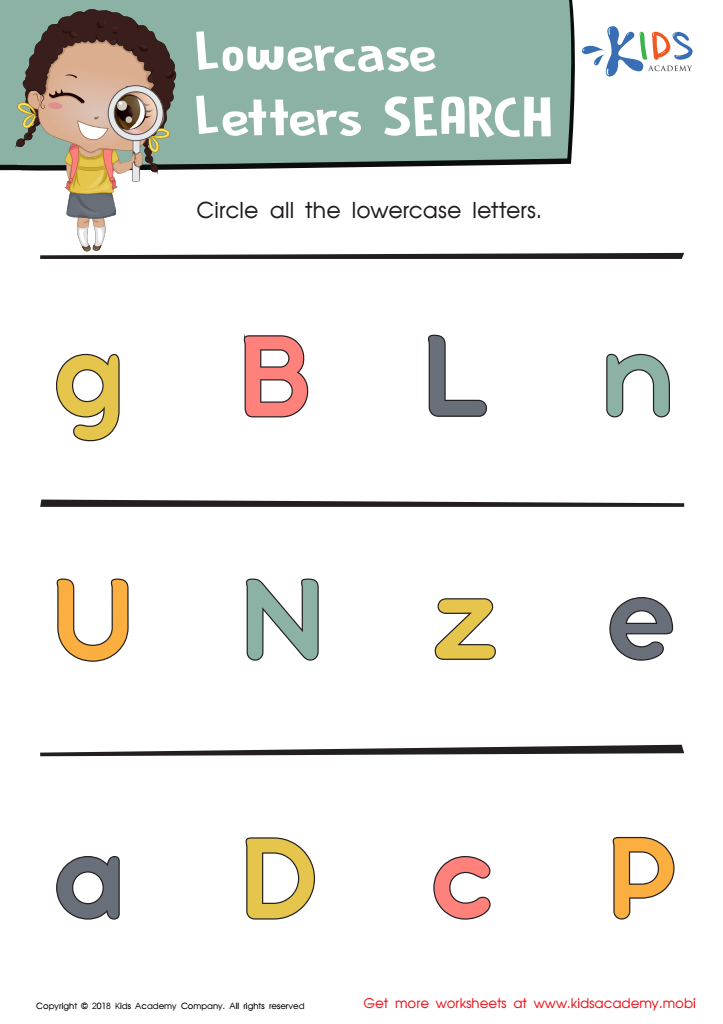
Lowercase Letters Search: Assessment Worksheet
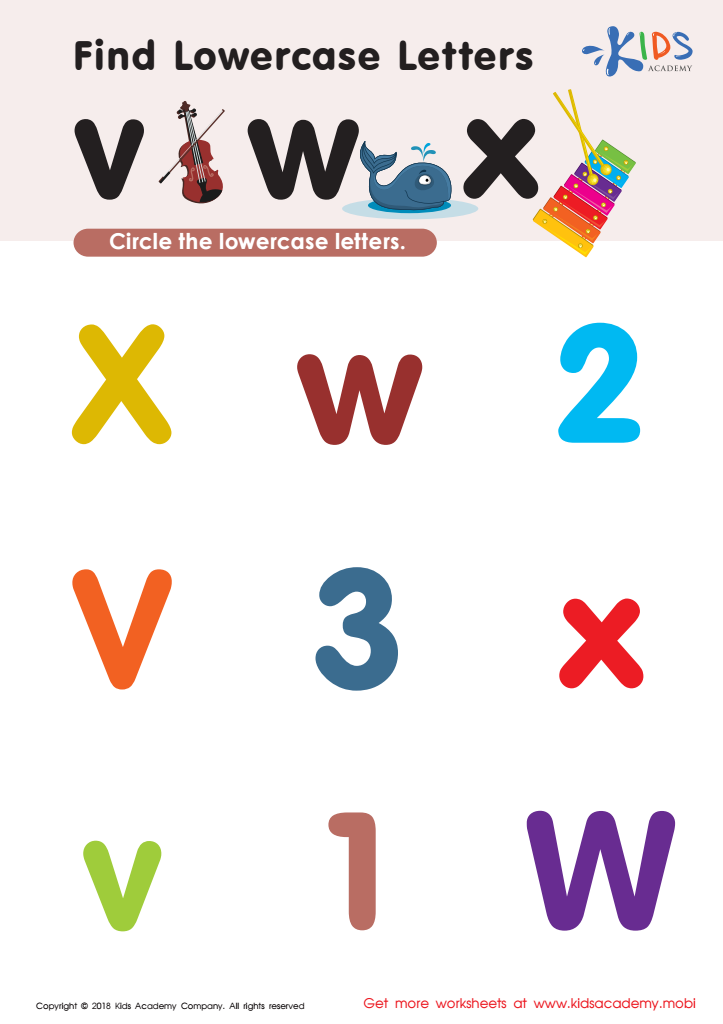
Find Lowercase Letters v w x Worksheet







Lowercase identification is an essential skill for six-year-olds, crucial for their literacy development. At this age, children transition from recognizing individual letters to decoding full sentences, and knowing lowercase letters is a foundational step in this journey. Early grade reading materials predominantly use lowercase letters, making it vital for young learners to quickly identify and differentiate them to build fluency.
Understanding lowercase letters links directly to reading efficiency. Children who can easily recognize lowercase letters will likely experience less frustration and more confidence when they read, fostering a positive attitude toward learning. Accurate identification of lowercase letters also supports correct spelling and writing, as most words in written English predominantly use lowercase forms.
Furthermore, early mastery of lowercase identification aids in phonemic awareness. Recognizing these letters helps children connect sounds to letter symbols, a critical step in learning to read and spell words accurately. It enables smoother transitions across various literacy activities, from following written instructions to engaging in collaborative classroom exercises involving print.
In summary, parents and teachers should prioritize lowercase letter identification for six-year-olds to promote reading fluency, spelling accuracy, and overall literacy confidence, creating strong, motivated readers.








