Practical math application Worksheets for 6-Year-Olds
5 filtered results
-
From - To
Discover our engaging Practical Math Application Worksheets for 6-year-olds, designed to bring real-world math concepts into your child's learning experience! These worksheets encourage young learners to explore essential skills, such as counting, addition, subtraction, and problem-solving through fun, relatable activities. Each worksheet is crafted to promote critical thinking while making math enjoyable and accessible. Ideal for classroom use or at-home practice, our resources help strengthen foundational math skills in a practical context. Get started today and watch your child's confidence grow as they tackle everyday math challenges! Perfect for children aged 6, our worksheets are an invaluable resource in early education.
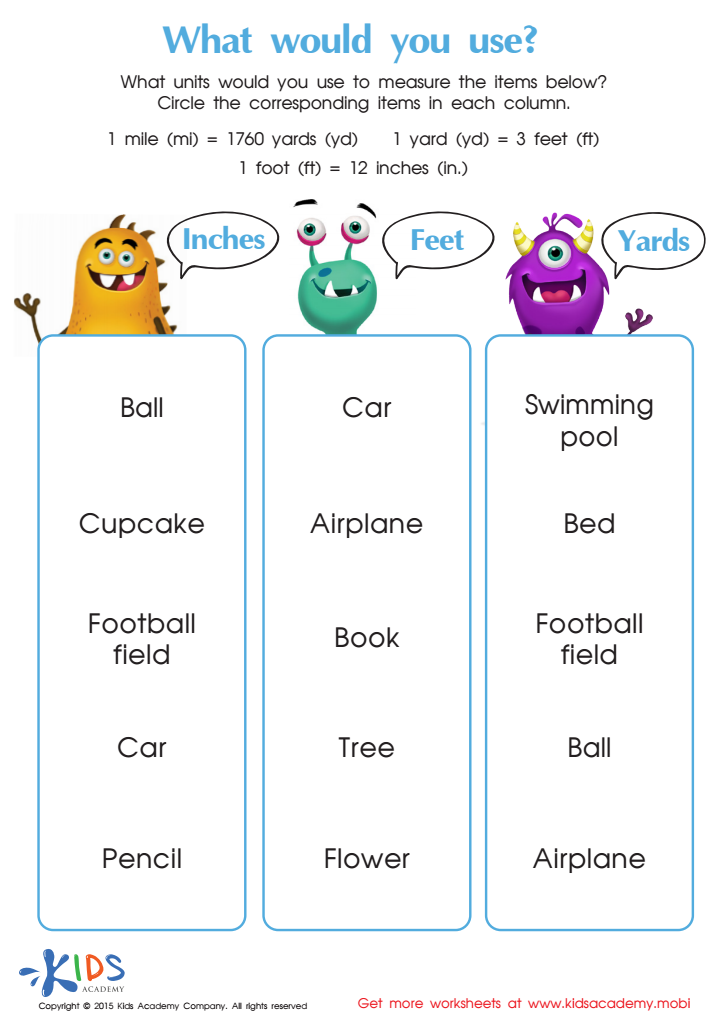
Learning about measuring objects in inches, feet and yards Worksheet
 Assign to My Students
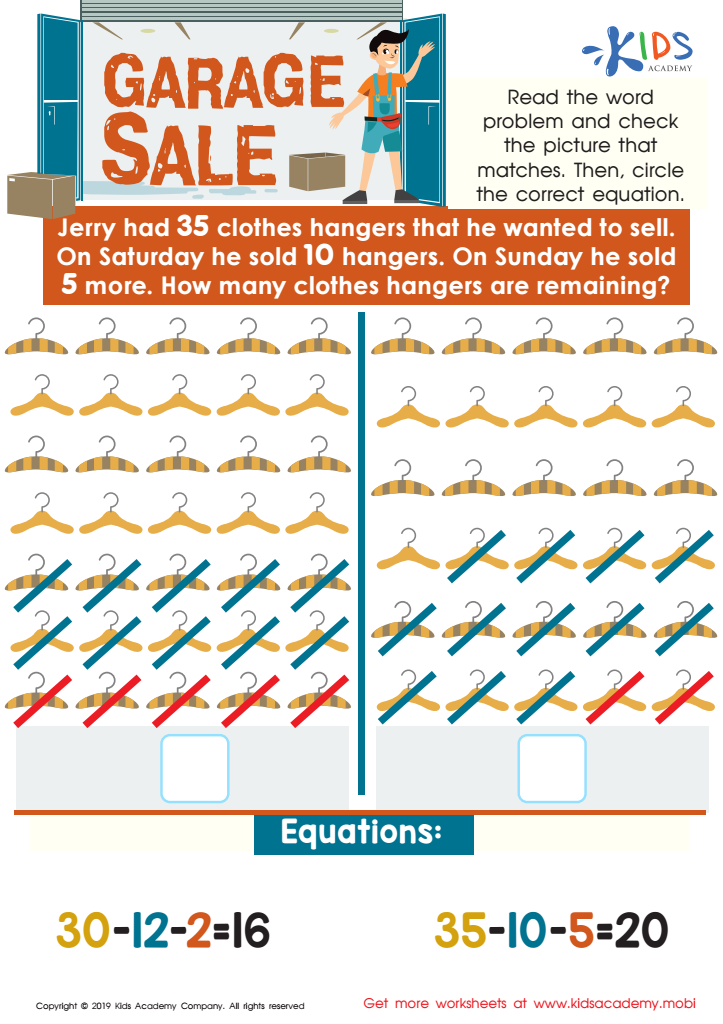
Garage Sale Worksheet
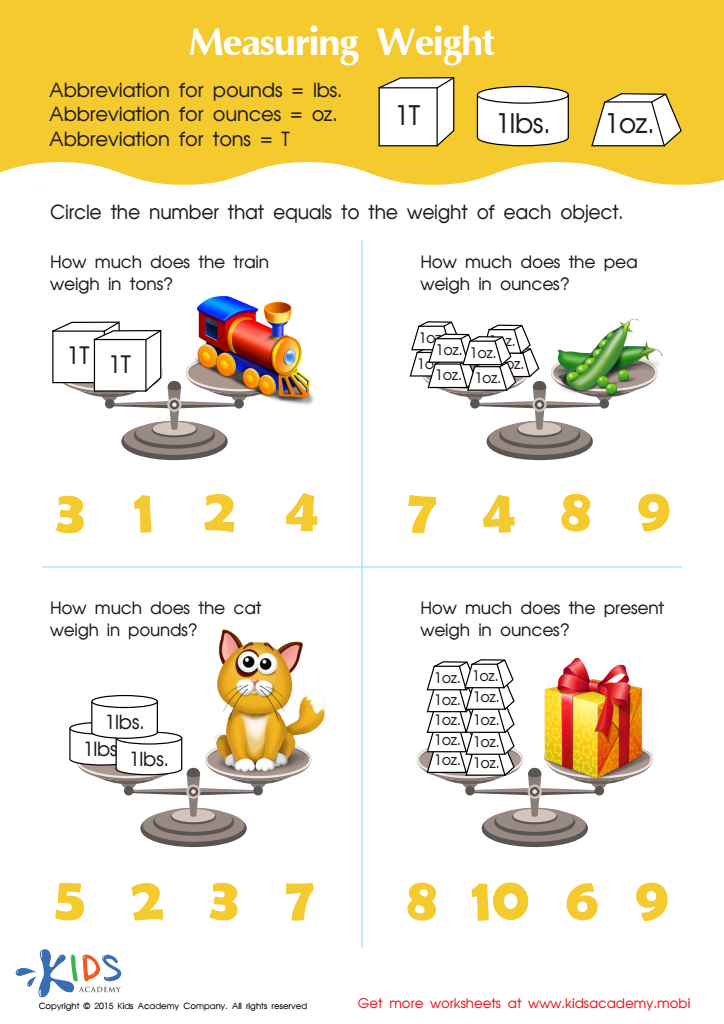
Measuring Weight in Ounces, Pounds and Tons Worksheet
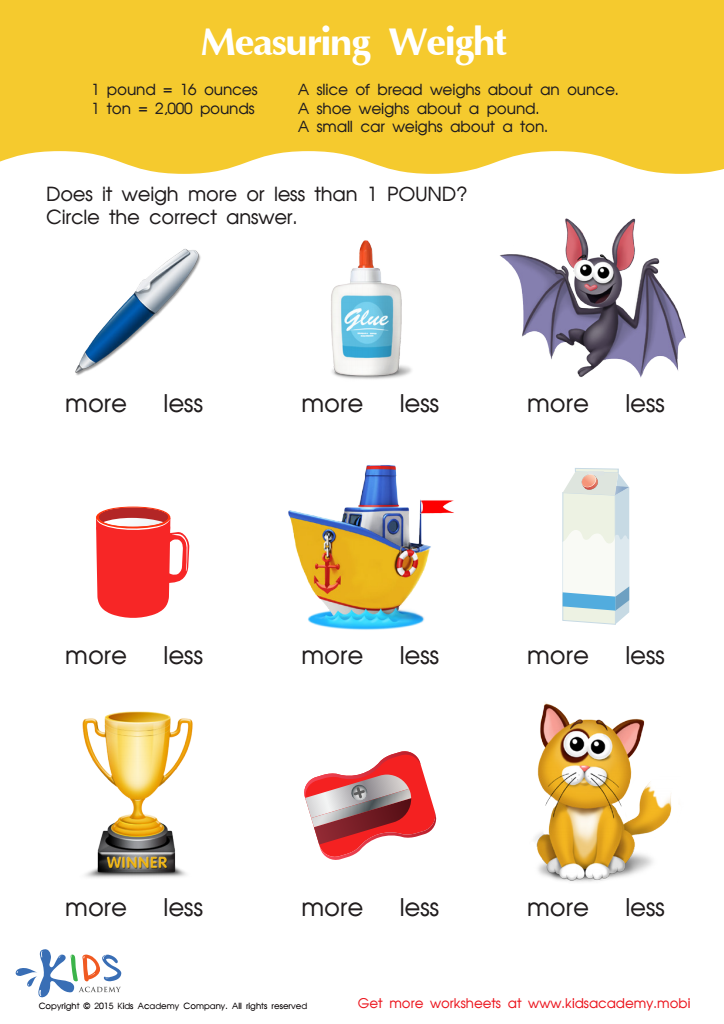
Measuring weight in pounds Worksheet
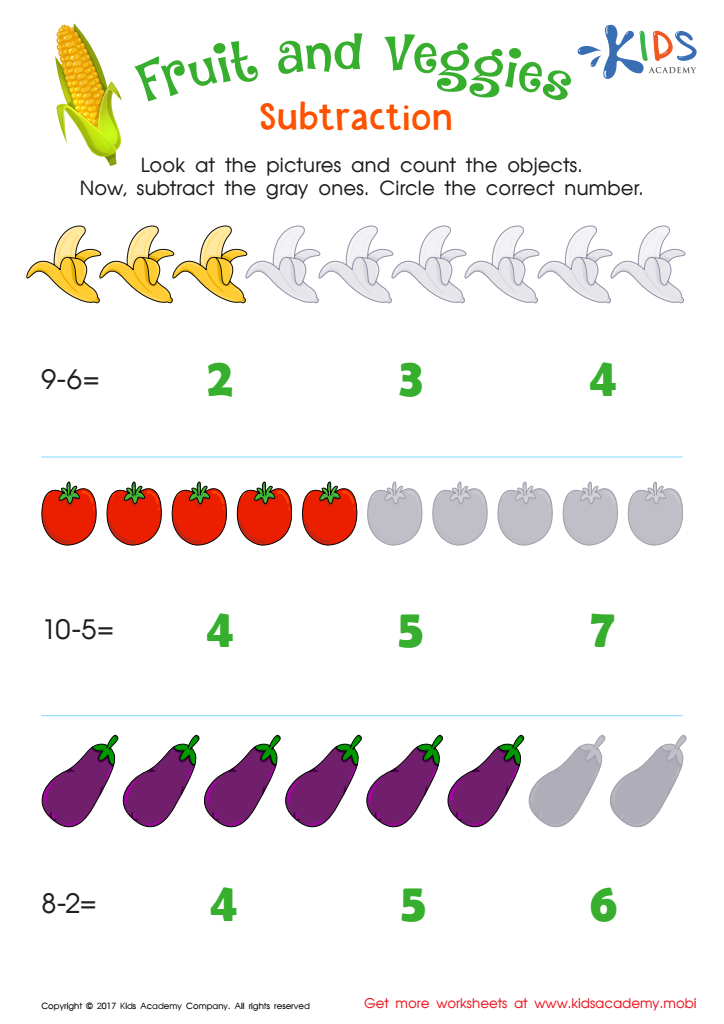
Fruit and Veggies Subtraction Worksheet




.jpg)


Understanding practical math application for 6-year-olds is crucial for both parents and teachers because it lays the foundation for lifelong mathematical skills and critical thinking. At this age, children are naturally curious and eager to learn; practical math engages their interest by connecting lessons to real-life scenarios, such as counting objects, measuring ingredients while cooking, or sorting toys. This approach not only makes math fun but also enhances their problem-solving abilities.
Additionally, practical math helps young learners grasp abstract concepts more easily. When children see how math applies to daily activities—like figuring out how many pieces of fruit they can buy with a certain amount of money—they understand its relevance and importance. This hands-on experience reinforces theoretical knowledge and boosts confidence.
Moreover, incorporating practical math fosters communication skills as children learn to express their thoughts and reasoning clearly. It encourages collaboration when they work together to solve problems, fostering social skills integral to their development.
Ultimately, parents and teachers who emphasize practical math not only support academic growth but also cultivate a positive attitude toward learning. Such encouragement can help prevent math anxiety in later years, setting children on a path for future success in academics and beyond.








