Comparing shapes 2D Shapes Worksheets for 6-Year-Olds
3 filtered results
-
From - To
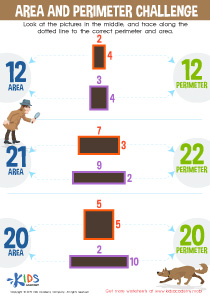
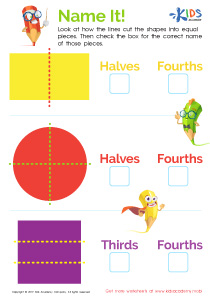
Explore our engaging "Comparing Shapes 2D Shapes Worksheets" tailored specifically for 6-year-olds! These worksheets are designed to help young learners recognize, compare, and differentiate various 2D shapes through fun activities. With clear visuals and interactive tasks, children will enhance their understanding of shapes like circles, squares, triangles, and rectangles. Activities encourage critical thinking as kids classify and sort shapes based on size, color, and attributes. Ideal for classrooms or home learning, our worksheets make mastering geometry enjoyable and effective! Download now to foster your child's shape recognition skills and build a strong foundation for future math learning!
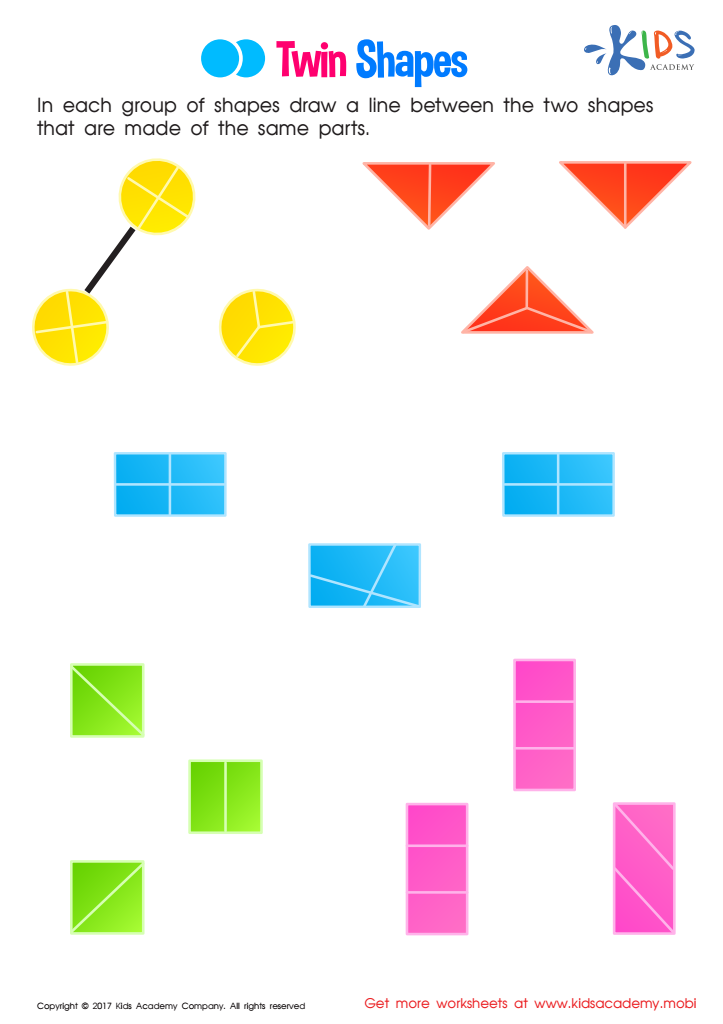
Twin Shapes Worksheet
 Assign to My Students











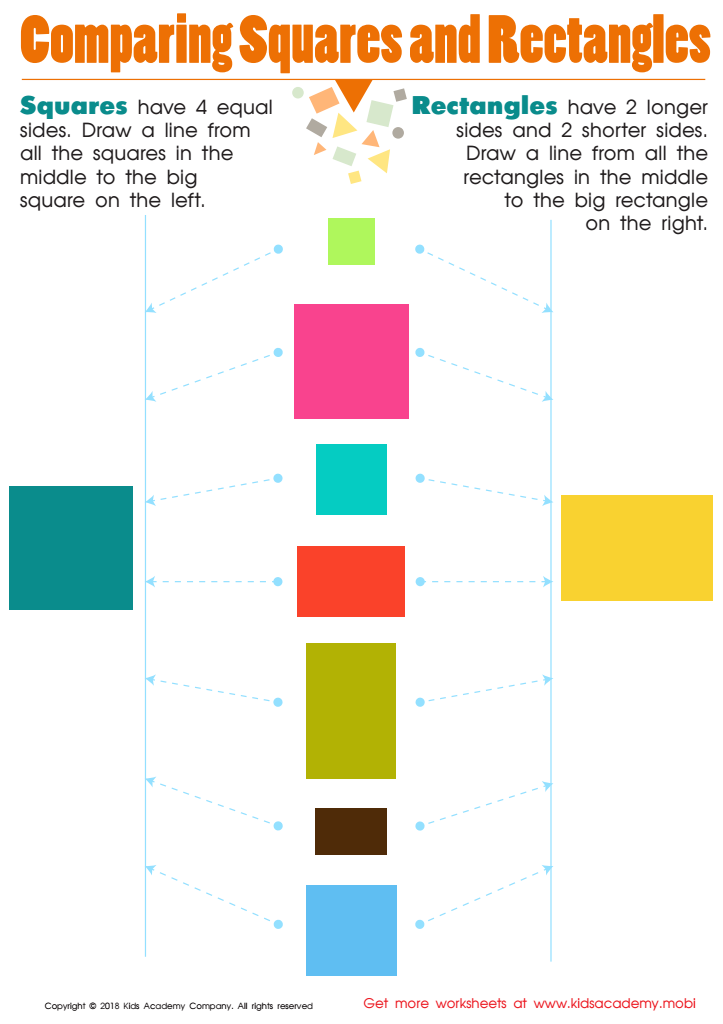
Comparing Squares Rectangles Worksheet
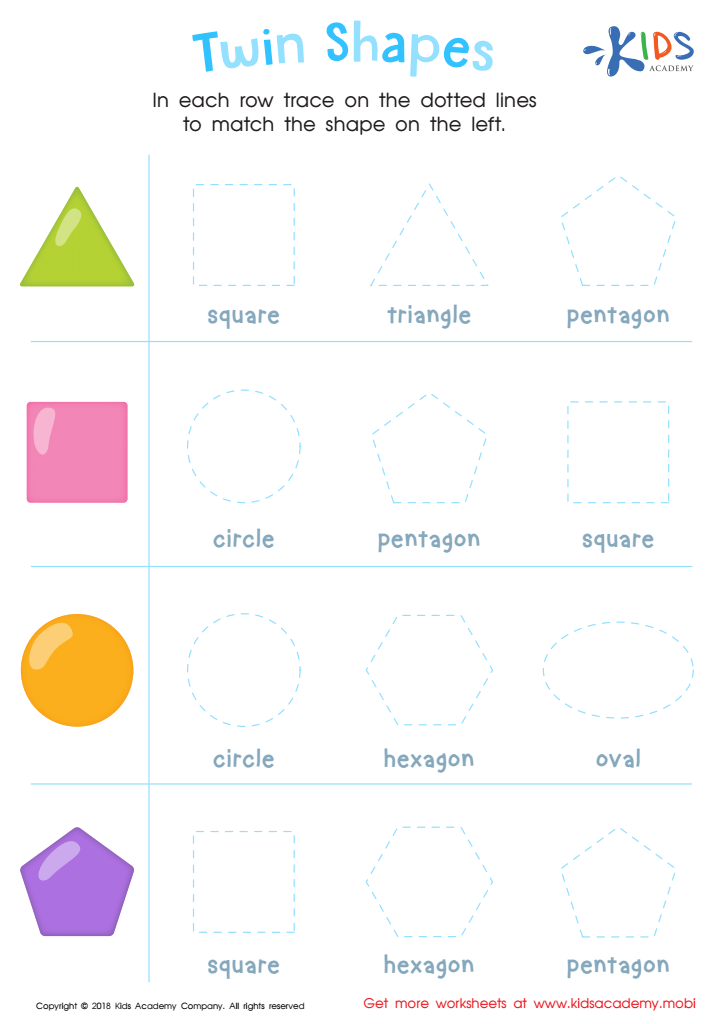
Twin Shapes Dot-to-Dot Worksheet








Comparing 2D shapes is essential for young learners, particularly for 6-year-olds, as it lays the foundation for critical thinking and spatial awareness. Understanding shapes and their properties allows children to recognize and categorize objects in their environment, a skill that enhances their observational abilities. When parents or teachers focus on comparing shapes, they help children develop mathematical vocabulary by introducing terms like "sides," "angles," "corners," and "symmetry," fostering early literacy in math concepts.
Additionally, shape comparison promotes problem-solving skills. As children analyze and distinguish between different shapes, they learn to use logic and reasoning. This skill is vital for more complex mathematical concepts in later years, such as geometry and measurement. Engaging children in interactive activities—such as sorting, classifying, or constructing with shapes—encourages hands-on learning and makes abstract concepts more tangible.
Moreover, understanding shapes supports several learning areas, including art and design, where children can apply their shape knowledge creatively. Thus, when parents and teachers prioritize the comparison of 2D shapes, they empower children with foundational skills that benefit not only their mathematical abilities but also their overall cognitive development, helping them to navigate the world around them confidently.