Subtraction practice Addition and Subtraction Word Problems Worksheets for 6-Year-Olds
19 filtered results
-
From - To
Enhance your child's math skills with our engaging subtraction practice worksheets designed specifically for 6-year-olds. These fun and interactive word problems help young learners grasp subtraction concepts in a relatable context. Each worksheet encourages critical thinking as kids tackle real-life scenarios, promoting both their arithmetic abilities and problem-solving skills. With a variety of problems, our resources cater to different learning styles, ensuring every child can excel in subtraction. Perfect for home or classroom use, these worksheets provide a valuable tool for practicing math while fostering a love for learning. Start your child's math journey today with our age-appropriate subtraction challenges!
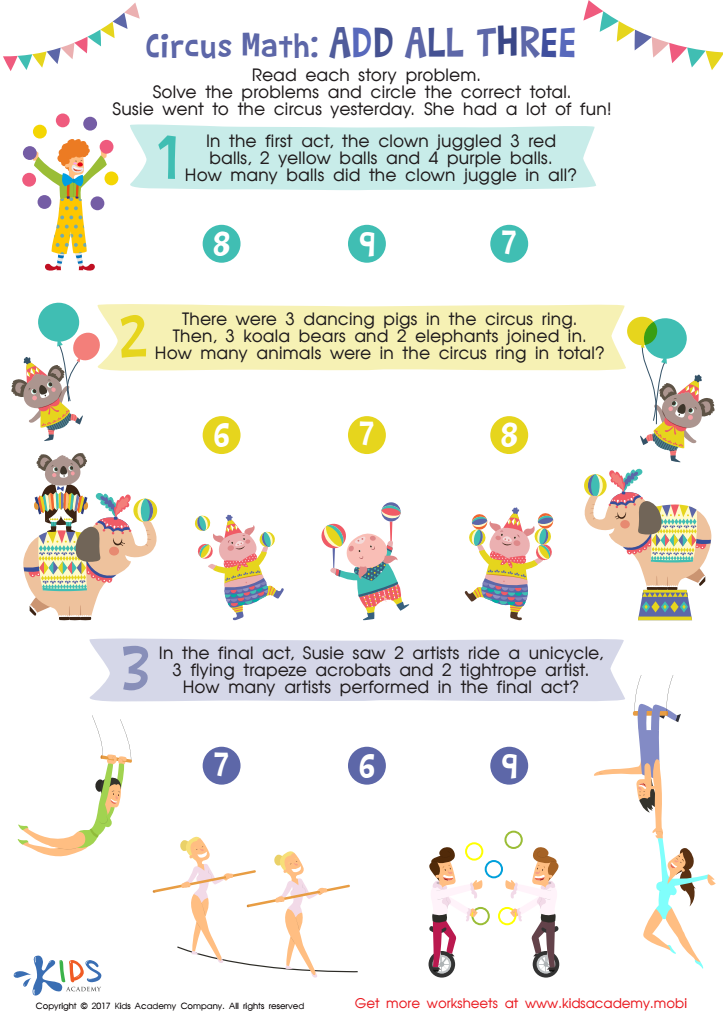
Circus Math Printable
 Assign to My Students
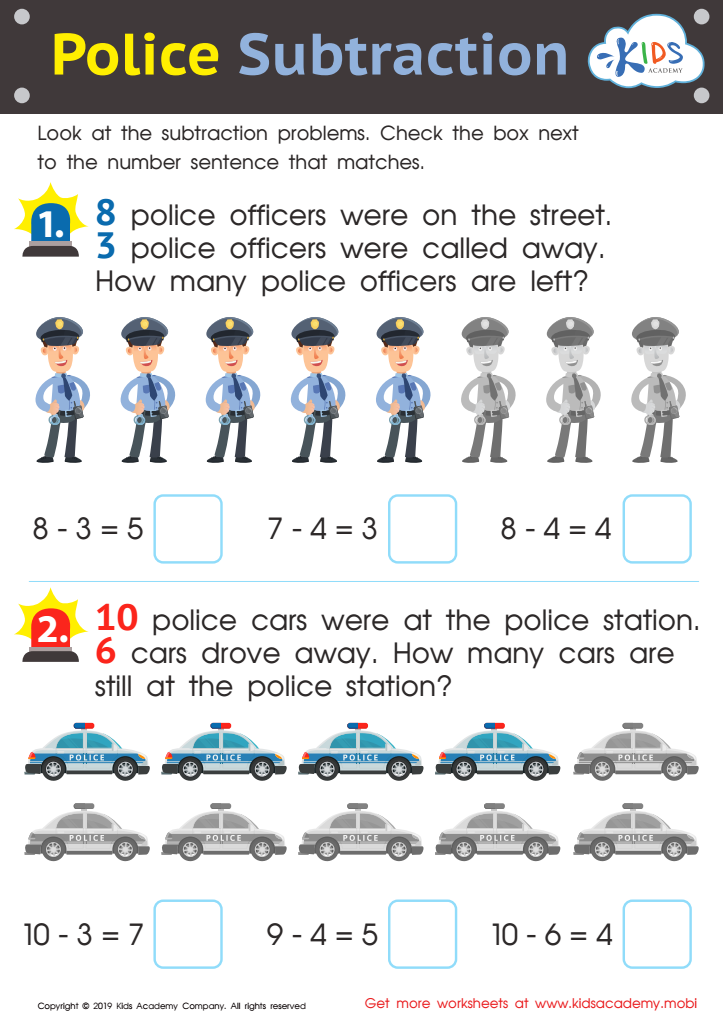
Police Subtraction Worksheet
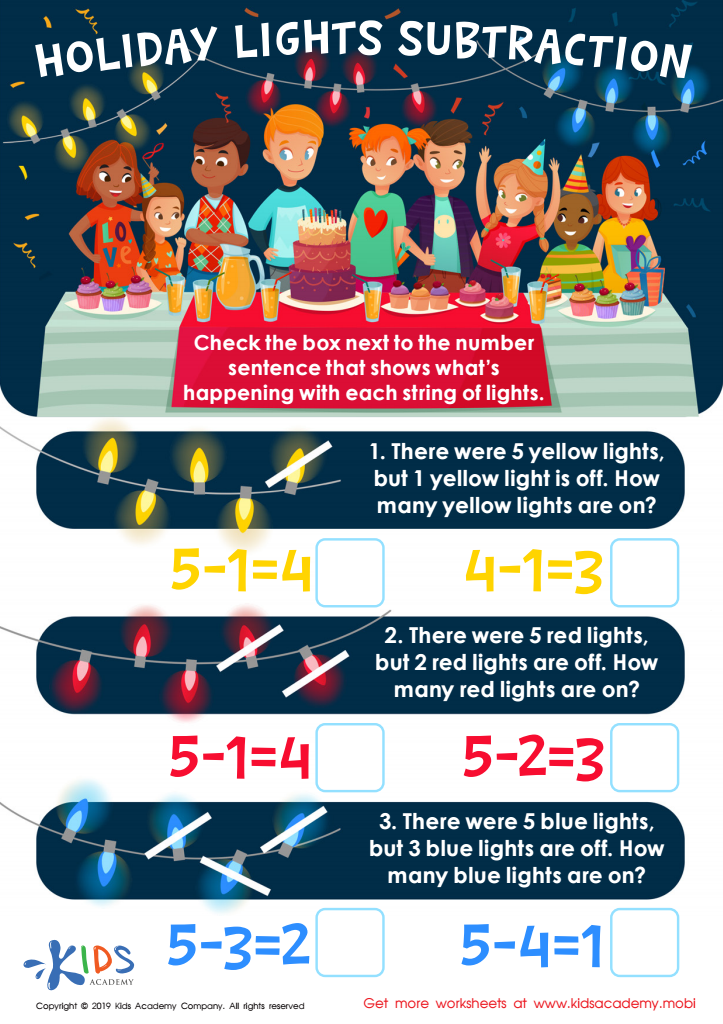
Holiday Lights Subtraction Worksheet
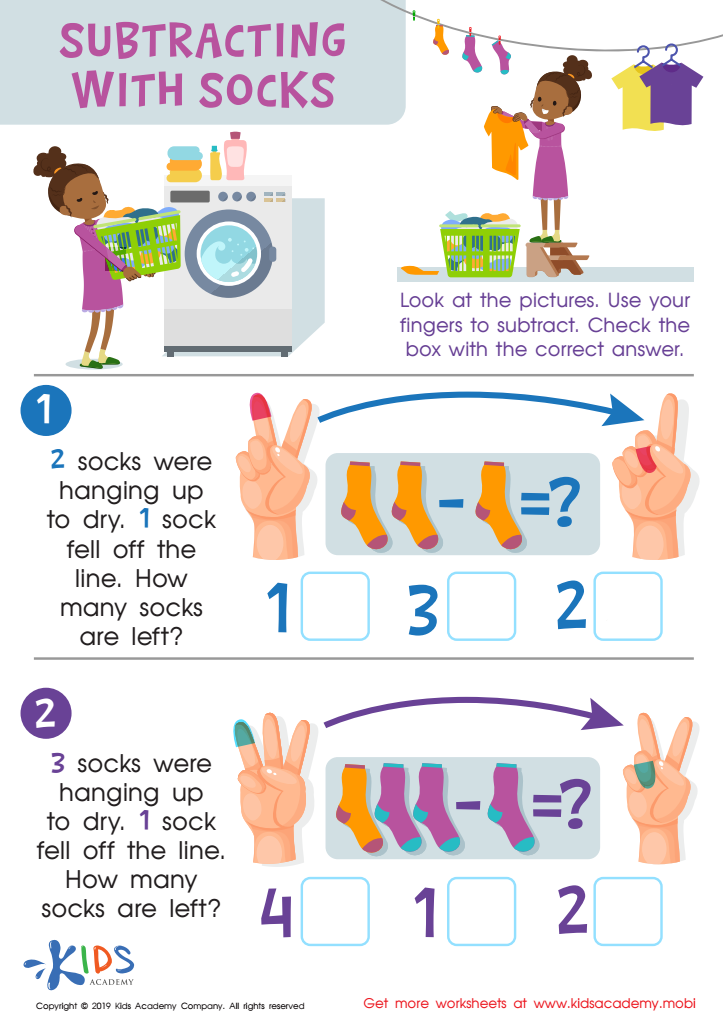
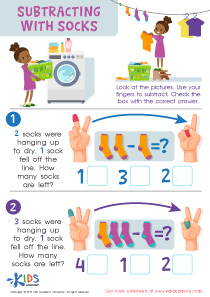
Subtracting Socks Worksheet
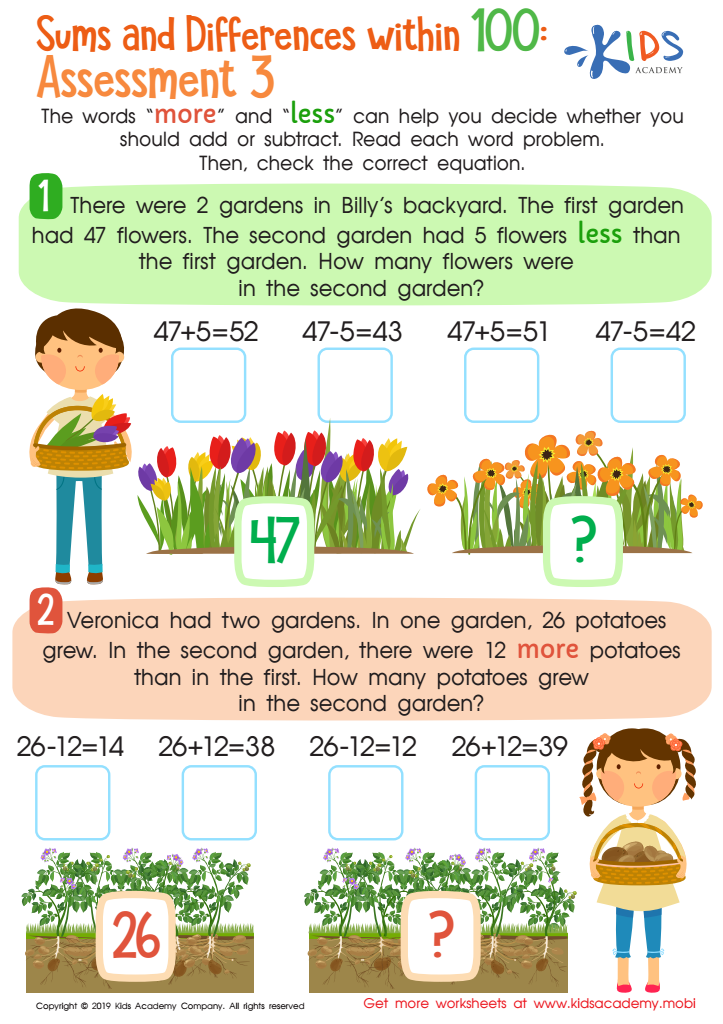
Sums and Differences Within 1 - Assessment 1 Worksheet
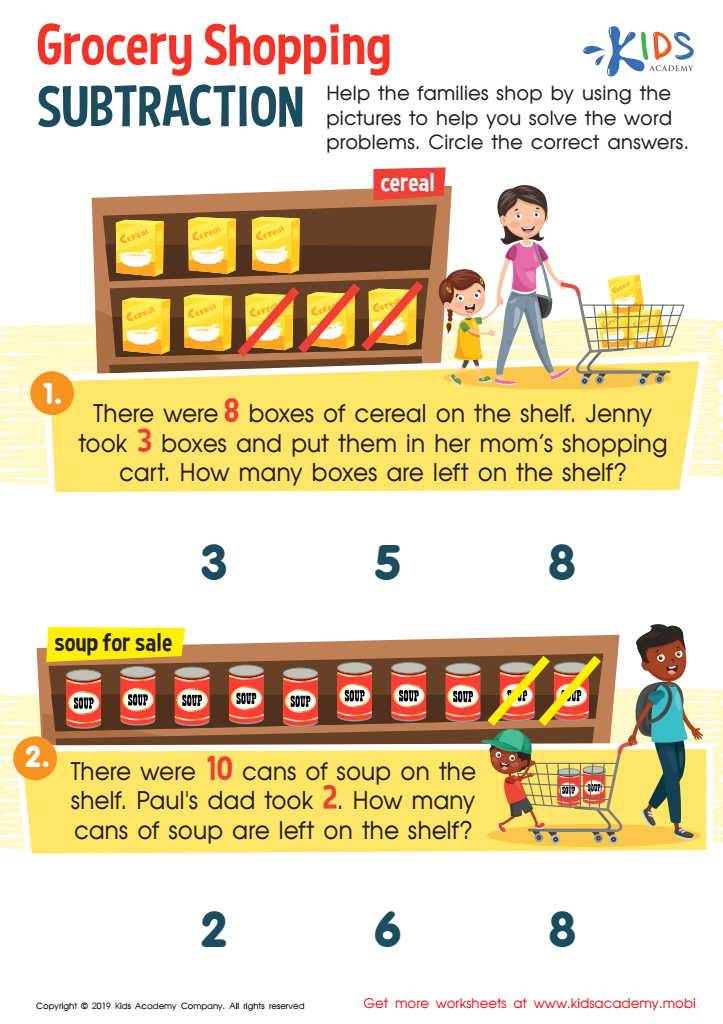
Grocery Shopping Subtraction Worksheet
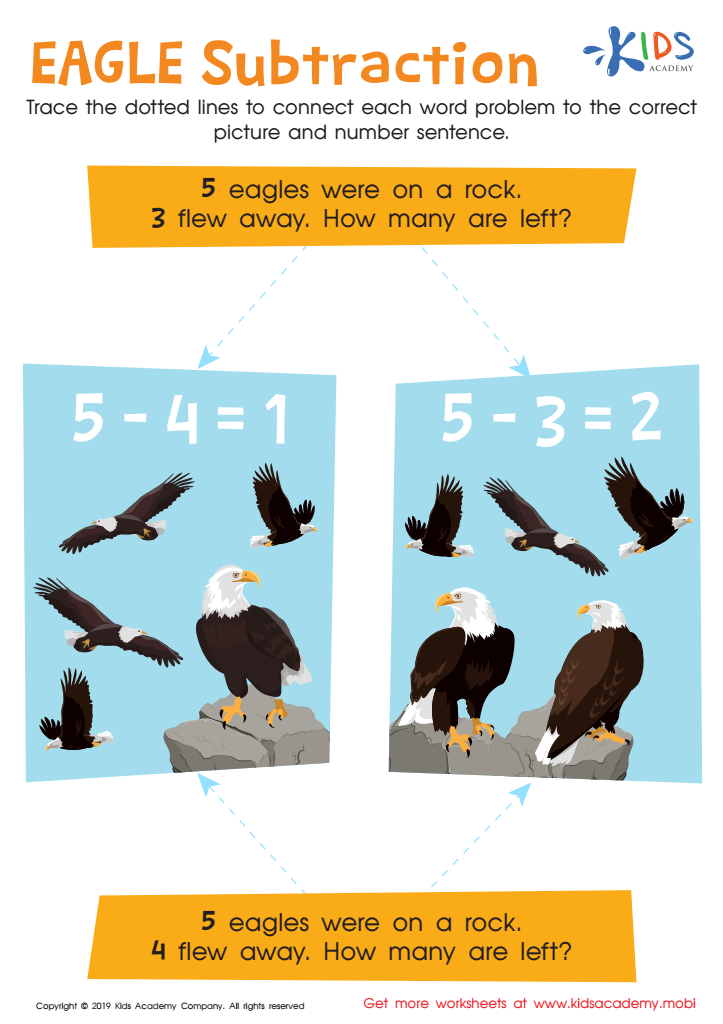
Eagle Subtraction Worksheet
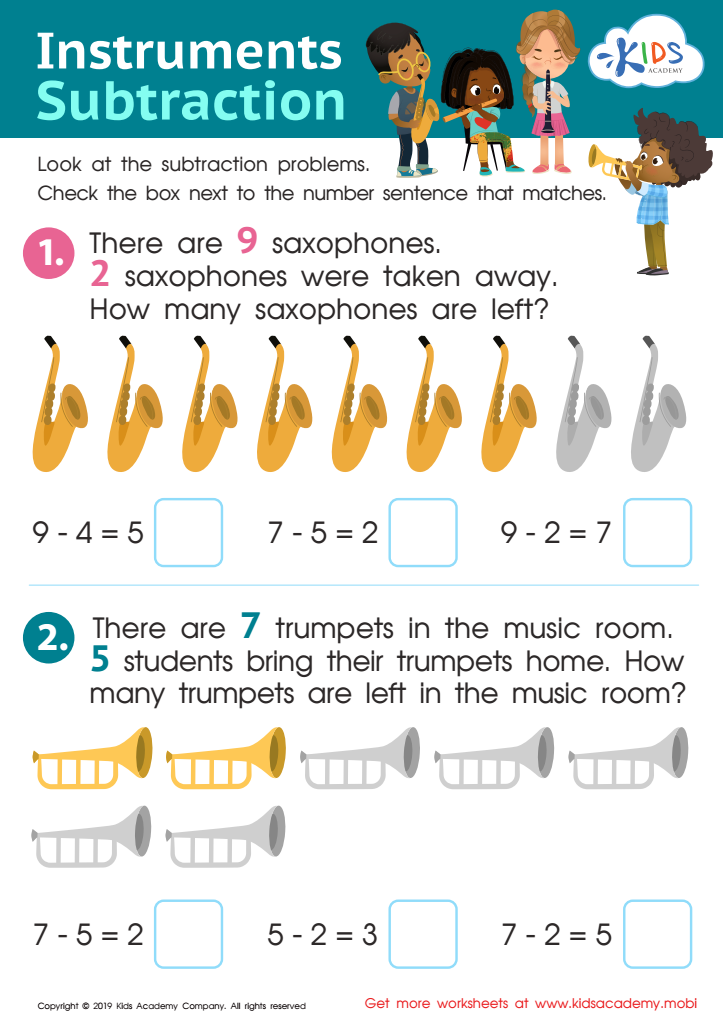
Instrument Subtraction Worksheet
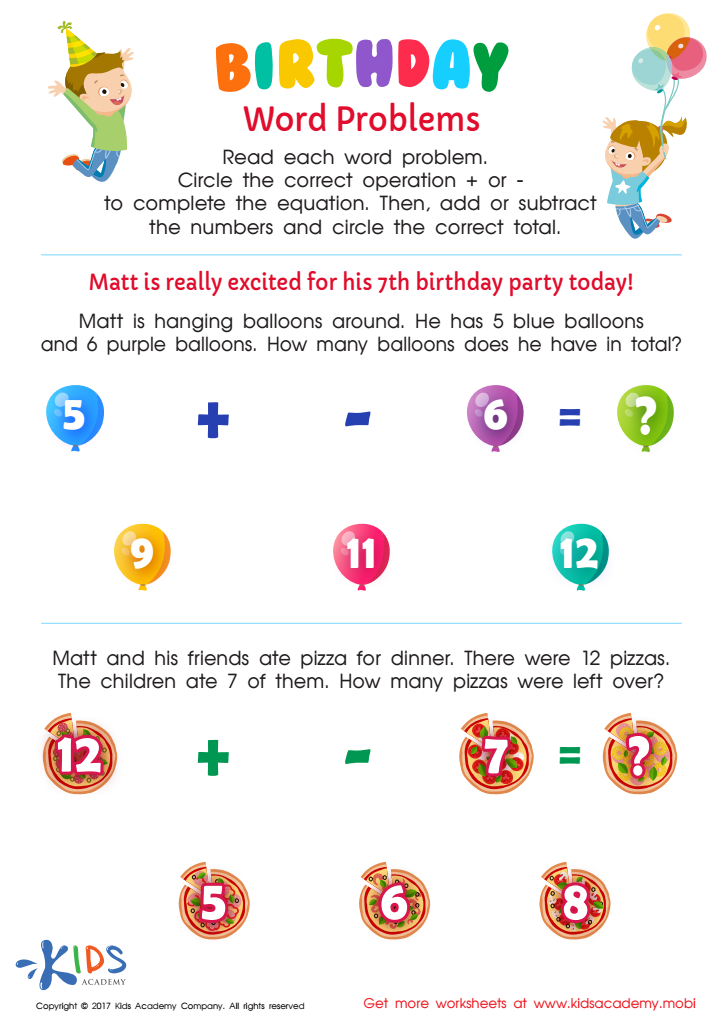
Birthday Word Problems Substraction Worksheet
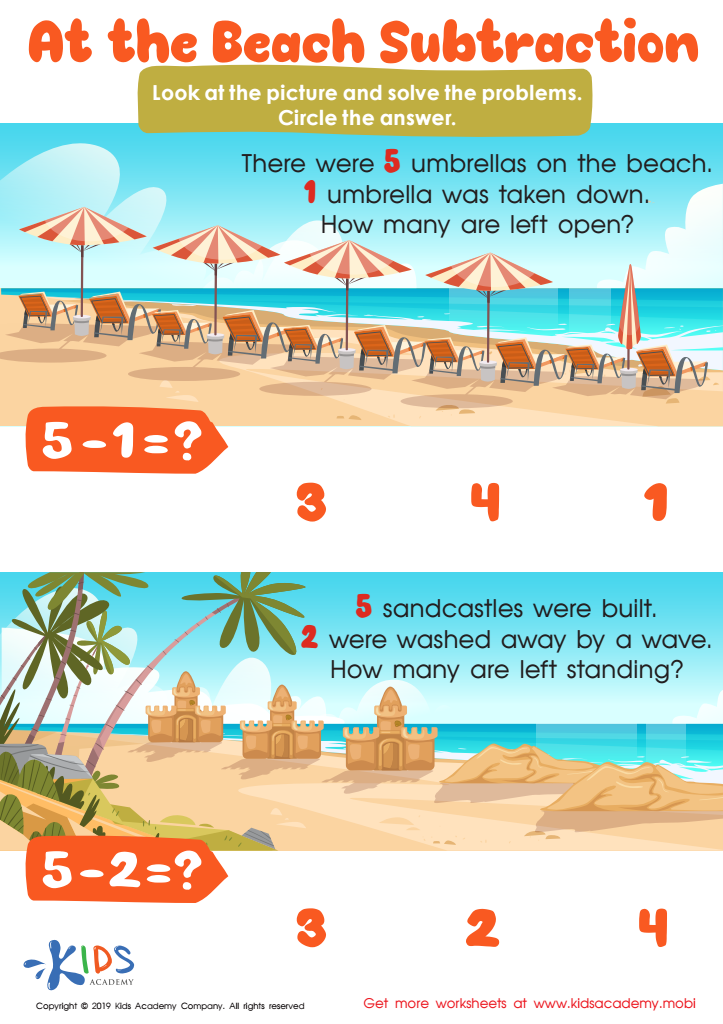
At the Beach Subtraction Worksheet
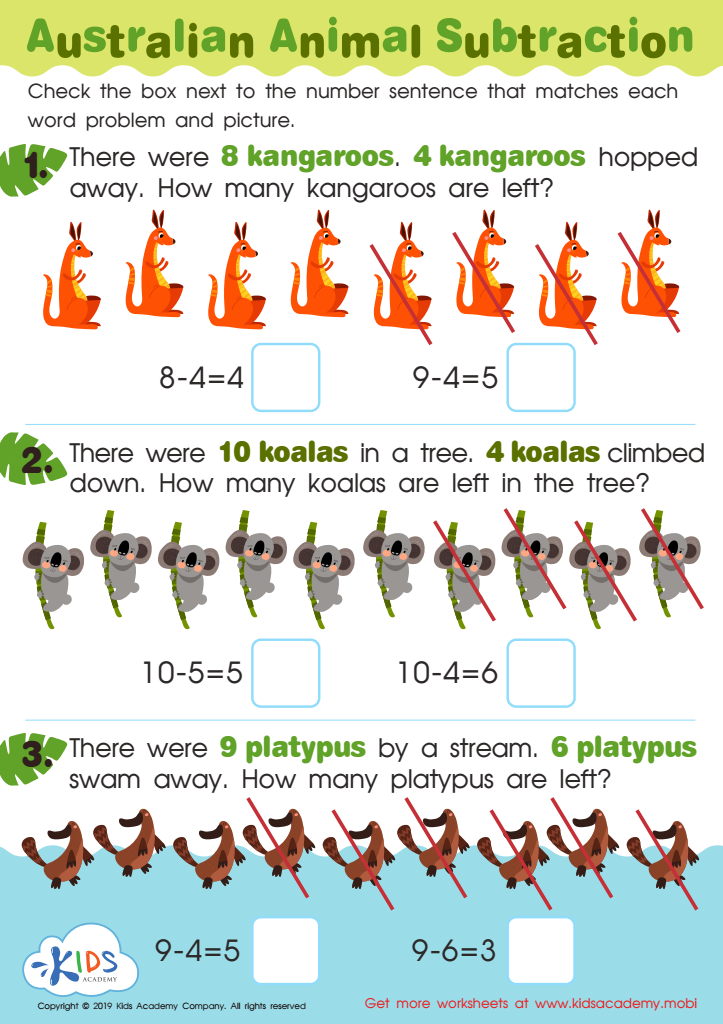
Australian Animal Subtraction Worksheet
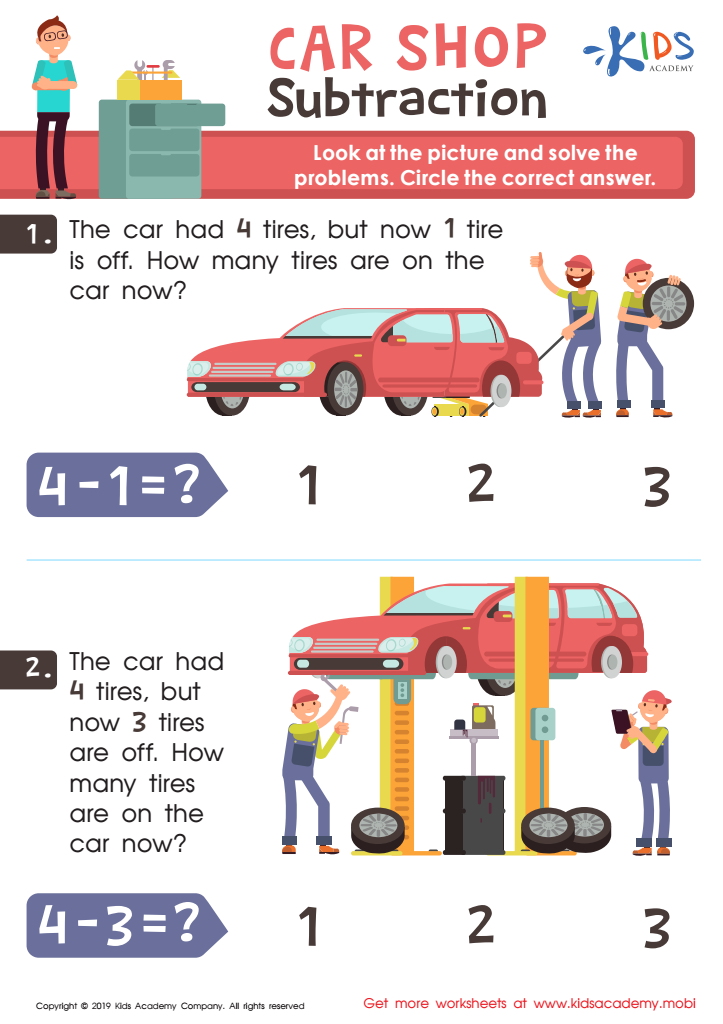
Car Shop Subtraction Worksheet
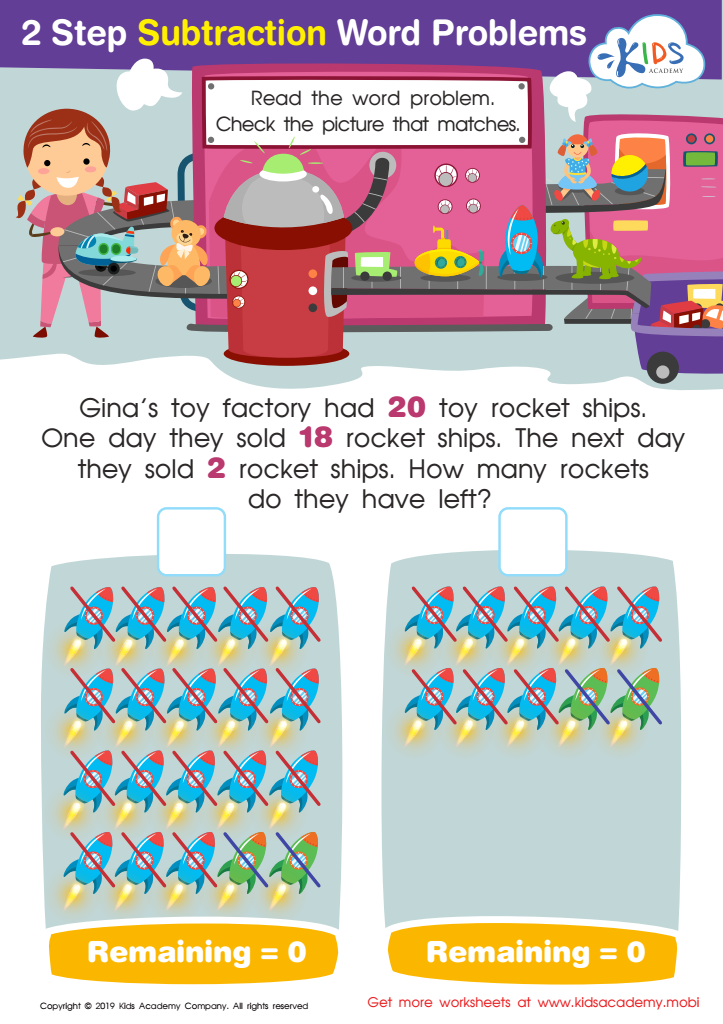
Step Subtraction Word Problems Worksheet
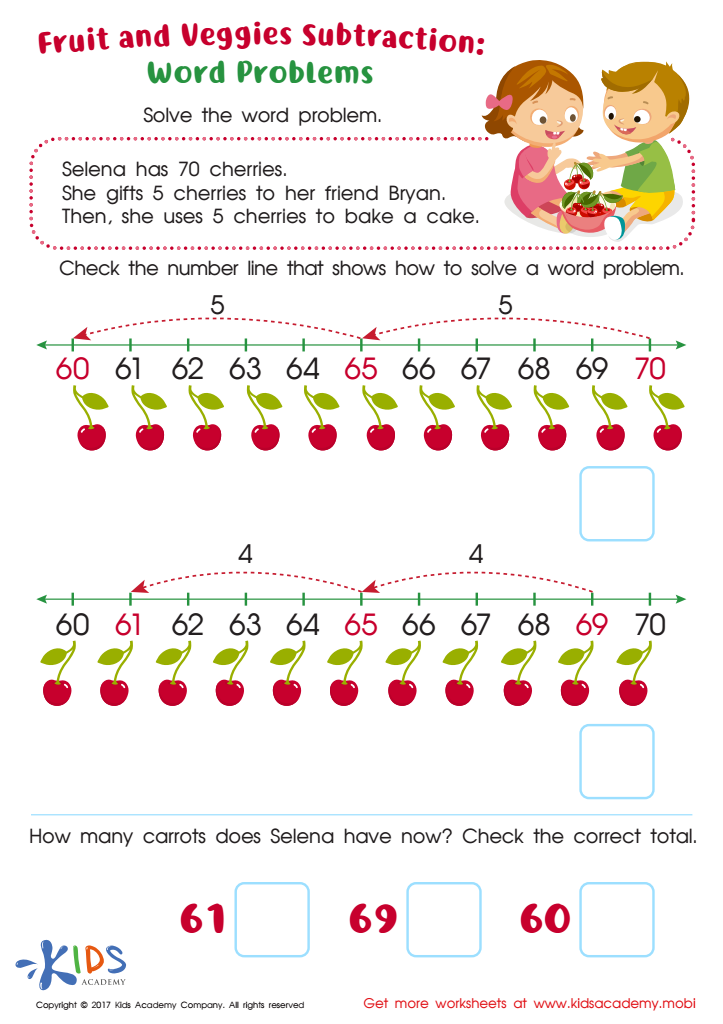
Subtraction Word Problems Free Printable
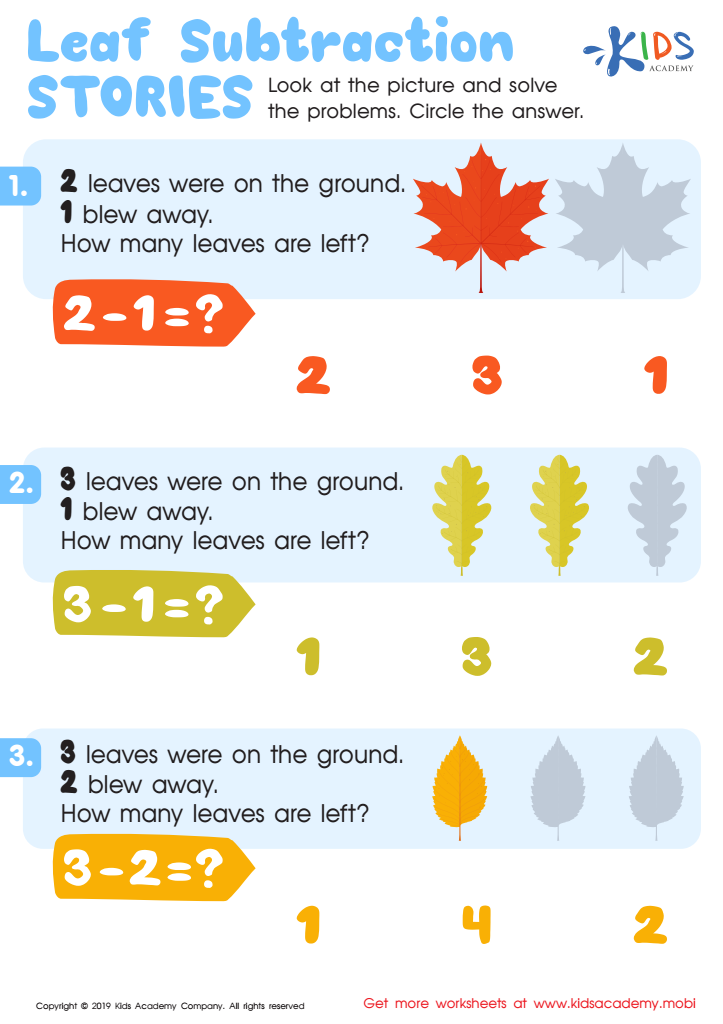
Leaf Subtraction Stories Worksheet
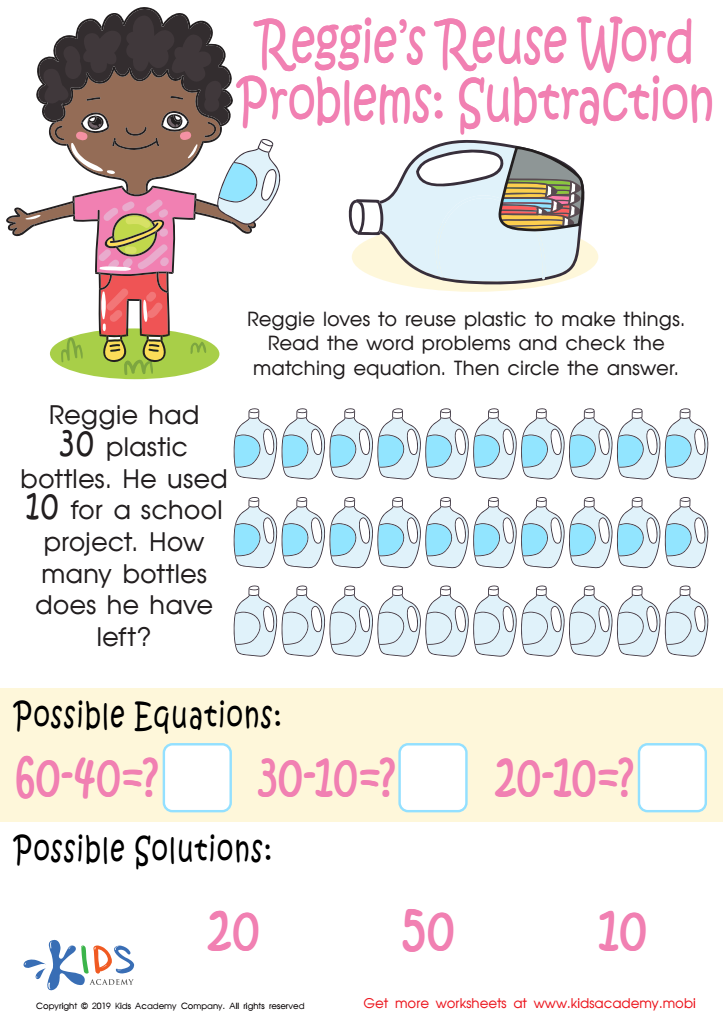
Reggie's Reuse Word Problems: Subtraction Worksheet
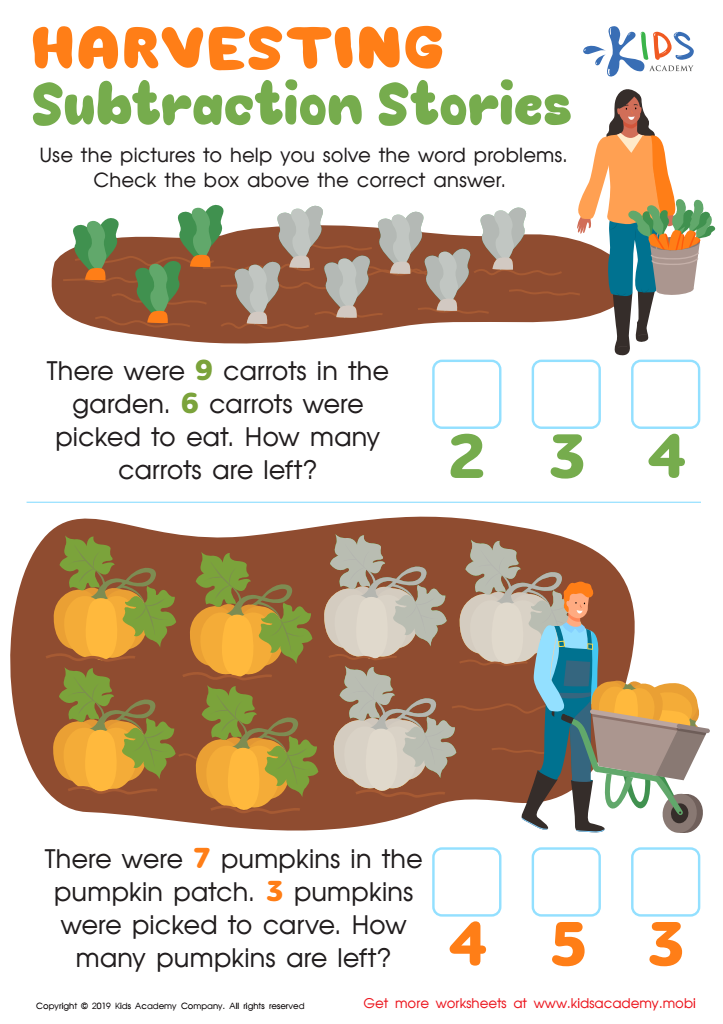
Harvesting Subtraction Stories Worksheet
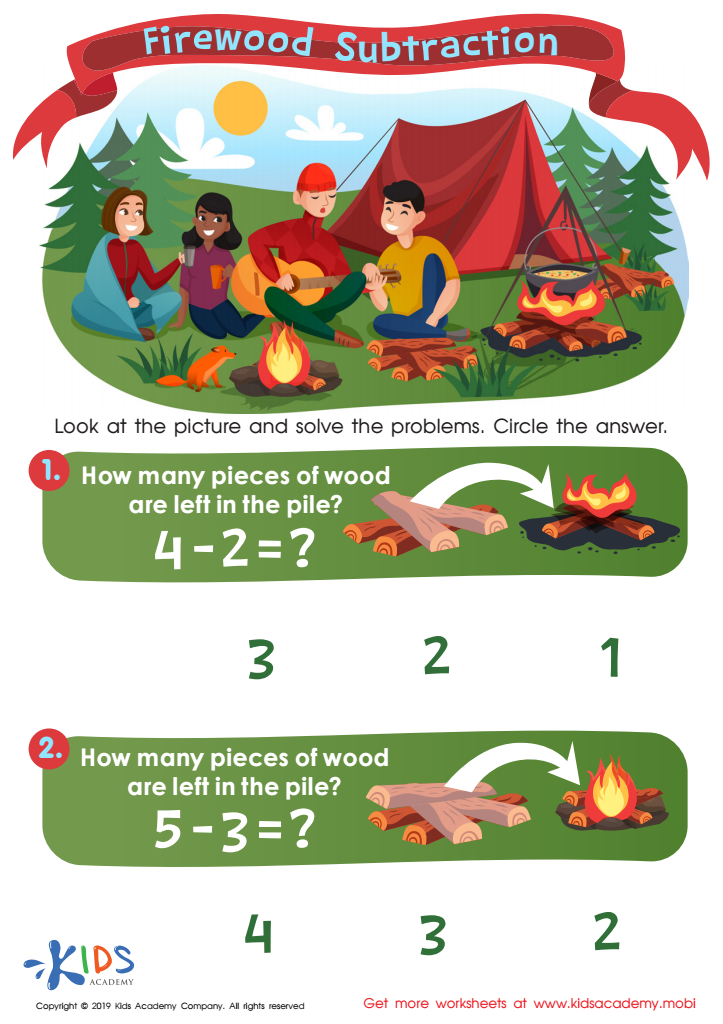
Firewood Subtraction Worksheet
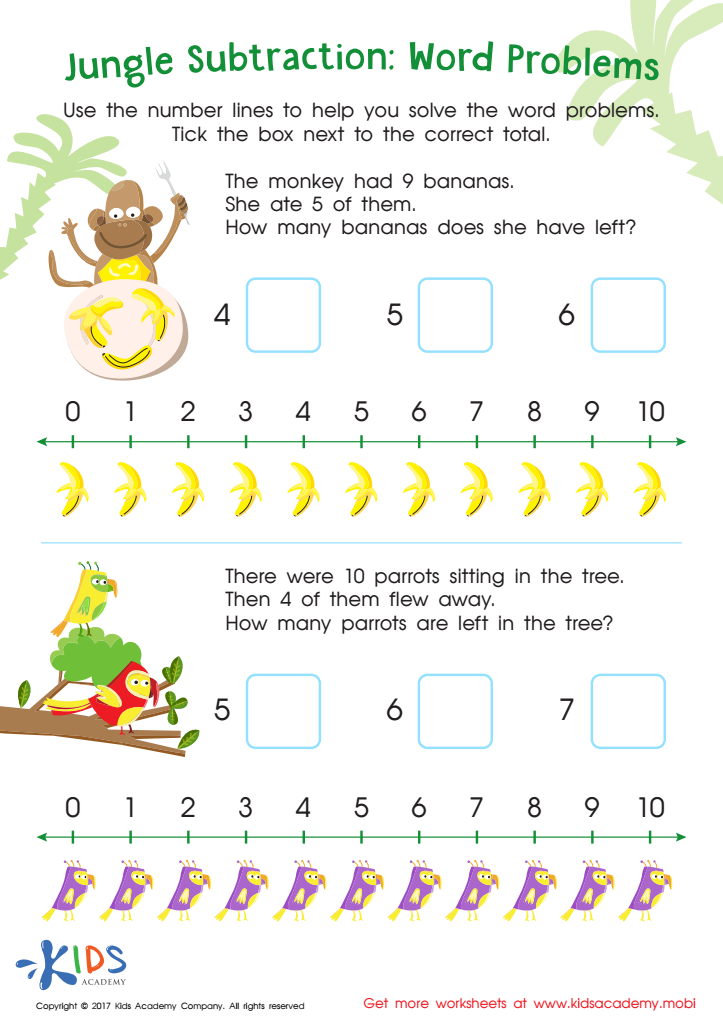
Jungle Subtraction Word Problems Substraction Worksheet








Parents and teachers play a crucial role in nurturing a child's early mathematical skills, especially in subtraction practice and addition and subtraction word problems. These areas form the foundation of a child's numerical literacy, fostering critical thinking and problem-solving abilities. For six-year-olds, mastering subtraction is not merely about rote learning; it involves understanding the concepts of taking away and comparing quantities.
Subtraction practice helps children refine their grasp of numbers, enhancing their ability to reason logically. When they engage with addition and subtraction word problems, they learn to translate real-life situations into mathematical expressions, promoting functional reasoning. This skill is vital for future academic success, as it prepares them to tackle more complex mathematical concepts.
Moreover, these practices foster a growth mindset, encouraging perseverance and resilience when facing challenging problems. As children articulate their thinking, they improve their communication skills and mathematical vocabulary. This comprehensive approach to subtraction and problem-solving helps children gain confidence in their abilities, making learning a positive experience.
Ultimately, when parents and teachers prioritize subtraction practice and problem-solving strategies, they contribute significantly to a child's cognitive development and lifelong love for mathematics.