Color Identification Geometry Worksheets for 6-Year-Olds
4 filtered results
-
From - To
Introduce your 6-year-old to the vibrant world of geometry with our Color Identification Geometry Worksheets! These engaging worksheets combine the excitement of color identification with foundational geometry skills. Perfectly designed for young learners, our activities support visual learning and critical thinking as children practice recognizing and coloring geometric shapes. From identifying squares and circles to distinguishing between triangles and rectangles, each worksheet encourages creativity while reinforcing essential math concepts. Ideal for both classroom use and at-home practice, these printable sheets make learning fun and effective. Jumpstart your child's math journey with our expertly crafted and delightful geometry worksheets today!
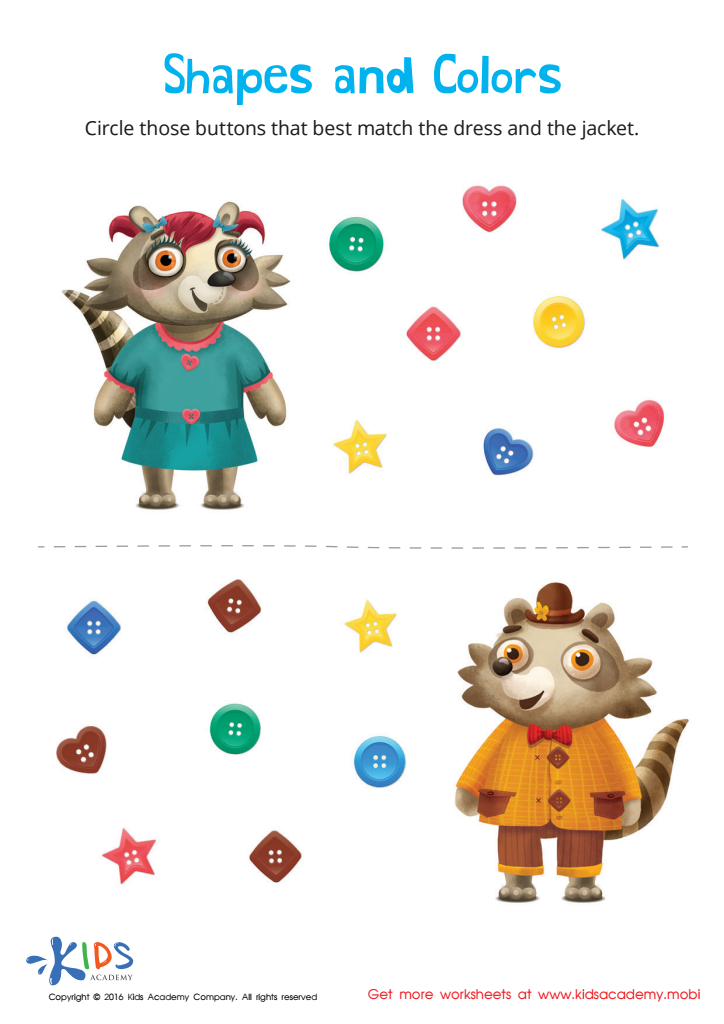
Matching: Shapes and Colors Worksheet











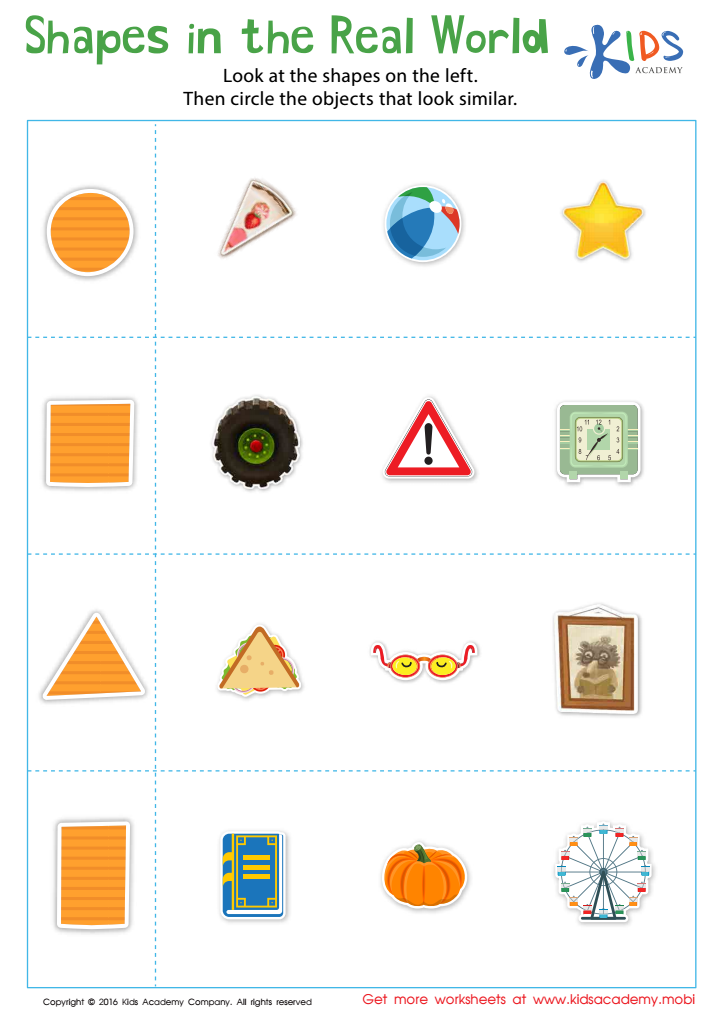
Shapes in the Real World Worksheet
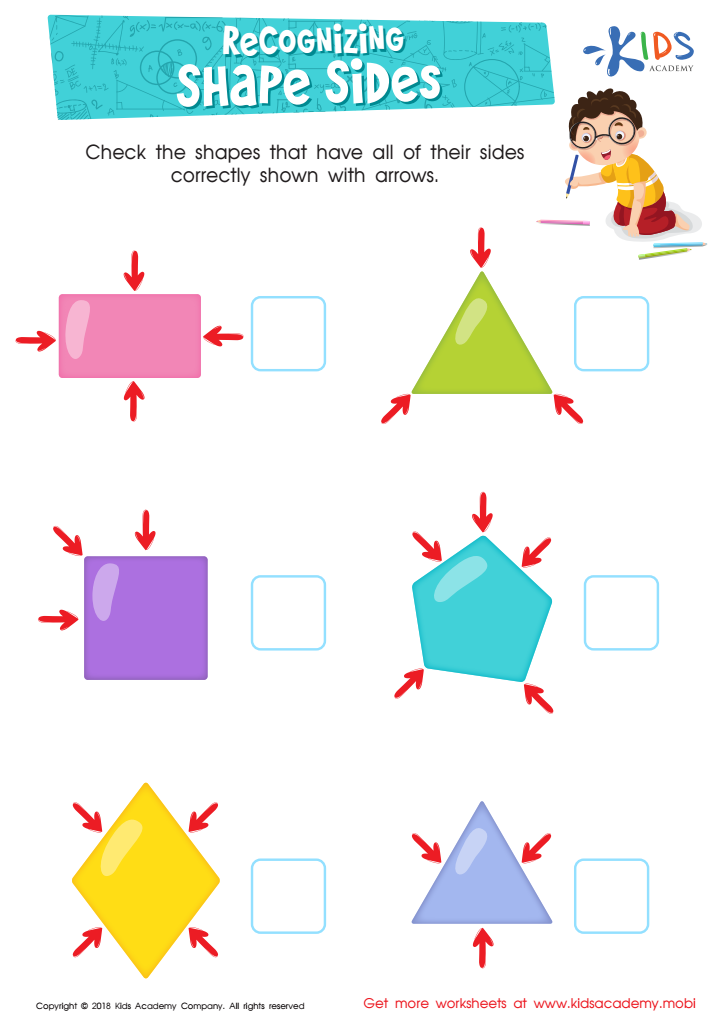
Recognizing Shape Sides Worksheet
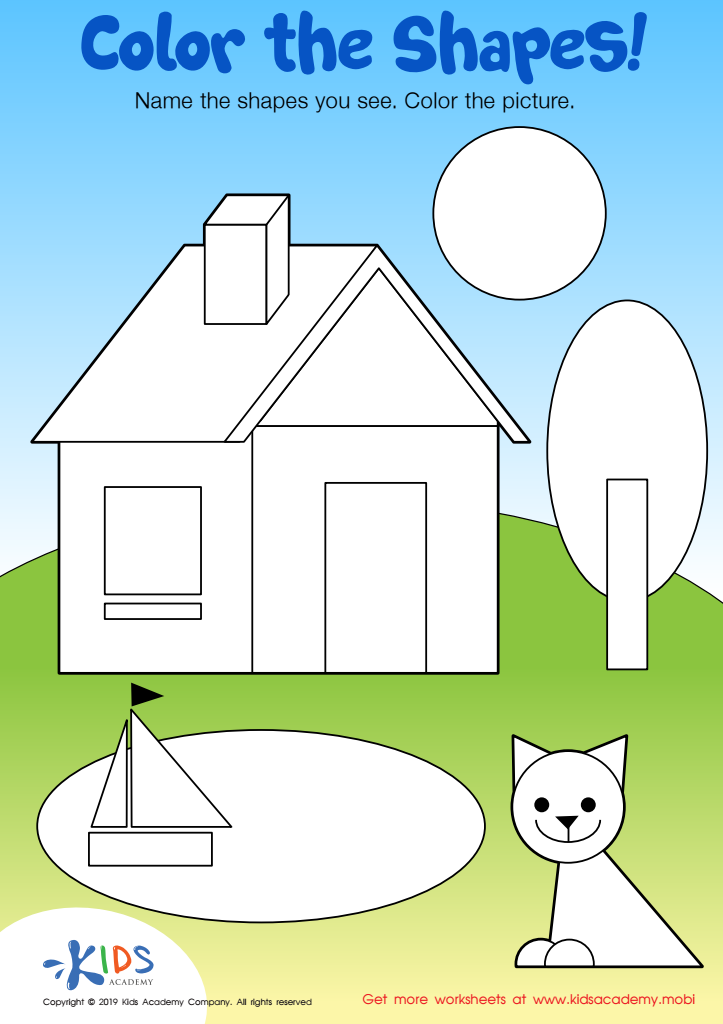
Color the Shapes Worksheet
 Assign to My Students








Color identification and geometry are foundational skills for 6-year-olds, contributing significantly to cognitive and perceptual development. When parents and teachers integrate lessons on color identification with geometric shapes, they yield multiple educational benefits.
Firstly, color identification enhances visual discrimination, a key component in early literacy. Recognizing different colors helps children differentiate between letters and numbers, making reading and math easier. Moreover, associating colors with shapes aids memory retention and vocabulary development, forming a solid base for academic learning.
Geometry exposes children to spatial awareness and problem-solving. Understanding shapes involves recognizing patterns and attributes, nurturing critical thinking. These skills extend beyond math, enhancing logic and reasoning abilities needed in everyday tasks and future academic pursuits.
Integrating these subjects captivates children’s natural curiosity and stimulates creativity, fostering an engaging learning environment. Hands-on activities, like sorting shapes by color or creating patterns, blend fun with education, ensuring children remain enthusiastic learners.
Ultimately, emphasizing color identification and geometry in early education equips children with essential cognitive tools. Parents and teachers play a crucial role in nurturing these skills, setting the stage for lifelong learning and success across diverse academic fields.








