Counting skills Numbers 0–10 Worksheets for 6-Year-Olds
82 filtered results
Difficulty Level
Grade
Age
-
From - To
Subject
Activity
Standards
Enhance your child's counting skills with our engaging "Counting Skills Numbers 0–10 Worksheets" designed specifically for 6-year-olds. These printable worksheets provide a fun and interactive way to help young learners grasp the fundamentals of counting and number recognition. Each activity encourages hands-on learning through colorful visuals and stimulating exercises that captivate children's attention. As they practice counting from 0 to 10, they'll build confidence and essential math skills needed for future success. Perfect for both classroom use and at-home learning, these worksheets offer endless opportunities for skill enhancement and entertainment. Get started on your child's math journey today!
Favorites
With answer key
Interactive
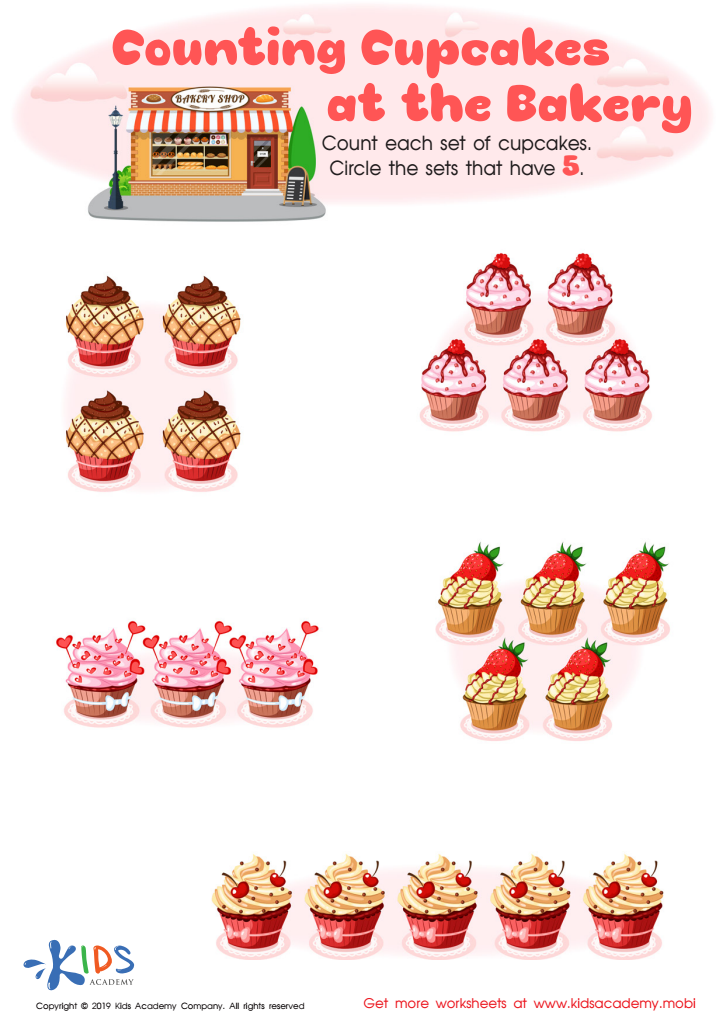
Counting Cupcakes Worksheet
This fun worksheet for preschoolers uses cupcakes to teach counting. Kids must circle the groups of cupcakes that add up to 5. The delicious treats make learning fun and engaging!
Counting Cupcakes Worksheet
Worksheet
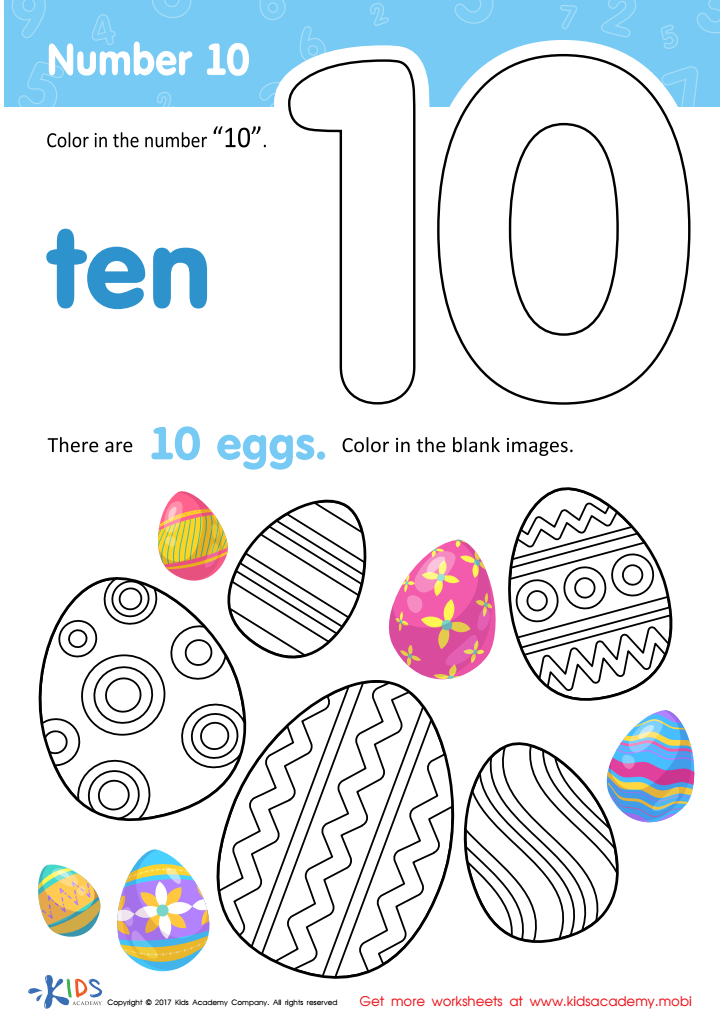
Number 10 Printable
Easter eggs are a great way to combine creativity and learning! Help your child explore the number 10 with our fun coloring page. The intricate designs will spark their imagination and fuel their artistic side, while they practice important numeracy basics. Get creative with eggs and enjoy the fun, no matter the time of year!
Download (PDF)
 Assign to My Students
Assign to My Students
Number 10 Printable
Worksheet
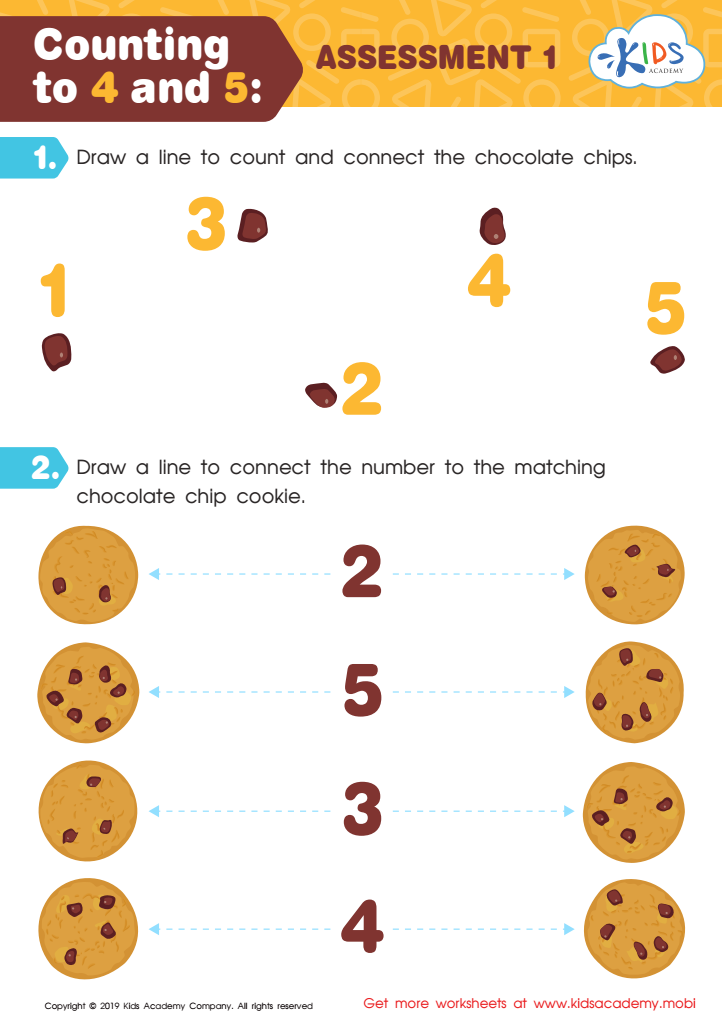
Counting to 4 and 5: Assessment 1 Worksheet
Counting correctly is essential for your little one. Make it fun by counting common objects or items they love. This worksheet includes chocolate chips - help them count then draw a line to connect them. Then draw a line between the number and the matching chip. They'll love it!
Counting to 4 and 5: Assessment 1 Worksheet
Worksheet
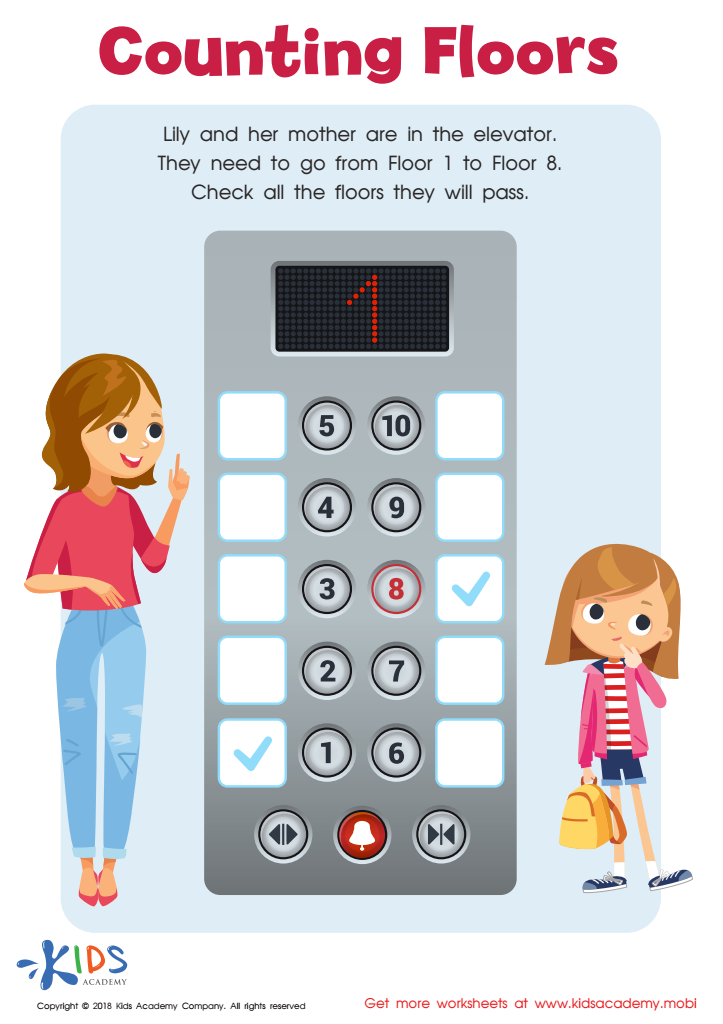
Counting Floors Worksheet
Take your kids on an elevator ride and have them help you. With this worksheet, little ones meet Lily and her mom. They're taking an elevator from Floor 1 to Floor 8. Ask them to check the floors they pass and help the two reach their destination.
Counting Floors Worksheet
Worksheet
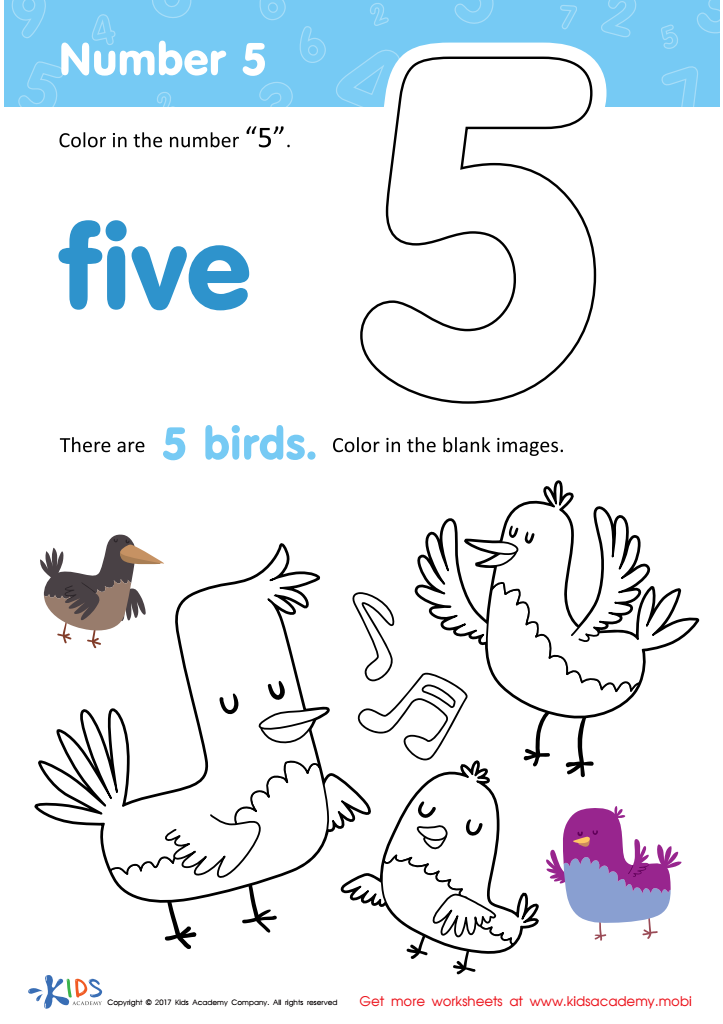
Number 5 Printable
Let your child have fun with this number 5 coloring page! They'll adore coloring the birds and music notes, while learning to recognize the number 5. Enjoy listening to the birds sing their beautiful songs!
Download (PDF)
Assign to My Students
Assign to My Students
Number 5 Printable
Worksheet
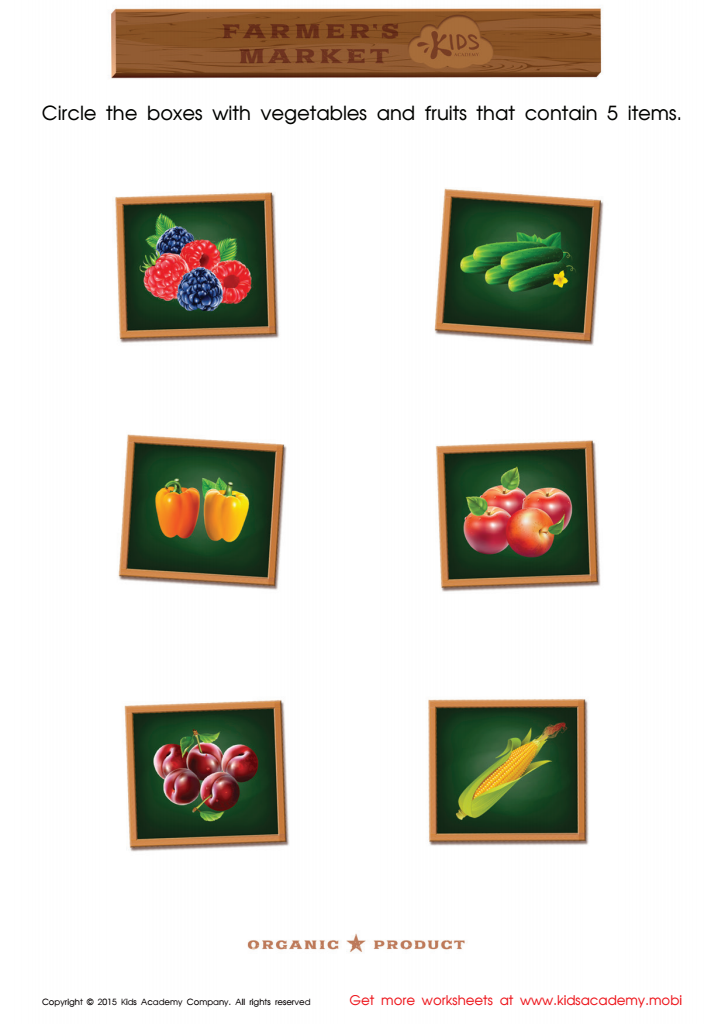
Count and Match Vegetables 1 – 7 Math Worksheet
Print this bright math worksheet from Kids Academy and give your child a fun way to enhance their counting skills. Based on Singapore Math, the colourful pictures make it easy for children to comprehend math. Get additional free worksheets here!
Count and Match Vegetables 1 – 7 Math Worksheet
Worksheet
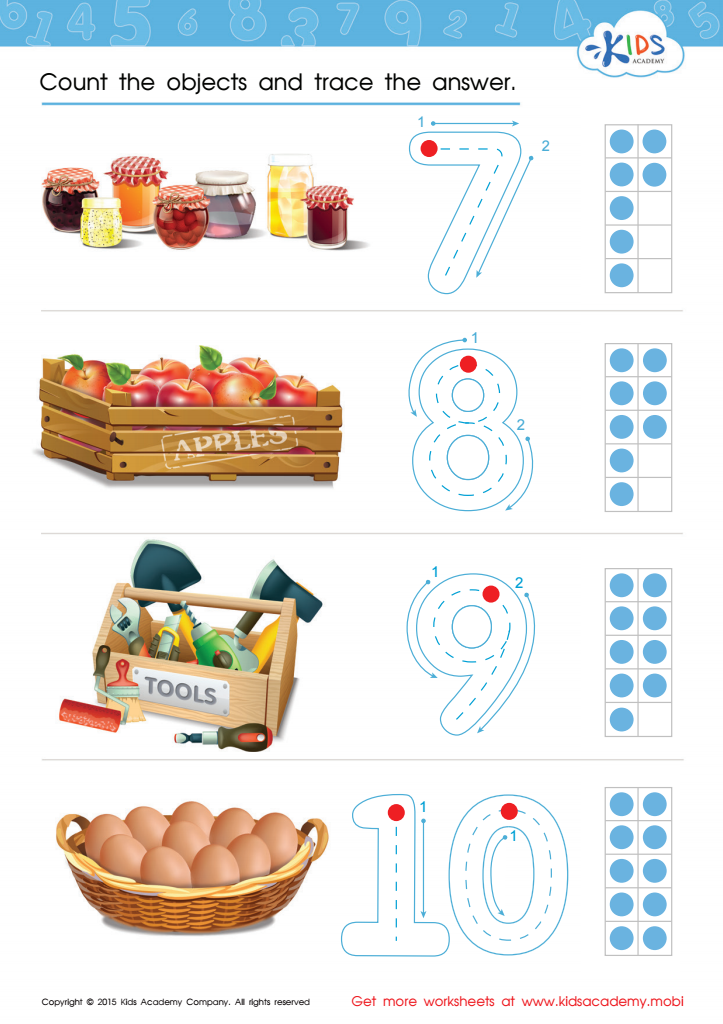
Count and Trace 7 – 10 Worksheet
Let your child develop a lifelong love of math with Kids Academy's printable math worksheet based on the innovative Singapore Math method. It uses funny pictures and graphs to help solve math problems. Check out our amazing collection of free printable math worksheets now!
Count and Trace 7 – 10 Worksheet
Worksheet
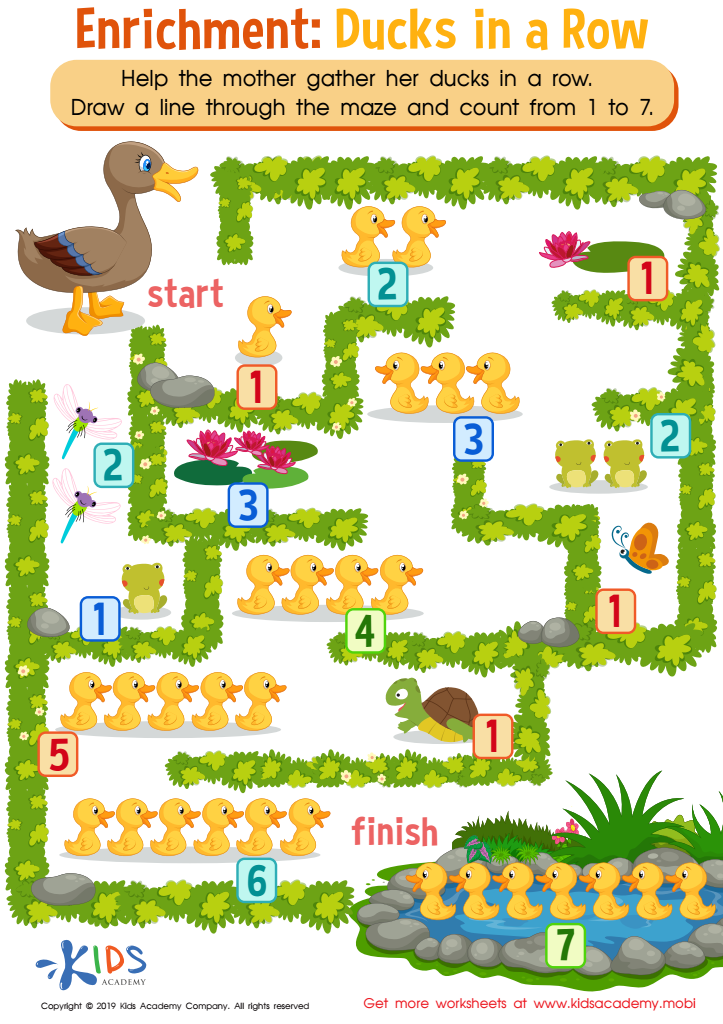
Ducks in a Row Worksheet
Are you looking for a fun and free math enrichment activity for your young one? Get Sweet Mama Duck and her ducks to the pond by helping your child navigate through this colorful maze! They'll use their fine motor skills and hone their number sense as they count ducks, turtles and frogs. Plus, they'll learn one-to-one representation. A great educational way to have fun!
Ducks in a Row Worksheet
Worksheet
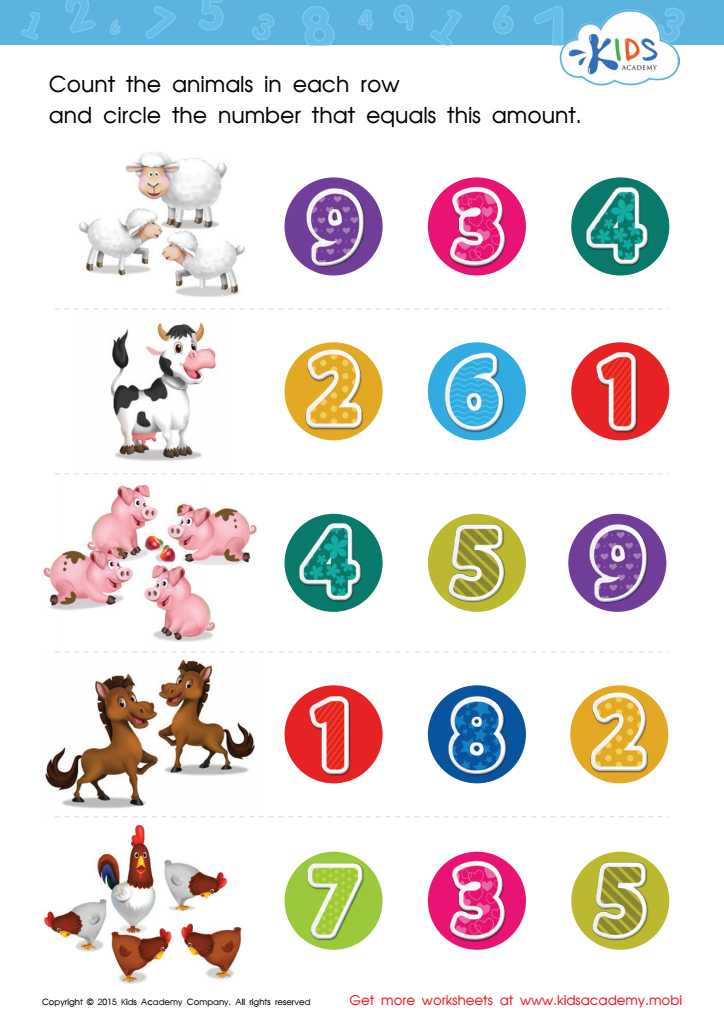
Count and Match 1 – 5 Math Worksheet
Find the colorful worksheet aimed to help your little learner develop their math skills. Count the cute animals and identify the correct numbers based on the Singapore Math method. This worksheet is a fantastic way to start your kid on their mathematical journey.
Count and Match 1 – 5 Math Worksheet
Worksheet
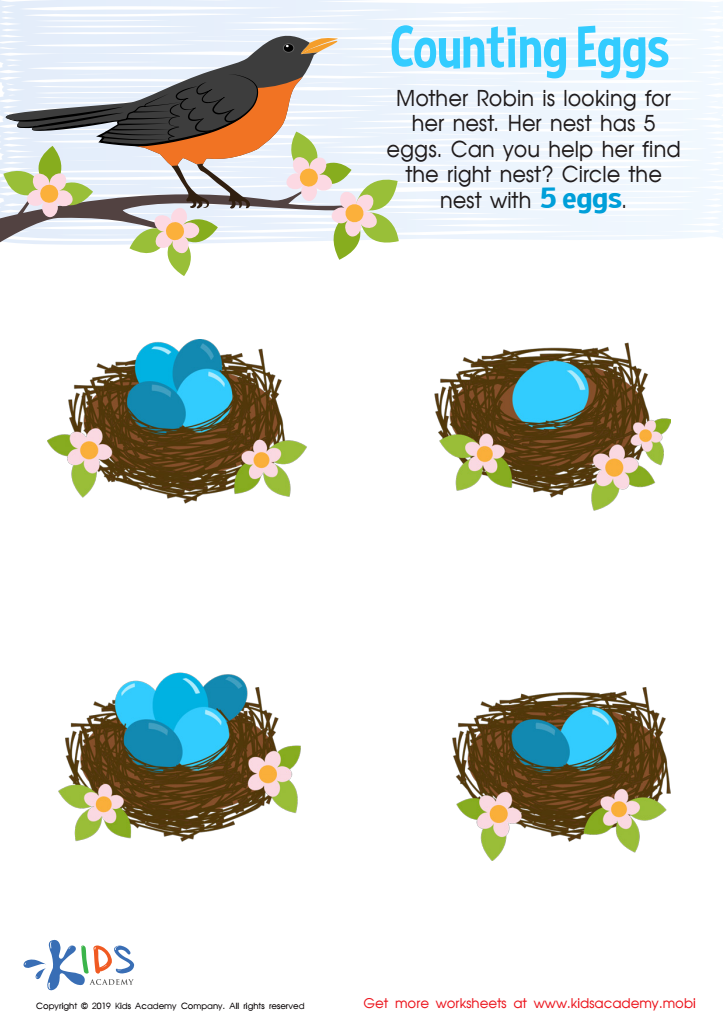
Counting Eggs Worksheet
Help the Mother bird find her nest! Show your kids this printout, have them point at the bird and the nests. Ask them to count the eggs in each nest carefully. Finally, help her by circling the one with 5 eggs.
Counting Eggs Worksheet
Worksheet
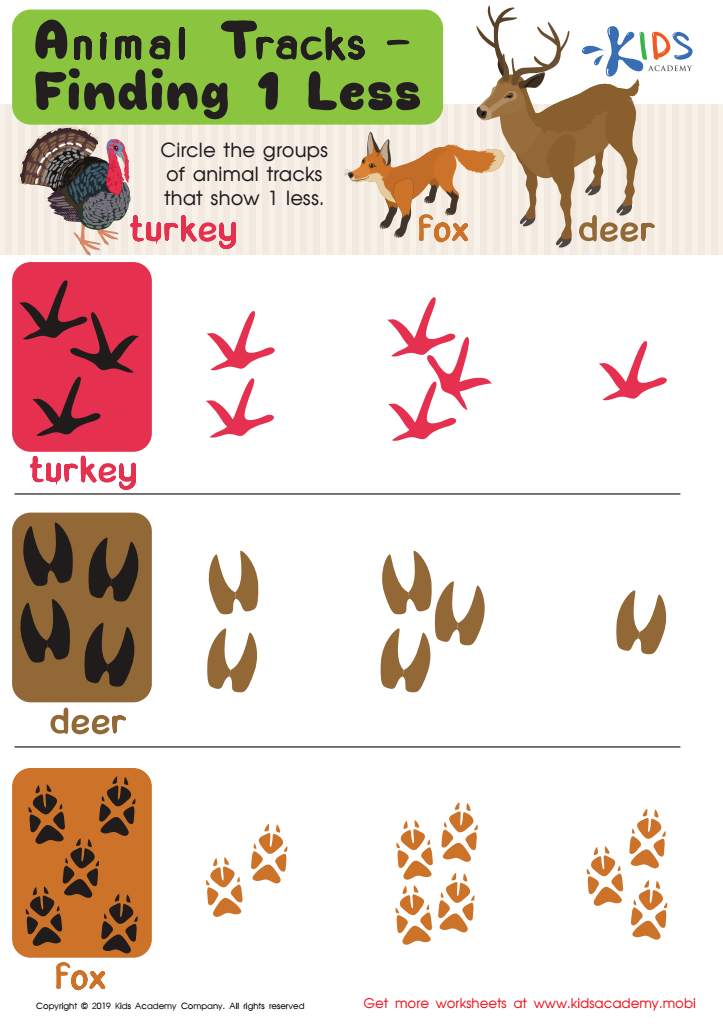
Animal Tracks: Find 1 Less Worksheet
Animals are all around us - wild and domestic. Ask your kids to name their favourites, then use this animal tracks worksheet to explore more. Help them circle the groups with 1 less animal track. It's a great way to learn about the creatures we share our world with!
Animal Tracks: Find 1 Less Worksheet
Worksheet
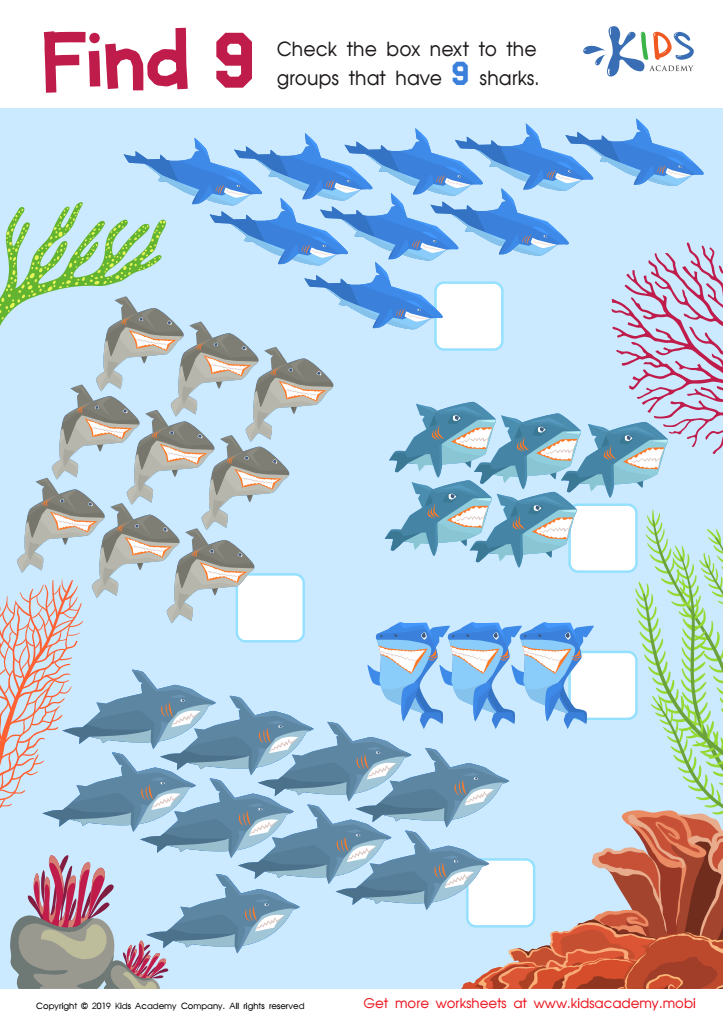
Find 9 Worksheet
Teach your kids to count proficiently with fun exercises and everyday objects. In this worksheet, assist your kid in counting sharks in the ocean and checking the box next to the group that has 9. This activity will help build a strong foundation for addition and subtraction later on.
Find 9 Worksheet
Worksheet
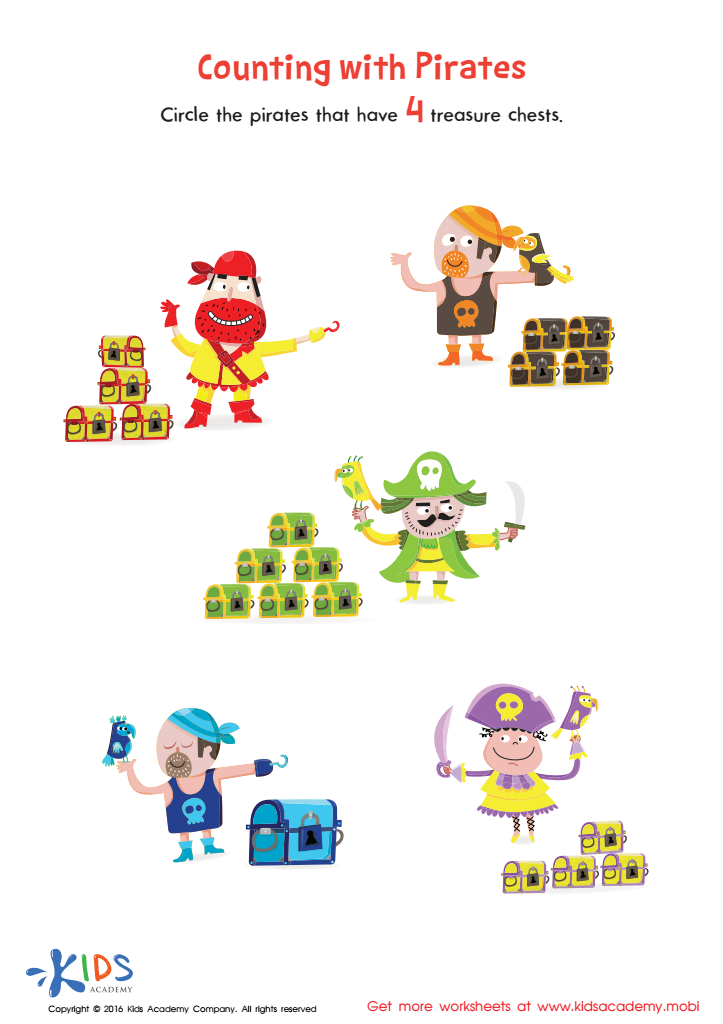
Counting With Pirates Worksheet
Ahoy, mateys! Join us on the hunt for the pirate with four treasure chests! They’re hidden in this counting worksheet, full of swashbuckling fun! Your little one will be excited to search for gold and at the same time develop key counting skills - a great start to early math!
Counting With Pirates Worksheet
Worksheet
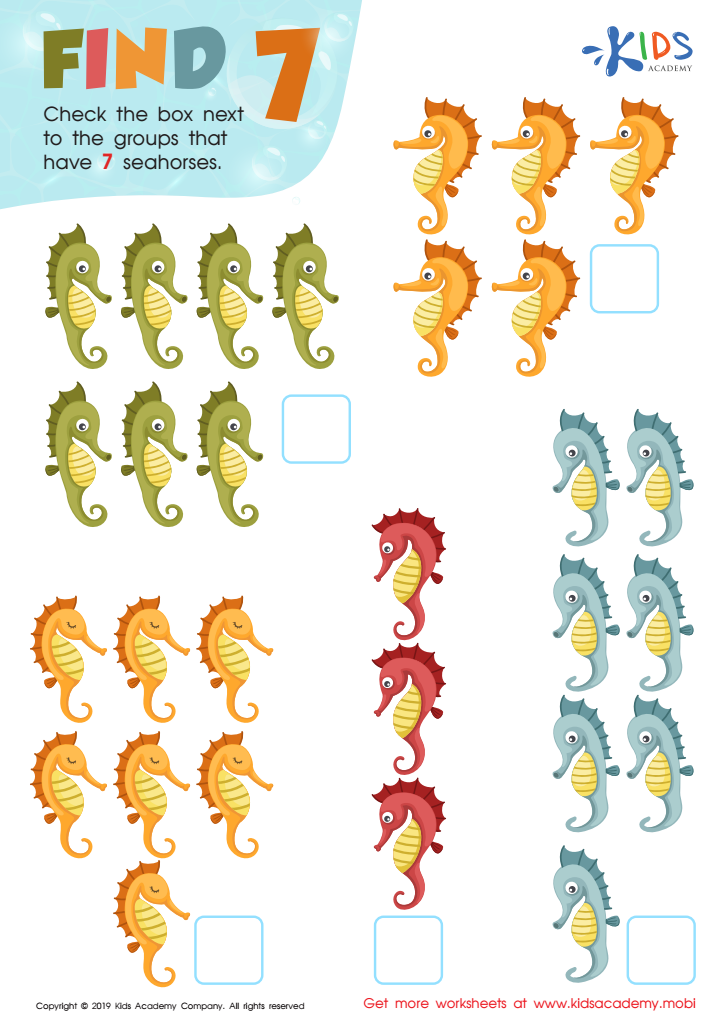
Find 7 Worksheet
Counting seahorses in groups of 7 is fun and educational with this free worksheet. Kids practice counting, one-to-one number representation, and check off the correct answers, all while admiring the brightly colored seahorses. A great way to make learning enjoyable!
Find 7 Worksheet
Worksheet
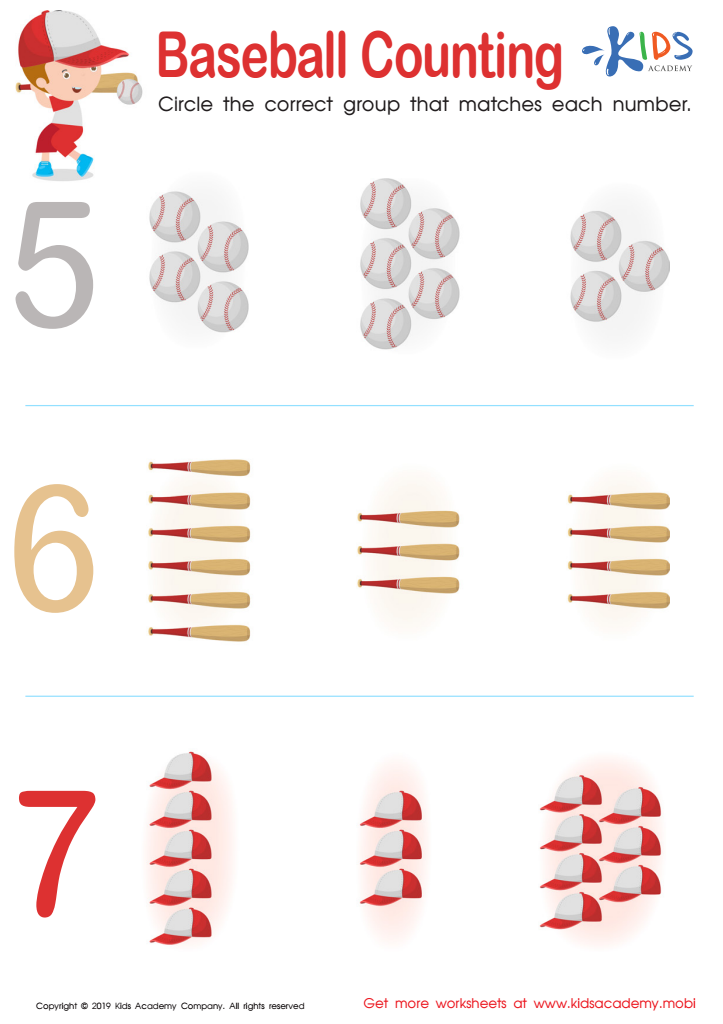
Baseball Counting Worksheet
Does your family like baseball? Refresh their minds by asking them to count items in a baseball game. To begin, have them count from 1 to 10. Point out each object and read out the numbers. Then, help them circle the group that matches each number. It will be a fun way to test their counting skills!
Baseball Counting Worksheet
Worksheet
Number 4 Printable
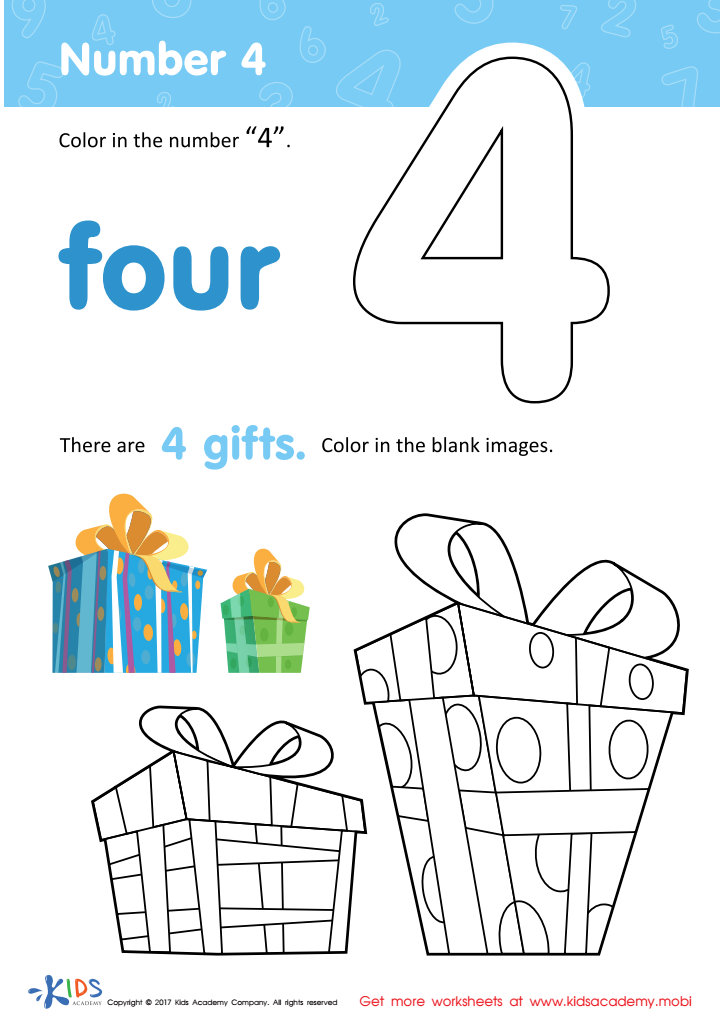
Kids love gifts! Give your child a learning opportunity with this number 4 coloring page. As they design their own wrapping paper, they'll learn to read and recognize the number four. An exciting way to have fun and learn at the same time!
Download (PDF)
Assign to My Students
Assign to My Students
Number 4 Printable
Worksheet
Ten Spots Worksheet
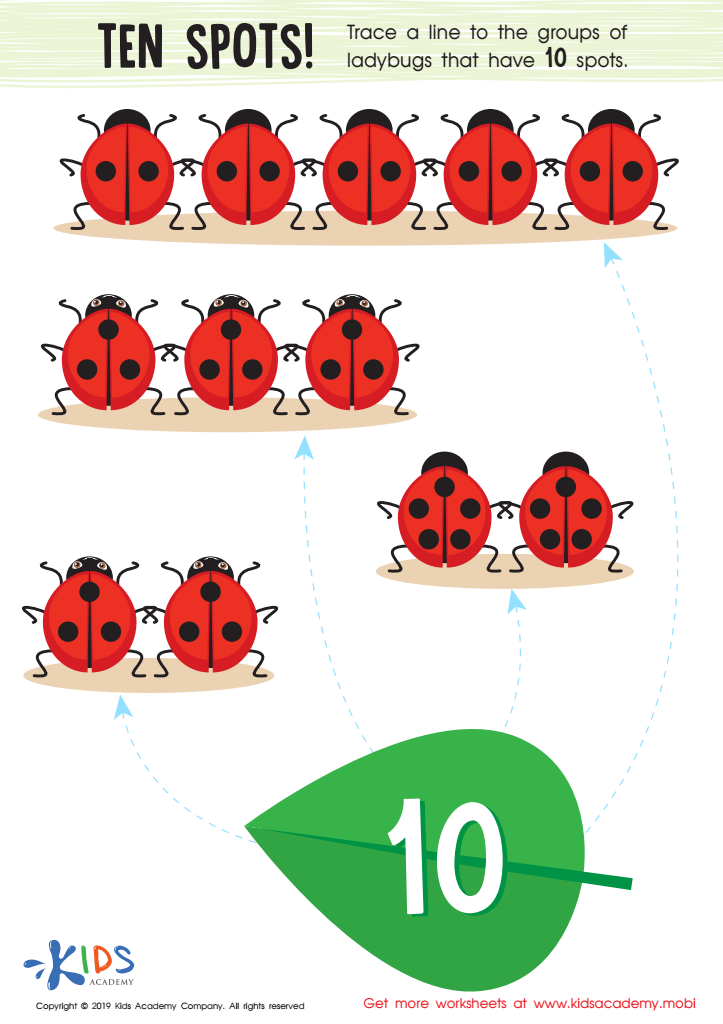
Kids love ladybugs! Ask them to tell you what stands out most--the spots. Show them a picture and help them count the spots. Trace a line to the group with 10 spots for a fun counting lesson.
Ten Spots Worksheet
Worksheet
Counting Pets Worksheet
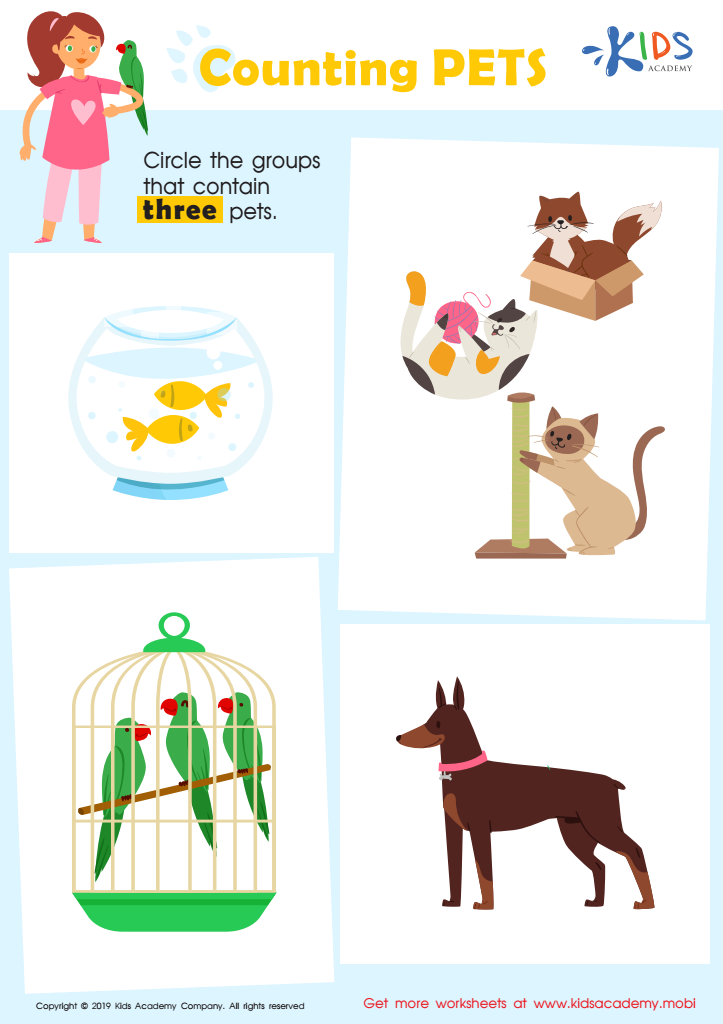
Kids adore their pets, making this free pet counting worksheet the perfect way to combine something they love with math skills. They'll count the number of pets, circle the pictures with three pets, and use one-to-one picture representation to help. This exercise will cultivate their learning and reinforce their love of animals!
Counting Pets Worksheet
Worksheet
Find 7 Eggs Worksheet
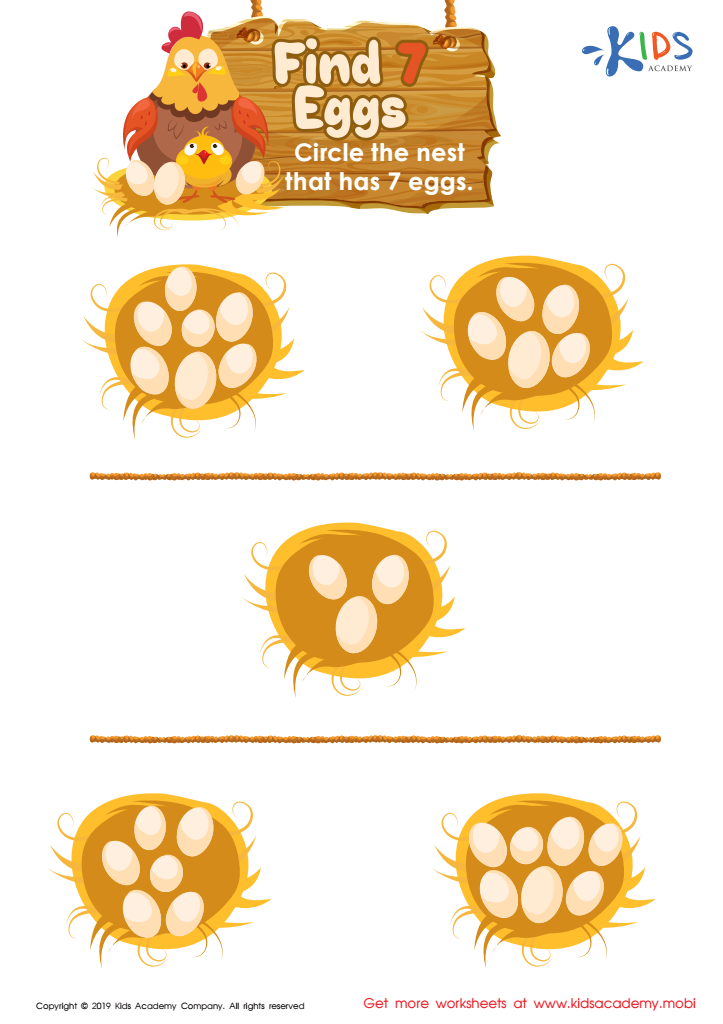
Mama chicken needs help counting her eggs! Have your child use one-to-one number representation to count and circle the nests that have seven eggs with this free and fun worksheet. Picture representation is a great way to start building math skills. Download this PDF and make math time fast and enjoyable!
Find 7 Eggs Worksheet
Worksheet
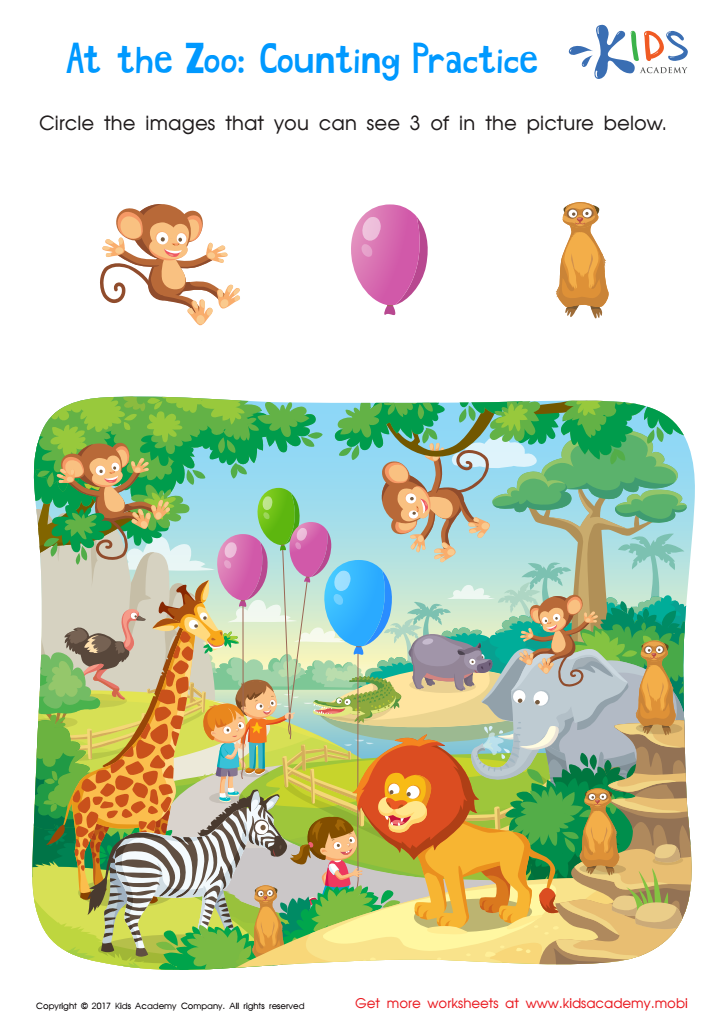
At the Zoo: Counting Practice Worksheet
This zoo-themed worksheet is perfect for practicing early counting skills and following directions. Your child will rule out incorrect answers and use problem solving to find images with duplicates. Fun and educational, this worksheet will get your preschooler ready for early math!
At the Zoo: Counting Practice Worksheet
Worksheet
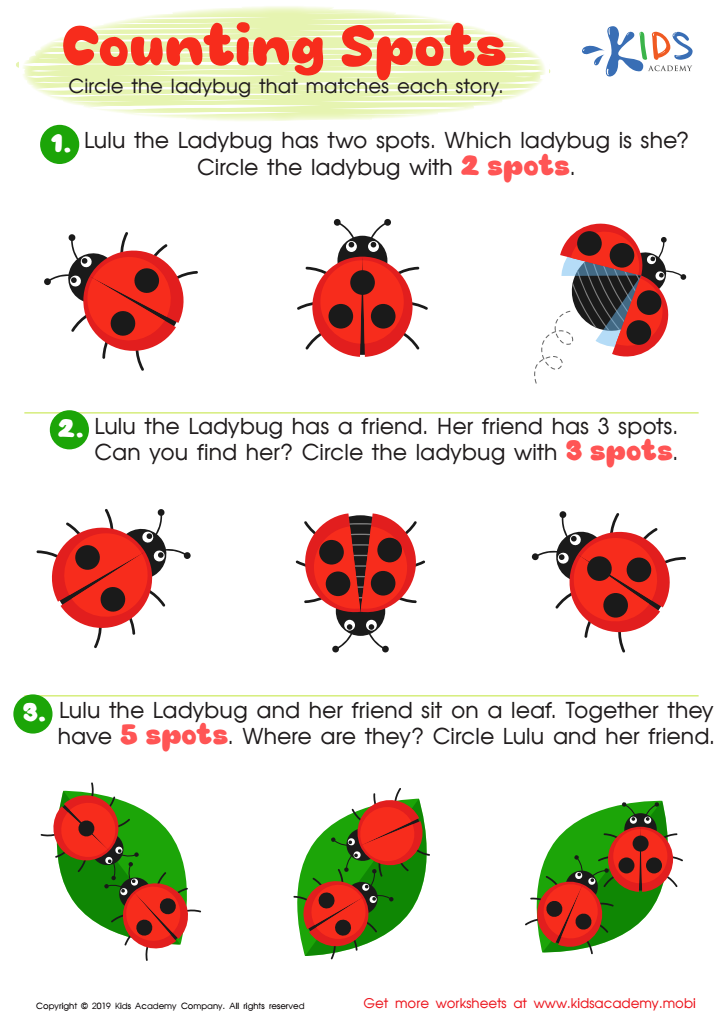
Counting Spots Worksheet
This worksheet is full of cute, colorful ladybugs. Help your kids identify Lulu, who has two spots on her body. Count the spots on each ladybug and circle the one with two spots. Then read the instructions on the other sections and help them find the ladybugs there, too!
Counting Spots Worksheet
Worksheet
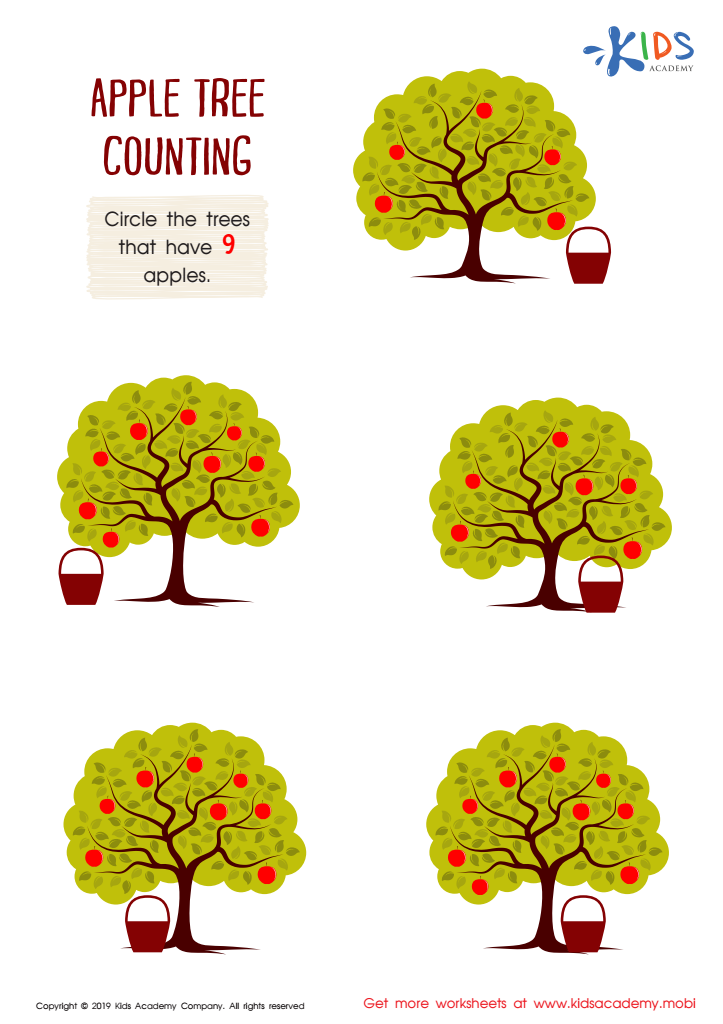
Apple Tree Counting Worksheet
Help your kids perfect their counting skills with this fun exercise. Get them to count the apples on the 5 trees and circle the ones with 9. It's great that they are learning to count at school and you can keep the excitement going at home. This colorful worksheet will help your children practice and perfect their counting.
Apple Tree Counting Worksheet
Worksheet
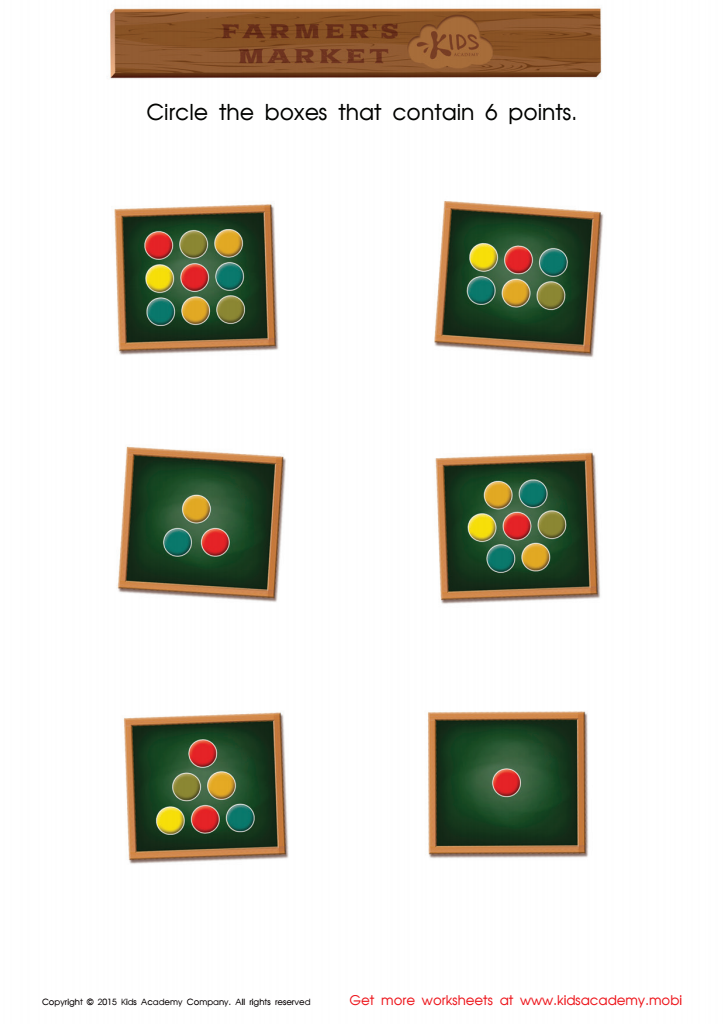
Count and Match Points 6 Math Worksheet
Help your child with mathematics by guiding them with this fun printable worksheet. They will practice counting numbers by looking at all the boxes and circling the ones containing 6 dots. Together you will gain a better understanding of mathematics.
Count and Match Points 6 Math Worksheet
Worksheet
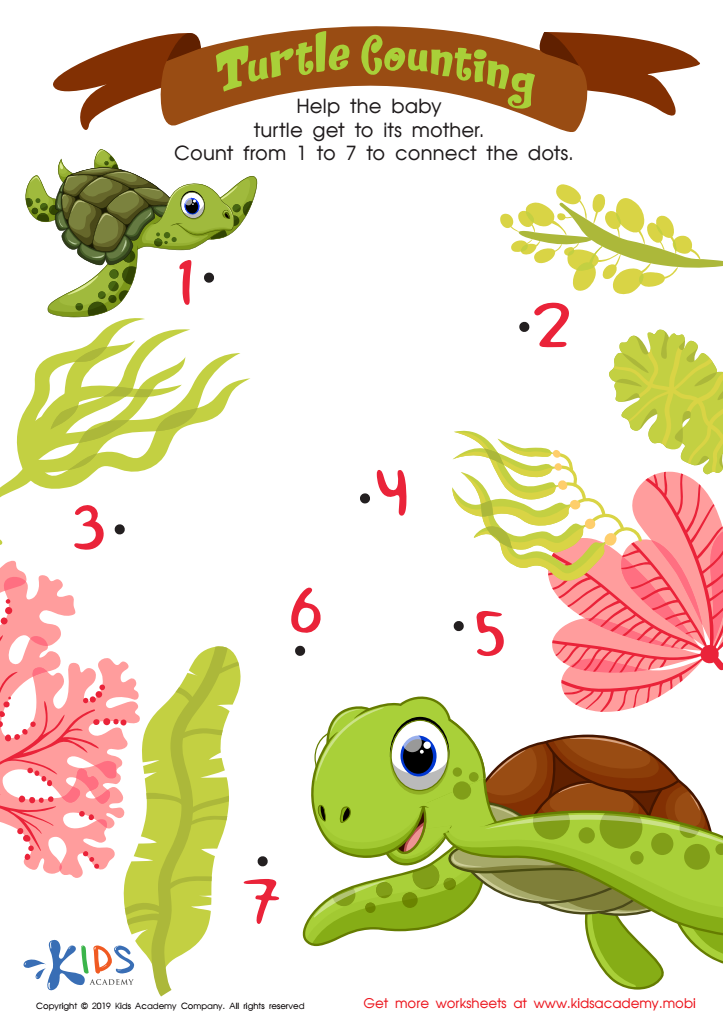
Turtle Counting Worksheet
Help your child identify the turtle in the picture and teach them about turtles. From their diet to the life cycle, they'll learn a lot. Now, help the baby turtle return to its mother. Count from 1 to 7, then connect the dots on the printout.
Turtle Counting Worksheet
Worksheet
Join Kids Academy for Free
Who is primarily going to use this learning content?








Counting skills for numbers 0–10 are foundational for young children, particularly those around 6 years old, as these skills lay the groundwork for future mathematical understanding. Parents and teachers should care about this developmental milestone for several reasons.
First, counting builds essential cognitive skills, including number recognition and one-to-one correspondence—both critical for later arithmetic functions. Mastery of counting up to 10 not only enhances a child's confidence in handling numbers but also lays the framework for addition, subtraction, and more complex math problems in the future.
Second, counting helps children develop problem-solving and critical thinking skills. When children can count, they can begin to analyze and interpret numerical information in everyday situations—be it through playing games, measuring ingredients for a recipe, or understanding time.
Furthermore, counting encourages social skills through cooperative activities. Group games involving numbers or counting allow children to learn teamwork, patience, and communication skills, all of which are important for overall development.
Finally, fostering counting skills supports a child’s academic readiness. Children with strong numerical understanding tend to perform better in school, making early intervention from parents and teachers vital in promoting lifelong learning habits. By prioritizing these skills, caregivers help create a positive and enriching learning environment.