Number Sequencing Numbers up to 100 Worksheets for 6-Year-Olds
6 filtered results
-
From - To
Introduce your 6-year-old to the exciting world of number sequencing with our carefully designed worksheets. These printable resources help children master the skill of arranging numbers up to 100. Engaging and fun activities not only enhance their counting abilities but also strengthen their understanding of numerical order. Created to support early learners, our worksheets include colorful illustrations and a variety of challenging exercises. Ideal for classroom or home use, these printables foster a love of math while building a strong foundation for future mathematical success. Download and explore our number sequencing worksheets for a thrilling learning adventure!
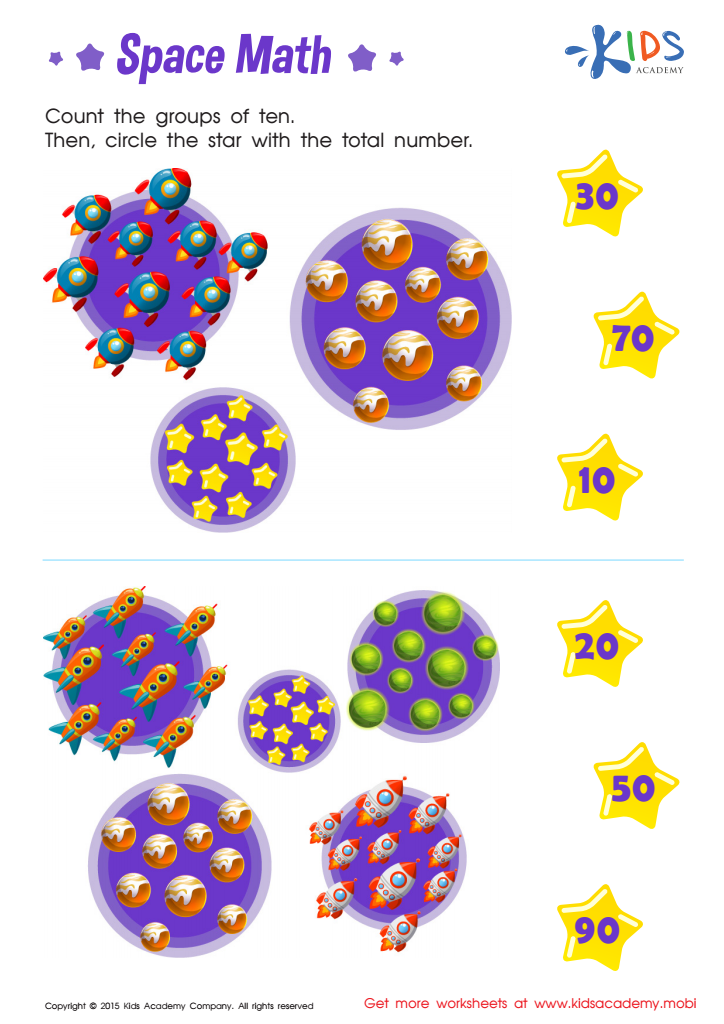
Learn dozens: Space math Worksheet
 Assign to My Students
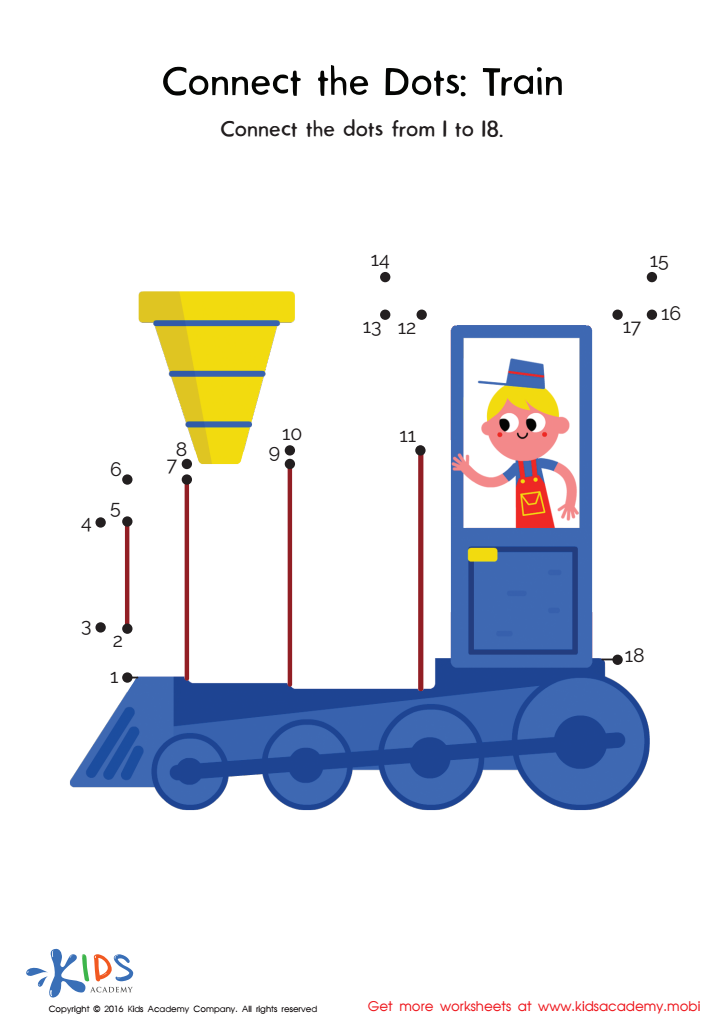
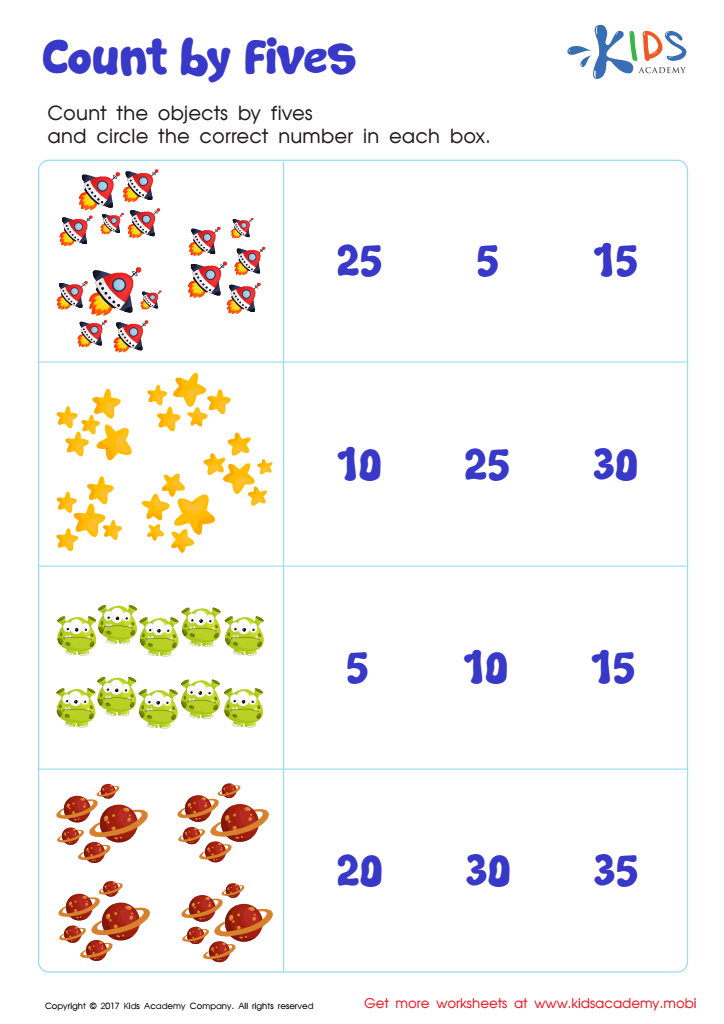
Skip Counting by 5s: Space Math Printable
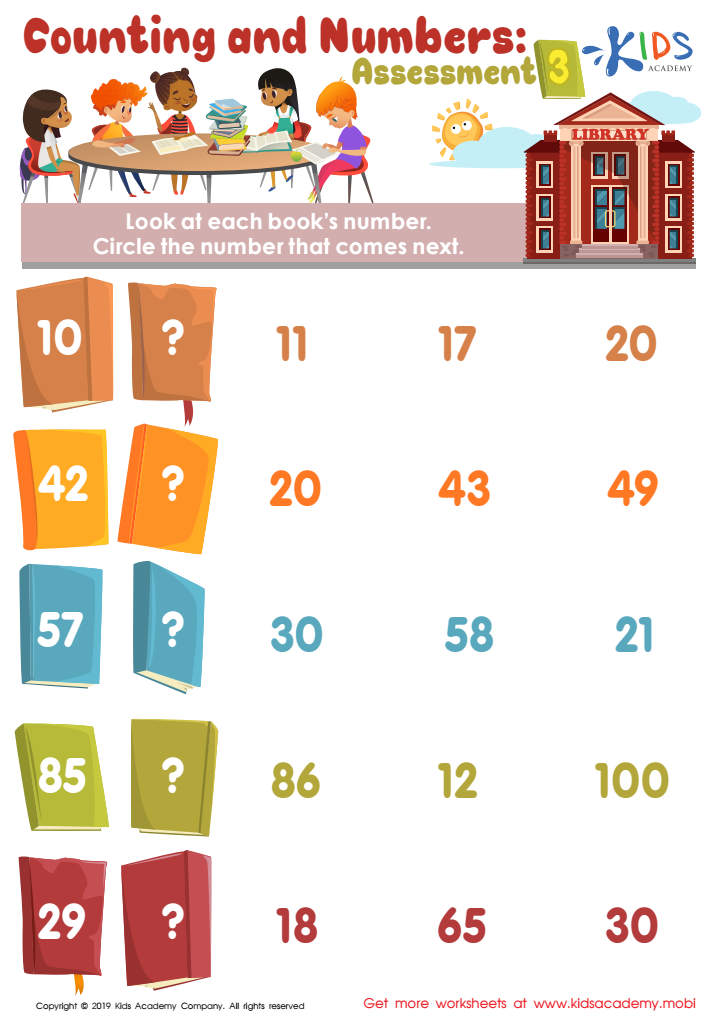
Counting and Numbers: Assessment Worksheet
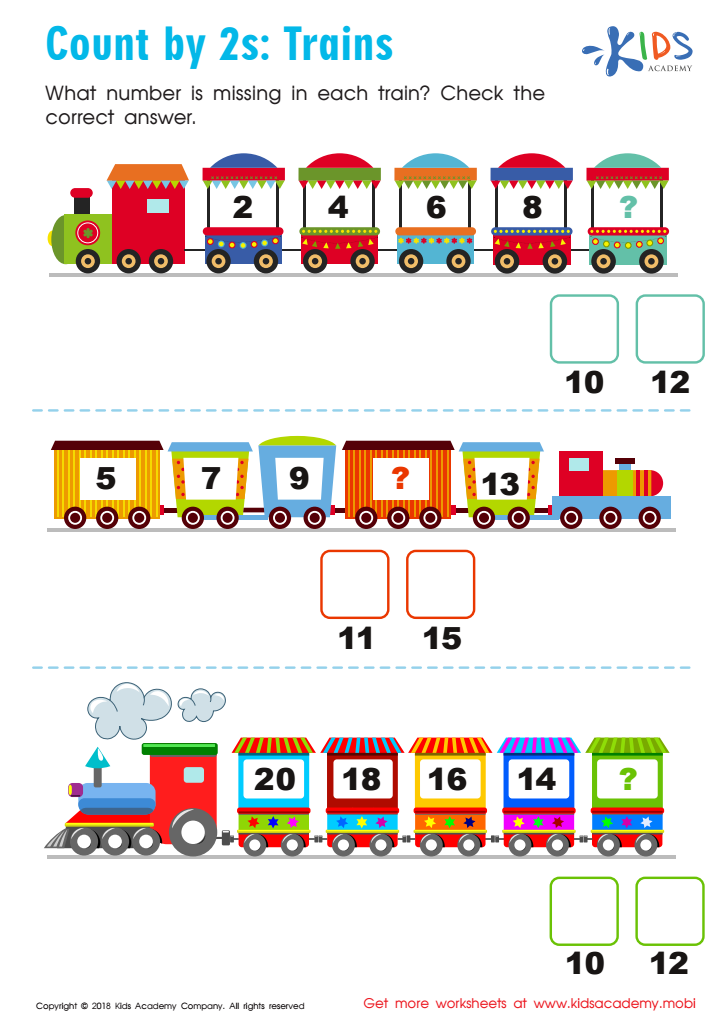
Count by 2's: Trains Worksheet
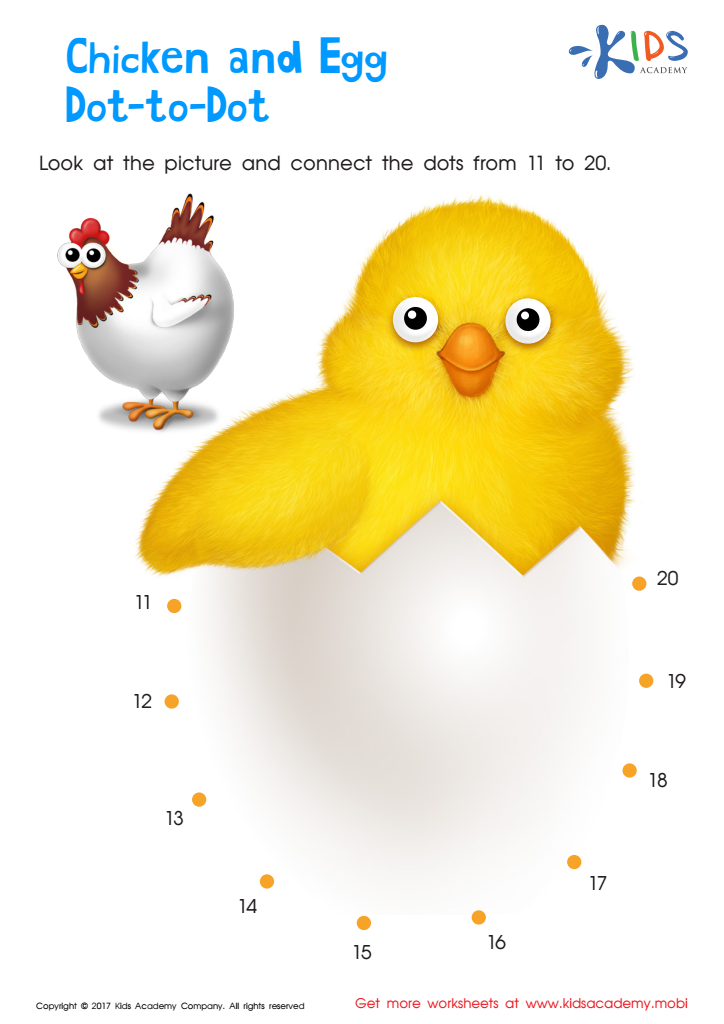
Ordering 11–20: Chicken & Egg Dot–to–dot Worksheet



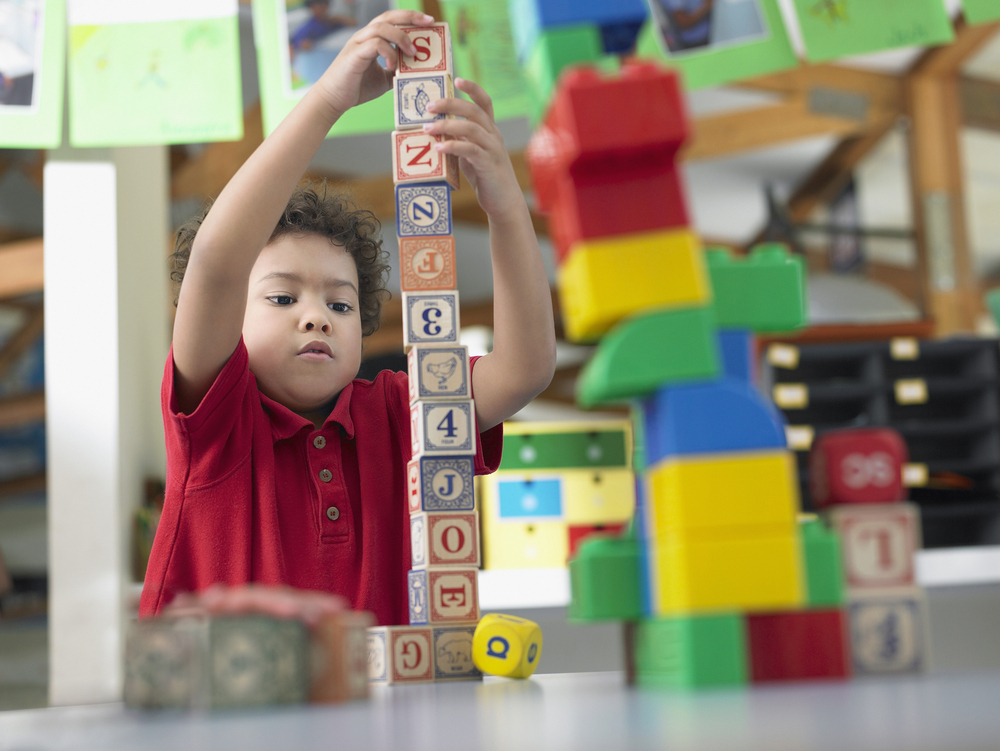




Understanding number sequencing up to 100 is crucial for 6-year-olds as it lays a fundamental foundation for their mathematical development. At this age, children are in the early stages of formal education and are building essential cognitive skills. Mastering number sequences up to 100 equips them with critical numeracy skills, including counting forwards and backwards, recognizing patterns, and understanding the concept of quantity.
For parents and teachers, focusing on number sequencing helps ensure that children grasp the base-10 number system, which is core to more complex mathematical operations like addition, subtraction, and later, multiplication and division. It also enhances their ability to estimate, compare, and make predictions.
By learning to order numbers sequentially, children develop strong problem-solving abilities and logical thinking. This also builds their confidence, making them more likely to enjoy math and succeed in future mathematical challenges. Moreover, number sequencing fosters fine motor skills through activities such as writing numbers and using manipulatives, which can improve overall hand-eye coordination and precision.
Overall, focusing on number sequencing to 100 gives young learners the tools they need for academic success, promotes a positive attitude towards mathematics, and equips them with life-long skills beneficial across various contexts.