Fine Motor Skills Tracing Shapes Worksheets for 6-Year-Olds
6 filtered results
Difficulty Level
Grade
Age
-
From - To
Subject
Activity
Standards
Boost your child's fine motor skills with our engaging Tracing Shapes Worksheets! Designed specifically for 6-year-olds, these interactive worksheets offer a fun and effective way to enhance hand-eye coordination, pencil control, and shape recognition. Each sheet features a variety of shapes, encouraging children to trace and develop their drawing precision. By engaging in this essential practice, young learners build a foundation for important skills such as writing, geometry, and spatial awareness. Perfect for both classroom and home use, our worksheets provide an enjoyable learning experience that helps prepare kids for academic success. Get started today!
Favorites
With answer key
Interactive
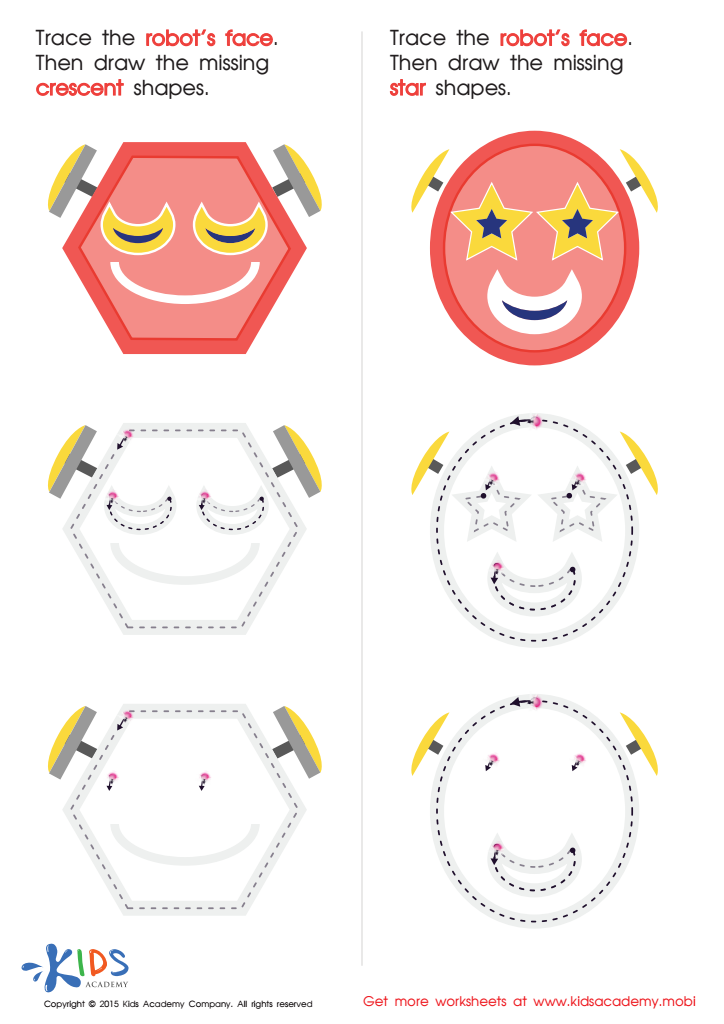
Composing a Robot's Face of Crescents And Stars Worksheet
Get free math geometry worksheets at Kids Academy! Help your child learn by practicing together - trace the robot's face and draw the missing crescent and star shapes. Be sure to remember their names! Have fun and learn with shapes for kids.
 Assign to My Students
Composing a Robot's Face of Crescents And Stars Worksheet
Worksheet
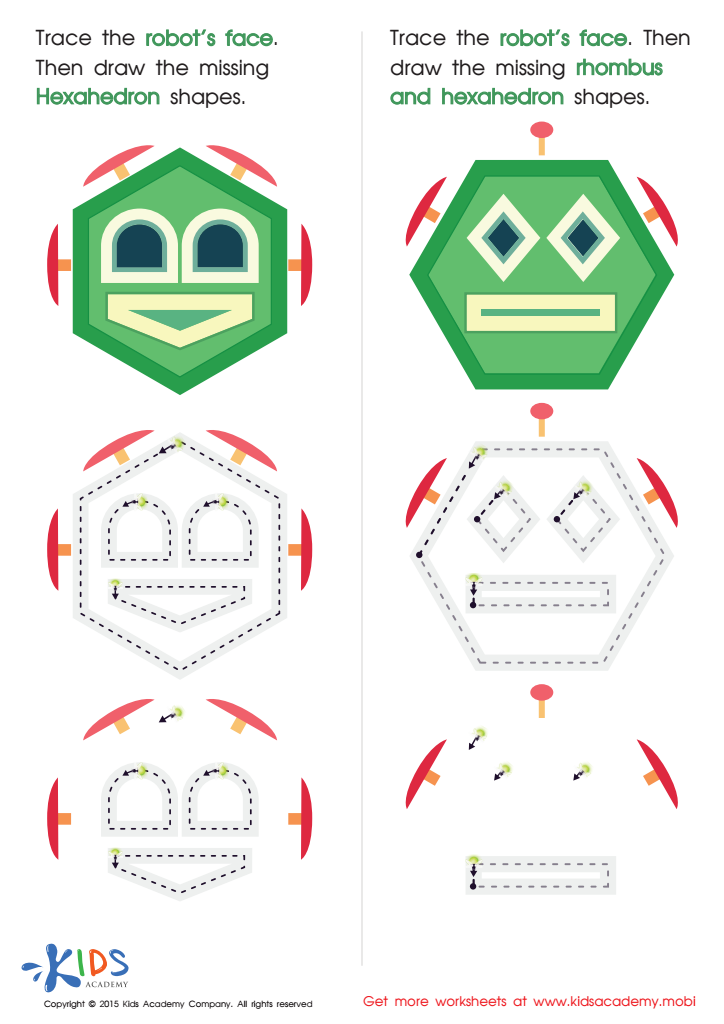
Practice Drawing Hexahedrons And a Rhombus Worksheet
Trace the Robot's face, draw hexahedron and rhombus shapes, then trace again. Our tracing shapes worksheets make it easy for kids to learn geometry. Get more materials from Kids Academy to practice all the shapes.
Practice Drawing Hexahedrons And a Rhombus Worksheet
Worksheet
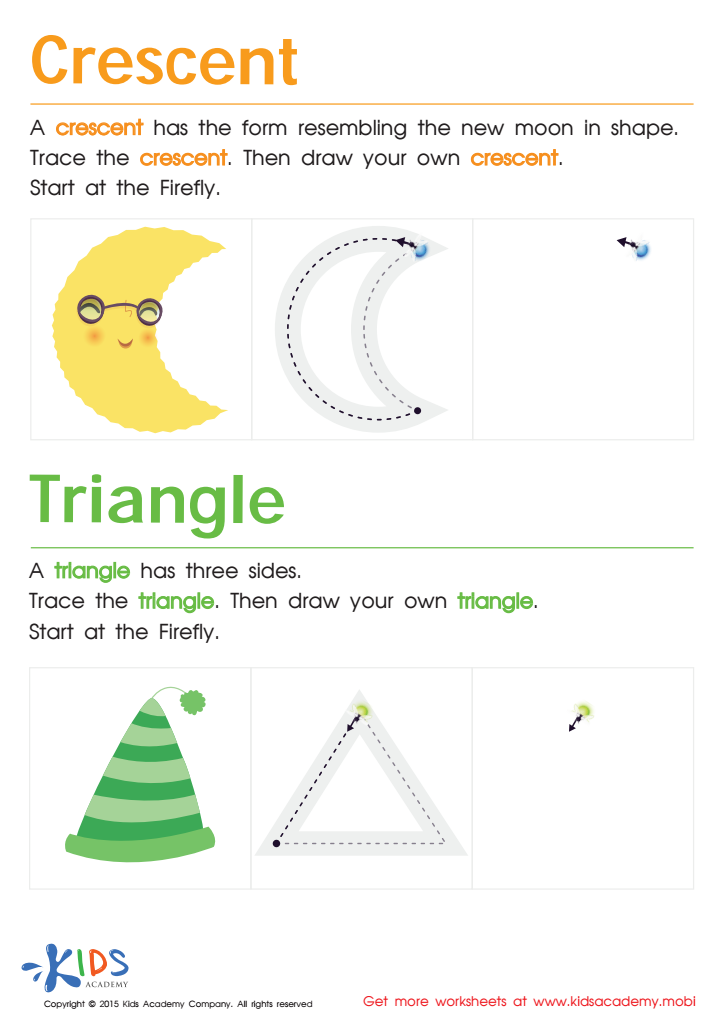
Learning to Draw Crescents And Triangles Worksheet
Help your kids draw a crescent and triangle with this free printable worksheet! Start by tracing a crescent in the form of the new moon, and then teach them that a triangle has three sides and looks like a hat. Find more geometry practice worksheets at Kids Academy!
Learning to Draw Crescents And Triangles Worksheet
Worksheet
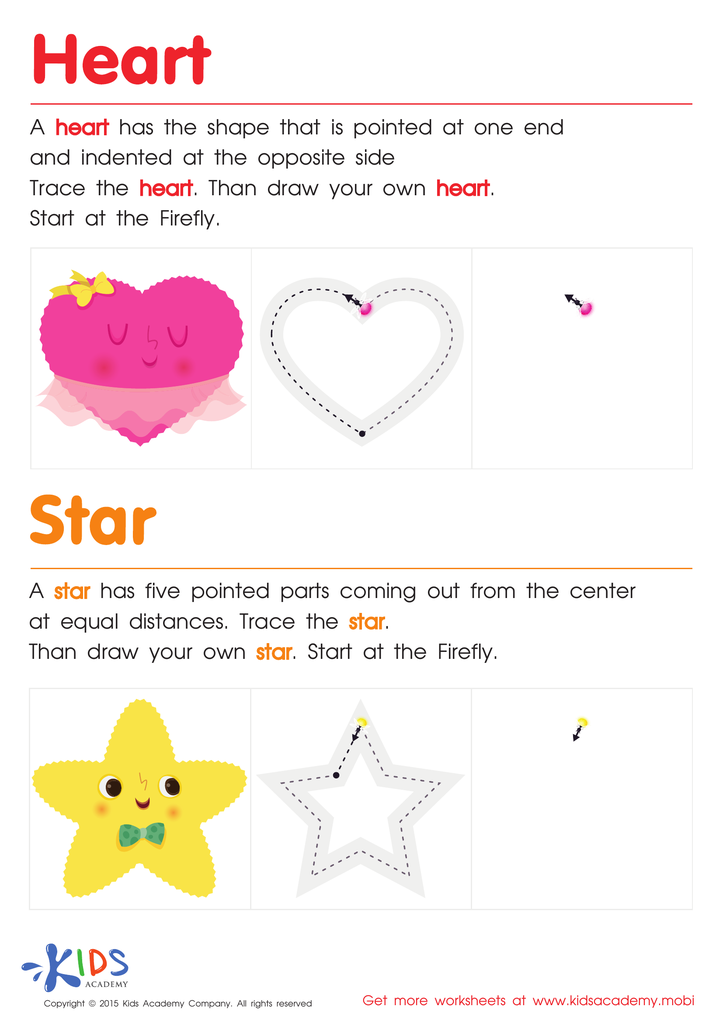
Let's Learn to Draw Hearts And Stars Printable
Trace and draw hearts and stars, learn their names and use them in your drawings. Start with the firefly and be creative!
Let's Learn to Draw Hearts And Stars Printable
Worksheet
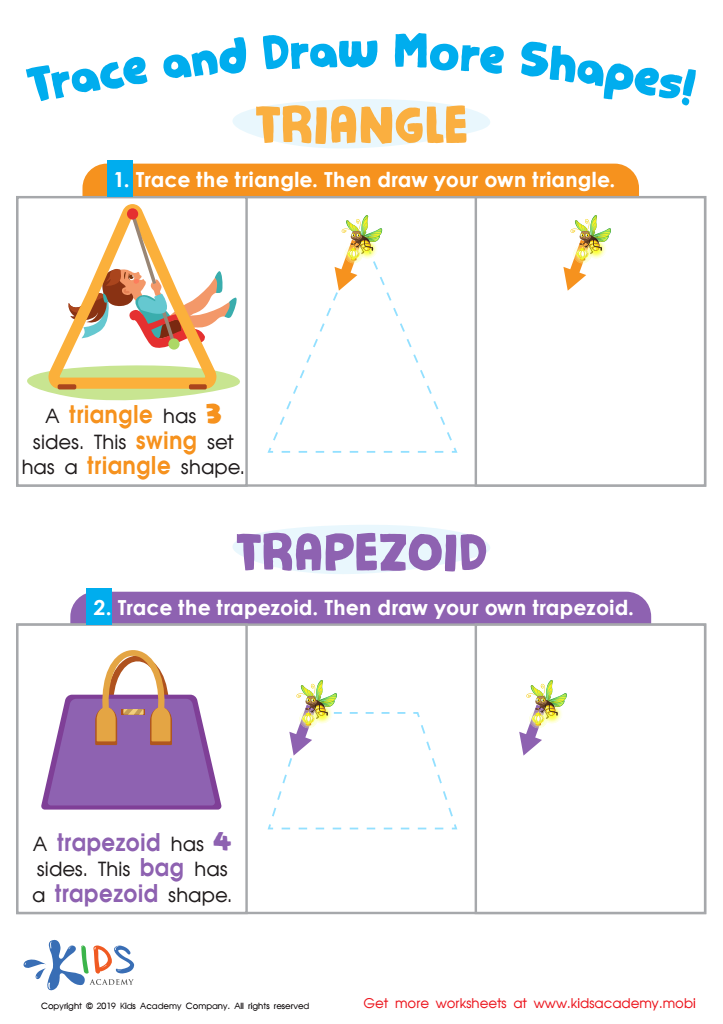
Trace and Draw More Shapes Worksheet
Help your kids with more learning! Look at images in the worksheet, read facts about the shapes, then help your kids trace and draw. This reinforces that learning is never done; use this simple worksheet to help your kids with school homework and more!
Trace and Draw More Shapes Worksheet
Worksheet
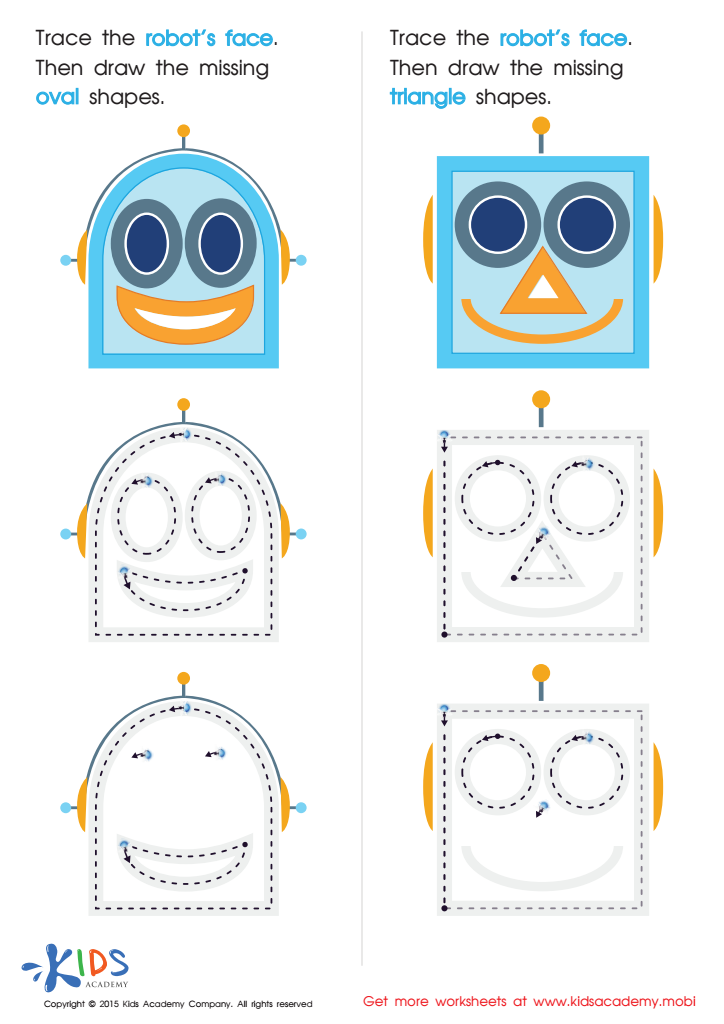
Drawing Ovals And Triangles with Fun Printable
Trace the face and draw missing ovals and triangles. Test your memory and recall shapes' names. Check if you remember how to draw them!
Drawing Ovals And Triangles with Fun Printable
Worksheet
Join Kids Academy for Free
Who is primarily going to use this learning content?








Fine motor skills are crucial for 6-year-olds, impacting their ability to perform essential tasks such as writing, drawing, and self-care activities. Tracing shapes plays a significant role in the development of these skills, making it an important focus for parents and teachers. By practicing tracing, children can improve their hand-eye coordination, dexterity, and muscle control, which are foundational for more complex motor tasks.
For instance, writing requires precise coordination of the fingers and wrist, and tracing shapes helps children learn how to control their movements smoothly and accurately. This process allows them to build the strength and endurance needed for writing and drawing, thus enhancing their academic performance and confidence. Moreover, fine motor skills are not limited to academic tasks; they also include daily activities such as buttoning clothes, tying shoelaces, and handling utensils, all of which contribute to a child's independence and self-esteem.
By encouraging activities like tracing shapes, parents and teachers help facilitate overall cognitive development, as these tasks require attention to detail, concentration, and problem-solving. Ultimately, focusing on fine motor skills will not only prepare children for more complex academic challenges but also equip them with essential life skills that promote independence and confidence.