
Observation skills Reading Worksheets for 6-Year-Olds
3 filtered results
Difficulty Level
Grade
Age
-
From - To
Subject
Activity
Standards
Boost your 6-year-old’s reading abilities with our comprehensive Observation Skills Reading Worksheets! These engaging and educational printables are designed to enhance young learners' attention to detail, comprehension, and critical thinking. Each worksheet encourages children to observe specific details in pictures or text, promoting careful reading habits. Colorful illustrations and fun activities capture kids' interest while developing essential reading skills. Our worksheets cater to varying difficulty levels, ensuring that each child stays challenged and excited. Perfect for classroom use or at-home learning, these observation worksheets are an invaluable resource for nurturing early reading proficiency. Jumpstart your child's reading journey today!
Favorites
With answer key
Interactive
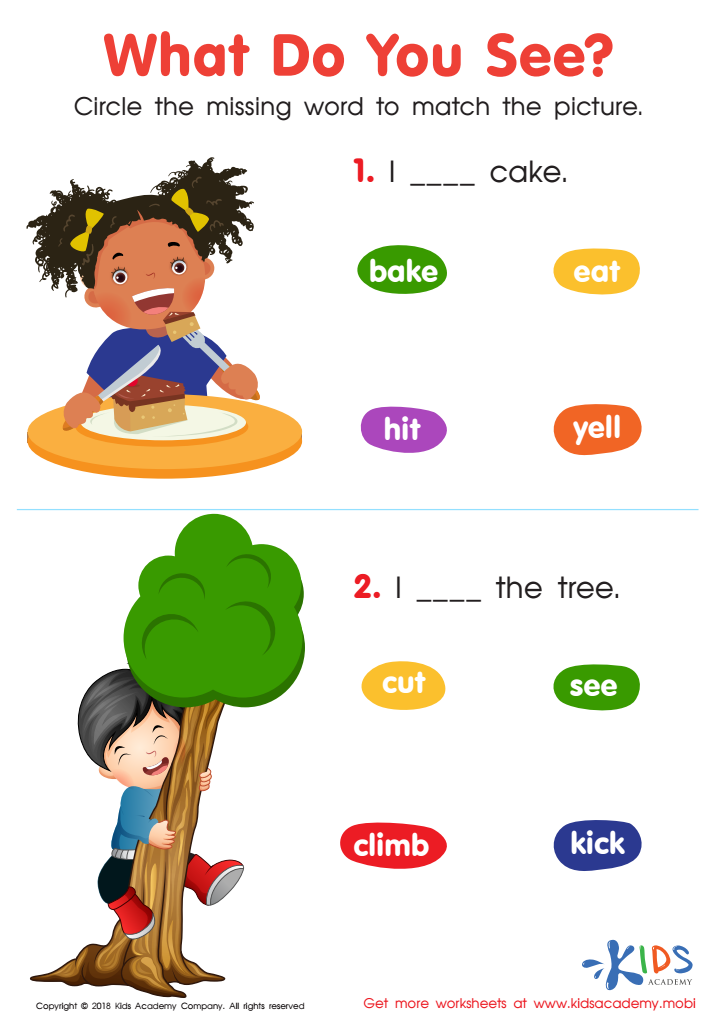
What Do You See? Reading Worksheet
New readers can use the attractive pictures and high-frequency words on this worksheet to practice expressive language skills and decode as they fill in the blanks. As they circle the correct words, they'll feel like reading superstars!
 Assign to My Students
What Do You See? Reading Worksheet
Worksheet
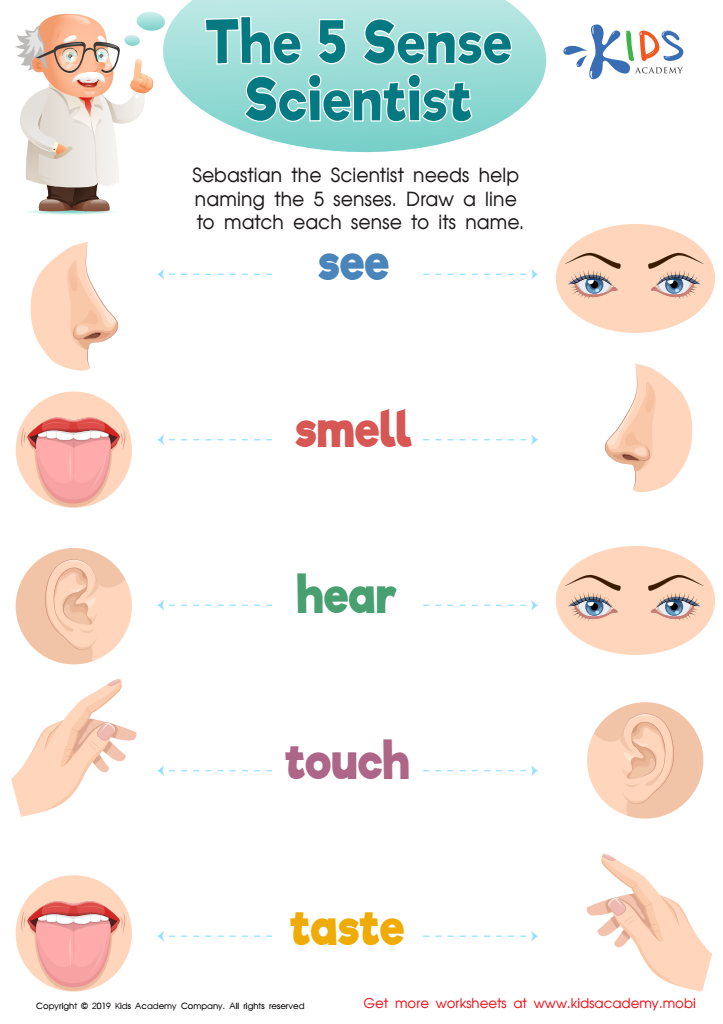
The 5 Sense Scientist Worksheet
Our young children will have fun learning about their five senses with this free Sense Scientist worksheet. Helping Sebastian the Scientist, they'll name the five senses and use traceable lines to connect each picture with its correct sense. Colorful words and pictures will create a memorable picture representation.
The 5 Sense Scientist Worksheet
Worksheet
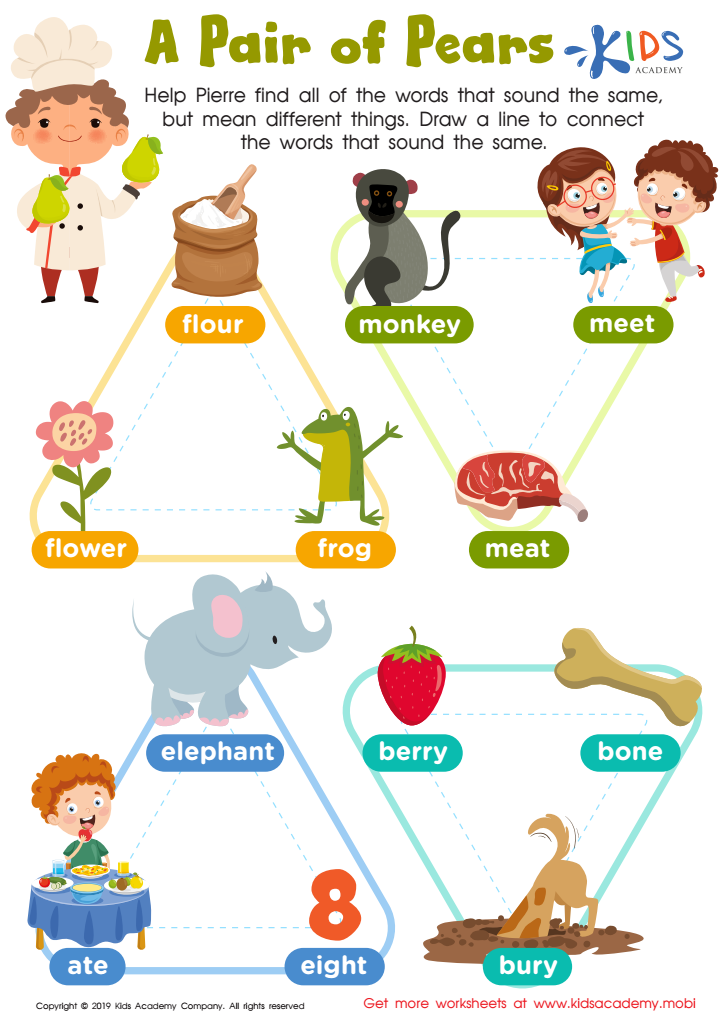
Pair Pears Worksheet
Young readers can have difficulty knowing when to use the right homophone. This free worksheet helps them use familiar imagery to understand better by connecting words that sound similar but are spelled and mean different things. Students will trace the lines to form a picture and have a reference image to differentiate between the different homophones.
Pair Pears Worksheet
Worksheet
Join Kids Academy for Free
Who is primarily going to use this learning content?






Observation skills are foundational for 6-year-olds as they begin to engage more deeply with the world around them. For parents and teachers, fostering these skills can significantly impact a child's learning and development. First, observation skills enhance a child’s ability to focus and pay attention to details, which are crucial traits for academic success. When children learn to notice and interpret small details in their environment, they become better at understanding and analyzing information in subjects like reading, science, and mathematics.
Moreover, observation skills contribute to language development. As children observe, they learn to describe what they see, enhancing their vocabulary and communication abilities. This descriptive prowess can also bolster reading comprehension. Children who are astute observers can pick up on contextual clues and infer meanings, making sense of stories and texts in a richer way.
Additionally, strong observation skills foster critical thinking and problem-solving abilities. When kids notice patterns, make connections, and gather data through observation, they learn to think logically and develop solutions.
Finally, observation helps in emotional and social development. Recognizing non-verbal cues allows children to empathize and interact more effectively with peers, promoting healthy social relationships.
In essence, by valuing and cultivating observation skills in 6-year-olds, parents and teachers set the stage for a well-rounded and robust educational foundation.








