Critical Thinking Animals Worksheets for 6-Year-Olds
3 filtered results
Difficulty Level
Grade
Age
-
From - To
Subject
Activity
Standards
Discover our engaging "Critical Thinking Animals Worksheets" specifically designed for 6-year-olds! These interactive worksheets encourage young learners to explore the fascinating world of animals while enhancing their critical thinking skills. Through fun activities, children will solve problems, make connections, and analyze information related to various animals. Each worksheet fosters creativity and curiosity, igniting a love for science and discovery. Perfect for classroom settings or at-home learning, these worksheets provide a valuable resource for parents and teachers alike. Help your child develop essential reasoning skills as they embark on an exciting adventure with their favorite animals. Download today and watch them learn!
Favorites
With answer key
Interactive
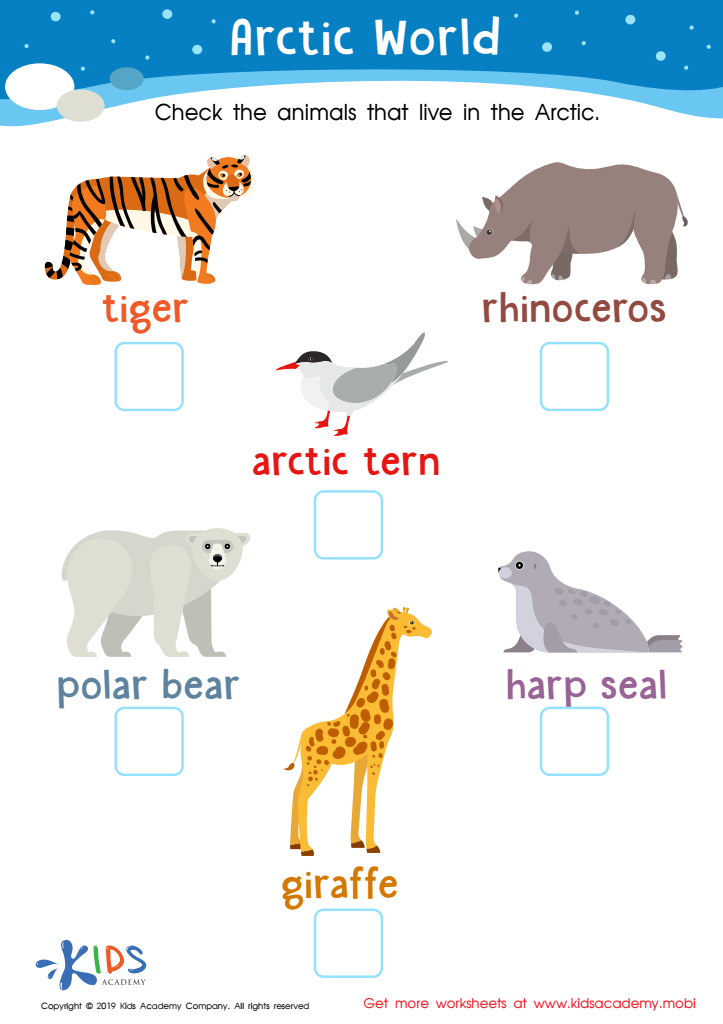
Arctic World Worksheet
Ask your students if they know where the Arctic is located and what lives there. If not, use a world atlas to show them. The Arctic is very cold and snow-covered; native animals have adapted to survive the harsh conditions. Look at the animals in the worksheet and help your students decide which ones live in the Arctic.
 Assign to My Students
Arctic World Worksheet
Worksheet
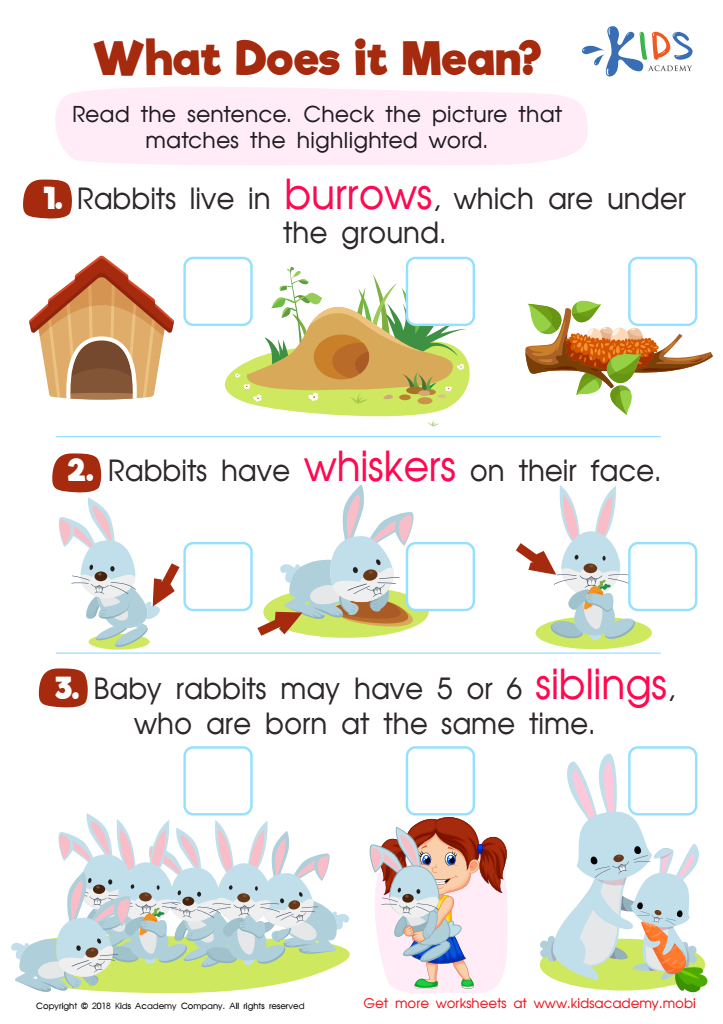
What Does It Mean? Worksheet
Teach your child to use context clues with this engaging Kids Academy worksheet. Read the sentences and find the pink-highlighted word. Use the other words in the sentence to figure out the meaning, then check the box next to the picture that represents it.
What Does It Mean? Worksheet
Worksheet
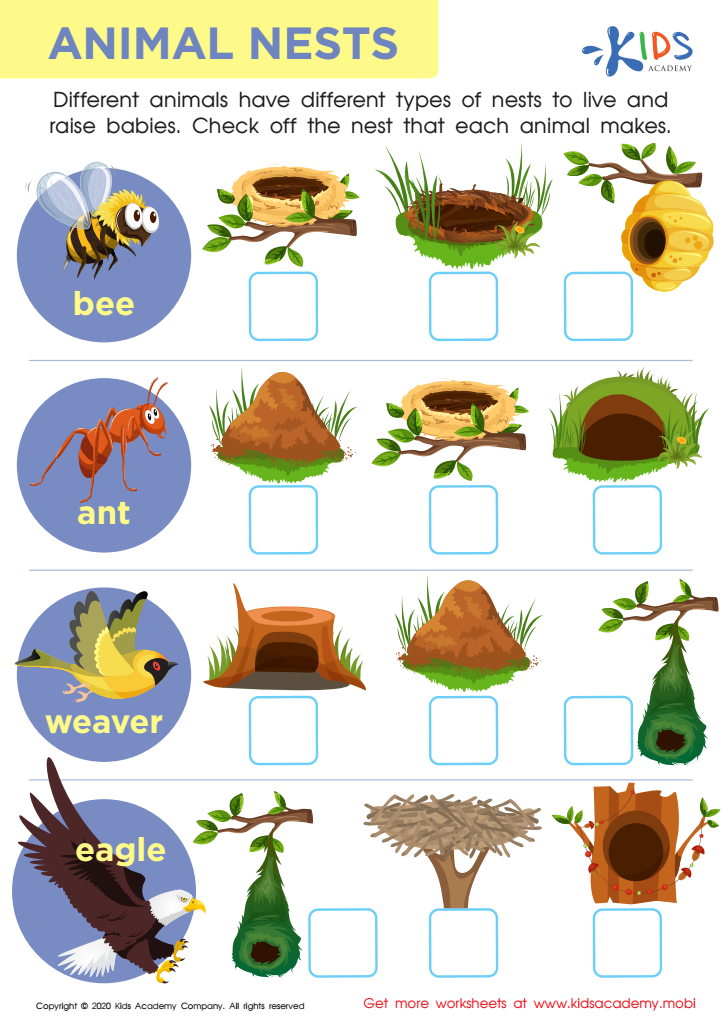
Animal Nests Worksheet
Animals need homes to sleep and stay safe. Look at the animal on the left and examine the nests and hives to the right. Check off the correct one for each animal to complete the worksheet! From birds to bees, it's a great way to show different types of homes animals make!
Animal Nests Worksheet
Worksheet
Join Kids Academy for Free
Who is primarily going to use this learning content?








Parents and teachers should care about Critical Thinking Animals for 6-year-olds because it fosters essential cognitive skills early in a child’s development. At this age, children's brains are highly receptive to learning through engaging methods. Critical Thinking Animals integrates play and education, helping children explore patterns, make connections, and solve problems in a fun, relatable way.
Developing critical thinking skills promotes curiosity and encourages children to ask questions, think independently, and consider multiple perspectives. When children engage with Critical Thinking Animals, they not only enjoy captivating stories and characters but also practice evaluating information and making decisions. This process sharpens their analytical abilities, laying a strong foundation for future learning.
Moreover, such tools can bolster communication skills as kids learn to articulate their thoughts and share insights with peers and adults. In our rapidly changing world, the ability to think critically will enable children to navigate challenges, make informed choices, and develop resilience.
By prioritizing activities like Critical Thinking Animals, parents and teachers can instill a love for learning, prepare children for academic success, and empower them to become thoughtful, responsible individuals. Engaging with these educational tools ultimately supports well-rounded development, giving young learners the skills to thrive in the future.