Sequencing Skills Science Worksheets for 6-Year-Olds
3 filtered results
-
From - To
Unlock your child's scientific potential with our Sequencing Skills Science Worksheets designed for 6-year-olds! These engaging and age-appropriate worksheets help young learners master the art of sequencing through fun activities that promote critical thinking and comprehension. Kids will participate in interactive exercises that encourage them to arrange events, understand processes, and improve their cognitive skills. Ideal for home or classroom use, our worksheets make learning science a delightful adventure. Enhance your child's ability to recognize patterns and sequences in nature while having fun along the way! Download our worksheets now and inspire a lifelong love of learning in your child!
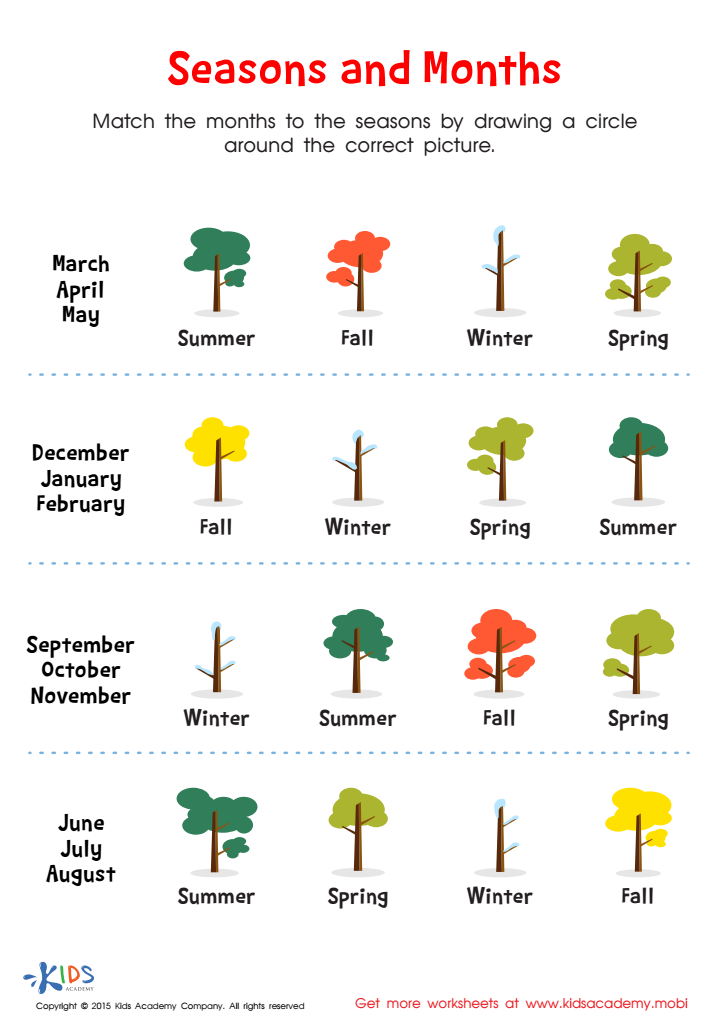
Seasons and Months Worksheet
 Assign to My Students
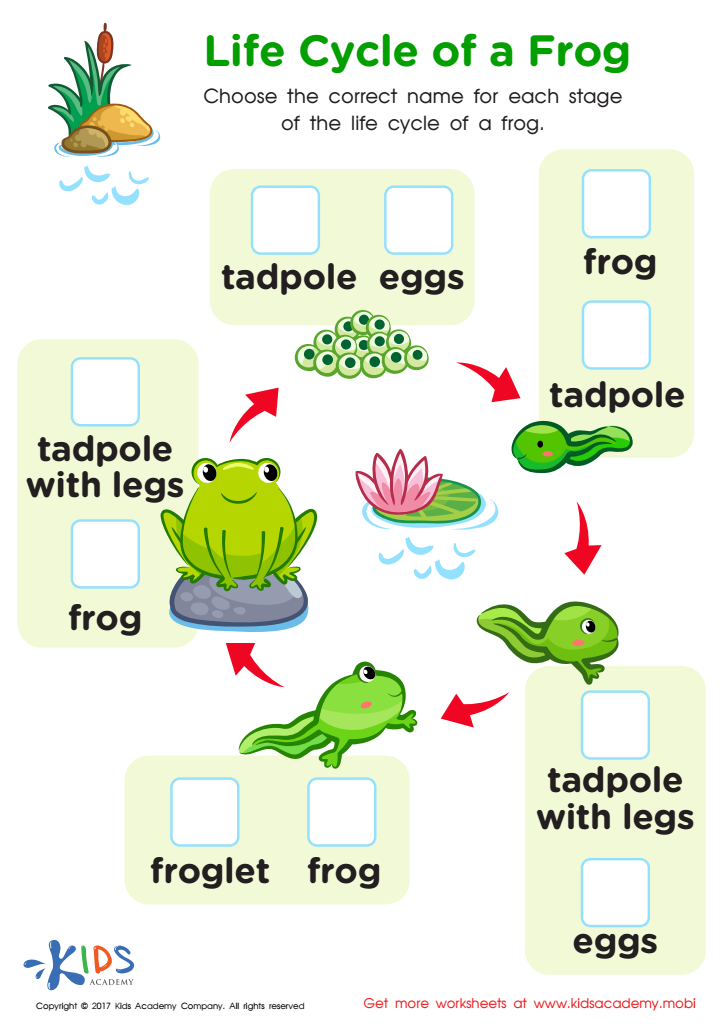
Life Cycle Frog Printable
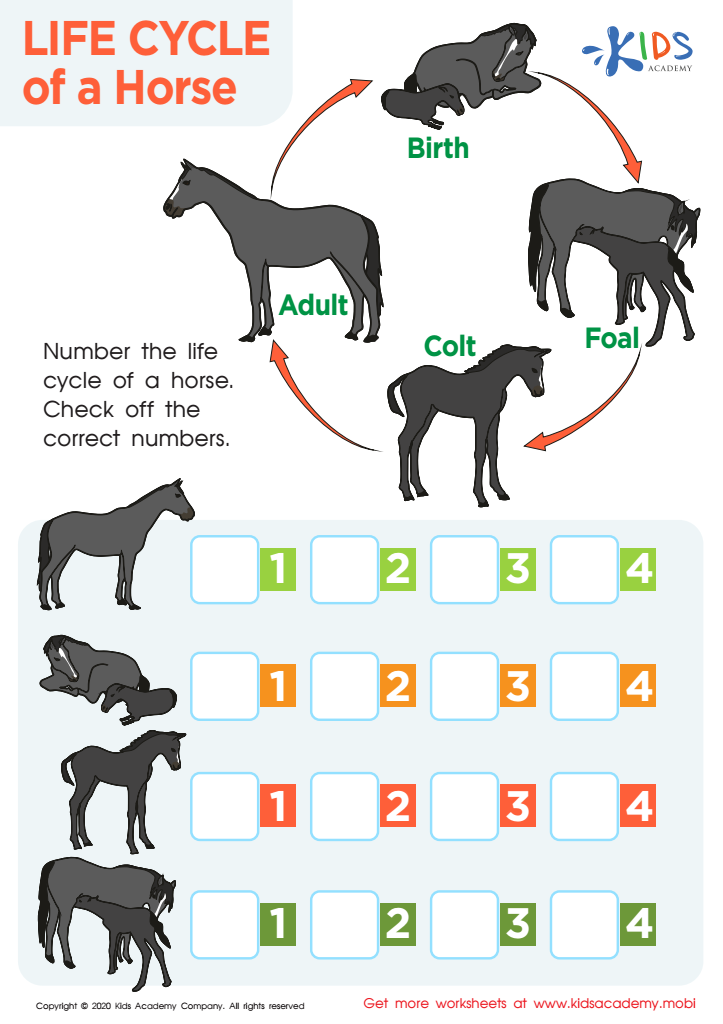
Life Cycle of a Horse Worksheet







Sequencing skills are crucial for 6-year-olds, especially in the context of science education. At this age, children are developing foundational cognitive abilities that will impact their overall learning. Sequencing involves arranging events, actions, or concepts in a logical order, which is essential for understanding scientific processes and experiments.
In science, children are introduced to concepts like the life cycle, weather patterns, and simple experiments, which all hinge on a sequence of events. When parents and teachers prioritize these skills, they help children grasp the cause-and-effect relationships that form the basis of scientific thinking.
Additionally, sequencing enhances critical thinking and problem-solving abilities. As children learn to organize their thoughts and communicate findings effectively, they become more skilled learners in both science and other subjects.
Moreover, fostering sequencing skills can boost a child's confidence and engagement in learning. When they can navigate information systematically, they are better equipped to tackle challenges and explore new concepts. In summary, integrating sequencing skills into science conversations not only reinforces scientific understanding but also supports overall cognitive development, making it essential for both parents and teachers to emphasize this crucial aspect of early education.







