
Understanding ecosystems Science Worksheets for 6-Year-Olds
5 filtered results
Difficulty Level
Grade
Age
-
From - To
Subject
Activity
Standards
Discover our "Understanding Ecosystems Science Worksheets for 6-Year-Olds" designed to engage young minds in exploring nature’s intricate relationships. These vibrant, age-appropriate printables introduce kids to various ecosystems, including forests, oceans, and deserts, presenting essential concepts like food chains, habitats, and adaptation. Through fun activities, children develop critical thinking and observation skills while fostering a love for the environment. Aligned with educational standards, our worksheets help kids understand the importance of balance in nature, making learning interactive and enjoyable. Ideal for classroom or home use, these resources are perfect for nurturing the next generation of eco-conscious learners.
Favorites
With answer key
Interactive
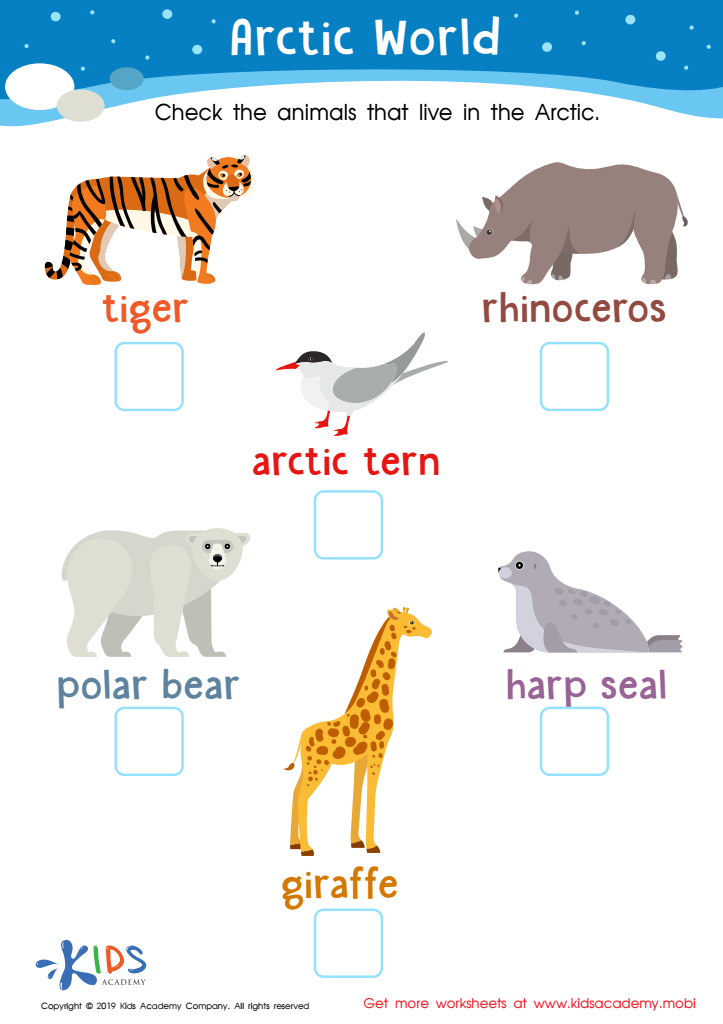
Arctic World Worksheet
Ask your students if they know where the Arctic is located and what lives there. If not, use a world atlas to show them. The Arctic is very cold and snow-covered; native animals have adapted to survive the harsh conditions. Look at the animals in the worksheet and help your students decide which ones live in the Arctic.
 Assign to My Students
Arctic World Worksheet
Worksheet
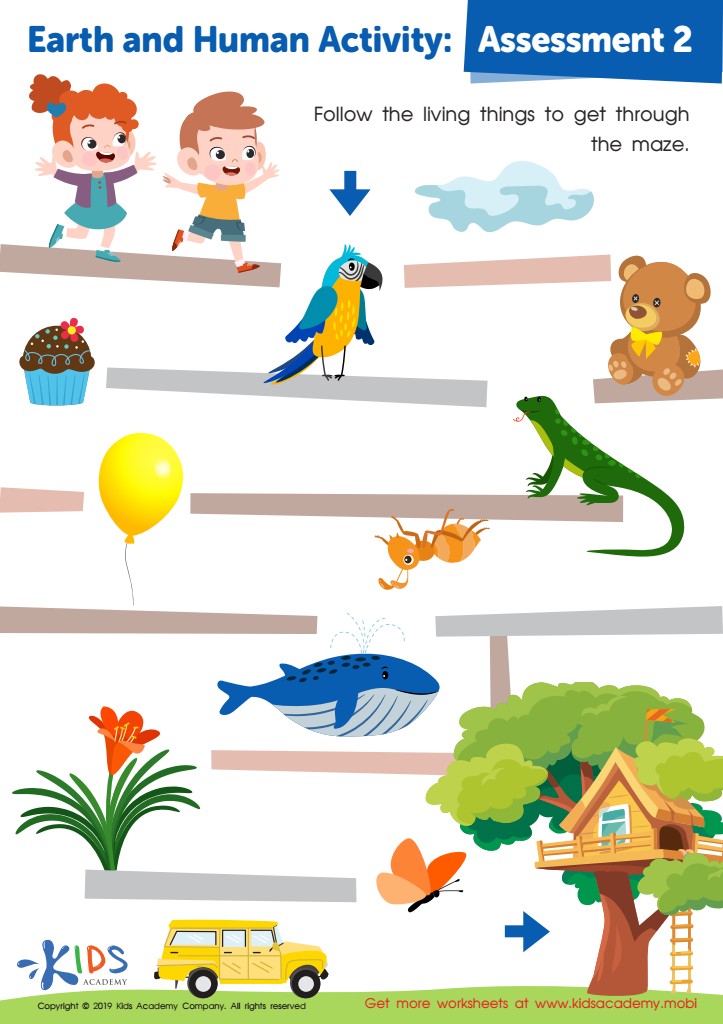
Earth and Human Activity: Assessment 2 Worksheet
Earth is alive with birds, trees, insects, and animals. Explain to your kids that the environment on Earth supports life. Ask for examples, then use the worksheet pictures to help them identify living things and complete the maze.
Earth and Human Activity: Assessment 2 Worksheet
Worksheet
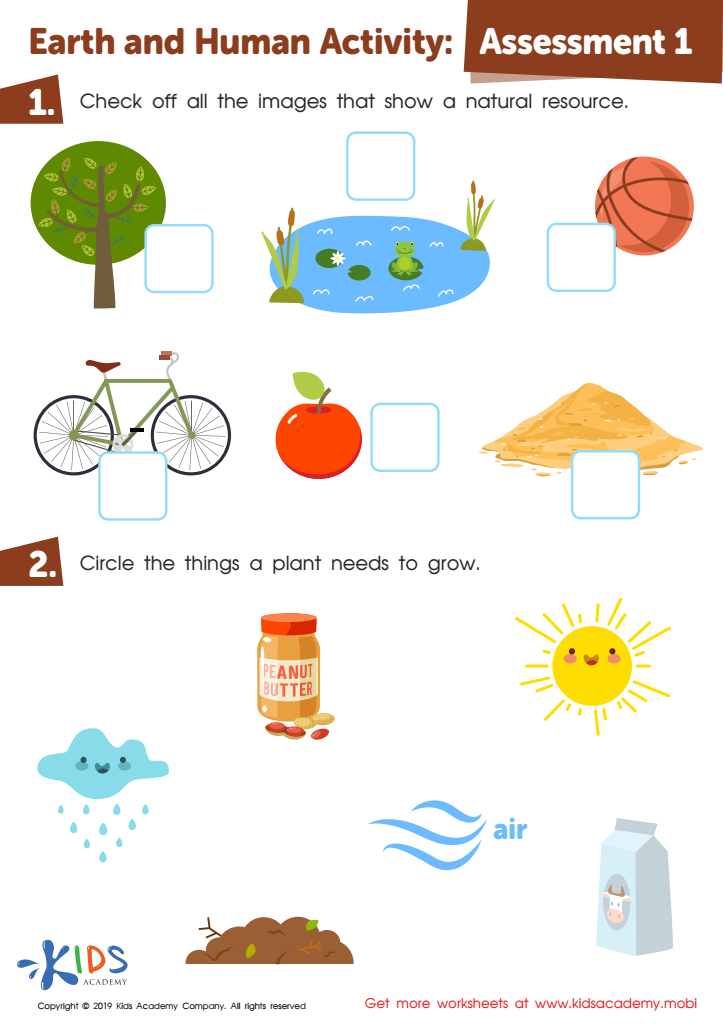
Earth and Human Activity: Assessment 1 Worksheet
Natural resources are gifts from Mother Nature that exist without man-made intervention. We use them to make essential items we use daily. Ask your kids for examples and have them check off images of natural resources on this worksheet.
Earth and Human Activity: Assessment 1 Worksheet
Worksheet
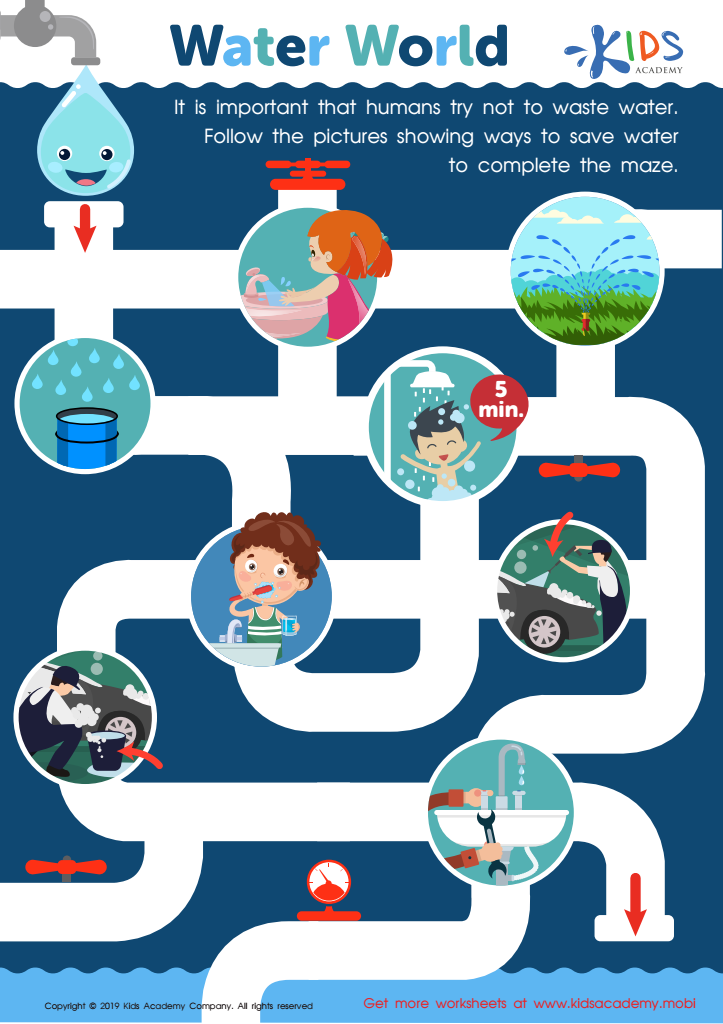
Water World Worksheet
Water is a vital necessity for living. Our bodies depend on it to stay healthy and survive. When we don't drink enough water, we become thirsty and run the risk of getting sick. Luckily, our planet is full of water and natural sources to stay hydrated. To prevent water waste, use this worksheet to teach your students how to conserve it and complete the maze.
Water World Worksheet
Worksheet
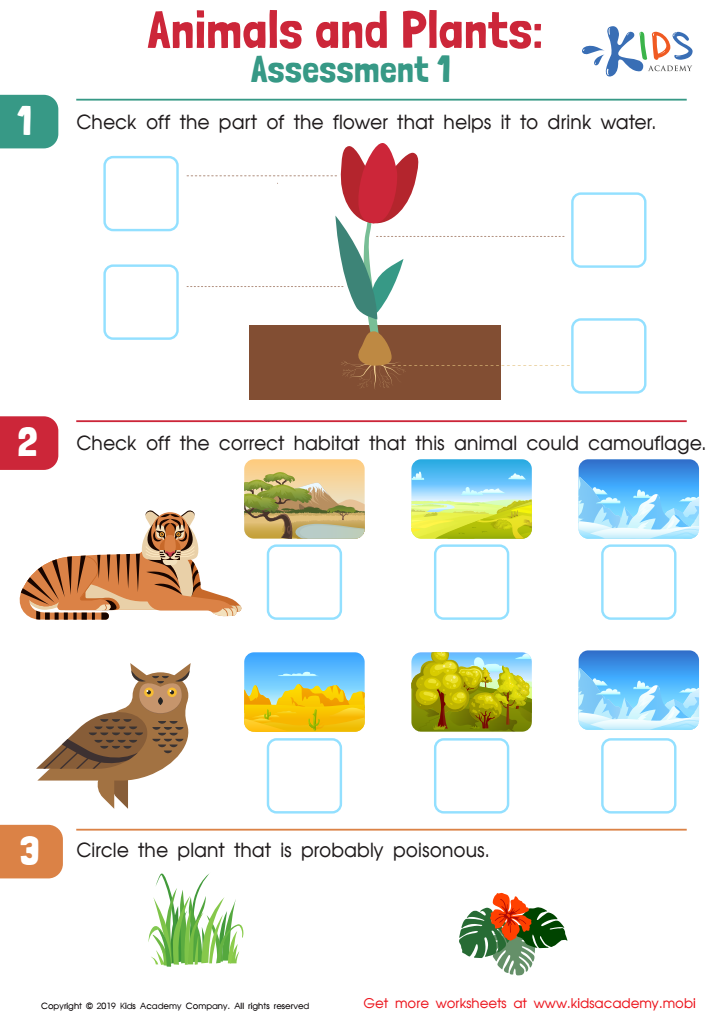
Animals and Plants: Assessment 1 Worksheet
Do you want to easily assess your child's understanding of basic science concepts? This colorful PDF offers a free opportunity for them to test their knowledge about parts of a flower, poisonous plants, animal habitats and more! Bright pictures make it fun and easy for you to see what they know.
Animals and Plants: Assessment 1 Worksheet
Worksheet
Join Kids Academy for Free
Who is primarily going to use this learning content?




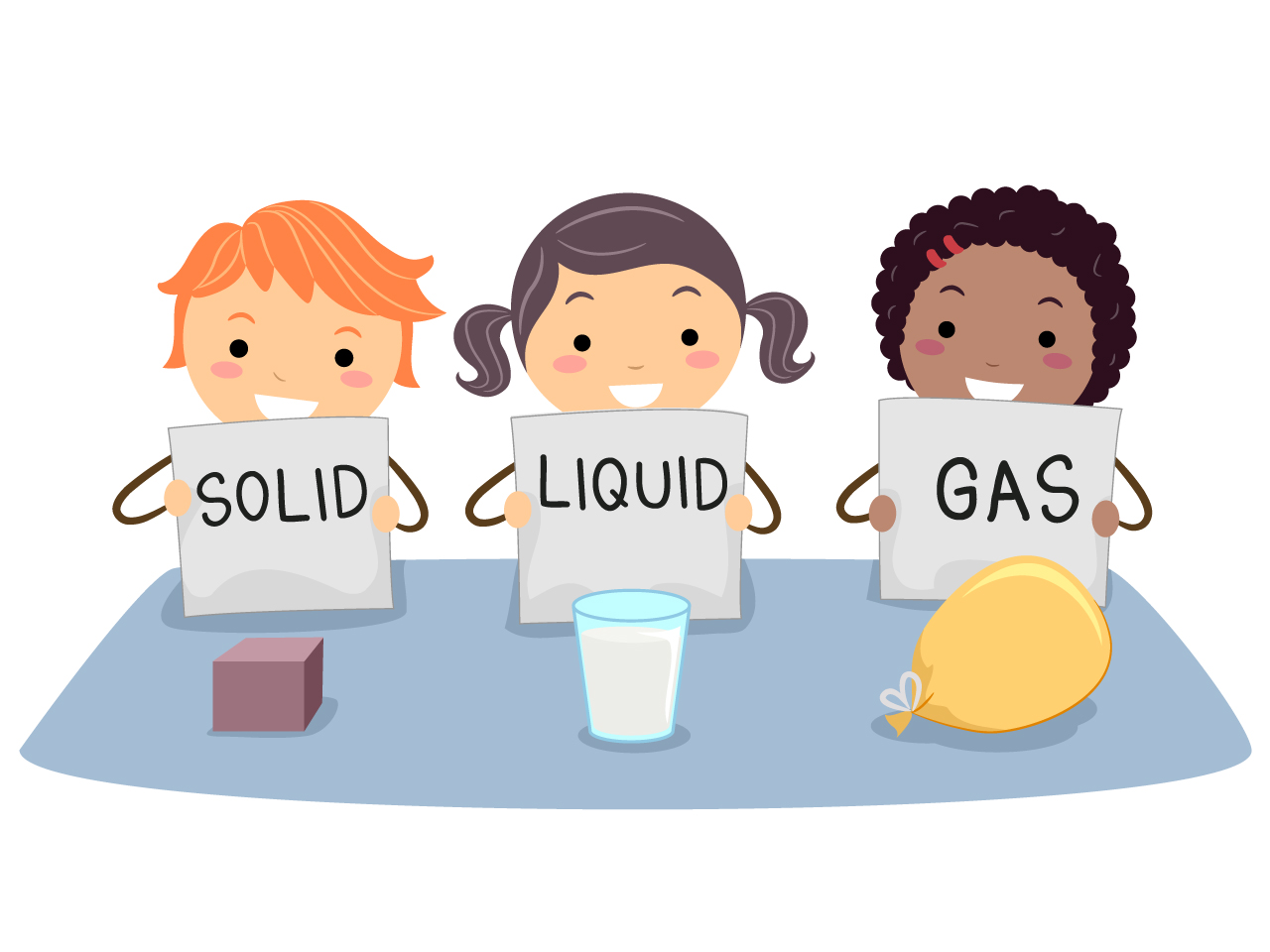


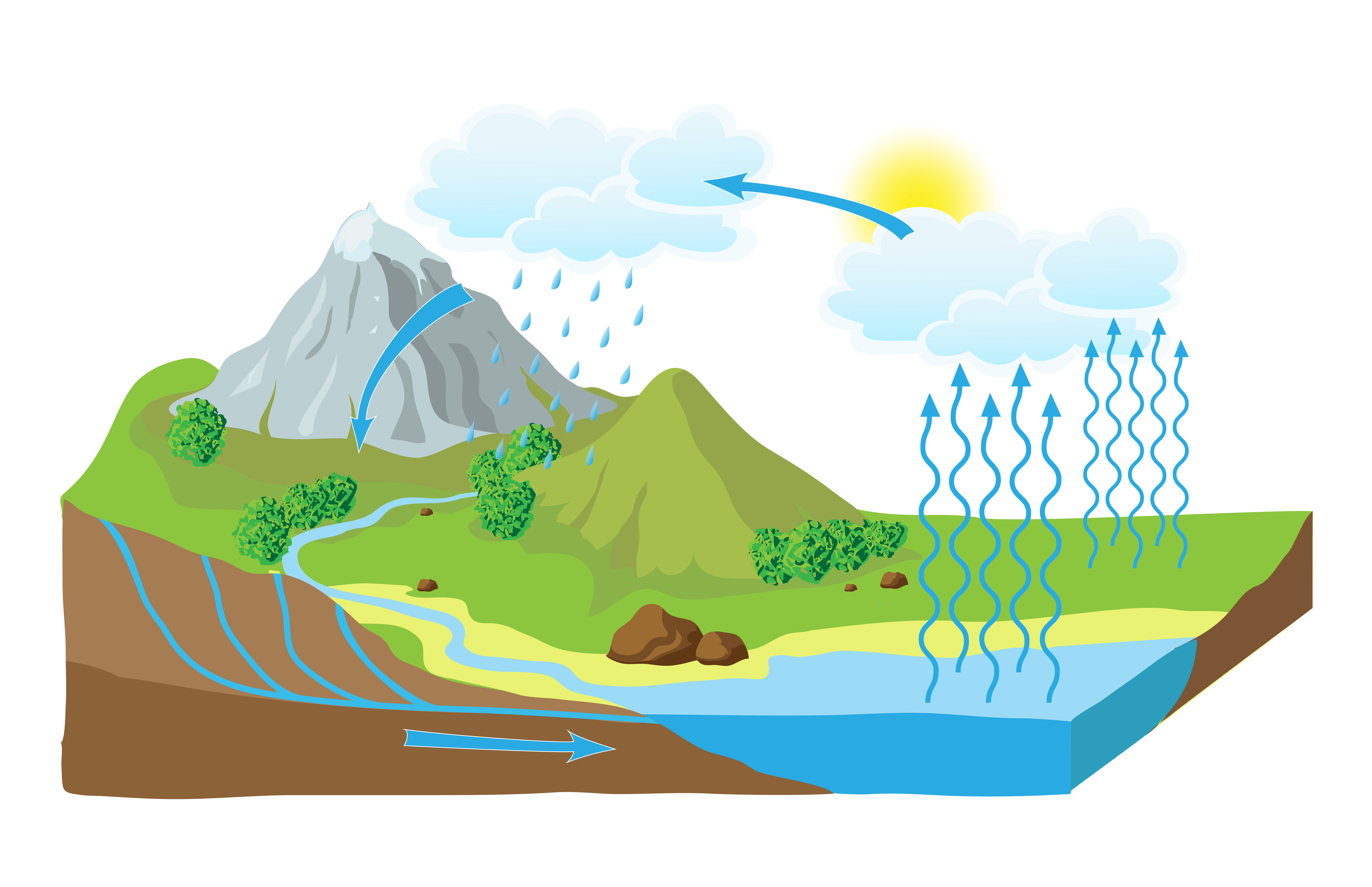
Understanding ecosystems is crucial for young minds because it lays the foundation for environmental literacy and responsible citizenship. When parents and teachers introduce six-year-olds to the concept of ecosystems, they foster a sense of curiosity and respect for the natural world. This early education helps children comprehend the interdependence of plants, animals, and their habitats, promoting awareness of biodiversity and the importance of conservation.
Learning about ecosystems encourages critical thinking and observational skills as children explore how different elements in nature interact and sustain each other. This knowledge empowers them to recognize the impact of human activities on the environment, fostering early eco-conscious habits like recycling, conserving water, and respecting wildlife.
Moreover, understanding ecosystems cultivates a holistic view of the world. It helps children see the bigger picture of life's interconnected systems, fueling a sense of wonder and inquisitiveness. Such early engagement can inspire future interests in science, leading to informed, environmentally-aware adults who can contribute positively to society.
Parents and teachers who prioritize this topic offer children valuable tools for understanding the world they live in and their role in preserving it. In essence, teaching ecosystems equips the next generation with the knowledge and values needed to act as stewards of our planet.







